The Single Statement: Budgeting for One Earring on Left Ear
Discover how to maximize your jewelry budget by investing in one earring on left ear styling, covering materials, gauge sizes, and value.

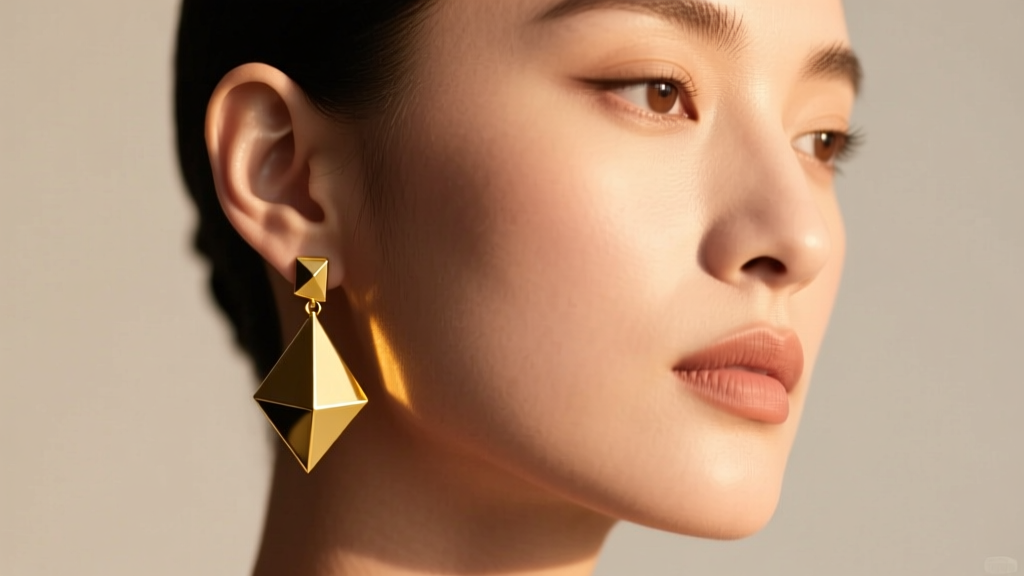
The Economics of Asymmetry: Why Buy Just One?
The cultural and fashion landscape has completely redefined the single earring. Once a niche subcultural marker or a nostalgic nod to 90s grunge, choosing to sport one earring on left ear placements is now a hallmark of deliberate, high-fashion asymmetry in 2026. From a budget and value assessment perspective, this trend offers a unique financial advantage that most jewelry buyers overlook. When you stop buying in pairs, your purchasing power shifts dramatically. Instead of settling for two mediocre, mass-produced silver drops that tarnish within a season, you can reallocate that same budget toward a single, superior statement piece crafted from solid, heirloom-quality materials.
Curating a singular focal point on the left ear forces a more intentional approach to jewelry collection. It eliminates the 'fast fashion' cycle of buying matched sets that eventually lose their luster or break. By focusing your budget on one high-impact earring, you invest in superior craftsmanship, better gemstone clarity, and hypoallergenic metals that guarantee longevity. This strategy transforms your jewelry box from a graveyard of broken pairs into a curated gallery of standalone masterpieces.
Material Value Breakdown for Single Statement Pieces
When buying a single earring, the material dictates both the upfront cost and the cost-per-wear over time. Understanding the difference between flash plating, vermeil, and solid alloys is critical for assessing true value. According to the Gemological Institute of America (GIA), the purity and alloy composition of gold directly impact its durability, which is especially important for a single piece that will be worn repeatedly without rotation.
| Material Grade | Standard | Price Range (Single) | Longevity | Best Use Case |
|---|---|---|---|---|
| Implant-Grade Titanium | ASTM F-136 | $30 - $85 | Lifetime | Sensitive lobes, heavy daily wear |
| 14k Solid Gold | 58.5% Pure | $120 - $350 | Lifetime | Heirloom pieces, heavy drops |
| Sterling Silver | 925 Stamp | $25 - $75 | Decades | Budget minimalism, lightweight |
| Gold Vermeil | 2.5µm over 925 | $45 - $110 | 2-5 Years | Trend-driven statement pieces |
Notice the distinction between standard gold-plated jewelry and gold vermeil. Standard plating is often a mere 0.5 microns thick and will rub off against the neck or hair within months. Vermeil, by legal definition, must be at least 2.5 microns of gold over a sterling silver base. For a single left-ear statement piece that will become your daily signature, vermeil or solid 14k gold offers the best return on investment.
Gauge, Weight, and Lobe Mechanics
One of the most overlooked aspects of wearing a single heavy earring is the biomechanical stress placed on the left lobe. When you wear a pair, the visual and physical weight is distributed. When you wear one earring on left ear piercings exclusively, that single lobe bears the entire load. This brings us to a critical technical specification: wire gauge.
Most commercial fashion earrings are manufactured with 20-gauge (0.81mm) or even 22-gauge (0.64mm) wires to save on metal costs. However, the Association of Professional Piercers (APP) warns against the 'cheese cutter effect'—a phenomenon where a thin wire under heavy tension slowly migrates through the lobe tissue, causing irreversible stretching or tearing. If your single statement earring weighs more than 8 grams, a 20-gauge wire is a structural liability.
Technical Framework for Heavy Singles
- 18-Gauge (1.02mm): The minimum acceptable thickness for medium-weight drops (4g - 8g). Provides adequate support without requiring lobe stretching.
- 16-Gauge (1.29mm): Mandatory for heavy architectural pieces, oversized hoops, or gemstone clusters exceeding 10g. You may need to visit a professional piercer to safely taper your standard lobe piercing to accommodate this thickness.
- Support Mechanisms: If you find a high-value 14k gold piece with a thin 20g wire, budget an extra $10 for silicone earring support discs or an 'earring jacket' that sits flush against the back of the lobe, distributing the weight across a wider surface area.
Curating the Look: Budget-Friendly Styling Frameworks
Styling a single earring requires balancing the asymmetry of your face and hair. Because the left side of the face is often perceived as more emotionally expressive in portrait photography, anchoring a statement piece here draws immediate attention. Here are three high-value styling frameworks that maximize visual impact without requiring a massive budget.
1. The Architectural Drop
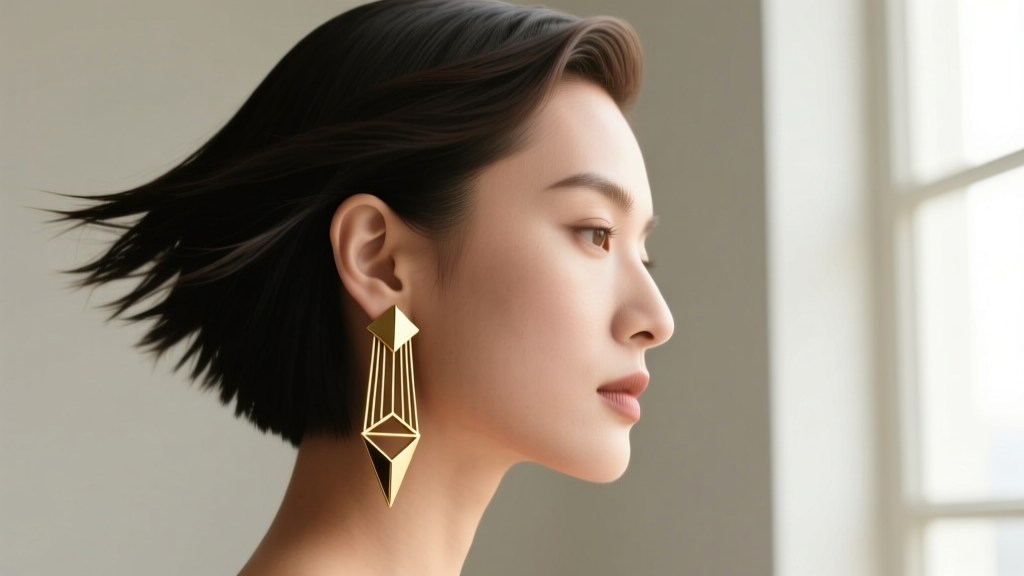
Instead of expensive diamonds or sapphires, invest in geometric, architectural shapes cast in solid brass or sterling silver. A single, elongated rectangular bar or an abstract molten-metal drop costs a fraction of gemstone jewelry but reads as high-end contemporary art. Pair this with a sharp, asymmetrical haircut that exposes the left ear, allowing the metal to catch the light without competition.
2. The Ear Cuff Illusion
If you want the look of a curated left ear without the cost of multiple piercings, allocate your budget to a single, high-quality huggie or stud for the lobe, and pair it with a non-pierced ear cuff on the upper cartilage. This creates the illusion of a complex, expensive constellation piercing. Look for cuffs with adjustable tension bands made from ASTM F-136 titanium to ensure they stay secure on the helix without causing cartilage fatigue.
3. The Heirloom Stud
For a subtle, everyday approach, pool your budget into one flawless, high-carat gemstone or a perfectly cut lab-grown diamond set in a solid 18k gold bezel. A single, brilliant 4mm lab-grown diamond on the left ear offers unmatched light performance and sophistication, proving that sometimes the most expensive-looking choice is the most minimalist.
Where to Source High-Value Single Earrings
The traditional jewelry market is built on the 'pair' pricing model, which often includes a markup for the matched set. To find true value for one earring on left ear styling, you must shift where you shop. Brands like Maria Tash and Mejuri have pioneered the 'single earring' retail model, allowing you to buy intricate, high-quality pieces à la carte. Furthermore, the secondary and vintage markets on platforms like Etsy or 1stDibs are goldmines for single replacements. Often, vintage jewelers will sell a single orphaned 14k gold earring from a broken pair at a 40% discount compared to its original retail value, allowing you to acquire vintage craftsmanship at a modern fast-fashion price point.
Final Verdict: Maximizing Your Jewelry Budget
Embracing the single left-ear earring is more than a stylistic rebellion; it is a highly strategic financial decision. By abandoning the obligation to buy in pairs, you free yourself from the compromises of mid-tier jewelry. Whether you opt for a heavy 16-gauge titanium drop or a sleek 14k gold architectural bar, focusing your budget on one exceptional piece guarantees better materials, superior comfort, and a signature look that mass-produced pairs simply cannot achieve.


