Best Budget Open Circle Stud Earrings: 2026 Value Guide
Discover the true value of budget open circle stud earrings in 2026. We analyze materials, pricing tiers, and durability to help you shop smart.

The Minimalist Appeal: Why Open Circle Studs Dominate
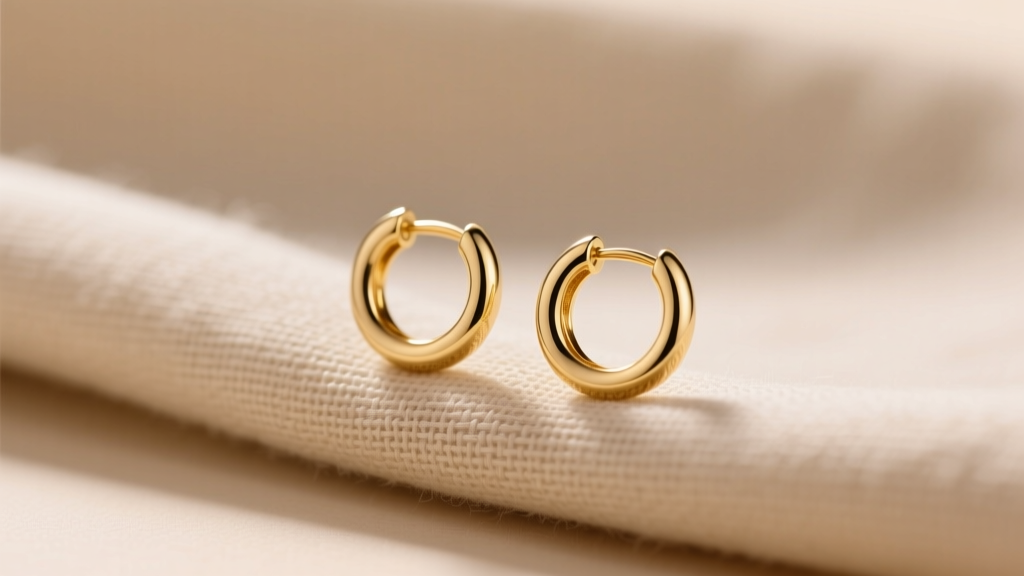
When building a versatile, everyday jewelry wardrobe, open circle stud earrings occupy a unique sweet spot between geometric edge and classic minimalism. Unlike solid discs or traditional gemstone studs, the negative space within an open circle creates visual lightness, making them appear larger on the earlobe without the heavy, dragging sensation of solid metal. However, as we navigate the 2026 jewelry market, the influx of ultra-cheap, mass-produced minimalist jewelry has made it increasingly difficult to distinguish between a genuine bargain and a disposable trap. This comprehensive value assessment breaks down the exact metallurgy, structural engineering, and pricing tiers you need to know before purchasing your next pair.
Material Grades & The 2026 Pricing Matrix
The term "budget" is highly subjective in jewelry. A $15 pair of earrings might be an incredible value if made from implant-grade titanium, but a complete waste of money if crafted from nickel-heavy brass with flash plating. According to the Federal Trade Commission Jewelry Guides, terms like "gold-filled" and "vermeil" have strict legal definitions that directly impact the lifespan of your earrings. Gold-filled wire must contain at least 1/20th (5%) of its total weight in 10k, 12k, or 14k gold, mechanically bonded to a brass core. Vermeil, conversely, is sterling silver plated with at least 2.5 microns of gold. Understanding these distinctions is the first step in assessing true value.
| Material Grade | Typical 2026 Price Range | Plating / Core Thickness | Tarnish & Wear Resistance | Hypoallergenic Rating |
|---|---|---|---|---|
| 316L Surgical Steel | $12 - $25 | Solid Alloy (No Plating) | Excellent (Will not tarnish) | Good (Contains trace nickel) |
| 14k Gold-Filled (1/20) | $35 - $65 | ~5 to 10 Microns Gold / Brass Core | Very High (Lasts 5-10+ years) | Excellent (Gold surface) |
| Gold Vermeil | $40 - $80 | Min. 2.5 Microns Gold / .925 Silver | Moderate (Wears in 1-3 years) | Excellent (Nickel-free core) |
| Solid 10k Gold | $85 - $130 | Solid 10k Alloy | Permanent (Can be polished) | Good (Alloy metals vary) |
For the budget-conscious buyer seeking the aesthetic of fine jewelry without the solid gold price tag, 14k gold-filled open circle studs offer the highest return on investment. The mechanical bond ensures the gold layer will not flake or peel like electroplated alternatives.
Gauge Sizes and Post Thickness: The Hidden Value Killer
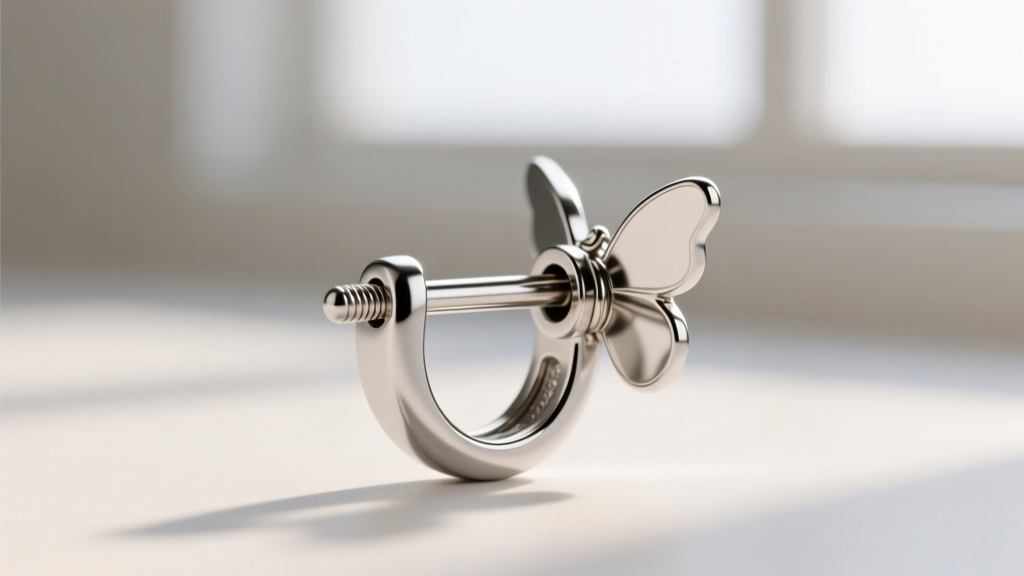
One of the most common ways manufacturers cut costs on budget open circle stud earrings is by reducing the wire gauge. The standard piercing size for a healed earlobe is 20-gauge (0.81mm) or 18-gauge (1.02mm). However, many fast-fashion brands utilize 22-gauge (0.64mm) or even 24-gauge wire for the circle itself to save on raw material costs.
The Work-Hardening Problem
When an open circle is crafted from ultra-thin 22-gauge wire, it lacks the structural rigidity to maintain its shape. Every time you take the earring out, adjust the backing, or accidentally catch it on a sweater, the metal undergoes "work hardening." Over time, this repeated stress causes the thin wire to become brittle and eventually snap, usually right at the solder joint where the post meets the circle. A true value purchase should never be thinner than 20-gauge for the primary circle structure. If the product description does not list the gauge size, assume it is 22-gauge and proceed with caution.
Common Failure Modes in Cheap Open Circle Studs
To accurately assess whether a pair of budget earrings is worth your money, you must understand how they fail. Based on metallurgical stress tests and consumer wear data, here are the primary failure modes to inspect upon receiving your jewelry:
- Solder Joint Fatigue: The post is typically attached to the circle via a small bead of solder. In cheap manufacturing, this is done quickly with a torch, creating a weak, porous bond. High-value budget brands use laser welding, which creates a microscopic, high-strength fusion without adding bulky solder bumps.
- Butterfly Back Tension Loss: Budget earrings often come with thin, stamped brass friction backs that lose their grip within weeks. Upgrading to silicone O-rings or purchasing solid 14k gold replacement backs ($10-$15) instantly elevates the security and value of a $30 pair of studs.
- Planar Warping: Because the circle is "open" (featuring a gap), it lacks the 360-degree structural integrity of a closed hoop. If the wire is too soft or too thin, the circle will warp into a figure-eight or saddle shape, ruining the minimalist aesthetic.
"The true cost of a budget earring isn't just the purchase price; it's the cost per wear. A $45 gold-filled pair worn 300 times a year costs $0.15 per wear, while a $15 plated pair that turns your ear green and breaks in three weeks costs infinitely more in frustration and replacement."
Hollow Tube vs. Solid Wire: Evaluating Structural Integrity
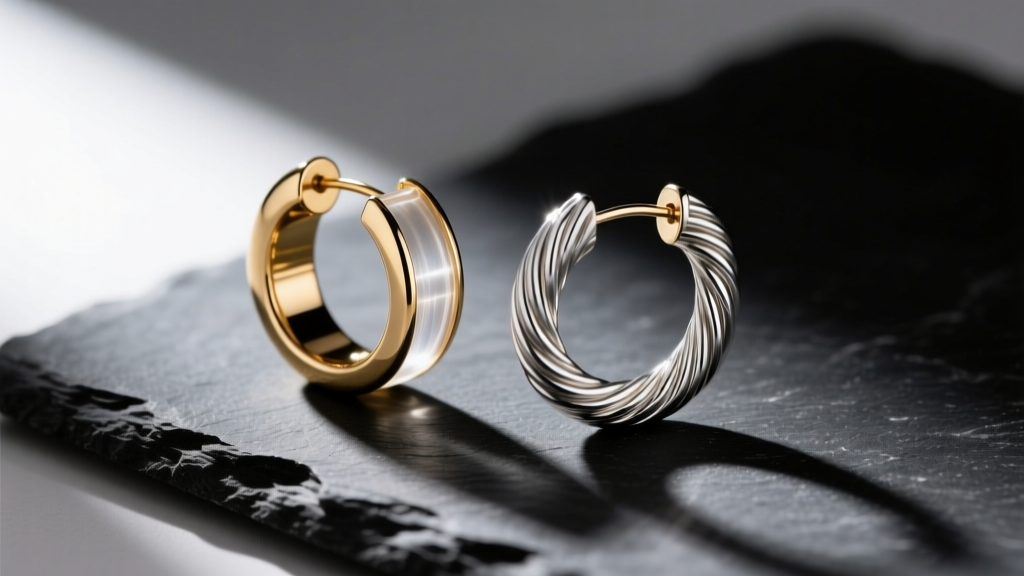
When shopping for larger open circle stud earrings (typically 12mm to 15mm in diameter), you will frequently encounter "hollow tube" designs. Manufacturers use hollow tubing to create a bold, chunky visual profile while keeping the weight—and the material cost—extremely low. While lightweight earrings are comfortable, hollow tubes present a specific durability risk.
If a hollow tube earring is dropped on a hard surface or squeezed in a jewelry box, the thin metal walls can easily dent or crush. Once a hollow tube is crushed, it is virtually impossible to repair or reshape without the metal splitting at the seam. Conversely, a solid drawn wire of the same visual thickness will be heavier and more expensive, but it can withstand significant impact and can be bent back into a perfect circle by a jeweler if warped. For diameters under 10mm, solid wire is mandatory. For diameters over 12mm, hollow tube is acceptable for budget buyers, provided the earrings are stored in a rigid compartmentalized box to prevent crushing.
Nickel Sensitization and the Budget Metal Trap
The Gemological Institute of America (GIA) frequently highlights the dangers of contact dermatitis caused by cheap jewelry alloys. Many ultra-budget open circle studs are made from "Tibetan Silver" or generic "alloy," which are often nickel-heavy base metals disguised with a microscopic flash of rhodium or silver plating. Once that flash plating wears off—often within days of contact with the natural oils and sweat of your earlobe—the nickel is exposed. The EU Nickel Directive strictly limits nickel release to less than 0.5 µg/cm²/week for post-assembly jewelry, a standard frequently ignored by unverified overseas marketplaces. If you have sensitive ears, the only safe budget options are solid 316L surgical steel, pure titanium, or verified 14k gold-filled pieces where the gold layer completely encapsulates the base metal.
Final Verdict: Where to Spend and Where to Save
Navigating the market for open circle stud earrings in 2026 requires a strategic approach to budget allocation. Do not compromise on the post material or the wire gauge. Spending an extra $15 to upgrade from gold-plated brass to 14k gold-filled wire ensures your earrings will survive years of daily wear without turning your skin green or snapping at the joint. Conversely, you can safely save money by skipping brand-name markups and purchasing from specialized, direct-to-consumer metalsmiths on platforms like Etsy or specialized minimalist jewelry boutiques, provided they transparently list their wire gauge (20G or 18G) and material origins. By prioritizing mechanical bonds over electroplating and structural thickness over visual bulk, you can secure a pair of open circle studs that deliver fine-jewelry longevity on a strict budget.


