The 2026 Pearl Earring Stud Value Guide: Budget vs Luxury
Discover how to evaluate a pearl earring stud for true value. We break down 2026 pricing, nacre thickness, luster grades, and the best budget tiers.

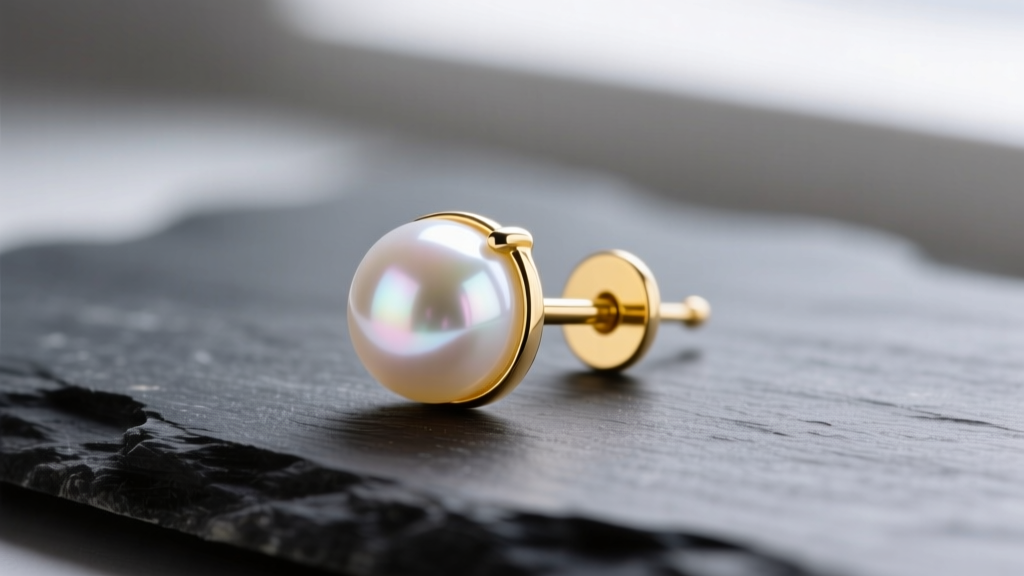
The classic pearl earring stud is a cornerstone of fine jewelry, yet the market is rife with extreme price disparities. In 2026, you can find a pair of pearl studs for $30 at a fast-fashion retailer or $3,000 at a high-end boutique. For the untrained eye, both might look like identical white spheres. However, as a domain expert in gemological value assessment, I can assure you that the structural integrity, optical properties, and long-term durability of these two options are worlds apart.
Evaluating a pearl earring stud requires moving beyond basic aesthetics and understanding the precise metrics that dictate wholesale and retail pricing. This guide deconstructs the true cost of pearl studs, helping you identify the ultimate 'sweet spot' where budget meets uncompromising quality.
Decoding the Price Tag: The 5 Value Factors
Unlike diamonds, which are graded on a rigid, universally standardized scale, pearls are evaluated on a more nuanced matrix. When assessing the value of a pearl earring stud, gemologists rely on five critical factors. Understanding these will immediately elevate your purchasing power.
1. Luster: The Ultimate Value Driver
Luster is the measure of how sharply light reflects off the pearl's surface. It is the single most important factor in determining value. A high-luster pearl will reflect a crisp, distinct image of a light source (often called the 'lightbulb test'). Low-luster pearls appear chalky or cloudy. According to the Gemological Institute of America (GIA), excellent luster can elevate a lower-grade surface pearl above a flawless but dull one.
2. Nacre Thickness and Durability
Nacre is the crystalline substance the oyster secretes to form the pearl. In bead-nucleated pearls (like Akoya), nacre thickness dictates both the luster and the lifespan of the earring. A pearl earring stud with nacre thinner than 0.3mm is a poor investment; it will eventually peel, chip, or reveal the dull shell bead beneath. For Akoya pearls, demand a minimum of 0.4mm, though 0.6mm+ is the hallmark of heirloom quality.
3. Surface Quality
Because pearls are organic, 100% flawless surfaces are exceptionally rare. Minor blemishes, tiny pinpricks, or slight growth rings are normal and help verify authenticity. However, deep cracks or chalky spots near the drill hole severely compromise structural integrity and should be avoided entirely.
4. Shape and Symmetry
For traditional studs, perfect roundness commands the highest premium. 'Near-round' pearls offer a massive value discount (often 30-40% less) while appearing perfectly spherical to the naked eye when worn on the earlobe.
5. Size (The Millimeter Multiplier)
Pearl sizes are measured in millimeters, and pricing scales exponentially, not linearly. A 6.0-6.5mm stud is the baseline. Moving to 7.0-7.5mm might increase the price by 20%, but crossing the 8.0mm threshold into 8.5-9.0mm can double or triple the cost due to the rarity of large, high-quality pearl sacs.
Market Pricing Tiers for 2026: What Should You Pay?
To accurately assess value, you must compare apples to apples. Below is a breakdown of the primary pearl types used for studs, their current market pricing, and their ideal use cases.
| Pearl Type | Average Size | 2026 Price Range (Pair) | Nacre Standard | Best Value Tier |
|---|---|---|---|---|
| Freshwater | 6-8mm | $50 - $250 | Solid Nacre | Budget / Everyday |
| Akoya | 7-9mm | $300 - $1,200 | 0.4mm+ (Ideal 0.6mm) | Classic Luxury |
| Tahitian | 8-11mm | $400 - $2,500 | 0.8mm+ (Legal Min) | Bold / Statement |
| South Sea | 9-13mm | $1,000 - $5,000+ | 2.0mm+ | Heirloom / Investment |
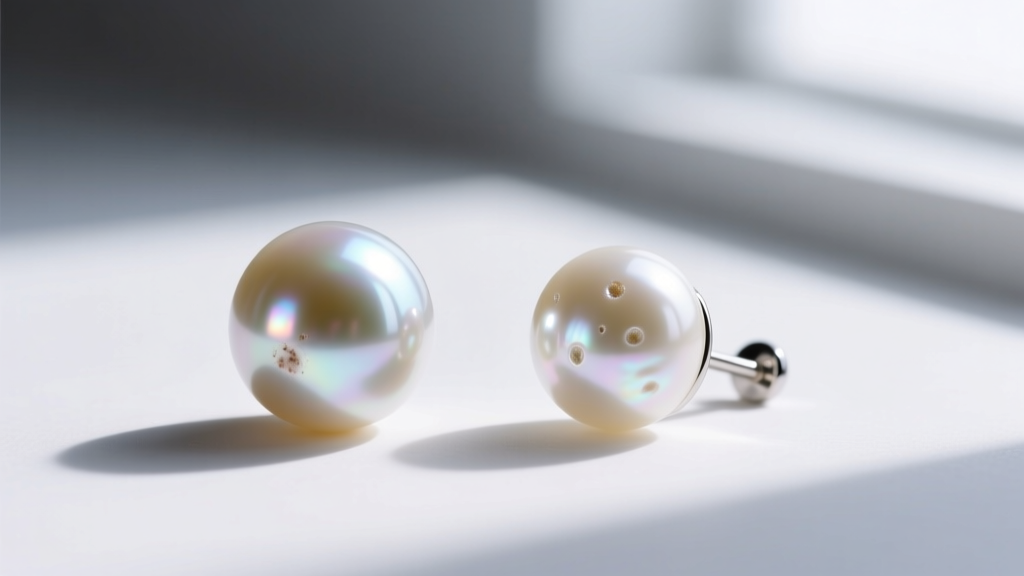
The Value Sweet Spot: High-End Freshwater vs. Entry-Level Akoya
If your budget sits between $150 and $350, you face a classic dilemma: buy top-tier Freshwater or entry-level Akoya. In 2026, the technology behind freshwater pearl cultivation (specifically metallic Edison pearls and premium round whites) has advanced dramatically. A $200 pair of AAA-grade freshwater studs will feature solid nacre (meaning they will never peel) and excellent luster. Conversely, a $200 pair of Akoya studs will likely be commercial-grade with thin nacre and mediocre luster. For pure durability and visual impact in this bracket, premium freshwater is the undisputed value winner.
Evaluating the Hardware: Metal Choices and Gauge Sizes
The pearl is only half the equation. The hardware of a pearl earring stud significantly impacts both the price and the longevity of the piece. Many budget brands cut corners here, leading to lost earrings and damaged piercings.
Precious Metal Settings
Pearls are traditionally set in 14k or 18k gold, or platinum. 14k gold offers the best balance of durability and cost, as the higher alloy content makes the prongs or cup settings more resistant to bending. 18k gold provides a richer yellow hue but is softer. Sterling silver is acceptable for fashion jewelry, but it tarnishes and can react with the adhesives sometimes used in cheaper pearl settings.
Post Gauge and Threading
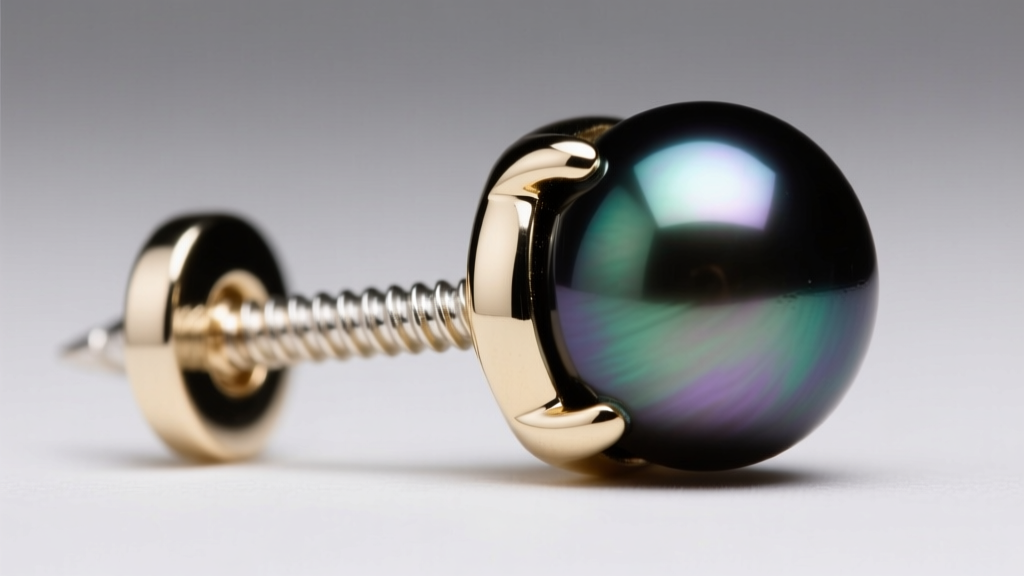
Pearls are dense and relatively heavy. A standard 22-gauge (0.64mm) post is too thin and will bend under the weight of an 8mm pearl, causing the stud to droop on the earlobe. Always look for an 18-gauge (1.02mm) or 20-gauge (0.81mm) post. Furthermore, ensure the post features secure threading for screw-backs, or a deep, precise groove for friction backs. The drill hole on the pearl itself should be clean and centered; a jagged drill hole will quickly wear down a thin metal post.
Backing Mechanisms
For valuable pearl studs, standard butterfly friction backs are insufficient. They loosen over time and can slip off silently. Invest in studs that come with La Pousette backs (which feature a mechanical locking click) or precision-machined screw backs. This minor hardware upgrade protects your investment from accidental loss.
Red Flags: How to Spot Overpriced Pearl Studs
The jewelry industry is notorious for inflated markups, particularly in mall-chain stores. When shopping for a pearl earring stud, watch out for these common traps:
- The 'Mall Brand' Markup: Department store jewelers frequently mark up commercial-grade Akoya pearls by 300% to 500%. A pair of studs priced at $800 in a mall kiosk might possess the exact same gemological qualities as a $250 pair from a specialized online pearl importer.
- Vague Grading Terminology: Terms like 'Fine,' 'Premium,' or 'Luxury' are unregulated marketing fluff. Reputable dealers will provide specific metrics, such as 'AAA,' 'Hanadama' (for certified Japanese Akoya), or exact millimeter sizing.
- Over-Whitening and Coating: Some low-quality pearls are heavily bleached or coated in artificial dyes to hide poor surface quality and enhance luster. Under magnification, coated pearls look plasticky and lack the deep, inner glow of natural nacre. Over time, this coating will scratch and peel.
Final Verdict: Maximizing Your Investment
Securing the best value for a pearl earring stud requires a strategic allocation of your budget. If you are purchasing for daily wear and have a modest budget, prioritize high-luster, near-round freshwater pearls set in 14k gold with secure 18-gauge posts. You will get a durable, beautiful earring that outperforms its price tag.
If you are seeking a generational heirloom or a milestone gift, shift your budget toward Hanadama-certified Akoya or gem-grade Tahitian pearls. As noted by the American Gem Society, buying from a credentialed gemologist or a specialized pearl dealer ensures you are paying for actual nacre quality and luster, rather than brand-name retail overhead. By focusing on the structural and optical realities of the pearl, you can confidently navigate the 2026 market and secure a piece that retains both its beauty and its intrinsic value for decades to come.


