Best Budget Peony Earrings in 2026: Value & Style Guide
Discover how to evaluate peony earrings in 2026. Compare materials, pricing tiers, and craftsmanship to find the best floral jewelry value.

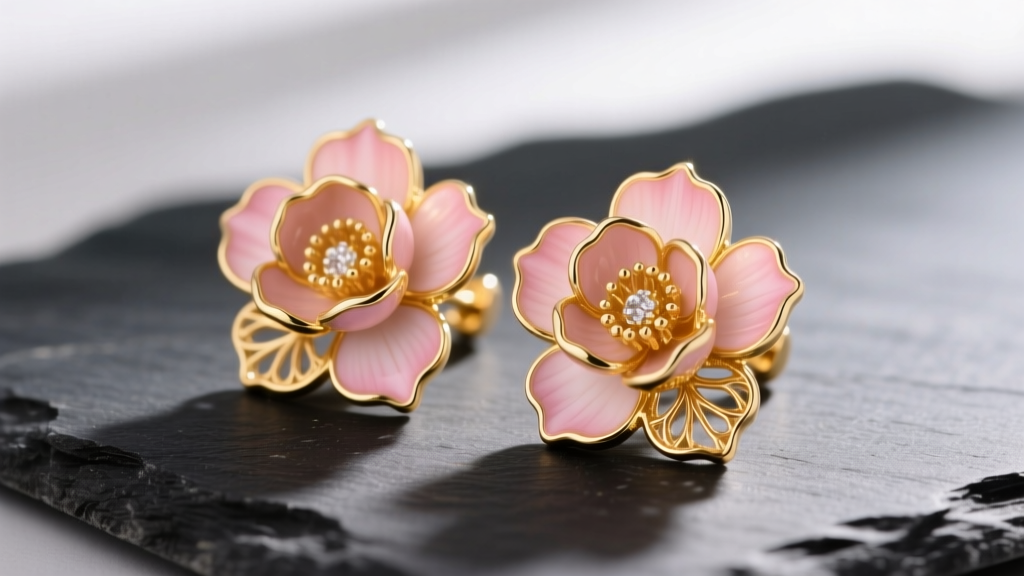
Floral jewelry has maintained a steadfast presence in accessory trends, but the peony motif remains uniquely complex. With its dense, ruffled petals and voluminous silhouette, translating the peony flower into wearable metal requires significant craftsmanship. As we navigate the jewelry market in 2026, consumers are increasingly scrutinizing the intersection of price and longevity. If you are hunting for the perfect pair of peony earrings without overspending, understanding the underlying manufacturing costs, material grades, and hardware mechanics is essential. This guide strips away the marketing fluff to provide a rigorous budget and value assessment of peony earrings, ensuring your investment holds its beauty long after the initial purchase.
The True Cost of Floral Jewelry: Why Peony Earrings Vary in Price
Unlike simple geometric studs or minimalist hoops, peony earrings demand intricate three-dimensional modeling. The price discrepancy between a $25 pair and a $250 pair rarely stems from brand markup alone; it is deeply rooted in the production method. High-value peony designs require either multi-part assembly or complex lost-wax casting to capture the delicate, overlapping nature of the petals. Budget options often rely on flat die-stamping or low-resolution 3D printing, resulting in a stiff, artificial appearance that lacks the organic movement of a real bloom. When assessing value, you must look past the initial price tag and evaluate the cost-per-wear, factoring in how the materials will withstand daily exposure to skin oils, cosmetics, and environmental moisture.
Material Breakdown: What You Are Actually Paying For
The foundation of any earring dictates its hypoallergenic properties and its resistance to tarnish. According to the Federal Trade Commission Jewelry Guides, specific terminology like 'vermeil' and 'gold filled' have strict legal definitions that protect consumers from deceptive marketing. Understanding these terms is your first line of defense when evaluating budget floral jewelry.
| Material Grade | Average Price Range | Longevity & Value Assessment |
|---|---|---|
| Brass with Flash Plating | $15 - $35 | Poor. Plating is under 0.5 microns. Will tarnish or cause contact dermatitis within weeks of daily wear. |
| 925 Sterling Silver | $40 - $85 | Good. Solid metal, but prone to sulfide tarnishing. Requires regular polishing, especially in the crevices of peony petals. |
| Gold Vermeil (Over Silver) | $65 - $150 | Excellent. Must be at least 2.5 microns of gold over sterling silver. Offers the look of solid gold at a fraction of the cost. |
| Solid 14k Gold | $250 - $600+ | Superior. Lifetime durability, hypoallergenic, and retains intrinsic scrap value. Best for heirloom-quality floral pieces. |
For the best budget-to-value ratio in 2026, heavy gold vermeil over a nickel-free sterling silver base is the sweet spot. It provides the luxurious warmth required for a realistic peony aesthetic while remaining accessible to most budgets. Avoid 'gold-plated brass' if you have sensitive earlobes, as the copper and zinc alloys in brass frequently trigger allergic reactions once the microscopic gold layer wears away.
Craftsmanship and Detail: Spotting High-Value Peony Designs
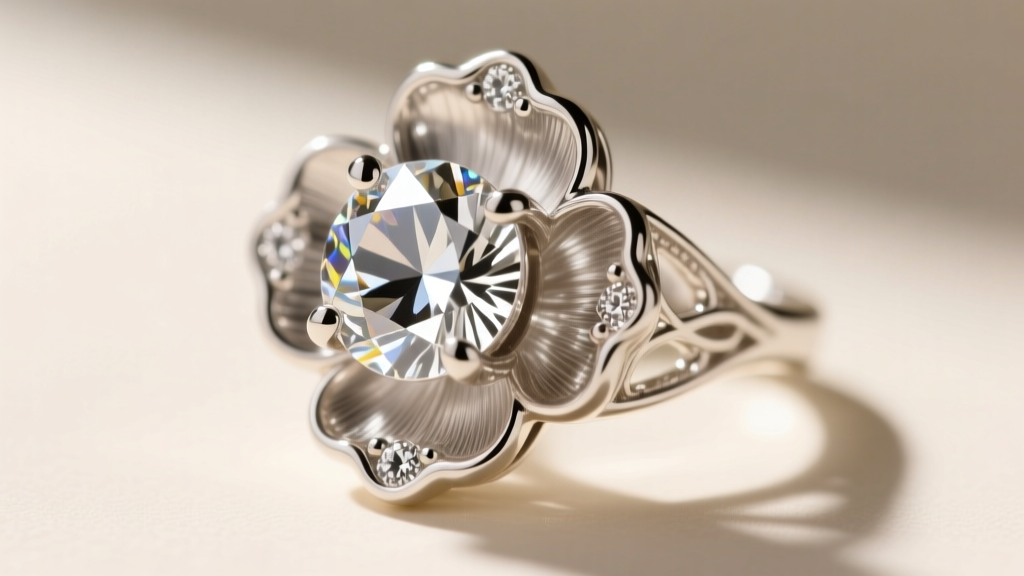
The devil is in the details, and with peony earrings, the details are everything. A high-value pair will feature petals with varied thicknesses, tapering to a razor-thin edge to mimic nature. Budget manufacturers often leave petal edges thick and blunt to prevent the metal from warping during the casting process.
The Petal Problem: Stamped vs. Cast
Die-stamped peony earrings are incredibly cheap to produce but result in a uniform, cookie-cutter look where every petal is identical. True value lies in cast pieces. According to gemological and manufacturing standards outlined by the Gemological Institute of America (GIA), precision casting allows for organic asymmetry. When inspecting a pair, look for slight variations in petal curvature. Furthermore, examine the center of the flower. High-value designs will feature a bezel-set or prong-set gemstone (like a morganite or cubic zirconia) to represent the pistil and stamen. Budget versions will simply glue a rhinestone directly onto the flat metal backing, a failure point that almost guarantees stone loss within the first few months of wear.
Enamel Techniques: Cold vs. Vitreous
Many peony earrings incorporate colored enamel to enhance the floral illusion. Budget pieces use 'cold enamel,' which is essentially an epoxy resin. While initially vibrant, epoxy resin yellows and chips easily when exposed to UV light and perfume. High-value budget pieces (typically in the $80-$120 range) will utilize vitreous enamel—a glass powder fired at extreme temperatures. Vitreous enamel is highly scratch-resistant, retains its color indefinitely, and provides a luminous depth that resin simply cannot replicate.
2026 Pricing Tiers: Where Does Your Budget Fit?
To help you navigate the market, we have categorized the current landscape of peony earrings into three distinct value tiers based on material integrity and manufacturing complexity.
- The Fast-Fashion Tier ($15 - $40): Characterized by zinc or brass alloys, flash plating, and glued-in acrylic stones. Value Verdict: Only suitable for single-use events or costume wear. Expect a functional lifespan of under six months.
- The Accessible Artisan Tier ($50 - $130): Features 925 sterling silver or thick gold vermeil, lost-wax casting for 3D petal definition, and secure prong settings. Value Verdict: The highest ROI for everyday wearers. Brands in this tier often offer replating services, extending the life of the earrings significantly.
- The Fine Jewelry Tier ($250+): Solid 14k or 18k gold, potentially incorporating natural diamonds or sapphires in the floral center. Value Verdict: An investment piece. While the upfront cost is high, the cost-per-wear drops dramatically over a lifetime of use, and the piece retains residual melt value.
The Hidden Costs: Maintenance, Hardware, and Failure Modes
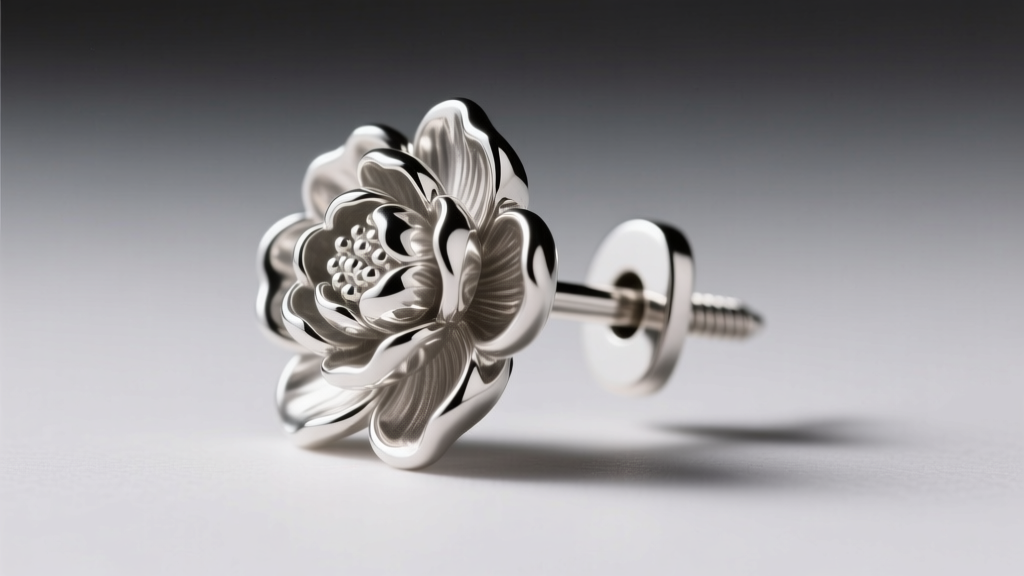
An often-overlooked aspect of jewelry valuation is the hardware. Peony earrings, due to their intricate and sometimes heavy three-dimensional design, place unique stress on the earlobe. A poorly engineered post will cause the flower to droop awkwardly, ruining the visual impact and stretching the piercing over time.
Standard earring posts are typically 20-gauge (0.81mm thick). However, for a detailed peony design that weighs more than 3 grams, a 20-gauge post is insufficient. High-value manufacturers will upgrade to an 18-gauge (1.02mm) or even 16-gauge (1.29mm) post to provide structural rigidity. Additionally, evaluate the clutch (the earring back). Standard butterfly friction backs are prone to slipping off, especially with the added weight of floral motifs. Seek out peony earrings that feature screw-back clutches or silicone O-rings, which lock the heavy earring securely against the earlobe and prevent the dreaded 'droop'.
Pro-Tip for Maintenance: The deep crevices of peony petals are magnets for lotion buildup and dead skin cells. To maintain the value and brilliance of your earrings, soak them weekly in a solution of warm water and a few drops of mild, phosphate-free dish soap. Use a soft-bristled baby toothbrush to gently agitate the crevices, rinsing thoroughly and drying with a microfiber cloth to prevent water spots on the metal.
Final Verdict: Maximizing Your Investment
When shopping for peony earrings on a budget, your primary goal should be to avoid the 'fast-fashion trap' of hollow metals and glued components. By targeting the $60 to $120 price range, you unlock access to heavy gold vermeil, secure prong-set stones, and structurally sound 18-gauge hardware. True value in floral jewelry is not found in the cheapest option on the page, but in the piece that maintains its structural integrity, resists tarnish, and continues to capture the organic, ruffled beauty of the peony flower for years to come. Prioritize casting quality and metal thickness, and your budget will yield a timeless accessory that punches far above its weight class.


