Best Storage Earrings Organizers: 2026 Value Guide
Discover the best budget and premium storage earrings organizers in 2026. Compare anti-tarnish materials, pricing, and value for your jewelry collection.

The Hidden Cost of Poor Jewelry Organization
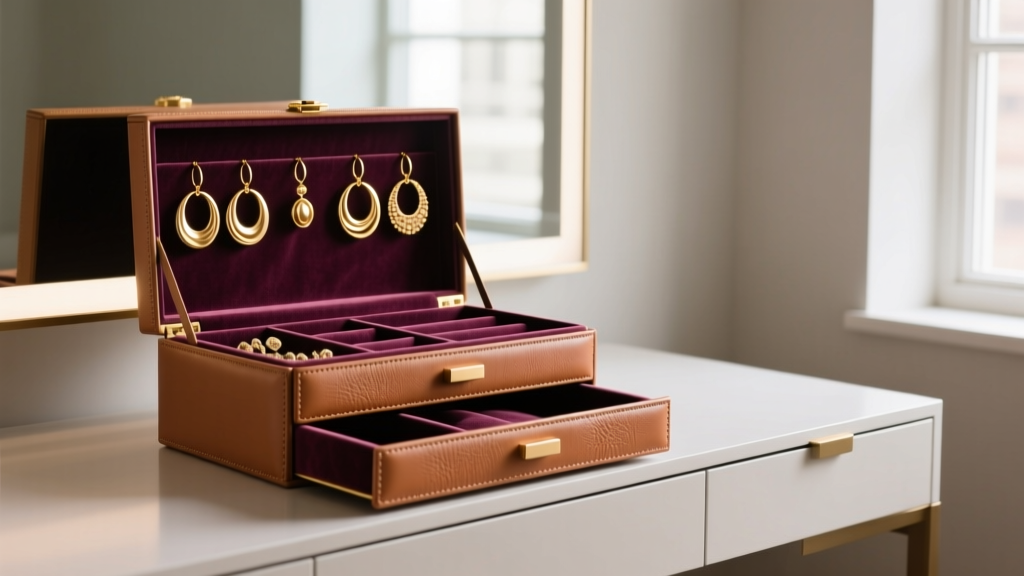
When building a comprehensive jewelry collection, dedicated storage earrings solutions are not merely an aesthetic afterthought—they are a critical component of asset preservation. In 2026, the market for jewelry organization has evolved significantly, moving beyond simple plastic boxes to highly engineered environments designed to mitigate oxidation, prevent physical abrasion, and maintain structural integrity. Whether you are managing a curated selection of solid 14k gold huggies or an extensive array of vintage silver dangles, evaluating the true value of storage earrings organizers requires looking past the exterior leather or acrylic and examining the material science within.
Many collectors make the expensive mistake of purchasing budget organizers that actively accelerate the degradation of their jewelry. According to the Gemological Institute of America (GIA), improper storage environments—particularly those utilizing certain synthetic plastics and unsealed woods—can off-gas chemicals that permanently cloud soft gemstones like pearls, opals, and turquoise. Furthermore, the Jewelers of America emphasizes that silver tarnish is primarily caused by hydrogen sulfide in the ambient air, meaning an organizer's ability to seal out or neutralize these compounds is the ultimate metric of its long-term value.
The Material Science of Tarnish and Degradation
To accurately assess budget versus premium storage earrings systems, we must first understand the materials lining the compartments. The interior fabric and structural plastics dictate the lifespan of your metals.
Anti-Tarnish Treated Flannel vs. Standard Velvet
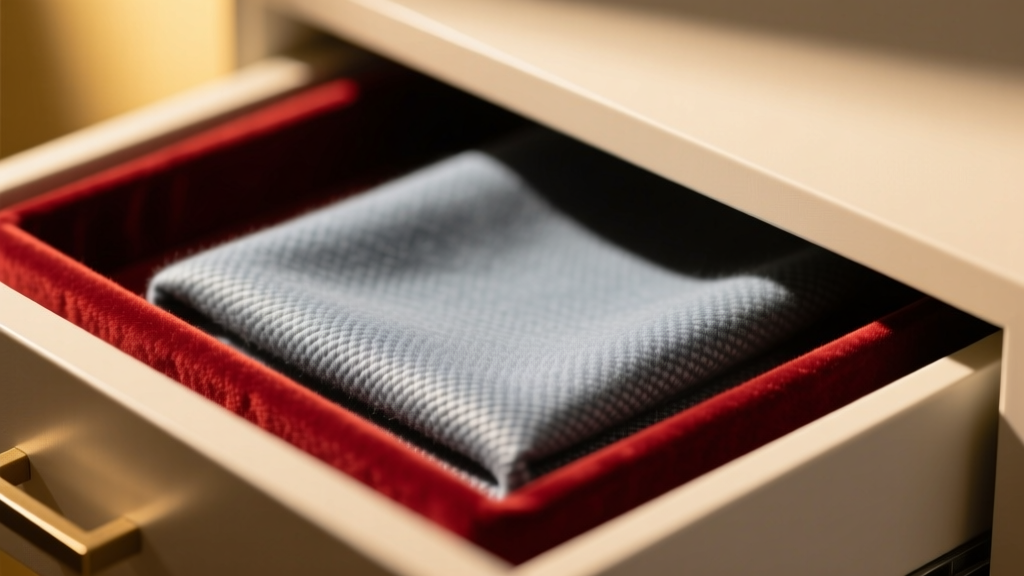
Standard velvet, while visually appealing, is essentially a dust trap that holds moisture and ambient pollutants against your metal. Premium storage earrings organizers utilize treated flannel, such as Pacific Silvercloth. This material embeds microscopic silver particles into the fabric weave. These particles act as a sacrificial anode, absorbing and neutralizing hydrogen sulfide before it can react with your actual jewelry. While standard velvet boxes might cost $20, a Silvercloth-lined drawer insert can cost $80, but the latter will save you hundreds of dollars in professional polishing and rhodium re-plating over a decade.
Plastics: Polyurethane vs. PVC and Acrylic
Budget organizers frequently use Polyvinyl Chloride (PVC) or low-grade extruded acrylic. PVC is notorious for off-gassing hydrogen chloride over time, which creates a highly corrosive micro-environment inside closed drawers. This is catastrophic for sterling silver and can cause pitting in lower-karat gold alloys. When evaluating clear acrylic storage earrings trays, always verify that the manufacturer uses cast, archival-safe acrylic or polyurethane, which remain chemically inert and will not leach plasticizers into your jewelry.
The Cost-Per-Slot Value Framework
Instead of looking at the total price tag, professional collectors use a "Cost-Per-Slot" (CPS) metric combined with a "Protection Multiplier." A $30 budget box with 60 slots offers a CPS of $0.50. However, if those slots lack individual dividers, your diamond studs will scratch your gold hoops, negating any perceived value. A $150 premium organizer with 50 individual, velvet-flocked, anti-tarnish slots yields a CPS of $3.00, but offers a Protection Multiplier that preserves the resale and intrinsic value of the pieces.
| Tier | Material Composition | Avg. Price Range | Cost-Per-Slot | Best For |
|---|---|---|---|---|
| Budget | PU Leather, Extruded Acrylic, Standard Felt | $15 - $35 | $0.30 - $0.75 | Fashion jewelry, stainless steel, high-karat gold (tarnish-resistant) |
| Mid-Tier | Cast Acrylic, Treated Flannel, Suede Inserts | $50 - $120 | $1.00 - $2.50 | Sterling silver, semi-precious stones, everyday solid gold pieces |
| Premium | Hardwood, Pacific Silvercloth, Archival Polyurethane | $180 - $400+ | $3.00 - $6.00+ | Heirloom pieces, pearls, opals, high-value diamond/gemstone studs |
Matching Storage to Earring Anatomy and Gauge
A major failure point in generic storage earrings boxes is the "one-size-fits-all" hole punching. Earrings vary wildly in post thickness, hoop diameter, and center of gravity. An effective organizer must accommodate the specific anatomy of your collection.
Studs and the Post Gauge Problem
Standard earring posts are typically 20-gauge (0.81mm) or 18-gauge (1.02mm). However, many budget organizers use thick, rigid foam with pre-punched holes designed for 16-gauge (1.29mm) wires. Forcing a delicate 20-gauge white gold post through a tight, unyielding foam hole can bend the post or stress the solder joint connecting the post to the earring head. Premium storage earrings trays utilize soft, die-cut silicone or flocked sponge that yields to the exact gauge of the post without applying lateral pressure.
Hoops, Huggies, and Hanging Bars
For hoops and huggies, hanging storage is vastly superior to laying them flat, which can cause them to tangle and scratch. When evaluating hanging storage earrings cabinets, measure the diameter of the hanging bars. If the bar is thicker than 1.5mm, standard 16-gauge or 14-gauge clicker hoops will not close properly around it, forcing you to leave them partially open where they can easily snag and fall. Look for organizers with slim, 1mm to 1.2mm stainless steel hanging rods wrapped in anti-tarnish fabric.
Cartilage Cuffs and Threadless Ends
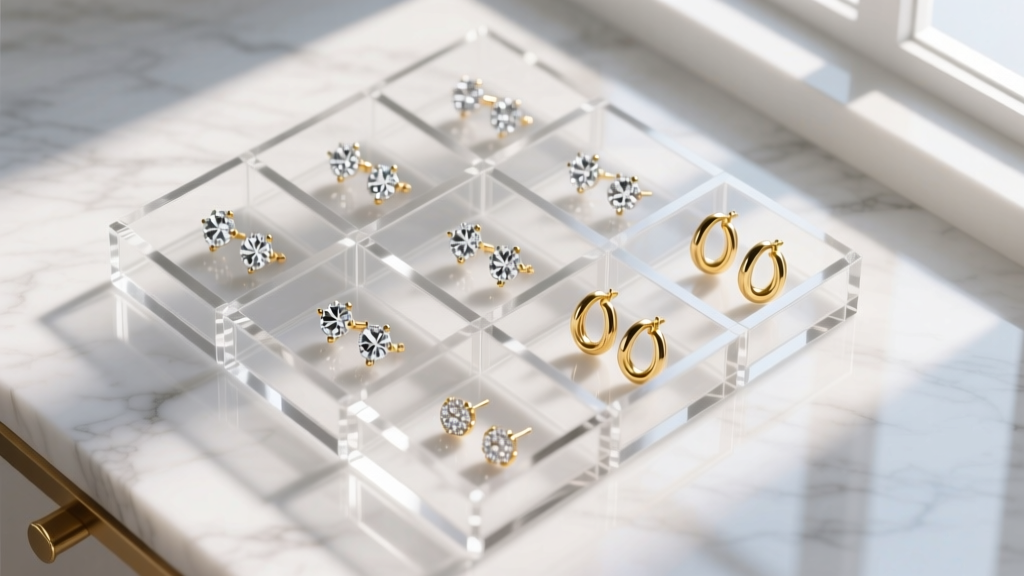
The rise of curated cartilage projects has introduced tiny, easily lost components like threadless ends, captive bead rings, and ear cuffs. Standard storage earrings boxes are useless for these 18-gauge and 16-gauge micro-components. The best value solution for cartilage jewelry is modular, multi-compartment acrylic inserts with snap-locking lids, originally designed for watchmakers and beaders. These prevent the "bounce-out" effect that occurs when opening a standard drawer.
Travel vs. Home Storage Earrings Solutions
Value assessment also depends heavily on use-case. Home storage earrings setups prioritize capacity and anti-tarnish environments, while travel setups must prioritize crush-resistance and secure locking mechanisms.
For travel, soft roll-up organizers offer poor structural protection. If a heavy toiletry bag is placed on top of a soft travel roll, the posts of your stud earrings will be driven into the backing, potentially bending them or cracking delicate gemstone settings. High-value travel organizers utilize hard-shell EVA (Ethylene Vinyl Acetate) foam encased in ballistic nylon. The EVA foam provides rigid crush protection, while the interior features a zippered mesh top layer that prevents earrings from falling out of their designated slots when the case is inverted in a suitcase.
Real-World Maintenance to Maximize Organizer Lifespan
Even the most expensive storage earrings organizer requires maintenance to retain its protective value. If you are using anti-tarnish strips (such as 3M copper-based polymer strips) inside your drawers, they must be replaced every 6 to 12 months. Once the copper polymer turns dark brown or black, it has reached its absorption capacity and will no longer protect your silver.
Expert Tip: Never store your jewelry in the bathroom. Even with premium storage earrings cabinets, the extreme fluctuations in humidity and the presence of aerosolized chemicals from hairsprays and perfumes will overwhelm anti-tarnish fabrics and accelerate the degradation of porous stones like malachite and turquoise.
Ultimately, assessing the budget and value of storage earrings systems comes down to calculating the replacement cost of your jewelry against the upfront cost of the organizer. Spending $150 on an archival-safe, Silvercloth-lined cabinet is a fractional premium when it guarantees the pristine condition of a $5,000 jewelry collection for decades to come. In 2026, smart collectors know that the box is just as important as the gold inside it.


