Wall Hanging Earring Holder: 2026 Budget & Value Guide
Assess the true value of a wall hanging earring holder in 2026. We break down material costs, weight limits, and ROI for serious jewelry collectors.

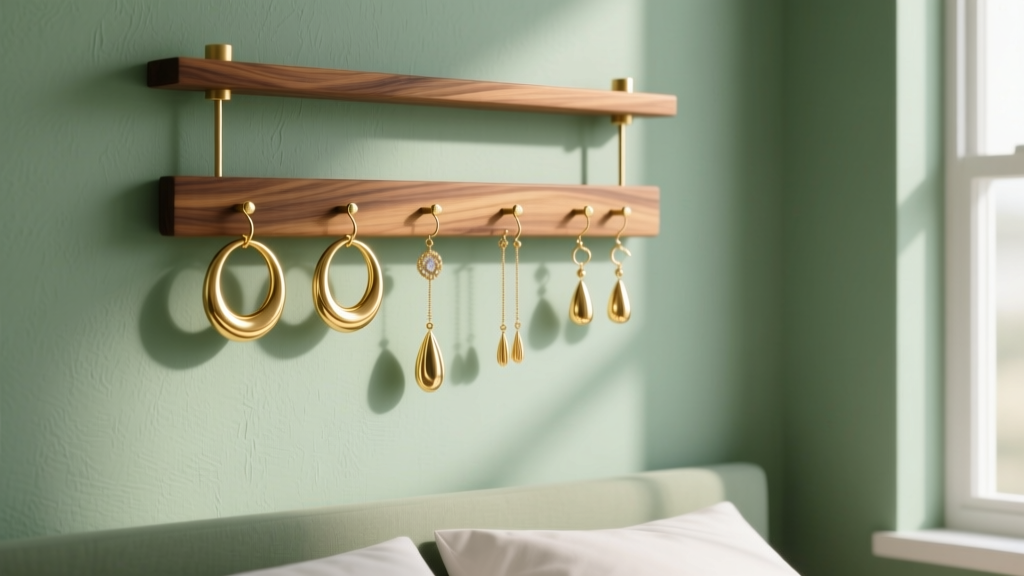
When building a curated earring collection, the transition from a traditional jewelry box to vertical storage is often inevitable. Drawer inserts cause chain tangling and hoop warping, while freestanding trees consume valuable dresser real estate. Enter the wall hanging earring holder—a space-saving solution that turns your accessories into functional art. But as collections grow to include heavy 18k gold vermeil hoops, solid brass dangles, and intricate enamel drops, the structural and financial viability of these organizers comes into question. In this 2026 budget and value assessment, we evaluate the true ROI of wall-mounted earring storage, breaking down material longevity, weight distribution physics, and hardware failure points to help you make a mathematically sound investment.
The Economics of Vertical Jewelry Storage
The primary value proposition of a wall hanging earring holder is spatial efficiency. By utilizing unused vertical airspace, you reclaim an average of 144 square inches of drawer or vanity space. For apartment dwellers or those with compact vanities, this spatial reclamation carries a tangible premium. However, the market is flooded with sub-$15 organizers made from low-density MDF (Medium-Density Fiberboard) and brittle acrylics that fail within 18 months. To assess true value, we must look beyond the initial purchase price and calculate the cost-per-year of ownership, factoring in material degradation, hardware replacement, and potential damage to your drywall or the earrings themselves.
Material Breakdown: What Are You Actually Paying For?
The lifespan of your organizer is dictated by its core material. According to market data from organization retailers like The Container Store, the shift toward sustainable, long-lasting materials has redefined the premium tier in 2026. Below is a value comparison of the most common materials used in vertical earring storage.
| Material Grade | Avg. Price Range | Expected Lifespan | Best Earring Type | Primary Drawback |
|---|---|---|---|---|
| High-Density MDF | $12 - $25 | 1 - 3 Years | Lightweight titanium studs, small huggies | Sagging under weight, moisture warping |
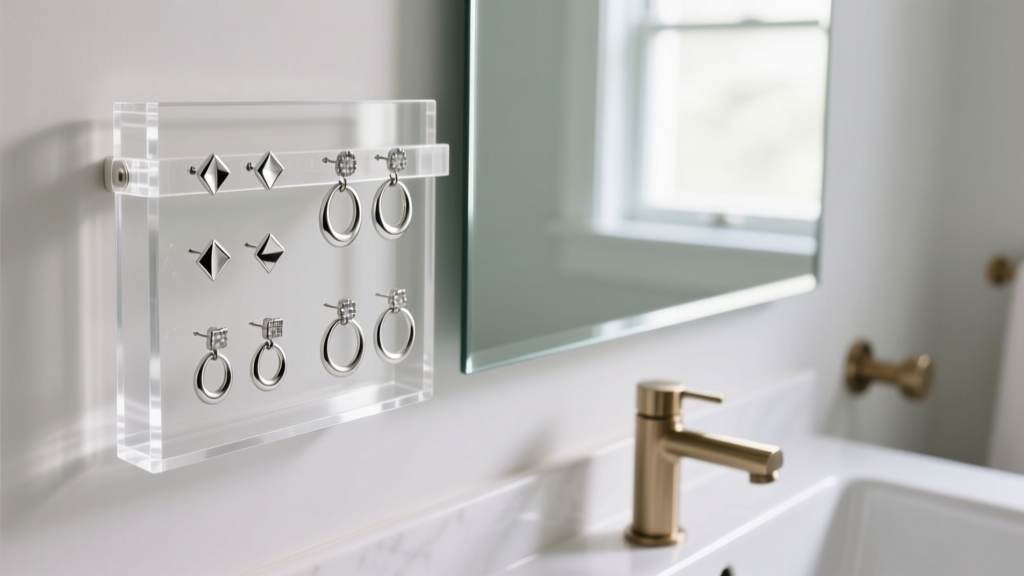
| Cast Acrylic (PMMA) | $20 - $45 | 2 - 5 Years | Silver minimalist pieces, clear gem drops | UV yellowing, micro-scratching |
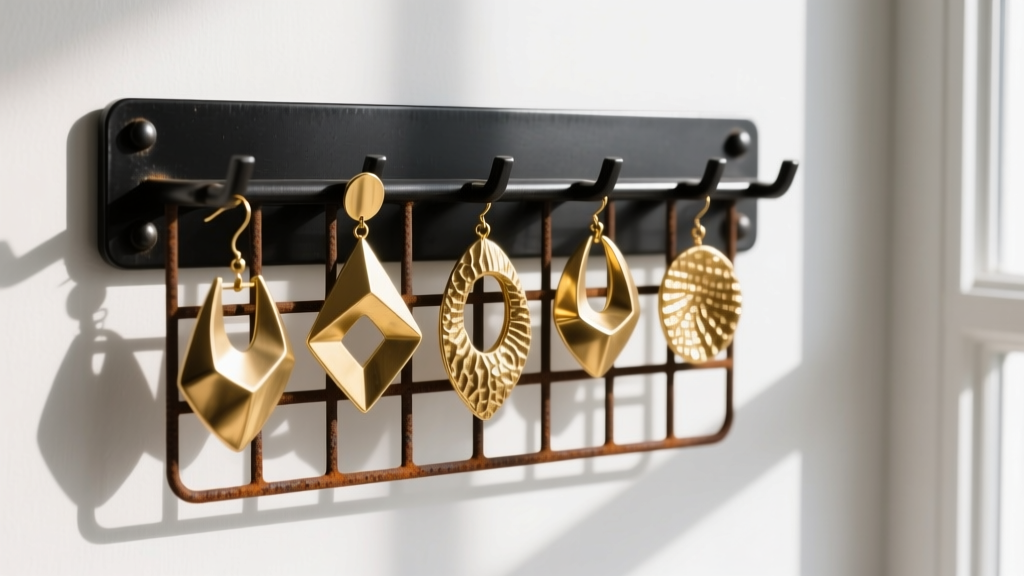
| Powder-Coated Steel | $35 - $65 | 10+ Years | Heavy brass statement pieces, large hoops | Requires heavy-duty drywall anchoring |
| Solid Hardwood (Walnut/Oak) | $55 - $120 | 20+ Years | All types, especially high-value gold pieces | High upfront cost, requires wood conditioning |
The Hidden Cost of Acrylic UV Yellowing
Acrylic wall hanging earring holders are incredibly popular for their modern, invisible aesthetic. However, budget acrylics lack UV stabilizers. If mounted near a sunlit window, cheap PMMA will undergo photo-oxidation, developing a cloudy yellow tint within 24 months. This not only ruins the aesthetic but makes it difficult to distinguish between yellow gold and rose gold pieces hanging on the display. If you opt for acrylic, ensure the product specifies 'UV-resistant cast acrylic' rather than extruded acrylic, which is far more prone to structural snapping when drilled or weighed down.
Weight Distribution and Hardware Failure Points
The most overlooked aspect of budget assessment is the physics of the mount. A collection of 50 pairs of solid brass or steel drop earrings can easily exceed 2.5 kilograms (5.5 lbs). When you factor in the dynamic load—the slight pulling and tugging when removing a stubborn earring back—the sheer force exerted on the mounting points is significant. Budget organizers often include cheap, hollow plastic expansion anchors that strip out of standard 1/2-inch drywall within weeks. The Gemological Institute of America (GIA) notes that improper storage and handling are leading causes of jewelry damage; a falling organizer can easily bend the posts of delicate gold studs or shatter enamel accents on impact.
Mounting Hardware Reality Check
To ensure your wall hanging earring holder remains secure, discard the included hardware and invest in proper anchors based on your wall type:
- Standard Drywall (Static Load < 10 lbs): Use threaded zinc drywall anchors (often called 'toggle bolts' or 'E-Z Ancors'). They provide a wide grip inside the wall cavity.
- Heavy Collections (Load > 15 lbs): You must locate wooden wall studs using a magnetic or electronic stud finder and mount the bracket directly into the wood using #8 or #10 wood screws.
- Plaster or Masonry: Require pre-drilling with a masonry bit and the insertion of ribbed plastic or lead anchors before driving the screw.
- Adhesive Strips (The Rental Trap): While 3M Command Strips are marketed for damage-free mounting, their adhesive degrades over time due to humidity and the constant micro-vibrations of hanging jewelry. Never use adhesive strips for metal or wood organizers holding more than 15 pairs of earrings.
Cost-Per-Use Analysis for Earring Collectors
Let us apply a cost-per-use (CPU) framework to evaluate value. Suppose you wear earrings daily and interact with your organizer 365 times a year. A $15 MDF board that sags, chips, and requires replacement after 1.5 years (547 uses) yields a CPU of $0.027 per use, but incurs the hidden cost of drywall repair and frustration. Conversely, a $75 solid walnut wall hanging earring holder with brass mounting brackets, lasting a conservative 15 years (5,475 uses), drops the CPU to $0.013 per use. The premium option is mathematically cheaper over time, while also protecting high-value jewelry from bending posts or scratching against deteriorating synthetic materials.
Final Verdict: Budget vs. Premium
If your collection consists primarily of lightweight titanium studs, thin silver huggies, and hollow resin dangles, a mid-tier powder-coated metal grid ($35) offers the best balance of budget and structural integrity. However, if you invest in heavy 14k gold-filled hoops, solid brass geometric shapes, or delicate gemstone drops, the budget tier is a liability. For serious collectors, a solid hardwood or heavy-gauge steel wall hanging earring holder is not just an organizational tool; it is a structural necessity that protects your jewelry investment, preserves your drywall, and ultimately delivers superior long-term value.


