Bullet Hits The Bone Golden Earring Care & Cleaning Guide
Learn expert care, cleaning, and maintenance tips for your bullet hits the bone golden earring to keep cartilage piercings healthy and gold radiant.

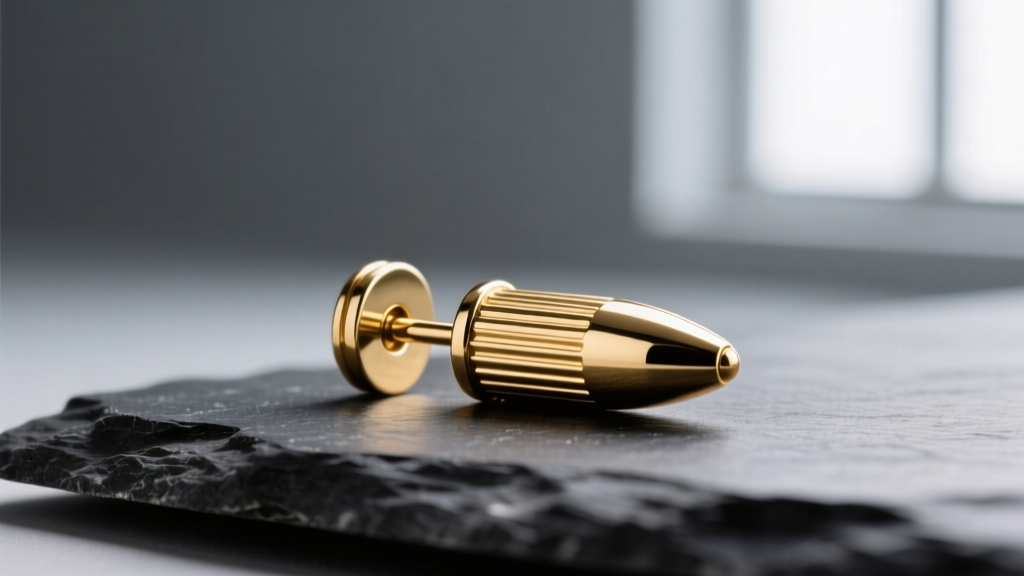
The bullet hits the bone golden earring is more than just a striking piece of body jewelry; it is a structural statement that demands meticulous care. Whether worn as a daith clicker, a rook barbell, or an intricate conch cuff, the bold 'bullet' motif combined with high-karat gold creates unique maintenance challenges. Cartilage piercings are notoriously slow to heal and prone to irritation, while the textured grooves of a bullet-shaped design can easily trap sebum, dead skin cells, and environmental debris.
In this comprehensive 2026 guide, we break down the exact material science, daily maintenance routines, and deep-cleaning protocols required to keep your gold radiant and your cartilage piercing completely healthy. By understanding the specific vulnerabilities of both your anatomy and your jewelry's alloy composition, you can prevent tarnish, avoid tissue trauma, and ensure your earring lasts a lifetime.
Material Science: 14k vs. 18k Gold in Cartilage
Before applying any cleaning solution, you must identify the gold purity of your bullet hits the bone golden earring. Pure 24k gold is entirely too soft for body jewelry, meaning your piece is alloyed with metals like copper, silver, or zinc to increase durability.
- 14k Gold (58.5% Pure): The industry standard for cartilage jewelry. It offers superior hardness, making the intricate 'bullet' threading and structural edges highly resistant to bending or micro-scratches. It is ideal for fresh piercings or high-friction areas.
- 18k Gold (75% Pure): Prized for its rich, warm color and higher biocompatibility (fewer alloy metals means a lower risk of nickel or copper allergies). However, 18k gold is softer. The tip of the bullet motif or the internal threading can wear down over time if subjected to aggressive polishing or forced insertion.
According to the Gemological Institute of America (GIA), the alloy metals in gold are what cause tarnish and discoloration, not the gold itself. Copper-rich alloys (often found in rose or lower-karat yellow gold) are highly susceptible to oxidation when exposed to the natural acidity of human sweat and sebum.
The 'Bullet' Crevices: Sebum and Keratin Management
The defining feature of this earring—its textured, bullet-like grooves and geometric angles—is also its biggest maintenance liability. The human ear naturally sheds keratin (dead skin cells) and produces sebum (oil). In a cartilage piercing, this mixture accumulates around the jewelry post and the decorative front.
When trapped in the crevices of a bullet design, this organic matter oxidizes and hardens, often resulting in a foul odor (colloquially known as 'ear cheese') and a dull, grayish film over the gold. Furthermore, hardened sebum acts as an abrasive; every time the earring moves against your cartilage, these microscopic particles can cause micro-tears in the fistula (the piercing channel), leading to hypertrophic scarring or irritation bumps.
Daily Maintenance Routine
For healed cartilage piercings, daily maintenance should be minimalist and non-invasive. The goal is to flush out daily debris without stripping the skin's natural moisture barrier or damaging the gold alloy.
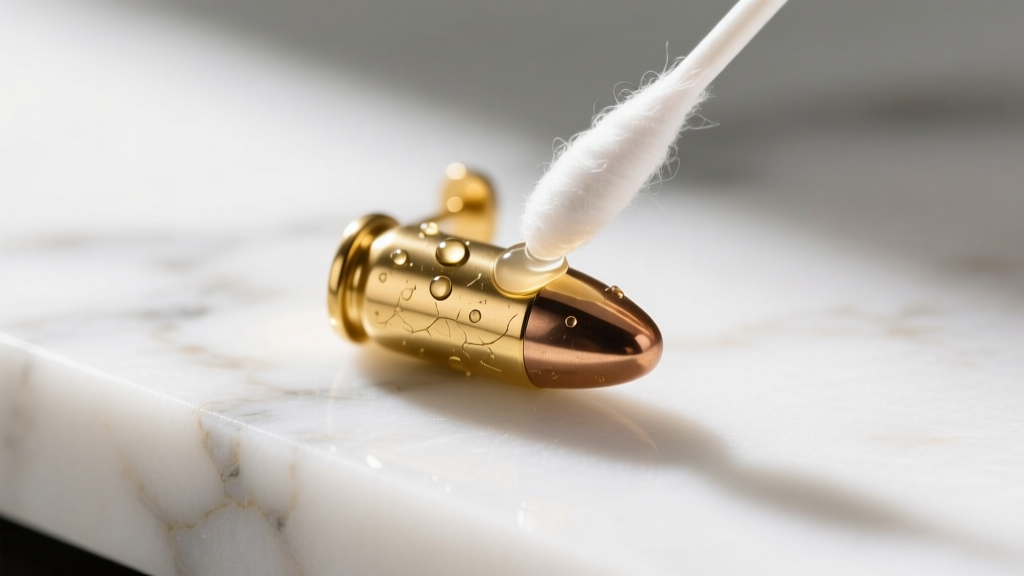
- Saline Flush: Spray a sterile, 0.9% sodium chloride wound wash directly onto the piercing site and the earring crevices. Avoid homemade salt solutions, as improper ratios can dehydrate the tissue.
- Drying Technique: Never use standard cotton balls or Q-tips. The loose cotton fibers will snag on the bullet's textured grooves and leave microscopic lint behind, which can embed in the piercing. Instead, use non-woven 4x4 gauze to gently pat the area dry.
- Airflow: If you shower with your earring in, ensure you rinse it thoroughly with warm water at the end of your shower to remove any shampoo or conditioner residue, which often contains sulfates that dull gold.
The Deep Cleaning Protocol
Every two to three weeks, your bullet hits the bone golden earring requires a deep clean to remove calcified sebum and restore the gold's luster. This must be done carefully to avoid damaging internal threading or loosening any inset gemstones.
What You Need
- Mild, fragrance-free liquid castile soap
- A soft-bristled baby toothbrush or a 0.4mm interdental brush
- A small bowl of warm distilled water
- Non-woven gauze pads
Step-by-Step Execution
Step 1: Wash your hands thoroughly with antibacterial soap. Remove the earring from your ear. If it features internal threading, unscrew it gently. If it is a clicker or hinged segment, pop the hinge open.
Step 2: Create a soapy bath by mixing a few drops of castile soap into the warm distilled water. Submerge the earring for exactly 3 to 5 minutes. This softens hardened keratin without the need for harsh chemicals.
Step 3: Using the 0.4mm interdental brush, gently sweep through the grooves of the bullet motif and the threading. The interdental brush is stiff enough to dislodge debris but soft enough not to scratch 14k or 18k gold.
Step 4: Rinse the earring under a steady stream of warm distilled water. Ensure no soap residue remains in the threading, as dried soap can cause the jewelry to seize up when you try to reinsert it.
Step 5: Pat completely dry with non-woven gauze before reinserting or storing.
Chemical Compatibility Matrix
Using the wrong chemicals will not only irritate your cartilage but can cause irreversible stress corrosion cracking in gold alloys. Refer to this matrix before applying any product near your jewelry.
| Chemical Agent | Safe for Gold? | Safe for Cartilage? | Verdict & Risks |
|---|---|---|---|
| Sterile Saline (0.9%) | Yes | Yes | Highly Recommended. The gold standard for daily flushing. |
| Rubbing Alcohol | No | No | Avoid. Dries out tissue and can degrade certain gold alloys over time. |
| Hydrogen Peroxide | No | No | Avoid. Destroys healthy cellular matrix and causes rapid oxidation of copper alloys. |
| Chlorine / Bleach | No | No | Extreme Danger. Causes stress corrosion cracking, making gold brittle and prone to snapping. |
| Ultrasonic Cleaners | Caution | N/A | Use with Caution. Safe for solid gold, but high-frequency vibrations can loosen inset gems or damage hinge mechanisms. |
Troubleshooting 'Hits the Bone' Cartilage Irritation
The phrase 'hits the bone' often refers to the deep, snug placement of cartilage jewelry against the ear's rigid structures, such as the daith or rook. Because cartilage is avascular (lacking direct blood supply), it relies on surrounding tissue for immune response and healing, making it highly susceptible to prolonged inflammation.
If you experience tenderness, heat, or an irritation bump near your bullet earring, evaluate the following mechanical factors:
- Post Length & Gauge: A standard cartilage piercing is usually 16-gauge (1.2mm) or 14-gauge (1.6mm). If your piercing was done at 16g but you are forcing a 14g bullet earring through the fistula, the micro-trauma will cause immediate swelling. Always match your jewelry gauge to your piercing needle size.
- Threading Type: Ensure your earring features internal threading (where the screw is on the post, and the hole is on the decorative bullet front). External threading acts like a cheese grater on the delicate fistula lining during insertion and removal.
- Pressure Necrosis: If the flat back of the earring is pressing too tightly against the back of your cartilage ridge, it can cut off localized circulation. According to the Association of Professional Piercers (APP), jewelry that is too tight can cause tissue necrosis and severe scarring. Visit a professional piercer to downsize the post length (e.g., from 8mm to 6mm) once initial swelling has subsided.
Long-Term Storage & Preservation
When you are not wearing your bullet hits the bone golden earring, proper storage is critical to prevent environmental tarnishing and physical damage.
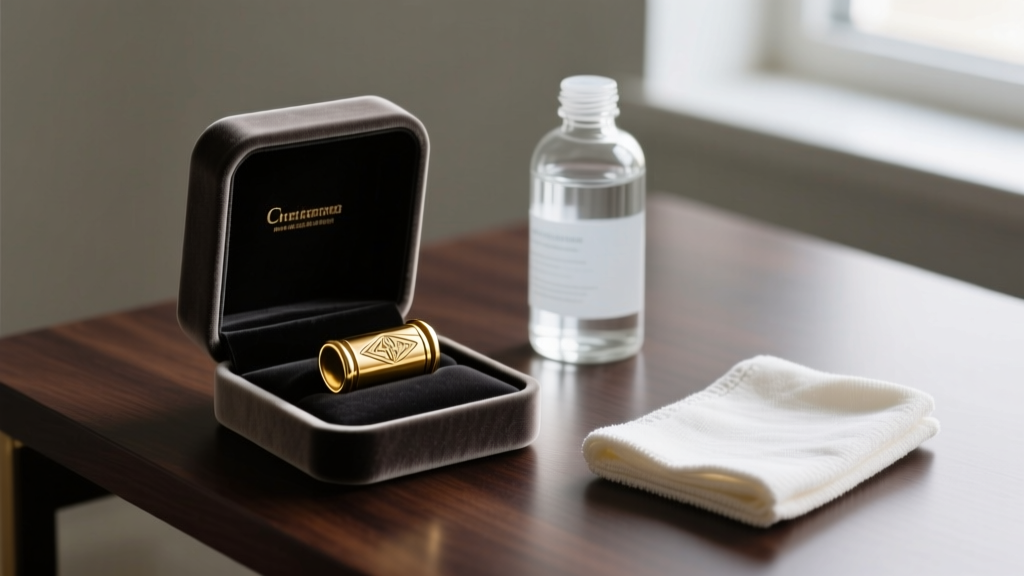
Never toss gold cartilage jewelry into a communal jewelry box where it can rub against harder gemstones like diamonds or sapphires, which will easily scratch the gold surface. Store the earring in an individual, anti-tarnish cloth pouch or a dedicated velvet-lined compartment. If you live in a high-humidity environment, place a small silica gel packet in your jewelry drawer to absorb ambient moisture, significantly slowing down the oxidation process of the alloy metals.
By adhering to these precise cleaning protocols and respecting the anatomical realities of cartilage piercings, your golden statement piece will remain as flawless and impactful as the day you first wore it.


