How to Buy Custom Earrings in Spanish: Step-by-Step Guide
Learn how to shop for, customize, and order earrings in Spanish. Master jewelry vocabulary, gauge conversions, and material terms.

Why Learning Jewelry Spanish Matters for Custom Orders
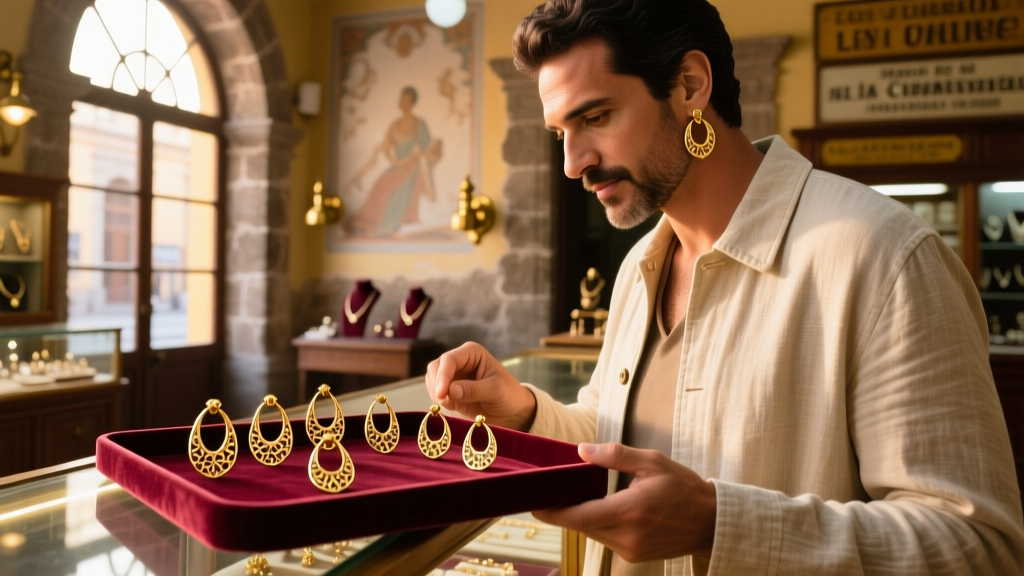
Whether you are navigating the bustling jewelry markets of Mexico City’s Centro Histórico, commissioning a bespoke piece in Bogotá, or shopping for fine jewelry in Madrid, knowing how to communicate your exact specifications is crucial. Direct translations often fail in the jewelry industry. A mistranslated term can lead to purchasing gold-plated brass instead of solid gold, or ending up with a 20-gauge wire when your cartilage piercing requires a 16-gauge post. This step-by-step guide bridges the gap between English and Spanish jewelry terminology, ensuring you get exactly what you want when ordering custom earrings abroad.
Step 1: Mastering Regional Earring Vocabulary
The Spanish language is rich with regional dialects, and jewelry terminology is no exception. The word for 'earring' changes depending on where you are, and specific styles have unique local names. Using the correct regional term builds immediate rapport with local jewelers (joyeros).
| English Term | Spain | Latin America (General) | Regional Specifics |
|---|---|---|---|
| Earrings (General) | Pendientes | Aretes | Arracadas (Mexico - large hoops) |
| Stud Earrings | Dormilonas / Puestos | Topos / Puestos | Chapas (Colombia - small studs) |
| Hoop Earrings | Aros / Pendientes de aro | Aros / Argollas | Arracadas (Mexico - thick/large hoops) |
| Huggies | Huggies / Aros pequeños | Huggies / Argollitas | Abrazadoras (Rare, but understood) |
| Ear Cuffs | Ear cuffs / Pendientes de cartílago | Ear cuffs / Aretes de cartílago | Pinzas (Slang for non-pierced cuffs) |
| Dangle / Drop | Pendientes colgantes | Aretes colgantes | Pomponas (Colombia - large statement drops) |
Step 2: Specifying Materials and Purity Grades
One of the most common and expensive mistakes travelers make is confusing solid gold with gold plating. In many Spanish-speaking countries, the visual difference between a high-quality gold plate and solid gold is indistinguishable to the untrained eye. You must use precise material terminology.
The Gold (Oro) Breakdown
- Oro Macizo / Oro Sólido: Solid gold. Always specify the karat: Oro de 14 quilates (14k) or Oro de 18 quilates (18k). Note that 18k is the standard for fine jewelry in Spain, while 14k is more common in Latin America for durable, everyday earrings.
- Baño de Oro: Gold plated. This is a thin layer of gold over a base metal. Avoid this for fresh piercings or sensitive ears.
- Chapa de Oro: Gold filled or rolled gold plate (common in Mexico). It has a much thicker layer of gold than standard plating and is a budget-friendly alternative to solid gold, but it is not solid gold.
For authoritative standards on gold purity and karat markings, always refer to the Gemological Institute of America (GIA) guidelines, which are recognized globally by reputable jewelers.
Silver (Plata) Specifications
Never just ask for plata. You must specify Plata de Ley 925 or Plata Sterling. If a jeweler offers you alpaca or plata alemana, politely decline; these are nickel-silver alloys that contain zero actual silver and will cause severe allergic reactions in fresh piercings.
Step 3: Navigating Gauge Sizes and Piercing Types
This is where E-E-A-T (Experience, Expertise, Authoritativeness, and Trustworthiness) becomes critical. The United States uses the American Wire Gauge (AWG) system for body jewelry. Spain and Latin America almost exclusively use the metric system (millimeters). If you ask a jeweler in Oaxaca for an '18-gauge' post, they will likely not understand you. You must convert your gauge to millimeters.
Gauge to Millimeter Conversion Chart
| US Gauge (AWG) | Metric (mm) | Common Earring Application |
|---|---|---|
| 20G | 0.81 mm | Standard lobe piercings, delicate nose studs |
| 18G | 1.02 mm | Standard lobe piercings, some cartilage |
| 16G | 1.29 mm | Cartilage, helix, tragus, conch |
| 14G | 1.63 mm | Industrial barbells, daith, rook |
When ordering, use this exact phrasing: 'Necesito el poste de 1.2 milímetros de grosor para el cartílago' (I need the post to be 1.2 millimeters thick for the cartilage). For more on international body jewelry sizing standards, consult the Association of Professional Piercers (APP).
Step 4: The Step-by-Step Script for the Joyero
When sitting down with a custom jeweler, structure your request logically: Style, Material, Dimensions, and Closure Type. Here is a proven script you can adapt.
You: 'Hola, quiero encargar unos aretes personalizados.' (Hello, I want to order some custom earrings.)
Jeweler: 'Claro, ¿qué estilo busca?' (Sure, what style are you looking for?)
You: 'Busco unos aros huggies de oro macizo de 14 quilates.' (I am looking for solid 14k gold huggie hoops.)
Jeweler: '¿Qué grosor y diámetro necesita?' (What thickness and diameter do you need?)
You: 'El diámetro interior debe ser de 10 milímetros, y el grosor del alambre de 1.2 milímetros para un piercing de cartílago.' (The inner diameter must be 10mm, and the wire thickness 1.2mm for a cartilage piercing.)
You: '¿Qué tipo de broche usan?' (What type of closure do you use?)
Jeweler: 'Podemos hacer bisagra con clic o rosca interna.' (We can do a hinged clicker or internal thread.)
You: 'Prefiero rosca interna para mayor seguridad. ¿Cuánto costaría y cuánto tiempo tarda?' (I prefer internal thread for security. How much would it cost and how long will it take?)
Step 5: Discussing Pricing, Timelines, and Aftercare
Custom jewelry pricing in Latin America can be significantly more accessible than in the US or Europe, provided you know how to negotiate and understand the cost breakdown. A custom pair of 14k solid gold huggies might cost between $150 and $300 USD in Mexico City, compared to $400+ in the US. However, always ask for the price breakdown: '¿Cuánto es por el oro y cuánto por la mano de obra?' (How much is for the gold and how much for the labor?).
Crucial Aftercare Vocabulary
If you are getting pierced at the shop or need advice on cleaning your new custom pieces, you must understand aftercare instructions in Spanish:
- Solución salina estéril: Sterile saline solution (the only recommended cleaner for fresh piercings).
- Jabón antibacterial: Antibacterial soap (sometimes recommended for healed lobe piercings, but avoid for cartilage).
- No tocar con las manos sucias: Do not touch with dirty hands.
- Evitar albercas y mar: Avoid swimming pools and the ocean (crucial advice for travelers in coastal towns like Tulum or Cancún).
- Enrojecimiento o pus: Redness or pus (signs of infection; seek a médico or professional piercer immediately).
Troubleshooting Common Miscommunications
Even with preparation, miscommunications happen. Here is how to troubleshoot the most frequent issues:
- The 'Oro' Bait-and-Switch: If the final price seems too good to be true for solid gold, the jeweler may have used baño de oro. Always ask for a written receipt (recibo) that explicitly states Oro Macizo 14k or 18k. Reputable jewelers will stamp the piece with a hallmark (sello de pureza).
- The Post Length Issue: Standard lobe posts are usually 6mm to 8mm. If you have thick earlobes or a fresh, swollen piercing, you must ask for a longer post: 'Necesito un poste más largo, de 8 o 10 milímetros, para la inflamación inicial' (I need a longer post, 8 or 10mm, for initial swelling).
- Thread Types: Avoid external threads (rosca externa), which can tear the fistula upon insertion. Insist on internal threads (rosca interna) or threadless push-pins (pasador sin rosca).
Final Thoughts on Cross-Border Jewelry Shopping
Ordering custom earrings in Spanish is an incredibly rewarding experience that connects you directly with master artisans. By mastering the metric conversions, understanding regional dialects, and strictly defining your material requirements, you eliminate the risk of costly mistakes. Keep this guide handy on your phone, practice your pronunciation of rosca interna and plata de ley 925, and enjoy the process of bringing your dream earrings to life.


