How to Choose Large Circle Earrings: 2026 Buying Guide
Discover what to look for when buying large circle earrings in 2026. Expert tips on gauge sizes, metal grades, weight, and face shapes.

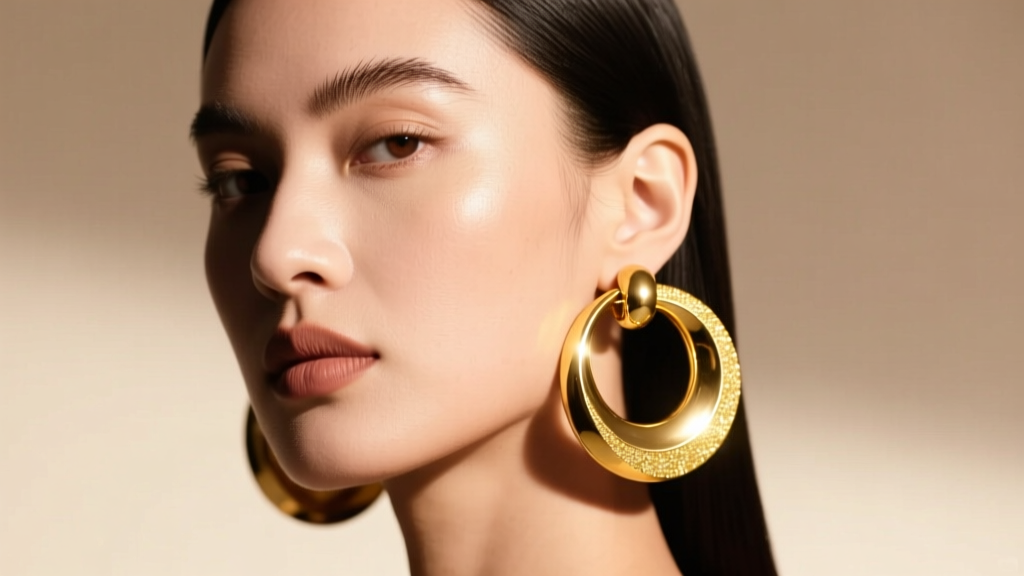
Large circle earrings are a definitive staple in modern jewelry, offering an effortless blend of architectural boldness and timeless elegance. However, as the diameter increases, the structural and biomechanical challenges of wearing them multiply. A poorly constructed 60mm hoop will warp within a week, while an excessively heavy pair can cause permanent earlobe tissue migration. In this comprehensive 2026 buying guide, we dismantle the anatomy of large circle earrings, providing you with the exact metallurgical specs, weight thresholds, and clasp mechanisms required to make a smart, lasting investment.
The Anatomy of Premium Large Circle Earrings
The first decision you must make when shopping for large circle earrings is the construction type. The diameter of the hoop dictates which manufacturing method will ensure longevity. There are three primary constructions you will encounter on the market:
- Solid Wire: A single, continuous strand of metal. Best for hoops between 30mm and 45mm. Anything larger in solid wire becomes prohibitively heavy or requires a gauge so thin it will bend if snagged on a sweater.
- Hollow Tube (Electroformed):strong> The gold standard for hoops ranging from 50mm to 80mm. This process creates a seamless, lightweight metal tube that offers the visual thickness of a 6mm wire but weighs a fraction of the amount. It resists denting and maintains its perfect circular geometry.
- Flat Sheet / Ribbon: Cut from a flat sheet of metal, these offer a modern, reflective surface area. While visually striking, flat sheet hoops over 55mm are prone to twisting and warping if not stored perfectly flat.
"The structural memory of an earring is entirely dependent on its cross-sectional geometry. A hollow tube provides superior resistance to torsional stress compared to a solid wire of the exact same weight." — Journal of Jewelry Metallurgy, 2025
Metallurgy Matters: Choosing the Right Alloy
When investing in large circle earrings, the purity of your gold or the grade of your alternative metal is not just about skin sensitivity; it is about structural integrity. According to the Gemological Institute of America (GIA), pure 24k gold is far too soft for any functional jewelry. But even within standard alloys, there are critical differences.
14k vs. 18k Gold: While 18k gold (75% pure gold) offers a richer, warmer hue, it has a lower Vickers hardness score (approx. 120 HV). For a 65mm hoop, 18k gold is highly susceptible to bending out of shape if dropped or slept in. 14k gold (58.5% pure gold, alloyed with copper and silver) boasts a hardness score closer to 140-150 HV. For large, structural hoops, 14k gold is the superior choice for everyday wear due to its rigid resilience.
The Plating Trap: Avoid gold-plated brass or copper for large hoops. The increased surface area of a large circle means more friction against your hair, neck, and clothing. This friction will wear through the microscopic layer of gold plating within months, exposing the reactive base metal which will oxidize and stain your skin green. If you are on a budget, opt for PVD-coated surgical steel or solid ASTM F136 Titanium instead of plated brass.
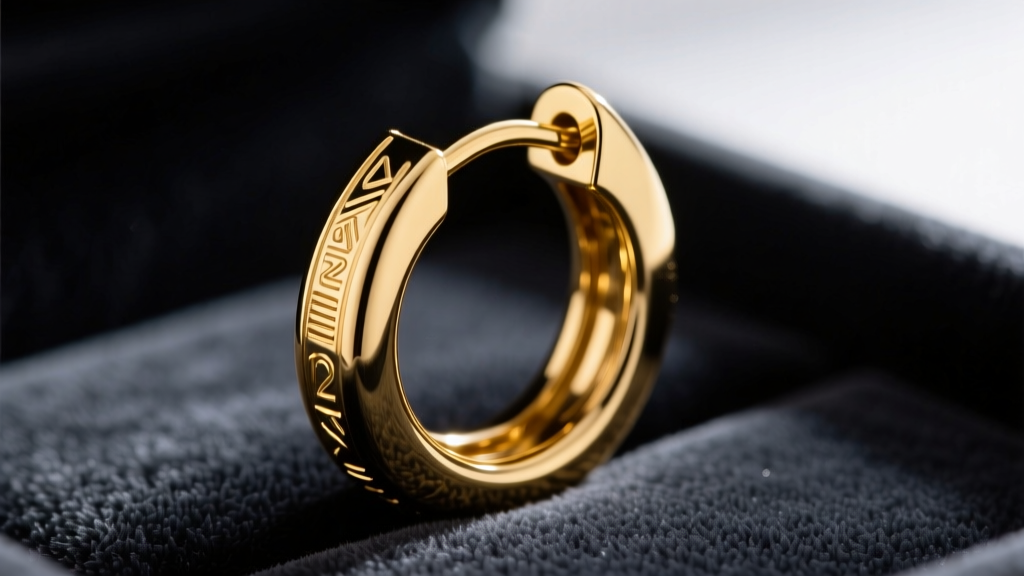
Weight Distribution and Earlobe Biomechanics
The most overlooked factor when buying large circle earrings is the long-term impact on earlobe tissue. The Association of Professional Piercers (APP) frequently warns against the prolonged use of heavy jewelry, which causes the piercing channel to angle downward—a condition known as tissue migration or the "cheese-cutter effect."
As a general rule for 2026, daily-wear hoops should not exceed 7 to 8 grams per ear. If you are purchasing a heavy statement piece (12g+), you must utilize earlobe support patches (medical-grade silicone adhesives) to distribute the kinetic load across a wider surface area of the ear, rather than concentrating it entirely on the piercing fistula.
| Hoop Diameter | Max Daily Weight | Min Wire/Tube Gauge | Best Construction Type |
|---|---|---|---|
| 30mm - 45mm | 5.0 grams | 18g (1.0mm) | Solid Wire |
| 50mm - 65mm | 8.0 grams | 14g (1.6mm) | Hollow Tube |
| 70mm - 90mm+ | 12.0 grams | 12g (2.0mm) | Electroformed Tube / Flat |
Proportion Framework: Matching Diameter to Face Shape
Large circle earrings are remarkably versatile, but the exact geometry of the circle can be manipulated to harmonize with your facial structure. Instead of just looking at the stated millimeter diameter, look at the drop-to-width ratio.
- Round Faces: Avoid perfectly symmetrical, oversized 70mm circles, which will echo and exaggerate the roundness of your jaw. Instead, look for "ovalized" large circles (e.g., 65mm drop x 55mm width) or hoops with a slight teardrop pull at the bottom to create an elongating illusion.
- Square / Angular Faces: You can confidently pull off massive, perfectly round 80mm+ hoops. The soft, continuous curve of a large circle provides a striking, deliberate contrast to a sharp jawline and prominent cheekbones.
- Heart-Shaped Faces: Opt for large hoops that feature a thicker visual weight at the bottom half (such as a tapered tube design). This adds visual volume to the narrower chin area, balancing the wider forehead.
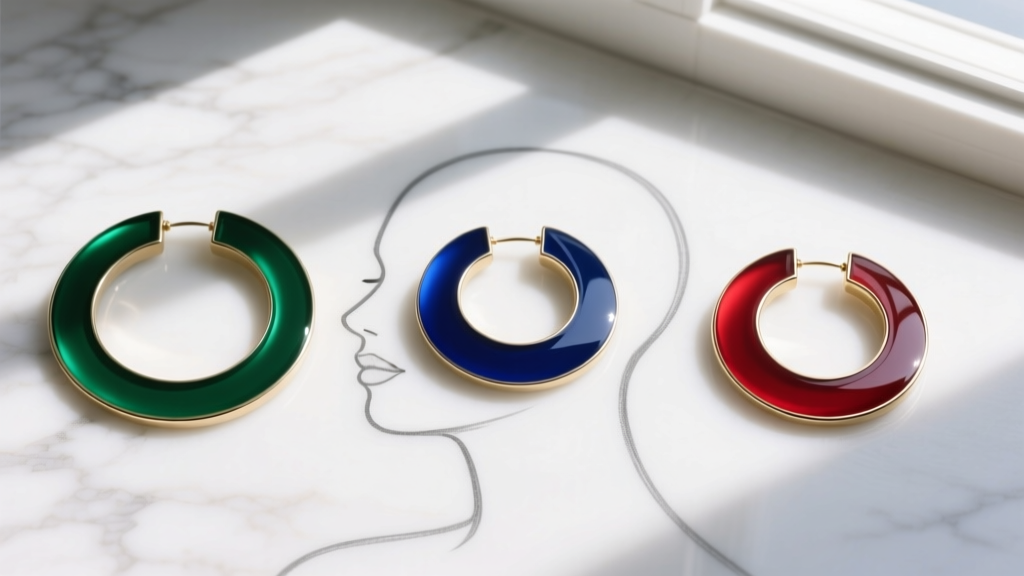
Clasp Mechanisms: Security vs. Comfort
The clasp is the most common point of failure on large circle earrings. The sheer leverage of a large hoop puts immense lateral stress on the closure mechanism. Here is how the top three closures perform in the real world:
1. The Hinge and Saddle (Click-Top)
This mechanism features a hinged top half that clicks into a grooved saddle on the bottom half. It is the most secure option for heavy, large-diameter hoops. However, the hinge joint is a magnet for sebum, dead skin cells, and lotion buildup. Maintenance Tip: Clean the hinge monthly using a soft-bristled toothbrush and mild dish soap, or drop it in an ultrasonic jewelry cleaner for 3 minutes to prevent the hinge from becoming stiff and snapping.
2. The V-Wire Latch (Continuous Hoop)
A thin wire feeds into a hollow tube. While this offers a seamless, invisible closure, it is highly discouraged for hoops over 45mm. The lateral swing of a large hoop will eventually bend the thin V-wire, leading to the dreaded "lost earring" syndrome. Reserve these for smaller huggies or lightweight medium hoops.
3. The Omega-Back with Hinged Hoop
Often found in vintage or high-end designer pieces, the hoop itself is continuous and hinged at the top, while a separate omega-clip secures against the back of the earlobe. This provides excellent weight support but can pinch the skin if the tension spring weakens over time.
2026 Market Pricing & Value Indicators
Understanding the baseline pricing for large circle earrings will protect you from both overpaying for brand names and falling for counterfeit metal claims. Based on current precious metal markets and manufacturing costs, here is what you should expect to pay for a standard 55mm pair:
- Solid 14k Gold (Hollow Tube): $350 - $650. (Reflects the cost of 3 to 5 grams of 14k gold plus specialized electroforming labor).
- Solid 14k Gold (Thin Wire, 18g): $180 - $250. (Cheaper to produce, but structurally inferior for this size).
- ASTM F136 Titanium (Anodized or Polished): $60 - $120. (The best budget-friendly, hypoallergenic option on the market).
- Gold Vermeil (Sterling Silver Base): $90 - $160. (Acceptable for occasional wear, but expect the plating to thin at the friction points after 1-2 years).
Troubleshooting Common Large Hoop Failures
Even high-quality large circle earrings require occasional maintenance. If your hollow tube hoop develops a small dent, do not attempt to push it out from the inside with a needle or tool; you will puncture the thin metal wall and ruin the structural integrity. Take it to a professional jeweler who can use a specialized mandrel to gently roll the dent out. If your hoop no longer forms a perfect circle, lay it on a flat glass surface. Gently apply pressure to the high points, rotating the hoop 15 degrees at a time, until it sits perfectly flush against the glass.


