The Beginner's Guide to Choosing Rose Gold Earrings Studs
Learn how to choose the perfect rose gold earrings studs. We cover karat differences, hypoallergenic alloys, gauge sizes, and pricing for beginners.

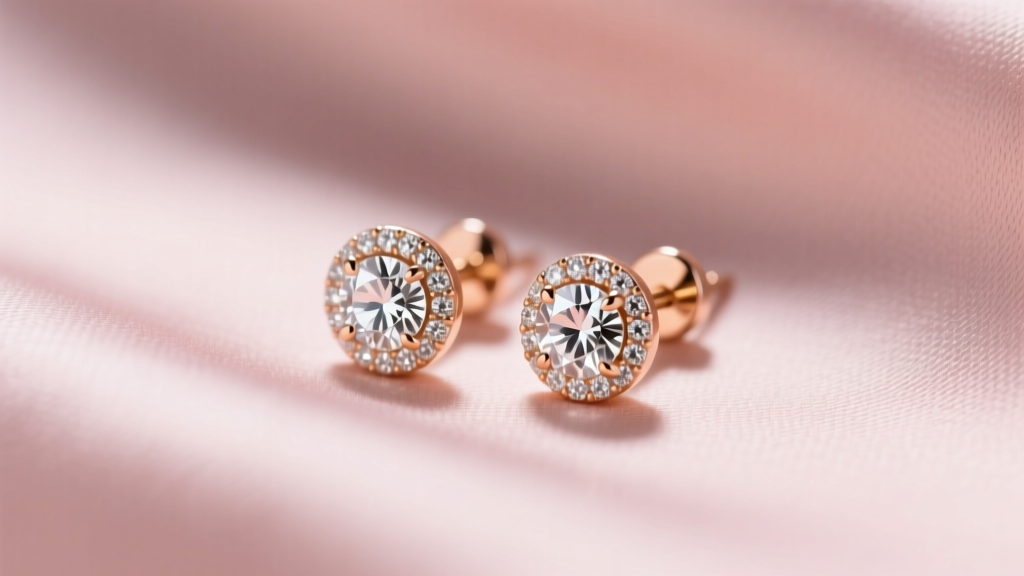
Understanding the Appeal of Rose Gold
When building a foundational jewelry collection, few pieces offer the versatile warmth and modern elegance of rose gold earrings studs. Unlike traditional yellow gold or stark white gold, rose gold features a romantic, coppery blush that flatters virtually every skin tone. For beginners navigating the jewelry market, however, the terminology surrounding gold alloys, karat weights, and piercing gauges can be overwhelming. This guide breaks down the exact metallurgy, sizing standards, and mechanical details you need to know before making your first purchase.
Unlike pure gold, which is naturally yellow and too soft for daily wear jewelry, rose gold is an alloy. It does not exist in nature. The signature pink hue is achieved by carefully blending pure gold with copper and, occasionally, small amounts of silver or zinc. Understanding this metallurgical reality is the first step toward buying high-quality studs that will not tarnish, bend, or irritate your skin.
The Metallurgy: What Makes Gold 'Rose'?
The color of rose gold is entirely dependent on its copper content. Copper is a highly durable, reddish-brown metal that strengthens the gold while imparting its distinct color. According to the Gemological Institute of America (GIA), the exact ratio of copper to gold dictates the depth of the pink hue. A higher copper percentage results in a deeper, more vibrant red-gold, while a lower percentage yields a softer, pastel pink.
However, copper is also a reactive metal. While it does not tarnish in the same way silver does, it can oxidize over time when exposed to sweat, lotions, and environmental acids, developing a subtle patina. This is why the karat weight—which determines the ratio of pure gold to copper—is critical for both the color and the long-term maintenance of your rose gold earrings studs.
Karat Guide: 10k vs 14k vs 18k
The term 'karat' (denoted as 'k') measures the purity of the gold alloy on a scale of 24. Pure gold is 24k, but it is far too malleable for earring posts. Here is how the most common karat weights compare specifically for rose gold alloys:
| Karat | Pure Gold % | Copper % | Silver/Zinc % | Durability | Avg. Price Range (Basic Studs) |
|---|---|---|---|---|---|
| 10k | 41.7% | ~45% | ~13.3% | Extremely High | $40 - $80 |
| 14k | 58.3% | ~31% | ~10.7% | High | $90 - $200 |
| 18k | 75.0% | ~22.25% | ~2.75% | Moderate | $180 - $400+ |
For most beginners, 14k rose gold is the optimal choice. It strikes the perfect balance between a rich, warm color, structural integrity for thin earring posts, and a relatively accessible price point. 18k rose gold offers a softer, more peach-pink hue and higher intrinsic value, but the posts are slightly more prone to bending if handled roughly.
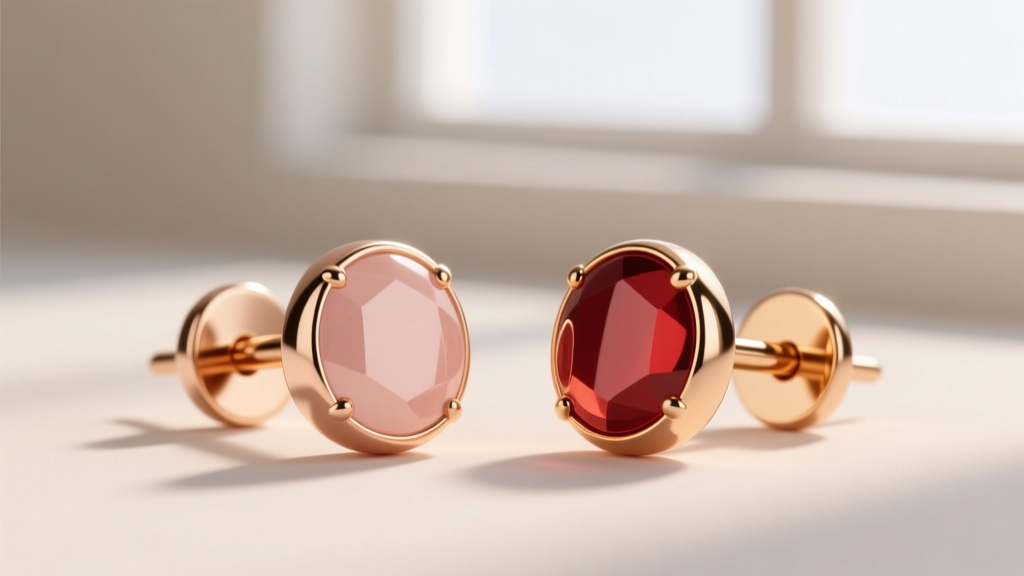
Hypoallergenic Concerns: Copper and Nickel
A common misconception is that rose gold is inherently hypoallergenic. While pure gold and silver are generally well-tolerated, copper can cause allergic contact dermatitis in a small percentage of the population. More importantly, cheap or poorly manufactured 10k and 14k alloys sometimes include trace amounts of nickel as a hardening agent or whitener for the silver component.
The American Academy of Dermatology (AAD) identifies nickel as the leading cause of metal allergies, affecting up to 10% of the population. If you have sensitive ears, you must specifically seek out jewelers who guarantee their rose gold alloys are 100% nickel-free. If you experience itching, redness, or flaking skin around your piercing after wearing new studs, remove them immediately and switch to implant-grade titanium or niobium until the tissue heals.
Expert Tip: If you love the look of rose gold but have severe metal sensitivities, look for 'rose gold vermeil' or 'rose gold PVD coating' over an implant-grade titanium base. This gives you the aesthetic of rose gold with the biocompatibility of medical-grade titanium.
Sizing and Gauge: Getting the Right Fit
Buying rose gold earrings studs requires understanding your specific piercing gauge (the thickness of the hole) and the required post length. Wearing a post that is too thin can lead to the 'cheese cutter effect,' where the thin metal slowly migrates through the tissue, while a post that is too short can cause the backing to embed into the skin, leading to infection.
- 20 Gauge (0.81mm): The standard for mall kiosk and piercing gun lobes. Very thin, often used for delicate, lightweight diamond or gemstone studs.
- 18 Gauge (1.02mm): A slightly thicker standard for earlobes, offering better structural support for heavier gold settings.
- 16 Gauge (1.29mm): The standard for professional needle piercings of the earlobe, as well as most cartilage piercings (helix, tragus, conch). If you are buying rose gold earrings studs for a cartilage piercing, 16g is usually required.
Post length is equally critical. Standard lobe posts are typically 6mm to 8mm long. Cartilage posts often require 6mm for healed piercings, but may need 8mm to 10mm if the tissue is still swollen or naturally thick.
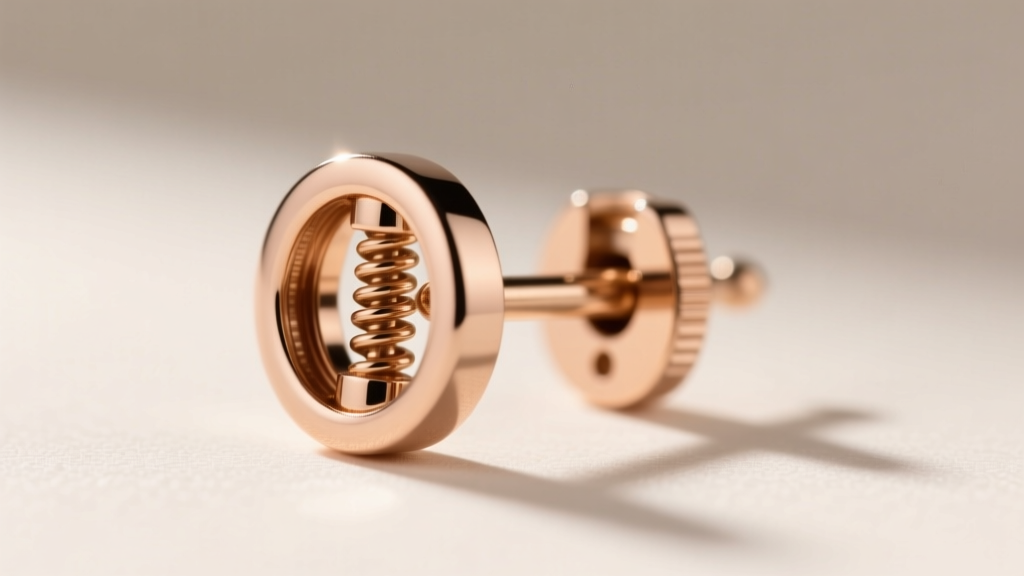
Clasp and Backing Mechanisms
The mechanism that secures your stud is just as important as the gold itself. The traditional 'butterfly' or 'friction' back is notorious for trapping dead skin cells, sebum, and bacteria against the earlobe, making it a poor choice for hygiene. When investing in quality rose gold earrings studs, consider upgrading the backing mechanism.
Screw-Backs
Screw-backs feature threaded posts that require you to twist the backing on. They are highly secure and prevent the earring from falling out during sleep or physical activity. However, cross-threading can easily strip the delicate gold threads, rendering the earring useless.
Threadless Flat-Backs (Push-Pin)
The modern gold standard for fine jewelry is the threadless flat-back system. The post is a hollow tube, and the earring front features a slightly bent pin that inserts into the tube. The tension of the bent pin holds the jewelry securely in place. Flat-backs sit flush against the ear, making them incredibly comfortable for sleeping, and they eliminate the bacteria traps associated with butterfly backs.
Care and Maintenance
To maintain the brilliant copper-pink finish of your rose gold earrings studs, establish a simple, non-abrasive cleaning routine. Avoid harsh chemical dips or ultrasonic cleaners if your studs feature porous gemstones like pearls, opals, or emeralds. Instead, use a few drops of mild, phosphate-free dish soap in warm water. Soak the studs for five minutes, gently agitate them with a soft-bristled baby toothbrush, and rinse thoroughly with distilled water. Dry completely with a lint-free microfiber cloth before storing them in a dry, airtight jewelry box to minimize exposure to ambient humidity.


