Can Earring Holes Close? Material Properties & Healing Guide
Discover if earring holes can close based on metal properties, gauge sizes, and tissue reactions. Expert guide on fistula elasticity and shrinkage.

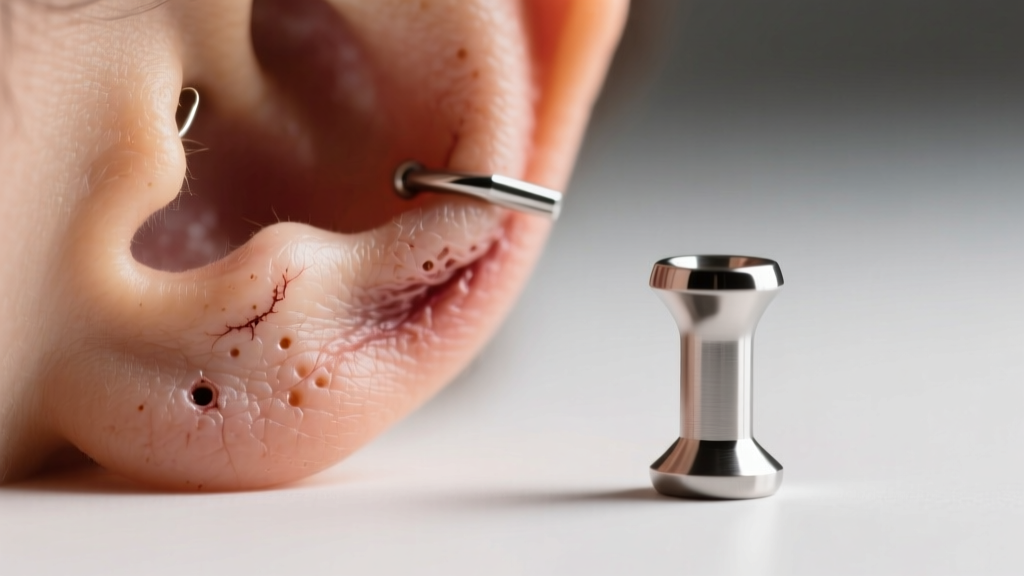
The Direct Answer: Can Earring Holes Close?
The question of whether earring holes can close is one of the most common concerns in body modification and jewelry styling. The short answer is yes, but with significant caveats. A piercing hole is not merely a puncture wound; it is a fistula—a structured tube of scar tissue that your body forms to protect the wound channel. Whether this fistula shrinks back to near-invisibility or remains a permanent divot depends heavily on three factors: the age of the piercing, the maximum gauge size it was stretched to, and, most crucially, the material properties of the jewelry worn throughout its lifespan.
As of 2026, advancements in metallurgical standards for body jewelry have given us a much clearer understanding of how different alloys interact with human tissue. The weight, stiffness, and allergenic profile of your earrings dictate the elasticity of your fistula. If you are wondering if your earring holes will close after removing your jewelry, you must first understand the material science governing your tissue's memory.
The Science of the Fistula: Why Material Matters
When you pierce an earlobe or cartilage, the body lines the channel with epithelial cells. Over time, this matures into a fistula. Healthy fistula tissue contains a balance of collagen (for structure) and elastin (for stretch and retraction). However, the jewelry material acts as a constant environmental stressor on this tissue.
Biocompatible materials, such as implant-grade titanium (ASTM F-136) or niobium, are entirely inert. They allow the fistula to develop a smooth, elastic lining. When jewelry made from these materials is removed, the elastin in the healthy tissue can contract, allowing standard 18-gauge (1.02mm) or 16-gauge (1.29mm) holes to shrink significantly, often becoming virtually invisible to the naked eye.
Conversely, porous or reactive metals disrupt this process. According to the Association of Professional Piercers (APP), materials with poor surface finishes or mixed alloys cause chronic micro-inflammation. This inflammation forces the body to lay down dense, rigid collagen fibers instead of elastic ones. A fistula lined with rigid scar tissue lacks the biological mechanism required to shrink and close.
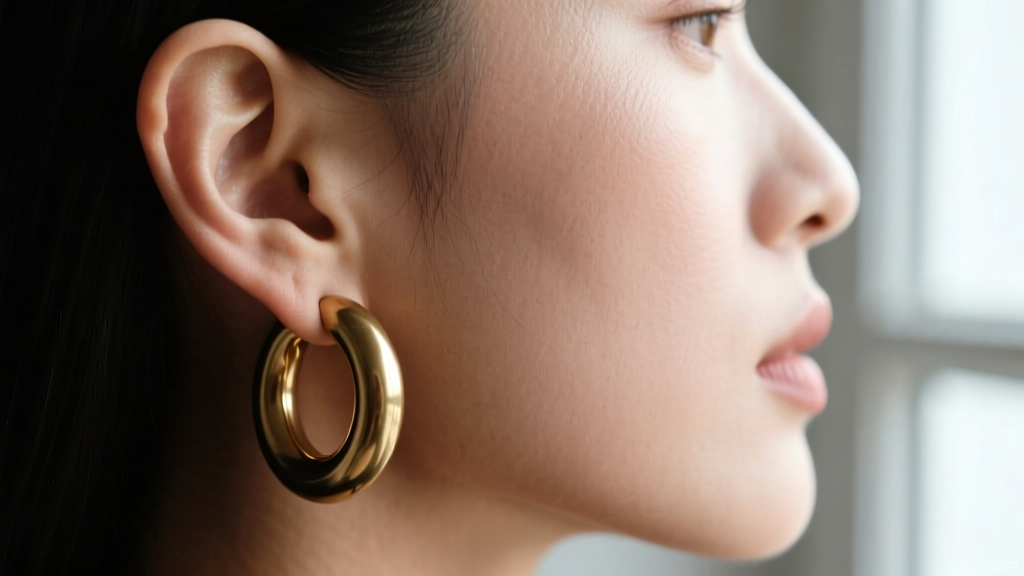
Material Density and Tensile Stress: The Sagging Effect
One of the most overlooked factors in hole closure is the physical density of the earring material. Heavy earrings cause chronic tensile stress on the lower wall of the piercing channel. Over years of wear, this stress causes migration—the slow tearing and stretching of the fistula downward. Once a hole migrates, the tissue is permanently thinned, and the hole will not close symmetrically; it will leave a visible slit or notch.
Understanding material density is critical if you want your holes to retain their elasticity and closure potential. Below is a comparison of common earring materials and their impact on tissue tension:
| Material | Density (g/cm³) | Tissue Impact | Closure Potential |
|---|---|---|---|
| Implant-Grade Titanium | 4.43 | Extremely lightweight; zero tensile drag on the fistula. | Excellent (for standard gauges) |
| 14k / 18k Solid Gold | 12.9 - 15.6 | Moderate to heavy; can cause slow migration in larger hoops. | Good (if worn in lightweight styles) |
| 316L Surgical Steel | 8.00 | Moderate weight; contains nickel which may cause rigid scarring. | Fair (highly dependent on allergy status) |
| Solid Brass / Bronze | 8.4 - 8.8 | Heavy and porous; causes oxidation and tissue dragging. | Poor (promotes permanent stretching) |
| Tungsten Carbide | 15.6 | Extremely heavy; high risk of rapid migration and tearing. | Very Poor |
If your goal is to eventually let your earring holes close, you must avoid high-density materials in large hoop or dangle styles. Opting for lightweight titanium or hollow glass retainers minimizes gravitational pull, preserving the structural integrity of the fistula's lower wall.
Allergenic Properties and Rigid Scar Tissue
Allergic contact dermatitis is the enemy of hole closure. Many commercial earrings are made from 316L surgical steel or silver alloys that contain trace amounts of nickel or copper. When these metals leach into the skin, the immune system triggers a localized inflammatory response.
Chronic inflammation leads to hypertrophic scarring. Unlike healthy fistula tissue, hypertrophic scars are dense, fibrotic, and entirely devoid of elastin. If you have spent years wearing reactive metals, your earring holes are likely lined with this rigid scar tissue. Even if you remove the jewelry, the fibrotic tube cannot contract. Furthermore, research published in the National Institutes of Health (NIH) highlights that prolonged nickel exposure from jewelry fundamentally alters local skin architecture, making spontaneous hole closure biologically impossible without surgical intervention.
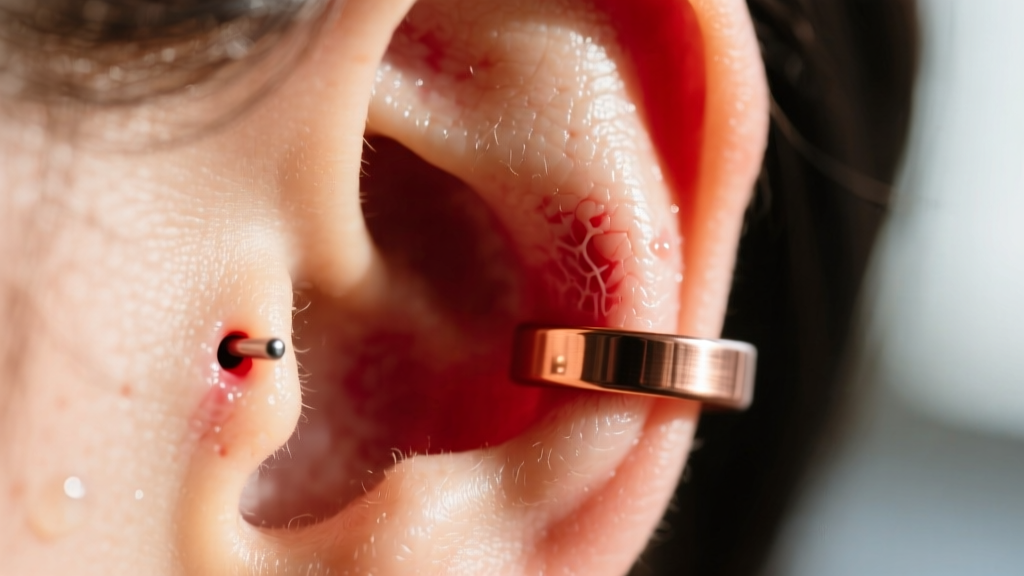
Cartilage vs. Lobe: Vascularity and Material Stiffness
The location of the piercing drastically alters how material properties affect closure. Earlobes are highly vascular, composed of soft adipose and connective tissue. They can tolerate a wider range of material stiffness and have a higher capacity for shrinking.
Cartilage, however, is avascular (lacks direct blood supply) and rigid. When you wear stiff, unyielding metals in cartilage piercings (like industrial bars or thick hoops), the metal forces the cartilage into unnatural angles. This creates pressure necrosis and permanent deformation of the cartilage matrix. If you remove a cartilage earring, the hole itself may shrink slightly on the surface, but the internal channel through the cartilage will almost never close completely. The rigid nature of both the metal and the cartilage ensures the tunnel remains permanently patent, often filling with dead skin cells and sebum if not cleaned regularly.
The Point of No Return: Gauge Size Thresholds
Material properties alone cannot overcome the physics of extreme stretching. The jewelry industry and professional piercers generally recognize a 'point of no return' for earring hole closure, which is heavily influenced by the stiffness of the stretching materials used.
- 20g (0.81mm) to 14g (1.6mm): Standard sizes. With biocompatible materials, these holes will shrink to near-invisibility upon removal.
- 12g (2.05mm) to 8g (3.2mm): The transitional zone. Holes will shrink significantly but will likely leave a small, visible divot. Using flexible glass or PTFE during the stretching phase preserves more tissue elasticity than rigid steel tapers.
- 6g (4.11mm) to 00g (10mm): The danger zone for permanent stretching. At these sizes, the skin's elastin network is microscopically torn. Even if you downsize, the hole will rarely close past an 8g or 6g.
- Above 00g: Surgical reconstruction is almost always required for full closure, regardless of the materials worn.
Actionable Protocol for Encouraging Hole Shrinkage
If you have decided to retire your stretched or standard piercings and want to maximize your chances of the holes closing, follow this material-based downsizing protocol:
- Purge Reactive Metals: Immediately remove any surgical steel, silver, brass, or copper jewelry. You must eliminate all sources of chronic inflammation to allow the tissue to soften.
- Switch to Borosilicate Glass: Glass is non-porous, perfectly smooth, and incredibly lightweight. Inserting glass plugs or retainers removes the weight burden from the fistula while keeping the channel open enough to allow the inside to heal from any micro-tears.
- Downsize in Single Steps: Do not jump from a 4g to an 18g. Step down one gauge at a time (e.g., 4g to 6g, wait 4 weeks; 6g to 8g, wait 4 weeks). This gradual reduction allows the collagen network to remodel slowly rather than collapsing into a hard, wrinkled scar.
- Massage with Vitamin E and Jojoba Oil: Once you reach standard sizes (16g or 18g) and remove the jewelry entirely, massage the lobes daily. This breaks up fibrotic adhesions and encourages blood flow, delivering the nutrients required for elastin production.
Final Thoughts on Jewelry and Tissue Memory
Ultimately, whether your earring holes can close is a direct reflection of how you treated the tissue over the years. By prioritizing lightweight, implant-grade materials and respecting the biological limits of your skin's elasticity, you preserve the fistula's ability to retract. Treat your earrings not just as aesthetic accessories, but as long-term implants that interact dynamically with your body's metallurgy and biology.


