Ultimate Care Guide for 2.5 Carat Diamond Earrings
Learn expert cleaning, maintenance, and storage tips to keep your 2.5 carat diamond earrings sparkling and secure for a lifetime of daily wear.

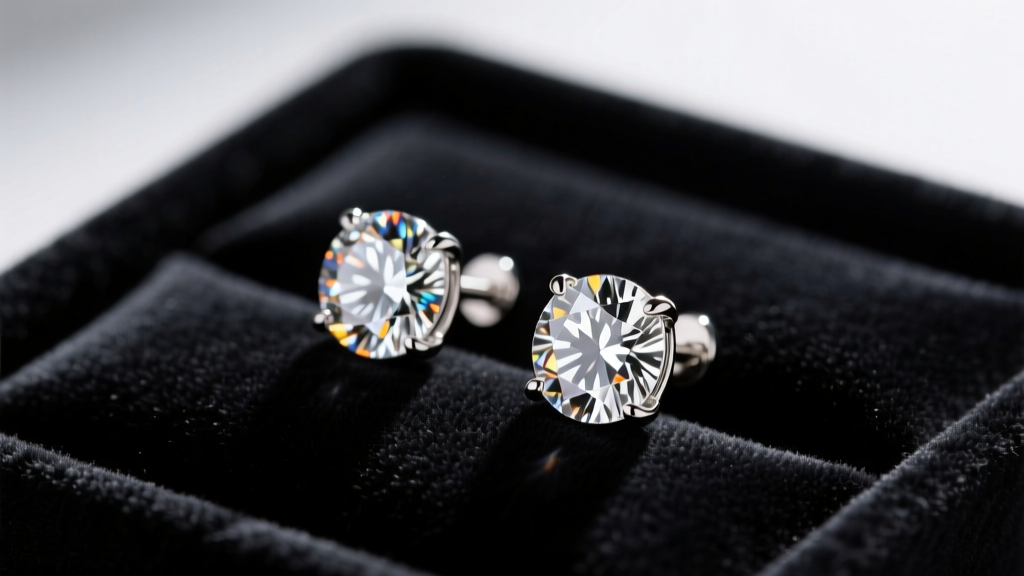
The Unique Physics and Chemistry of 2.5 Carat Diamonds
When you invest in 2.5 carat diamond earrings, you are typically acquiring a matched pair of 1.25-carat round brilliant stones. At this substantial size, the physical dynamics of the jewelry change dramatically compared to smaller 0.50-carat studs. A 1.25-carat diamond measures approximately 6.8mm in diameter and carries enough physical weight to cause the earring to droop on the earlobe. This drooping alters the angle of the basket, exposing the gallery and pavilion to an increased accumulation of hair products, dead skin cells, and sebum.
Furthermore, diamonds are naturally oleophilic (oil-attracting) and hydrophobic (water-repelling). According to the Gemological Institute of America (GIA), this chemical affinity means your 2.5 carat diamond earrings will act as magnets for facial oils, lotions, and airborne grease. When a microscopic layer of oil coats the pavilion facets, it disrupts total internal reflection, causing a brilliant stone to look cloudy and lifeless in a matter of days. Proper care is not just about aesthetics; it is about preserving the structural integrity of a high-value asset.
The Ultimate At-Home Cleaning Protocol
To maintain the optical performance of large-carat diamonds, you must establish a rigorous, safe cleaning routine. Avoid commercial jewelry dips that contain harsh chemicals like chlorine, which can degrade the alloy metals in your setting over time.
Step 1: The Distilled Water Soak
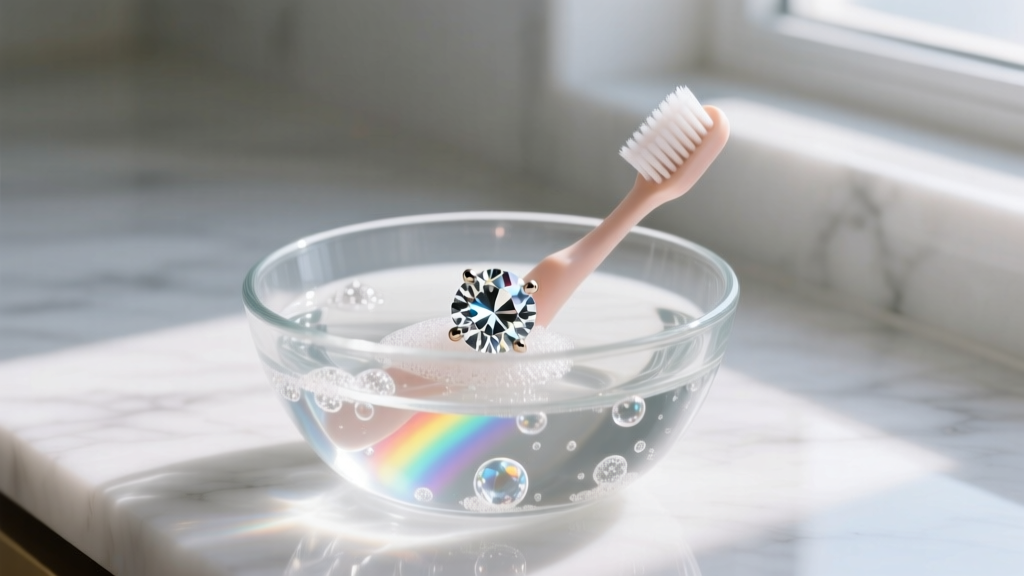
Never use tap water for soaking high-carat diamonds. Tap water contains dissolved calcium, magnesium, and fluoride, which can leave microscopic mineral deposits on the diamond's surface, creating a persistent film. Instead, mix one part mild, ammonia-free dish soap (like Dawn or a specialized gemological surfactant) with ten parts warm distilled water in a glass bowl. Allow the earrings to soak for 15 to 20 minutes. This loosens the lipid bonds holding skin oils to the stone without shocking the metal.
Step 2: Precision Brushing
After soaking, use an extra-soft baby toothbrush. Standard toothbrushes have bristles that are too stiff and can scratch the precious metal basket (especially if set in 18k yellow gold, which sits at a mere 2.5 on the Mohs hardness scale). Gently brush the crown and table, then flip the earring over. The culet and lower pavilion facets are where 90% of debris accumulates. Use gentle, circular motions to dislodge trapped particles from the gallery wires.
Step 3: The Drying Phase
Rinse the earrings under a gentle stream of distilled water. Do not use paper towels or cotton swabs to dry them, as these materials shed microscopic fibers that will snag on the prongs and wrap around the post. Instead, use a lint-free microfiber cloth, patting the stone dry, and finish with a blast of compressed air to remove moisture from beneath the setting.
Ultrasonic and Steam Cleaners: A Risk Assessment
Many owners of 2.5 carat diamond earrings assume that professional-grade ultrasonic and steam cleaners are the best at-home solutions. However, large stones carry unique geological risks. If your 1.25-carat diamonds have a clarity grade of SI1, SI2, or I1, they likely contain internal inclusions such as feathers or crystal cavities.
As noted by Jewelers of America, high-frequency vibrations from ultrasonic cleaners can cause existing internal fractures (feathers) to expand, potentially cleaving the diamond or causing it to shatter under stress.
| Cleaning Method | Safety for 1.25ct+ Stones | Best Use Case |
|---|---|---|
| Mild Soap & Distilled Water | 100% Safe (All Clarities) | Weekly maintenance and degreasing |
| Ultrasonic Cleaner | High Risk for SI1/I1 Clarities | Only for VVS/VS flawless stones |
| Steam Cleaner | Moderate Risk (Thermal Shock) | Final rinse by professionals only |
| Isopropyl Alcohol (90%+) | Safe for Diamonds, Risky for Alloys | Quick degreasing of the diamond table |
If your diamonds are graded VS2 or higher, an ultrasonic cleaner is generally safe, provided the setting is secure. However, for daily maintenance, the manual distilled water method remains the gold standard for preserving both the stone and the setting.
Prong Security and Earlobe Stress Management
The weight of 2.5 carat total weight earrings places significant mechanical stress on the earlobe and the setting's prongs. Over time, the natural friction of putting on and taking off the earrings, combined with the weight of the stone pulling downward, can cause prongs to lift or wear thin.
Martini vs. Crown Settings
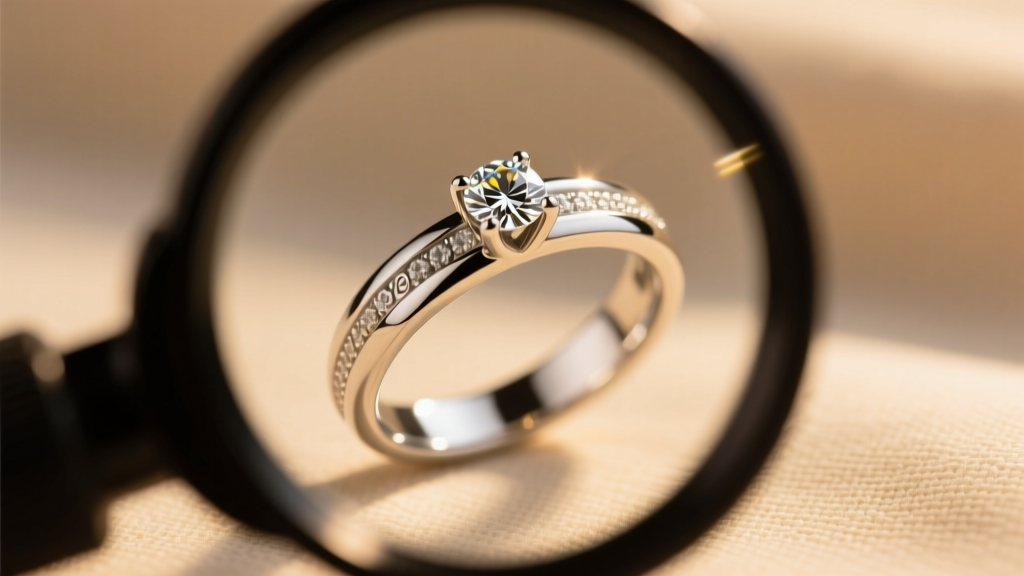
Most 1.25-carat studs are set in either a three-prong martini basket or a four/six-prong crown setting. Martini settings sit lower to the ear, which helps mitigate drooping, but they place immense tension on just three points of contact. If one prong snags on a sweater and lifts, the stone is immediately compromised. For 2.5 carat earrings, a six-prong platinum crown setting is highly recommended. Platinum is a dense, durable metal that does not lose mass when scratched (it merely displaces), making it vastly superior to 14k or 18k gold for securing heavy stones.
Upgrading Your Earring Backings
Standard friction backs (butterfly backs) are entirely inadequate for 2.5 carat diamond earrings. The weight of the front will cause the earring to tilt forward, and standard backs frequently slip off, leading to catastrophic loss. Upgrade to one of the following mechanical backs:
- La Poussante Backs: These feature a silicone O-ring inside a metal casing that grips the post with adjustable tension, providing a secure lock without bending the post.
- Monster Backs (Jumbo Friction): A larger, wider friction back that distributes the weight across a broader area of the earlobe, reducing the forward tilt.
- Screw Backs: While highly secure, screw backs require threaded posts. If your earrings currently have smooth posts, a jeweler can laser-weld threaded extensions, though this is an expensive modification.
Long-Term Storage and Appraisal Updates
When you remove your 2.5 carat diamond earrings for the night, never toss them loosely into a jewelry box. Diamonds rank a 10 on the Mohs scale of hardness, meaning they can easily scratch each other, as well as any other gemstones or metals they come into contact with. Store them in a dedicated, fabric-lined compartment or a soft microfiber pouch.
Finally, the secondary market for diamonds fluctuates, and the cost of precious metals like platinum and gold continues to shift. Ensure your homeowner's or renter's insurance policy includes a scheduled jewelry rider with an up-to-date appraisal. An appraisal from 2020 will likely not cover the replacement cost of a matched pair of 1.25-carat diamonds in 2026. Have your earrings professionally inspected and reappraised every 24 months. During this visit, the jeweler will use a microscope to check for prong porosity and ensure the posts have not bent, guaranteeing your investment remains safe, secure, and brilliantly maintained for a lifetime.


