How to Clean and Maintain Your 24k Gold Stud Earrings
Discover expert tips to clean, store, and maintain 24k gold stud earrings. Learn how to prevent bending, scratching, and dullness in pure gold jewelry.

The Metallurgical Reality of 24k Pure Gold
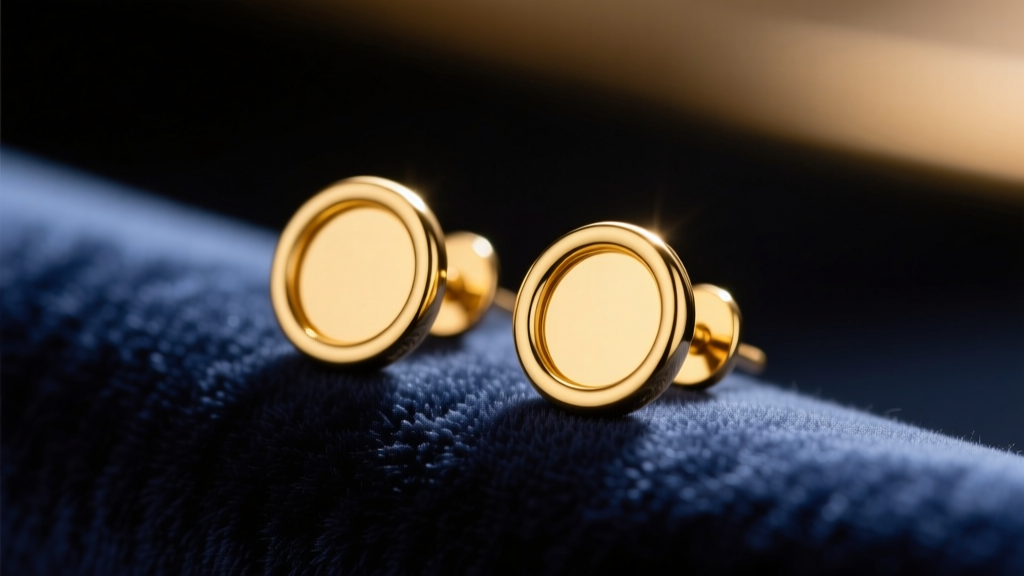
When you invest in 24k gold stud earrings, you are acquiring jewelry in its most unadulterated form. Comprising 99.9% pure gold, these pieces possess a distinct, rich orange-yellow hue that lower-karat alloys simply cannot replicate. However, this exceptional purity comes with a unique set of metallurgical vulnerabilities that dictate how you must clean, wear, and store them. According to the Gemological Institute of America (GIA), pure gold sits at a mere 2.5 to 3 on the Mohs scale of mineral hardness. To put this into perspective, a standard copper penny is a 3.5, and a steel needle is a 6.5.
Unlike 14k or 18k gold, which are alloyed with copper, silver, and zinc to increase tensile strength and scratch resistance, 24k gold is inherently soft and malleable. It will not tarnish or oxidize—meaning you will never need to use harsh silver polishes or chemical dips to remove black sulfide layers. The primary enemies of your 24k gold stud earrings are not chemical reactions, but rather physical abrasion, deformation, and surface-level micro-scratches that can dull their natural luster over time. Understanding this fundamental difference is the first step in establishing a proper care regimen for your fine jewelry.
The 4-Step Cleaning Protocol for 24k Gold Studs
While the jewelry market in 2026 is flooded with advanced sonic cleaners and chemical foams, the safest and most effective method for cleaning pure gold remains a gentle, manual process. Because 24k gold scratches easily, abrasive polishing cloths or stiff brushes will leave permanent micro-marring on the surface. Follow this precise protocol to restore your earrings' brilliance without causing structural damage.
Step 1: The pH-Neutral Surfactant Soak
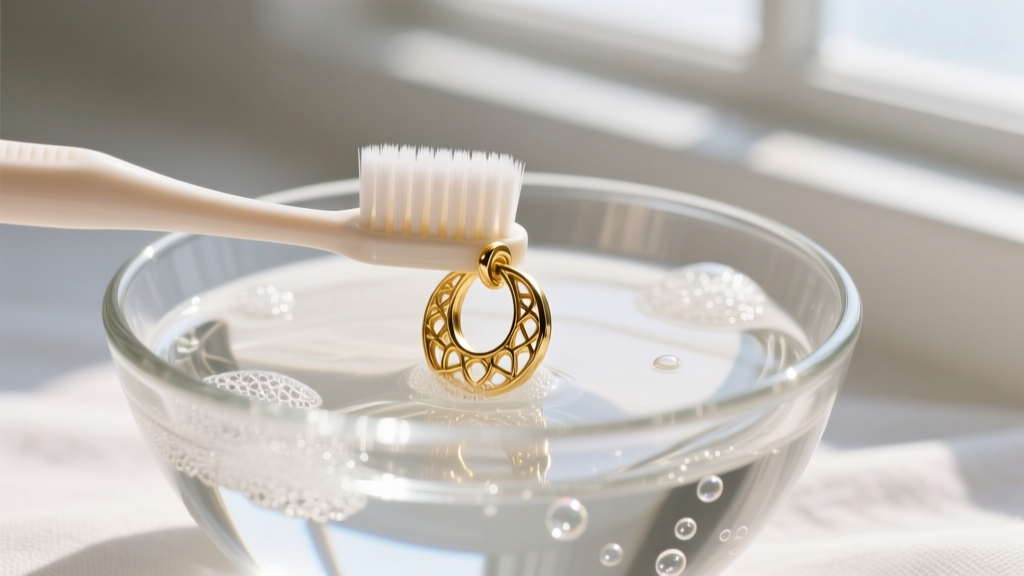
Fill a small glass or ceramic bowl with lukewarm water (approximately 95°F or 35°C). Avoid hot water, as extreme temperature shifts can stress any secondary gemstone settings or adhesive backing. Add three to four drops of a pH-neutral, lotion-free dishwashing liquid. Submerge your 24k gold stud earrings and let them soak for 15 to 20 minutes. This allows the mild surfactant to break down the lipid bonds of sebum, lotions, and dead skin cells that accumulate behind the earring post and within the setting crevices.
Step 2: Micro-Agitation
Remove the earrings from the soak and use an ultra-soft baby toothbrush to gently agitate the surface. Brush in small, circular motions, paying special attention to the junction where the post meets the earring head. Never use a standard adult toothbrush, as the nylon bristles are stiff enough to inflict microscopic scratches on 99.9% pure gold.
Step 3: The Distilled Water Rinse
Rinse the earrings thoroughly under a gentle stream of distilled water. Tap water contains dissolved minerals like calcium and magnesium, which can dry on the surface of the gold and leave stubborn, cloudy hard-water spots. Distilled water ensures a completely mineral-free rinse, preserving the uninterrupted reflectivity of the metal.
Step 4: Capillary Drying
Place the wet studs on a clean, lint-free microfiber cloth and gently pat them dry. Avoid rubbing the metal aggressively. Allow them to air-dry completely in a dust-free environment before storing or wearing them again to prevent moisture from becoming trapped against the skin when you reinsert the posts.
The 24k Gold Damage Matrix
To protect your investment, it is crucial to recognize which environmental factors pose the greatest threat to pure gold. The World Gold Council emphasizes that while gold is noble and unreactive to most acids, certain everyday chemicals and physical environments can compromise its finish.
| Environmental Threat | Mechanism of Damage | Prevention Protocol |
|---|---|---|
| Chlorine & Bleach | Causes stress corrosion cracking in the crystalline structure of the gold, leading to microscopic fractures. | Always remove studs before swimming in chlorinated pools or using household cleaning agents. |
| Quartz & Silica Dust | Common household dust contains quartz (Mohs 7), which will aggressively scratch 24k gold (Mohs 2.5-3). | Never wipe dry, dusty gold with a cloth. Always soak and rinse to lift particulates first. |
| Ultrasonic Cavitation | High-frequency vibrations can loosen bezel settings and cause micro-pitting on the soft gold surface. | Avoid ultrasonic jewelry cleaners entirely; stick to manual soaking and soft-bristle brushing. |
| Harder Metal Friction | Contact with platinum, tungsten, or steel jewelry will gouge and displace pure gold. | Store 24k studs in dedicated, isolated soft pouches away from all other jewelry pieces. |
Navigating Post Bending and Metal Fatigue
One of the most common issues owners face with 24k gold stud earrings is the bending of the earring post. Because pure gold lacks the structural rigidity of alloyed metals, manufacturers typically use 18-gauge or 20-gauge wire for the posts to provide some resistance. However, the post will still flex if snagged on clothing, towels, or hair.
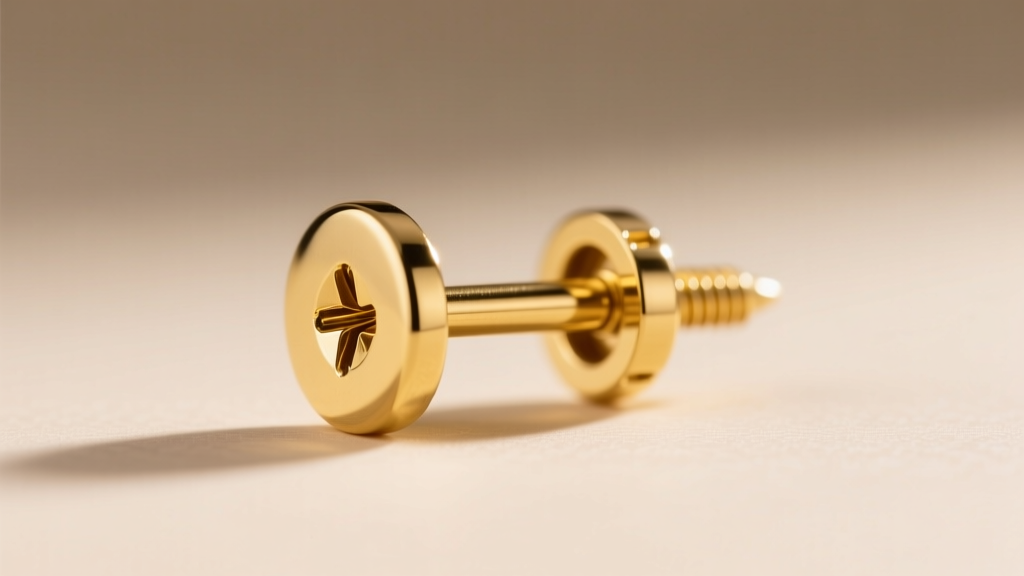
If your 24k gold post bends, your instinct may be to bend it back into place. Do not do this. Pure gold is subject to a phenomenon known as work hardening. When you bend the metal, you alter its crystalline lattice. Bending it back and forth repeatedly aligns these crystals, making the once-malleable gold brittle. Eventually, metal fatigue will set in, and the post will snap cleanly off the earring head. If a post becomes severely bent, take the earring to a professional jeweler who possesses the specialized mandrels and annealing torches required to safely heat-treat and straighten the gold without inducing structural fractures.
Strategic Storage for Soft Metals
Proper storage is arguably more important than cleaning when it comes to 24k gold. Because pure gold does not contain copper or silver, it is completely immune to atmospheric tarnishing. Therefore, investing in anti-tarnish strips or airtight plastic bags is unnecessary and represents a misallocation of your jewelry care budget.
Instead, your storage strategy should focus entirely on friction prevention. Store each 24k gold stud earring in its own individual, untreated flannel or soft cotton pouch. Never toss them loosely into a jewelry box drawer where they can collide with diamond or sapphire pieces, which will instantly carve deep scratches into the soft gold. Furthermore, ensure the earring backs are secured tightly against the posts during storage so that the sharp ends of the posts do not drag across the faces of the earrings themselves.
When to Consult a Master Jeweler
While routine cleaning and careful storage can be managed at home, certain maintenance tasks require professional intervention. If the friction groove on your earring post wears down, causing the backing to slide off too easily, a jeweler can use a specialized grooving tool to re-cut the notch. Similarly, if a post does succumb to metal fatigue and snaps, modern jewelers utilize precision laser welders to reattach the post. Laser welding applies localized heat, preventing the thermal damage to the surrounding pure gold that a traditional soldering torch might cause. By combining gentle at-home cleaning with expert structural maintenance, your 24k gold stud earrings will retain their pristine, heirloom-quality luster for generations.


