The Ultimate Care Guide for Chunky Gold Earrings Hoops
Learn expert cleaning, maintenance, and storage tips for chunky gold earrings hoops. Protect your investment from grime, bending, and hinge damage.


The Weight and Wear of Chunky Gold Hoops
Chunky gold earrings hoops are a definitive statement piece, offering a bold silhouette that catches the light and frames the face beautifully. However, the very characteristics that make them desirable—their substantial volume, heavy weight, and thick wire gauges—also introduce unique maintenance challenges. Unlike delicate 22-gauge wire hoops, chunky designs typically utilize 12-gauge (2.0mm) to 8-gauge (3.2mm) wire. This added mass means they are more susceptible to gravitational pull on the earlobe, post-bending, and severe debris accumulation in their mechanical hinges. According to the Jewelers of America, proper maintenance of heavy gold jewelry is not just about aesthetics; it is critical for preserving the structural integrity of the closure mechanisms and the alloy itself.
In this comprehensive guide, we will bypass generic jewelry advice and dive deep into the metallurgy, mechanics, and specific cleaning protocols required to keep your chunky gold earrings hoops looking pristine and functioning perfectly for decades.
Understanding Your Gold: Karat Matters in Maintenance
Before you mix any cleaning solutions, you must understand the metallurgical composition of your hoops. Pure 24k gold is never used for chunky hoops because it is far too soft to support its own weight; a thick 24k hoop would warp simply from being taken on and off. Therefore, your earrings are an alloy, and the karat dictates your care strategy.
14k Gold (58.5% Pure Gold)
14k gold is alloyed with metals like copper, silver, and zinc. This composition makes it highly durable and resistant to scratching, which is ideal for the heavy, swinging motion of chunky hoops. However, the copper and zinc content makes 14k gold susceptible to tarnishing when exposed to sulfur compounds in the air or harsh chemicals. It requires regular polishing to maintain its high-shine finish.
18k Gold (75% Pure Gold)
18k gold offers a richer, deeper yellow hue but is significantly softer. Chunky 18k hoops are highly prone to micro-scratches and surface marring. Furthermore, the posts on 18k hoops are more likely to bend under the heavy weight of the earring if not handled with extreme care during insertion and removal. The Gemological Institute of America (GIA) notes that higher-karat gold requires gentler cleaning methods to avoid abrasive damage to the softer metal matrix.
Expert Warning: The Chlorine Threat
Never wear your chunky gold hoops in a swimming pool or hot tub. Chlorine aggressively attacks the alloy metals (copper, silver, zinc) in both 14k and 18k gold, causing a phenomenon known as 'stress corrosion cracking.' Because the hinge of a chunky hoop is under constant mechanical tension when closed, chlorine exposure can cause the earring to literally snap in half at the joint.
The Anatomy of Grime: Why Thick Hoops Trap More Debris
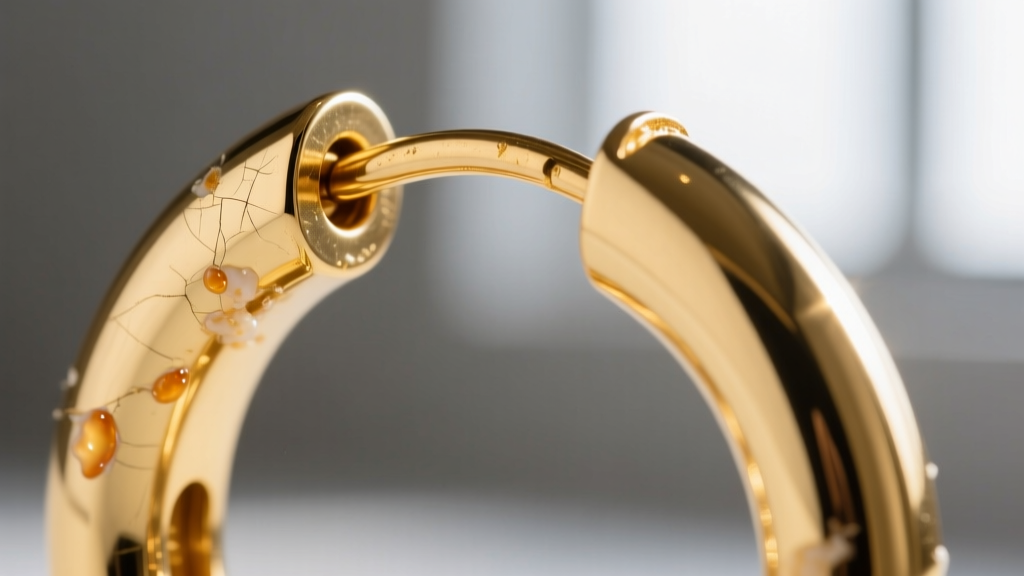
The surface area of a 10mm to 15mm thick hoop acts as a magnet for environmental and biological debris. While a thin wire hoop might accumulate a barely noticeable film, a chunky hoop provides a wide, flat canvas for sebum (skin oils), dead skin cells, hair sprays, and heavy cosmetic foundations to adhere to.
The most critical failure point on a chunky hoop is the hinge mechanism. Whether your earrings utilize a traditional saddle hinge with a locking clicker or a continuous wire snap closure, the microscopic tolerances of these joints are easily compromised. When lotion and skin oils compact into the hinge, they oxidize and harden over time. This results in a stiff hinge that refuses to snap shut securely, increasing the risk of losing your valuable earring. Furthermore, the groove where the post locks into the catch can fill with hardened sebum, preventing a secure closure and putting undue stress on the gold wire.
Step-by-Step Cleaning Protocol for Solid Gold Hoops
To safely remove this compacted debris without scratching the gold alloy or damaging the hinge tension, follow this professional-grade cleaning protocol.
Tools Required
- Phosphate-free, mild liquid dish soap (e.g., original Dawn)
- Distilled water (tap water contains minerals that can leave hard water spots on high-polish gold)
- Two extra-soft baby toothbrushes (one for general cleaning, one dedicated solely to the hinge)
- Lint-free microfiber polishing cloths
- A wooden or plastic toothpick (never metal)
The Cleaning Process
- The Soak: Fill a small glass bowl with warm distilled water and add three drops of mild dish soap. Submerge your chunky gold earrings hoops and let them soak for exactly 15 to 20 minutes. This softens the hardened sebum in the hinge without requiring aggressive scrubbing.
- The Hinge Agitation: Remove one earring and gently brush the hinge mechanism with the dedicated baby toothbrush. If the hinge is still stiff, use the wooden toothpick to gently dislodge any calcified lotion trapped in the joint crevices. Never use a metal pin, as it will scratch the gold.
- Surface Polishing: Using the second toothbrush, gently brush the wide surfaces of the hoop in the direction of the polish lines (if visible) to lift away skin oils and cosmetics.
- The Rinse: Rinse thoroughly under a gentle stream of warm distilled water. Ensure all soap residue is flushed out of the post catch.
- The Dry: Pat dry with a microfiber cloth. Crucially, leave the earrings out to air-dry completely for at least two hours before storing. Trapping moisture inside a closed hinge can lead to long-term degradation of the alloy.
Cleaning Methods Compared: What Works and What Ruins Gold
Not all jewelry cleaning methods are safe for heavy, solid gold pieces. Below is a comparison of common techniques and their viability for chunky gold hoops.
| Cleaning Method | Best For | Risk Level | Time Required |
|---|---|---|---|
| Mild Soap Soak | Routine weekly maintenance | Zero (Safest) | 20 Minutes |
| Ultrasonic Cleaner | Deep hinge grime removal | Low (Solid gold only) | 3 Minutes |
| Commercial Gold Dip | Quick shine restoration | High (Can strip alloys) | 10 Seconds |
| Baking Soda Paste | NEVER use on gold | Severe (Micro-scratches) | N/A |
| Steam Cleaning | Sanitization post-cleaning | Low (Avoid if gem-set) | 5 Seconds |
Note on Ultrasonic Cleaners: While ultrasonic waves are excellent for shaking dirt out of tight hinge mechanisms, they should only be used on solid, un-gemmed chunky gold hoops. If your hoops feature pavé diamonds or porous gemstones like turquoise or opals, the high-frequency vibrations can shatter the stones or loosen the adhesive.
Storage Solutions to Prevent Warping and Scratching
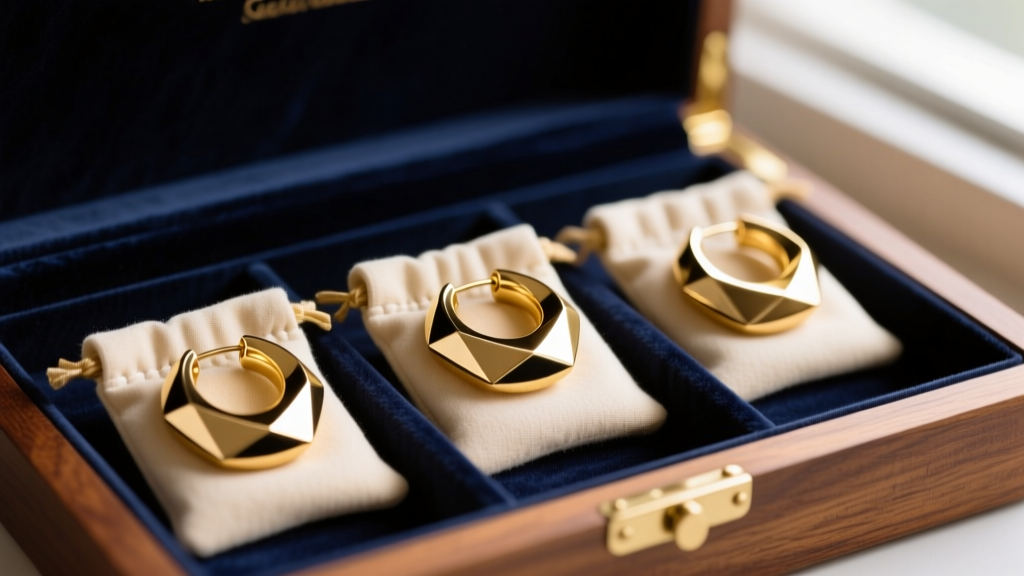
Improper storage is the leading cause of post-bending in chunky earrings. Because of their heavy weight, if a chunky hoop is tossed loosely into a jewelry box, the sheer mass of the gold can cause the earring to shift, bending the post or warping the continuous wire against other pieces. Furthermore, high-polish gold is highly susceptible to surface scratching when it rubs against other metals or even other gold pieces.
Optimal Storage Framework
- Individual Pouches: Store each pair of chunky hoops in its own soft microfiber or anti-tarnish flannel pouch. This prevents friction scratches and slows down oxidation.
- Upright Hanging or Flat Padded Slots: If using a jewelry box, ensure the hoops are either hung from a dedicated thick-bar earring tree (which supports the weight without bending the post) or laid flat in individual, velvet-lined compartments where they cannot roll.
- Clasp Position: Always store your hoops with the hinge fully open. Storing them snapped shut keeps the internal spring mechanism of the clicker under constant tension, which can eventually cause the locking mechanism to fail or weaken.
When to See a Professional Jeweler
While meticulous at-home care will handle 90% of your maintenance needs, the heavy nature of chunky gold earrings hoops dictates that they will experience mechanical wear over time. You should take your hoops to a professional bench jeweler once every 12 to 18 months for a structural inspection. A jeweler will use specialized pliers to gently re-tighten the hinge tension if the earring has become too easy to open, check the post catch for metal fatigue, and utilize professional polishing compounds like rouge to buff out deep micro-scratches that a simple soap soak cannot fix. By combining this professional oversight with a rigorous at-home cleaning routine, your chunky gold hoops will remain a flawless, heavy-hitting staple in your wardrobe for a lifetime.


