Care Guide: Cleaning & Maintaining Earrings with Buttons
Master the care of earrings with buttons. Learn expert cleaning methods for pearl, enamel, and rhinestone studs, plus push-button clasp maintenance.

Understanding Earrings with Buttons: A Dual Category
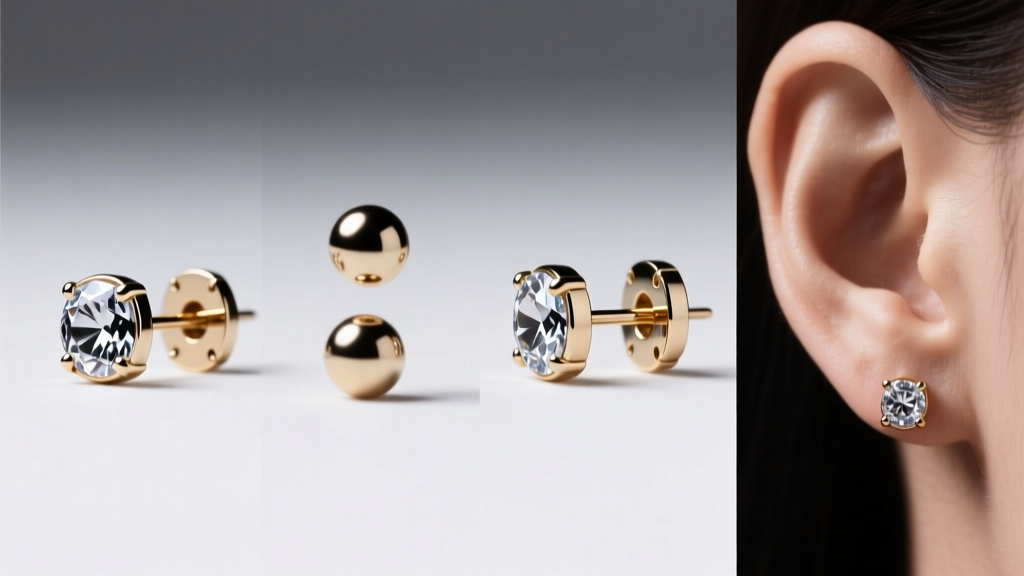
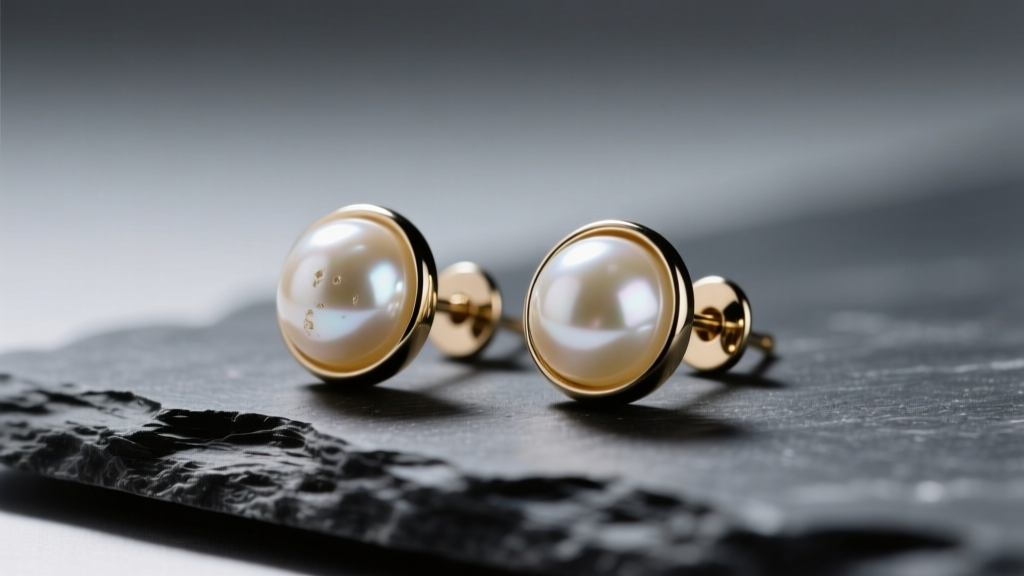
When jewelers, collectors, and stylists discuss earrings with buttons, they are typically referring to one of two distinct categories. The first encompasses aesthetic button-style studs—jewelry designed to mimic the look of vintage haberdashery buttons, often featuring pearl clusters, vitreous enamel, or rhinestone pavé. The second category refers to high-security mechanical earrings that utilize a push-button clasp mechanism (often called LaPoussé or lock-back clasps) rather than traditional friction butterfly backs.
As we navigate the jewelry landscape of 2026, the resurgence of vintage-inspired button studs has collided with a growing consumer demand for secure, mechanical push-button clasps for high-value diamonds and gemstones. Both styles require highly specific maintenance protocols. Using the wrong cleaning agent on a pearl button earring can dissolve its nacre, while improper maintenance of a push-button clasp can lead to galvanic corrosion and catastrophic loss of the earring. This comprehensive guide details the exact chemical, mechanical, and storage protocols required to maintain both types of earrings with buttons.
Category 1: Caring for Aesthetic Button Studs
Button-style studs are characterized by their flat, rounded, or slightly domed profiles. Because they sit flush against the earlobe, they are prone to accumulating sebum, dead skin cells, and cosmetic residues along their flat backplates and intricate front bezels.
Pearl and Mother-of-Pearl Button Earrings
Pearl button earrings are often crafted from half-drilled Akoya or Freshwater pearls glued to a metal post, or feature intricate clusters of seed pearls. Pearls are organic gems with a Mohs hardness of just 2.5 to 4.5, making them exceptionally vulnerable. According to the Gemological Institute of America (GIA), ultrasonic cleaners and steamers are strictly forbidden, as the high-frequency vibrations will shatter the nacre or detach the pearl from its epoxy mount.
- Cleaning Solution: Use a pH-neutral, phosphate-free liquid soap diluted in distilled water. Tap water contains chlorine and trace minerals that can dull the pearl's luster over time.
- Application: Dampen a microfiber cloth—never submerge the earring, as water can infiltrate the drill hole and weaken the adhesive bond.
- Drying: Lay flat on a lint-free towel. Never hang pearl button earrings, as the weight of the water can stretch silk threads if they are part of a composite button design.
Vitreous Enamel vs. Cold Enamel Buttons
Enamel button earrings provide a bold, opaque pop of color, but you must identify the type of enamel before cleaning. Vitreous enamel is essentially fused glass, fired in a kiln at over 1400°F. It is highly durable (Mohs 5-6) and can be cleaned with mild dish soap and a soft toothbrush. Cold enamel (epoxy resin), frequently used in modern, mass-market button studs, is highly reactive.
Acetone, alcohol, and commercial jewelry dips will melt, cloud, or permanently yellow cold enamel. For resin-based button earrings, use only a slightly damp microfiber cloth. If cosmetic buildup is trapped in the metal cloisons (the wire separating the enamel colors), use a wooden toothpick to gently dislodge the debris without scratching the resin surface.
Rhinestone and Pavé Button Clusters
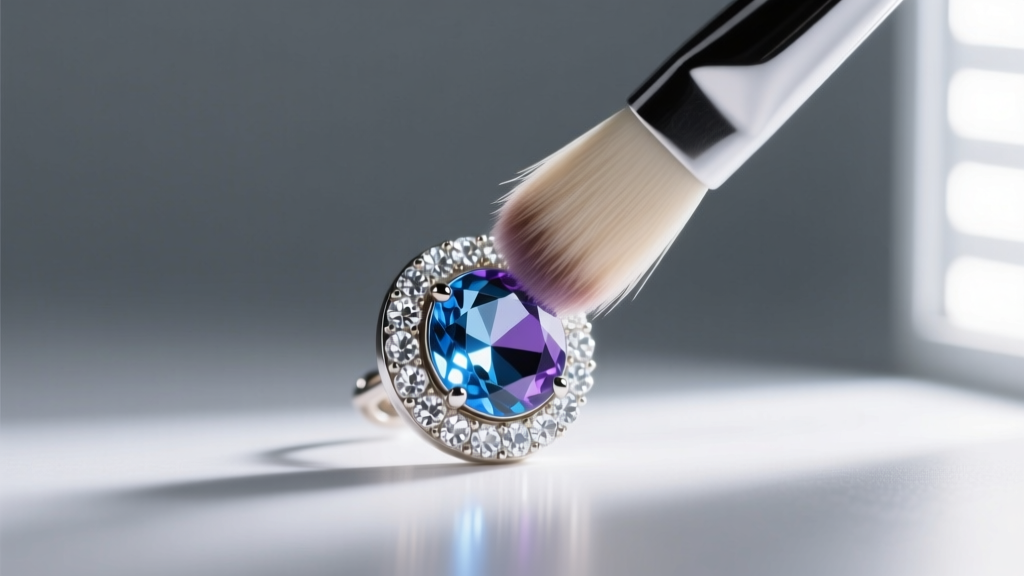
Rhinestone button earrings, particularly vintage pieces from the mid-20th century, often feature foil-backed stones. The foil acts as a mirror to amplify the stone's sparkle. If water or ammonia-based cleaners penetrate the bezel setting, the foil will oxidize, turning black and permanently clouding the stone. Clean these exclusively with a dry, soft-bristled makeup brush. For modern, unfoiled diamond or sapphire pavé button earrings, a mild ammonia-based cleaner is safe and effective for dissolving the heavy sebum that accumulates beneath the low-profile settings.
Category 2: Maintaining Mechanical Push-Button Clasps
Security is paramount for high-value earrings, which is why many 2026 fine jewelry collections utilize push-button locking backs. These clasps feature a hollow cylindrical housing containing a micro-spring and dual ball bearings that snap into a grooved earring post.
The Galvanic Corrosion Threat
The housing of a push-button clasp is usually cast in 14k or 18k gold, but the internal spring is almost always surgical stainless steel or titanium. When human sweat (which has a pH ranging from 4.5 to 7.0 and contains sodium chloride) becomes trapped inside the clasp housing, it acts as an electrolyte. This triggers galvanic corrosion between the steel spring and the gold housing, eventually causing the spring to seize or snap.
Flushing the Spring Mechanism
To prevent mechanical failure, push-button backs must be flushed monthly. Do not use water, as it leaves microscopic residue that promotes rust. Do not use oil-based lubricants like WD-40, as they attract dust and create an abrasive paste that grinds down the ball bearings.
- Remove the push-button back from the earring post.
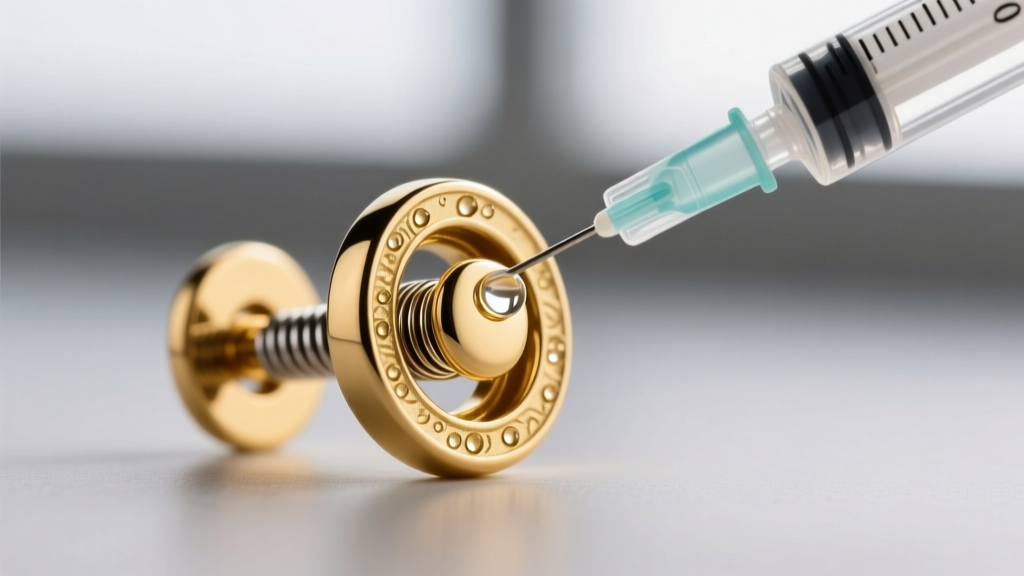
- Fill a micro-syringe with 91% or higher isopropyl alcohol.
- Inject the alcohol directly into the hollow cavity of the clasp to dissolve sebum and flush out particulate matter.
- Press the push-button repeatedly while flushing to ensure the alcohol penetrates the spring coils.
- Allow to air dry completely; 91% alcohol evaporates rapidly without leaving moisture behind.
Post Gauge and Friction Wear
Push-button mechanisms are calibrated for specific post gauges, typically 18-gauge (1.0mm) or 20-gauge (0.8mm). If you attempt to force a thicker 16-gauge post into a standard push-button back, you will permanently stretch the internal spring, rendering the locking mechanism useless. Always verify the groove depth on your earring post; if the grooves become worn smooth from years of friction, the push-button clasp will slide off. A jeweler can easily re-cut these grooves using a specialized lathe.
Material Compatibility and Cleaning Matrix
The following table serves as a quick-reference framework for identifying safe cleaning agents and recognizing potential failure modes for various earrings with buttons.
| Material / Component | Safe Cleaners | Forbidden Chemicals | Primary Failure Mode |
|---|---|---|---|
| Pearl Button | pH-neutral soap, distilled water | Ultrasonic, ammonia, vinegar | Nacre delamination, epoxy failure |
| Vitreous Enamel | Mild dish soap, microfiber | Hydrofluoric acid, hard impacts | Glass micro-fractures, chipping |
| Cold Enamel (Resin) | Damp cloth only | Acetone, alcohol, abrasives | Resin melting, yellowing, clouding |
| Foil-Back Rhinestone | Dry soft brush only | Ammonia, ultrasonic, water | Foil oxidation, stone clouding |
| Push-Button Clasp | 91% Isopropyl alcohol | Oil-based lubricants, WD-40 | Spring corrosion, bearing seizure |
Storage Protocols and Environmental Hazards
Proper storage is just as critical as active cleaning. Button-style studs, due to their flat profiles, are frequently tossed into communal jewelry boxes where they are subjected to abrasive forces.
Preventing Enamel and Pearl Micro-Scratches
While vitreous enamel is relatively hard, the metal bezels surrounding it are not. Store enamel and pearl button earrings in individual, soft-flocked compartments or acid-free tissue paper pouches. Never store pearl button earrings in airtight plastic bags or safety deposit boxes without a damp cotton ball nearby; pearls require ambient moisture to prevent their organic conchiolin core from drying out and cracking, a condition known as 'crazing'.
Navigating Environmental Hazards
The low profile of button earrings makes them a magnet for aerosolized cosmetics. Hairspray and perfume contain alcohols and volatile organic compounds (VOCs) that will leave a stubborn, cloudy film over rhinestones and degrade cold enamel. Always apply cosmetics, perfumes, and hairspray before putting on your earrings. Furthermore, chlorine in swimming pools is highly destructive to the copper alloys mixed into 14k gold push-button housings. Exposure to chlorinated water can cause 'stress corrosion cracking' in the clasp housing, leading to sudden, unrepairable structural failure.
Troubleshooting Common Button Earring Failures
Even with meticulous care, mechanical and aesthetic issues can arise. Here is how to troubleshoot the most common problems associated with earrings with buttons:
- Push-Button Clasp Feels 'Mushy' or Won't Click: This indicates a buildup of compacted dead skin cells and sebum inside the bearing track, or a weakened spring. Attempt the isopropyl alcohol flush first. If the spring is fatigued, the clasp must be replaced by a professional jeweler; internal micro-springs cannot be repaired.
- Pearl Button Spins on the Post: The epoxy bond has failed. Do not attempt to glue it back with household superglue (cyanoacrylate), which emits fumes that will permanently frost the pearl's surface. Take it to a jeweler who will clean the post and use a specialized, jewelry-grade two-part epoxy.
- Rhinestone Button Looks 'Dead' or Gray: The foil backing has likely oxidized due to moisture intrusion. Unfortunately, this is irreversible for vintage pieces. A skilled lapidary can sometimes replace the stones with modern, unfoiled equivalents, but this alters the historical value of the piece.
By understanding the distinct material sciences and mechanical engineering behind your jewelry, you can ensure that your collection remains secure, brilliant, and structurally sound for decades. Whether you are wearing a delicate pearl button stud or a high-security diamond earring with a push-button lock, targeted maintenance is the key to preserving both beauty and function.