Expert Care & Cleaning for Gold Ball Dangle Earrings
Learn expert cleaning, storage, and maintenance tips to keep your gold ball dangle earrings shining and structurally sound for years to come.

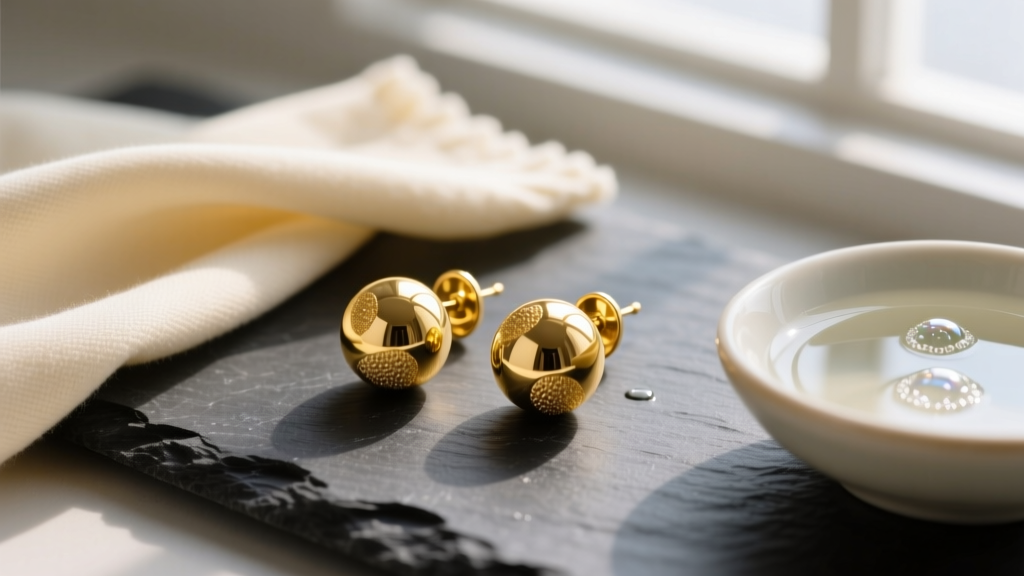
The Hidden Vulnerabilities of Kinetic Jewelry
Gold ball dangle earrings are a timeless staple in any jewelry collection, offering a perfect blend of minimalist elegance and kinetic movement. However, the very nature of their design—suspended spheres swinging from a delicate ear wire—introduces unique structural and aesthetic vulnerabilities that static studs or solid hoops simply do not face. As a domain expert in jewelry maintenance, I often see owners of these beautiful pieces unknowingly accelerate wear and tear through improper cleaning routines and storage habits.
Unlike rigid jewelry, dangle earrings endure constant micro-stress at their connection points. Furthermore, the spherical surface area of the gold ball acts as a magnet for fingerprints, cosmetic residue, and environmental oils, which can quickly dull a high-polish finish. According to the Gemological Institute of America (GIA), gold alloys require specific care regimens based on their karat weight and manufacturing method. In this comprehensive guide, we will break down the exact protocols for cleaning, maintaining, and storing your gold ball dangle earrings to ensure they remain pristine and structurally secure.
Anatomy of a Dangle: Where Dirt and Damage Hide
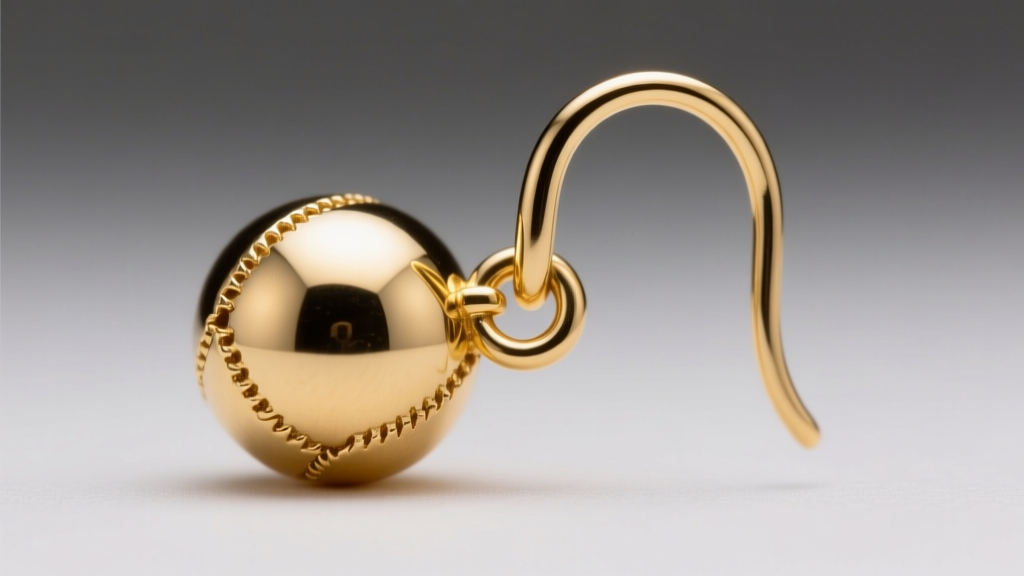
To properly care for gold ball dangle earrings, you must first understand their anatomy. A standard dangle consists of three primary components: the ear wire (often a French hook or leverback), the jump ring or solder joint, and the gold sphere itself. The jump ring—the tiny loop connecting the ball to the wire—is the most critical vulnerability. It is a notorious trap for sebum, dead skin cells, and soap scum. Over time, this buildup not only dulls the metal but can also cause localized skin irritation.
Additionally, the constant swinging motion creates metal fatigue at the solder joint where the jump ring meets the ball. If your earrings feature a hollow gold ball, the risk multiplies. Hollow spheres are typically created via electroforming, leaving a microscopic pinhole that can trap moisture and cleaning solutions, leading to internal oxidation that is impossible to polish away.
Solid vs. Hollow Gold Balls: Adjusting Your Cleaning Protocol
Before you submerge your earrings in any solution, you must determine whether the gold balls are solid cast or hollow electroformed. This distinction dictates your cleaning methodology.
The Warm Suds Method (Safe for All Types)
For both solid and hollow gold balls, the safest and most effective日常 cleaning method relies on pH-neutral surfactants. Here is the professional protocol:
- Preparation: Always plug your sink drain or work over a silicone mat. Dangle earrings are notoriously slippery when wet.
- The Solution: Mix two drops of mild, phosphate-free dish soap (like original Dawn) into a bowl of lukewarm distilled water. Avoid tap water, as dissolved minerals can leave microscopic hard water spots on high-polish gold.
- Agitation: Submerge the earrings for exactly three minutes. Using an extra-soft infant toothbrush (never a standard adult brush, as the bristles are too stiff and will cause micro-scratches on 18k or 22k gold), gently agitate the jump ring and the underside of the ball.
- Rinsing and Drying: Rinse briefly in clean distilled water. Pat dry with a lint-free microfiber cloth. Never use paper towels, which contain wood pulp fibers that can inflict fine abrasions on polished gold.
What to Avoid: Ultrasonic and Steam Risks
While ultrasonic cleaners are excellent for diamond stud earrings, they are highly dangerous for gold ball dangles. The high-frequency vibrations can easily snap the delicate solder joint connecting the dangle to the ear wire. Furthermore, if your earrings feature hollow balls, the ultrasonic waves can cause the thin gold shells to collapse or dent inward. Steam cleaners pose a similar risk, as the pressurized heat can force moisture into the microscopic seams of hollow spheres, leading to trapped water and eventual skin irritation when worn.
Environmental Hazards: The Silent Destroyers of Gold Alloys
Pure 24-karat gold is virtually impervious to tarnish, but it is far too soft to be used for the structural components of dangle earrings. Therefore, your earrings are alloyed with metals like copper, silver, zinc, or nickel to provide tensile strength. These alloy metals are highly reactive to specific environmental chemicals.
- Chlorine: Exposure to chlorinated pool water or household bleach causes a phenomenon known as stress corrosion cracking. This rapidly degrades the alloy metals, specifically targeting the high-stress solder joints on dangle earrings, leading to sudden, catastrophic breakage.
- Sulfur: Found in hot springs, certain rubber bands, and even some cardboard packaging, sulfur reacts with the copper and silver in gold alloys to create a dark, stubborn tarnish layer.
- Cosmetics and Hairspray: Aerosol hairsprays and liquid foundations leave a microscopic film on the gold ball, diffusing light and robbing the sphere of its mirror-like reflectivity.
The Jewelers of America strongly advises removing all gold jewelry before swimming, cleaning with harsh chemicals, or applying aerosol beauty products to prevent irreversible alloy degradation.
Karat Durability and Maintenance Frequency
Not all gold is created equal. The karat weight of your earrings dictates their hardness, scratch resistance, and required maintenance frequency. Refer to the table below to tailor your care routine to your specific jewelry.
| Karat Weight | Gold Purity | Approx. Vickers Hardness | Primary Care Risk | Recommended Cleaning Frequency |
|---|---|---|---|---|
| 10k Gold | 41.7% | 135 HV | Tarnishing of high copper/zinc alloys | Bi-weekly |
| 14k Gold | 58.3% | 120 HV | Soap scum buildup in jump rings | Weekly |
| 18k Gold | 75.0% | 90 HV | Micro-scratching on high-polish balls | Weekly (gentle only) |
| 22k Gold | 91.6% | 60 HV | Bending of ear wires and dangle stems | As needed (wipe only) |
As noted by the Federal Trade Commission (FTC) Jewelry Guides, understanding the exact karat stamp on your jewelry is not just a matter of value, but a critical indicator of how the metal will react to physical stress and chemical exposure over time.
Proper Storage to Prevent Tangling and Micro-Scratches
Because of their kinetic design, gold ball dangle earrings are highly susceptible to tangling when tossed loosely into a jewelry box. When the delicate French hook wraps around the jump ring of another earring, attempting to pull them apart can easily bend the ear wire or snap the solder joint. Furthermore, if stored alongside harder gemstones like diamonds or sapphires, the gold balls will inevitably suffer from surface gouging.
The Ideal Storage Protocol:
- Always fasten the ear wire before storage. If using French hooks, thread the wire through a small piece of plastic tubing or a dedicated earring stopper to keep the hook closed and prevent tangling.
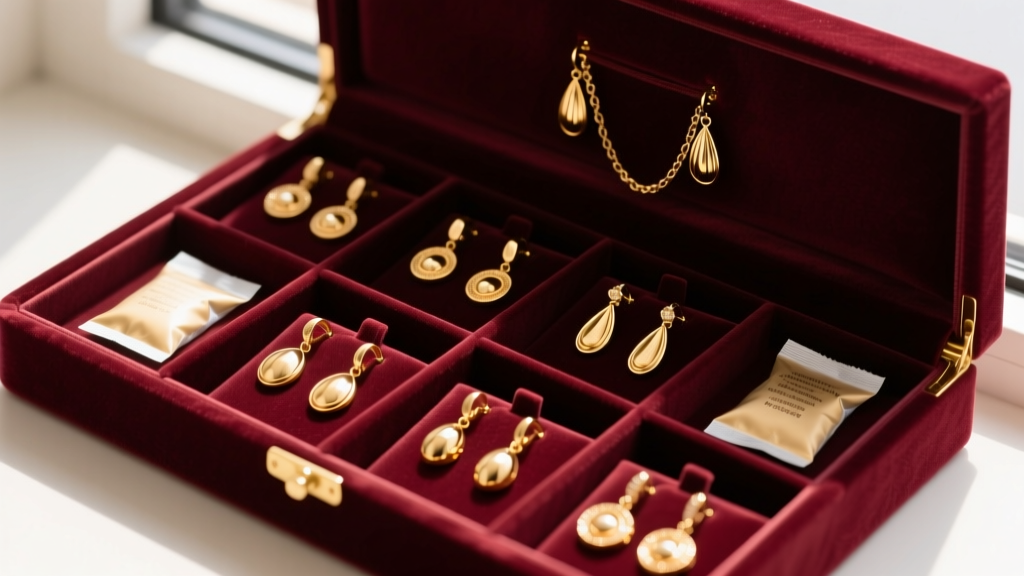
- Store each pair in an individual, soft-lined compartment or a dedicated anti-tarnish flannel pouch.
- Place a 3M anti-tarnish strip or a small silica gel packet inside your jewelry box to absorb ambient moisture and neutralize sulfur gases that cause alloy tarnishing.
- Avoid PVC plastic bags, which can trap moisture and emit chemicals that react negatively with copper-alloyed gold (like rose gold).
Troubleshooting Common Structural Issues
Even with meticulous care, the mechanical nature of dangle earrings means minor adjustments are occasionally necessary. Here is how to handle common issues without causing further damage:
Loose or Gapping French Hooks
If your ear wire no longer sits flush against the back of your earlobe, it has likely been pulled open. Never use standard metal pliers to bend the wire back into shape; the steel teeth will deeply gouge the soft gold. Instead, invest in a pair of nylon-jaw jewelry pliers. These allow you to gently squeeze the wire closed with zero risk of marring the metal surface.
Dented Hollow Gold Balls
If a hollow electroformed gold ball becomes dented, it is unfortunately very difficult to repair. Because there is no access to the inside of the sphere, a jeweler cannot push the dent out from within. Attempting to burnish the dent from the outside usually results in stretching and tearing the thin gold shell. Prevention—removing earrings before sleeping or changing clothes—is the only true safeguard.
Stiff Jump Rings
If the dangle mechanism feels stiff and no longer swings freely, do not apply commercial lubricants like WD-40, which will attract dirt and degrade the metal. Instead, apply a microscopic drop of synthetic watchmaker's oil to the jump ring crevice using a needle oiler, then gently work the ring back and forth to restore fluid kinetic movement.
Conclusion
Caring for gold ball dangle earrings requires a shift in mindset from passive ownership to active maintenance. By understanding the structural stresses placed on the solder joints, respecting the chemical sensitivities of gold alloys, and utilizing the correct micro-fiber and soft-bristle tools, you can preserve the mirror-like finish and kinetic grace of your earrings for decades. Treat the jump ring with the same attention you give the gold sphere, and your dangles will remain a flawless, swinging testament to timeless jewelry design.


