Expert Care and Cleaning Tips for Threaded Earrings
Learn expert techniques to clean, maintain, and troubleshoot internally and externally threaded earrings without damaging the delicate screw mechanisms.

The Anatomy of Threaded Body Jewelry
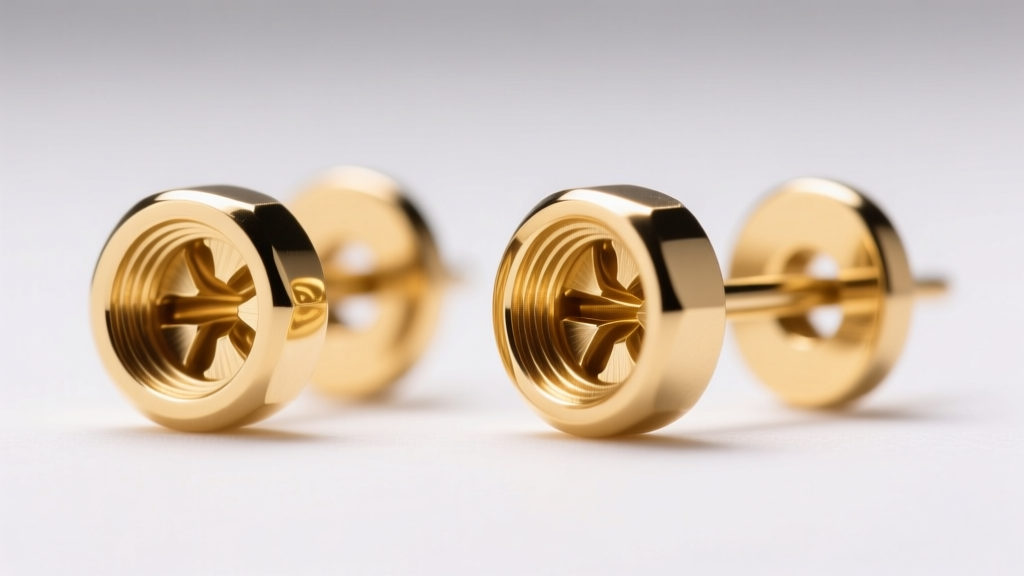
Threaded earrings represent the gold standard for secure, comfortable, and high-end body jewelry. Whether you are wearing a classic 14k gold ball stud or an intricate cartilage flat-back, the screw mechanism is what keeps your jewelry safely in place. However, the microscopic grooves of these threads are notorious traps for sebum, dead skin cells, hard water minerals, and soap scum. Neglecting this specific area leads to cross-threading, seized components, and localized piercing irritation.
To properly care for threaded earrings, you must first understand their anatomy. According to the Association of Professional Piercers (APP), high-quality body jewelry utilizes internal threading. In this design, the post that passes through your ear is completely smooth, while the screw threads are located on the inside of the backing or decorative end. This prevents the "cheese-grater" effect that externally threaded jewelry (where the sharp threads are on the post) inflicts on the delicate fistula tissue during insertion. Standard internal thread pitches are highly precise: typically 0.8mm for 18-gauge and 16-gauge jewelry, and 1.2mm for 14-gauge and 12-gauge pieces.
Metallurgy: Why Thread Material Matters
Before applying any cleaning agents, consider the metallurgy of your earrings. Most premium threaded earrings are crafted from ASTM F-136 implant-grade titanium or 14k/18k nickel-free gold. The cleaning approach must adapt to the material:
- Titanium: Highly resistant to corrosion and chemical degradation. You can safely use slightly stronger degreasing agents if sebum buildup is severe.
- 14k/18k Gold: Gold is a relatively soft metal. The threads on a solid gold earring back can easily strip or warp if subjected to aggressive scrubbing or forced tightening. Furthermore, if you are mixing a solid gold threaded end with a titanium post, the harder titanium can slowly wear down the softer gold threads over years of use.
The Professional Step-by-Step Cleaning Protocol
Rinsing your earrings under the tap while showering is not enough to clean threaded mechanisms. Body oils and soap residue compact into the threads, acting like a biological cement. Follow this professional protocol every 4 to 6 weeks.
Step 1: Safe Disassembly
Never attempt to clean threaded earrings while they are still in your ear. Remove them and unscrew the components. If the backing is stubborn, do not use bare fingers, as natural skin oils reduce friction. Instead, wear nitrile gloves (avoid latex, which can leave a powdery residue in the threads) to gain the necessary grip to unscrew the components safely.
Step 2: The Degreasing Soak
Fill a small ceramic or glass bowl with warm distilled water (approximately 100°F to 110°F). Add a few drops of mild, fragrance-free liquid castile soap or sterile saline solution. Submerge the disassembled threaded components and let them soak for 10 to 15 minutes. This softens the compacted keratin and sebum without damaging the metal. Avoid harsh chemicals like rubbing alcohol or bleach, which the Gemological Institute of America (GIA) warns can degrade the clarity of certain gemstones and damage porous materials like opals or pearls often set in high-end threaded ends.
Step 3: Micro-Agitation
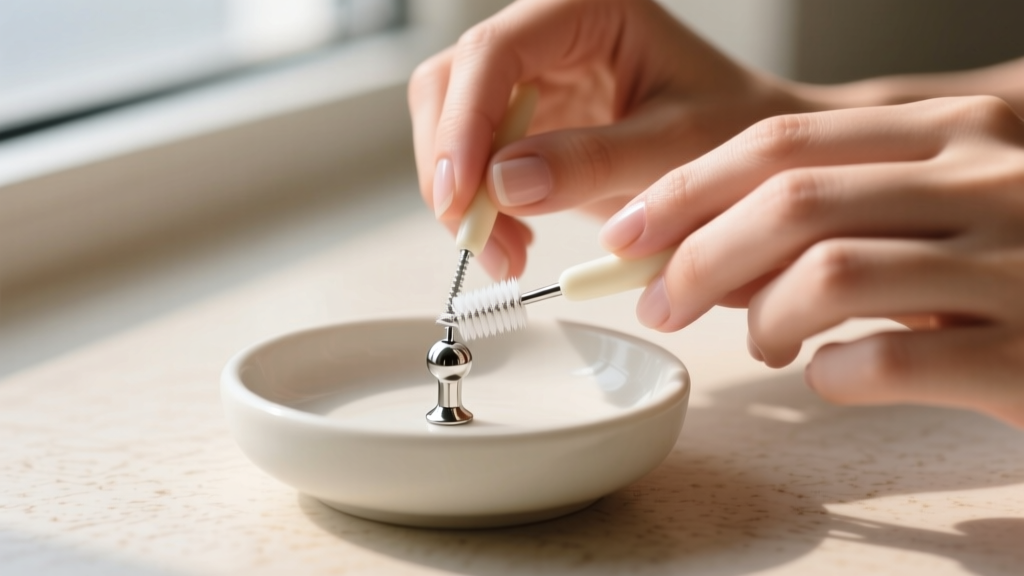
This is the most critical step. A standard toothbrush cannot reach the internal grooves of a 0.8mm thread. Instead, use a soft-bristled interdental brush (the kind used for braces or dental gaps). Gently insert the brush into the internal threading of the earring back and twist it back and forth. For externally threaded posts, brush gently along the grooves in the direction of the thread to avoid bending the metal ridges. Never use metal needles, safety pins, or toothpicks, as these will scratch the gold or titanium and create microscopic burrs that cause future cross-threading.
Step 4: Rinsing and Complete Drying
Rinse the components thoroughly under warm distilled water to remove all soap residue. Pat dry with a lint-free microfiber cloth. Crucially, you must ensure the internal threads are completely dry before reassembly or storage. Trapped moisture can lead to water spots on gold and, in rare cases of mixed-metal jewelry, galvanic corrosion. Use a hair dryer on the "cool" setting to blow air into the threaded backing to guarantee it is bone-dry.
Ultrasonic Cleaners: A Warning for Threaded Gemstone Ends
Many jewelry owners use ultrasonic cleaners for deep cleaning. While excellent for plain metal hoops and huggies, ultrasonic waves pose two distinct risks to threaded earrings. First, the high-frequency vibrations can inadvertently loosen the tiny set screws that hold gemstones in place on decorative threaded ends. Second, if your threaded earring features fracture-filled diamonds, emeralds, or soft organic gems, the ultrasonic cavitation can shatter or cloud the stone. Reserve ultrasonic cleaning only for plain metal threaded posts and backs, and always use a mild, ammonia-free solution.
Troubleshooting Common Thread Failures
Even with meticulous care, threaded earrings can experience mechanical issues. Below is a diagnostic framework for the most common failures.
| Issue | Root Cause | Professional Solution |
|---|---|---|
| Cross-Threading | Forcing the backing on at an incorrect angle, causing the threads to cut across each other. | Stop immediately. Reverse the backing slowly until you feel a subtle "click" or drop—this is the thread groove aligning. Then, tighten gently. |
| Seized / Stuck Backing | Sebum and hard water minerals acting as a biological glue inside the threads. | Soak in warm sterile saline for 20 minutes. Use nitrile gloves for grip. If needed, use rubber-tipped jewelry pliers, applying minimal pressure. |
| Stripped Threads | Overtightening, dropping the jewelry, or mixing harder titanium posts with softer gold ends. | The component is permanently damaged. Do not attempt to use adhesives. Replace the threaded end or post through the original manufacturer. |
| Gunk Buildup | Failure to unscrew and clean the threads during routine jewelry maintenance. | Use the interdental brush method outlined above. For calcified buildup, a 5-minute soak in a 50/50 mix of distilled white vinegar and water can dissolve minerals. |
Proper Storage to Protect Delicate Threads
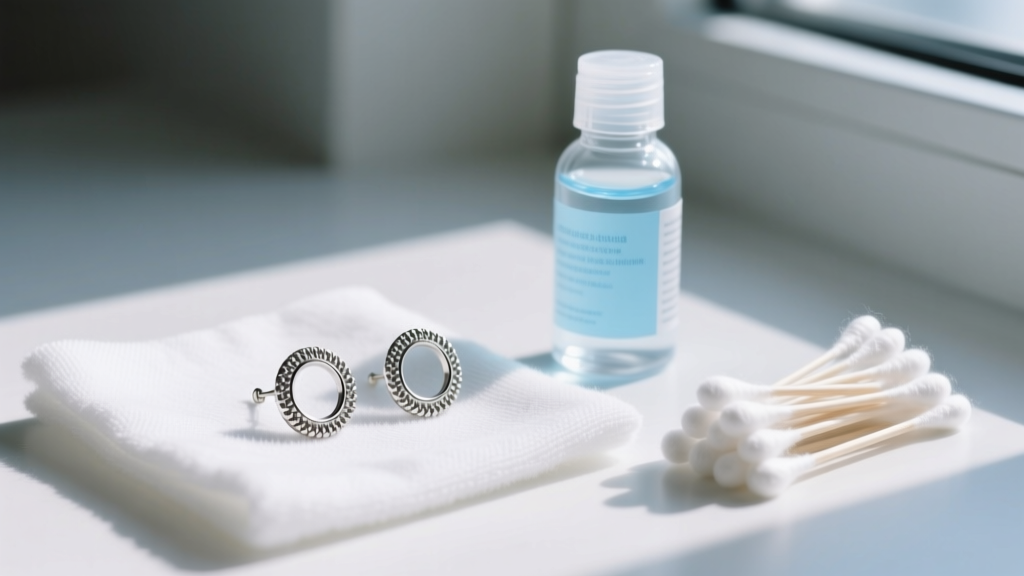
How you store your threaded earrings is just as important as how you clean them. Tossing threaded jewelry into a communal jewelry box is a recipe for disaster. The weight of heavier items can crush the delicate 0.8mm threads, rendering the earring back useless. Furthermore, loose earrings can become entangled, causing the threads to scrape against gemstones or scratch polished metal surfaces.
Always store threaded earrings in individual silicone pouches or a compartmentalized jewelry box with soft, velvet-lined dividers. If you are traveling, use a dedicated hard-shell jewelry case. Keep the posts and backs screwed together loosely when not in use; this protects the internal threads from dust and physical impacts while preventing the components from getting separated and lost.
When to Retire Your Threaded Components
Threaded earrings are an investment, but they are not indestructible. A common and dangerous mistake is attempting to repair a stripped thread with cyanoacrylate (superglue). Never use superglue on body jewelry. The chemical fumes can cause severe allergic contact dermatitis, and the glue will permanently fuse the jewelry, making safe removal impossible without cutting the metal.
If your threads are stripped, or if the decorative end no longer sits flush against the post due to warped threading, it is time to replace the component. High-end body jewelry brands like NeoMetal, Maria Tash, and BVLA sell replacement ends and posts separately, allowing you to salvage your piercing setup without compromising on safety or quality. By adhering to these meticulous cleaning and maintenance protocols, your threaded earrings will remain secure, hygienic, and beautiful for a lifetime.


