How to Safely Clean and Store Minnie Mouse Gold Earrings
Learn how to safely clean, polish, and store your Minnie Mouse gold earrings without damaging the plating, enamel, or gemstones. Expert care tips inside.

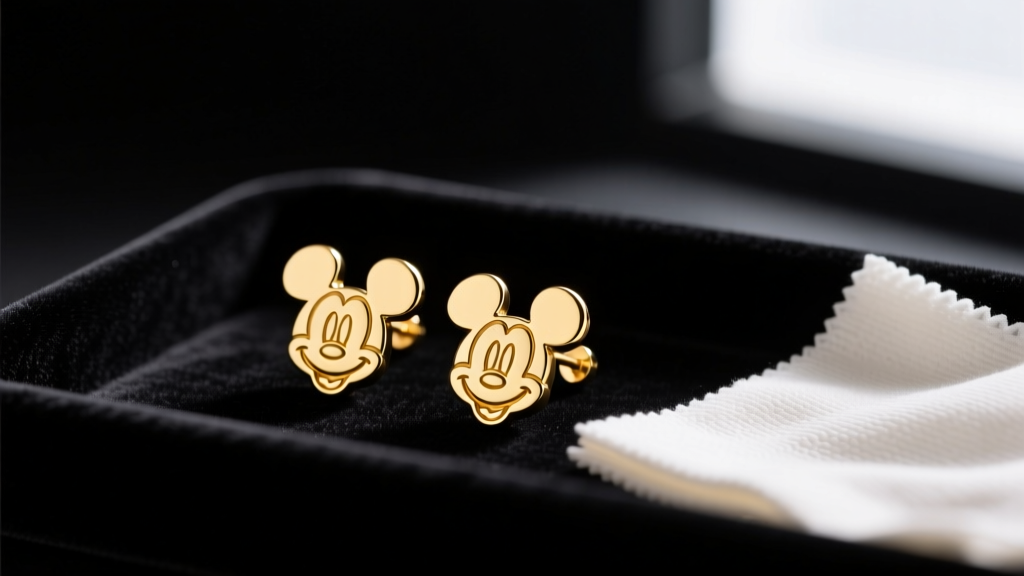
The Material Reality of Licensed Disney Jewelry
When it comes to maintaining the iconic charm of Minnie Mouse gold earrings, a one-size-fits-all approach to jewelry cleaning is a recipe for disaster. As we navigate the 2026 jewelry market, licensed character pieces span a massive spectrum of manufacturing tiers. Understanding the exact metallurgy and decorative techniques used in your specific pair is the foundational step in preventing irreversible damage, plating loss, and enamel degradation.
Unlike heirloom fine jewelry, novelty and licensed earrings frequently combine disparate materials. You are often dealing with a base metal alloy, a microscopic layer of gold plating, synthetic or natural gemstones, and various types of enamel. According to the Gemological Institute of America (GIA), the presence of mixed media and surface treatments dictates that aggressive cleaning methods must be entirely avoided. Before you reach for a polishing cloth or a soaking solution, you must identify which tier your Minnie Mouse earrings belong to.
Tier 1: Fashion and Costume (Flash Plated)
The most common and affordable Minnie Mouse studs and hoops are cast from brass or zinc alloys and finished with 'flash' gold plating. Flash plating is incredibly thin—often less than 0.1 microns. These pieces frequently feature 'cold enamel' (an epoxy-based resin) to create Minnie's signature red bows or polka dots, and may include glued-in cubic zirconia (CZ) accents.
Tier 2: Demi-Fine (Gold Vermeil)
Mid-range pieces utilize a sterling silver base coated with at least 2.5 microns of 14k or 18k gold, legally classified as vermeil. These may feature 'hot enamel' (vitreous glass fused to the metal at high temperatures) and prong-set stones, offering greater durability but still requiring careful chemical management to prevent the silver core from tarnishing and bleeding through the gold layer.
Tier 3: Fine Jewelry (Solid Gold)
High-end Disney Signature collections feature solid 10k, 14k, or 18k gold, sometimes accented with pavé diamonds. While the metal itself is highly resilient, the intricate pavé settings and potential use of fracture-filled diamonds demand specialized care protocols.
Step-by-Step Cleaning Protocols by Material Type
The American Gem Society emphasizes that porous materials and plated surfaces require gentle, non-abrasive cleaning agents. Here is how to safely restore your earrings based on their composition.
Protocol A: Cleaning Flash-Plated & Cold Enamel Pieces
Never submerge flash-plated earrings in water. Prolonged exposure to moisture degrades the epoxy adhesives holding the cold enamel and glued stones in place. Furthermore, tap water contains trace minerals and chlorine that can cause the underlying brass to oxidize, leading to green spotting beneath the plating.
- Step 1: Mix a solution of distilled water and a single drop of pH-neutral dish soap (such as original Dawn) in a small glass bowl.
- Step 2: Dip a soft, lint-free microfiber cloth into the solution and wring it out until it is barely damp.
- Step 3: Gently wipe the gold-plated surfaces. Do not scrub the enamel or CZ stones, as friction will accelerate the wear of the flash plating.
- Step 4: Immediately dry the earrings with a separate, completely dry microfiber cloth to prevent water spotting.
Protocol B: Cleaning Gold Vermeil with Hot Enamel
Vermeil can tolerate brief, careful cleaning, but you must avoid anything that strips the gold layer to expose the sterling silver beneath.
- Step 1: Use a brand-new, ultra-soft baby toothbrush dipped in a mild, ammonia-free soapy solution.
- Step 2: Lightly brush the crevices around Minnie's bow or silhouette, being careful not to catch the bristles on the prongs of any set stones.
- Step 3: Rinse quickly under a slow stream of lukewarm distilled water. Do not use hot water, as thermal shock can crack hot enamel.
- Step 4: Pat dry and use a hairdryer on the 'cool' setting to blow moisture out of the settings.
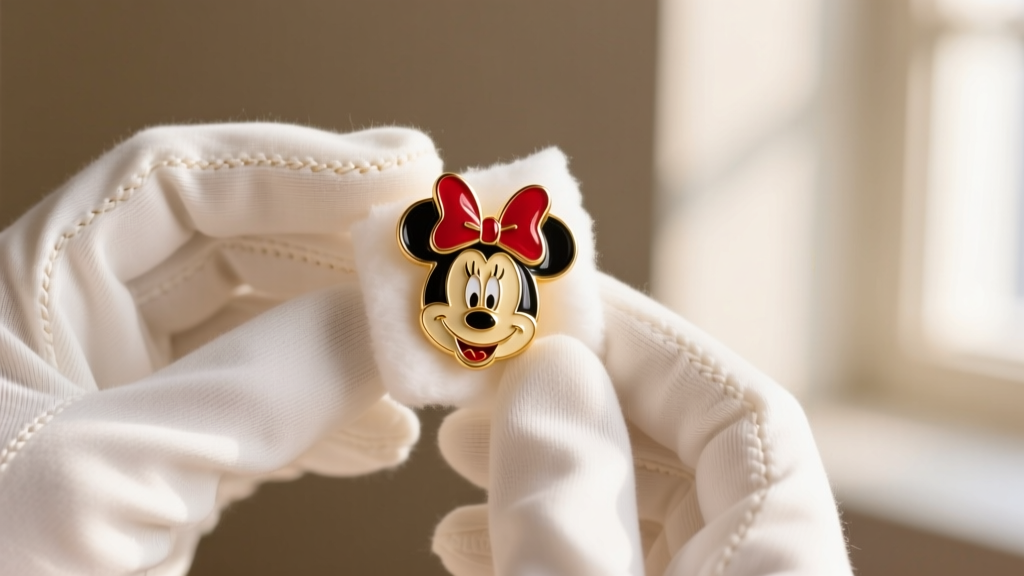
Earring Post Hygiene: The Overlooked Necessity
While the decorative face of your Minnie Mouse earrings gets all the attention, the earring post is a critical hygiene vector. Most licensed studs utilize 20-gauge (0.81mm) or 18-gauge (1.0mm) posts. Over time, these posts accumulate sebum, dead skin cells, and cosmetic residues in the microscopic grooves near the backing notch. This buildup is the primary cause of contact dermatitis and 'earring stink,' rather than an allergy to the metal itself.
Expert Tip: To sanitize the post without destroying the gold plating on the decorative face, dip a cotton swab in 70% isopropyl alcohol and vigorously swab only the metal post and the earring backing. Keep the alcohol strictly away from cold enamel and porous gemstones, as it will dissolve epoxy resins and strip surface dyes.
The Enemies of Novelty Gold Earrings
To preserve the structural integrity and aesthetic brilliance of your Minnie Mouse gold earrings, you must actively avoid the following environmental and chemical hazards:
- Ultrasonic Cleaners: Operating at high-frequency sound waves (typically 40 kHz), ultrasonic cleaners create microscopic cavitation bubbles. While excellent for solid gold, these shockwaves will instantly shatter cold enamel and vibrate glued-in pavé stones right out of their settings.
- Chlorine and Bromine: Whether from swimming pools or household bleach, halogens aggressively attack gold alloys and plating. Chlorine causes a chemical reaction that permanently weakens the crystalline structure of the metal, leading to stress corrosion cracking and severe pitting.
- Aerosol Hairsprays and Perfumes: The volatile organic compounds (VOCs) and alcohols in hair and body products create a stubborn, cloudy film over cubic zirconia, completely masking its light return. Over time, these chemicals also degrade the glossy finish of cold enamel.
- Commercial Silver Dips: Never use chemical tarnish removers on vermeil or plated pieces. The thiourea-based acids in these dips will strip the gold layer entirely, leaving you with bare, rapidly tarnishing silver or brass.
Strategic Storage Solutions
Proper storage is 80% of jewelry maintenance. The goal is to minimize exposure to atmospheric sulfur (which causes tarnish) and physical friction (which causes micro-scratches on soft gold plating). Below is a comparative framework for storing your Disney collection.
| Storage Method | Pros | Cons | Best For |
|---|---|---|---|
| Original Retail Boxes | Prevents physical crushing; looks aesthetic. | Often lacks anti-tarnish properties; traps humidity if not climate-controlled. | Short-term display or gifting. |
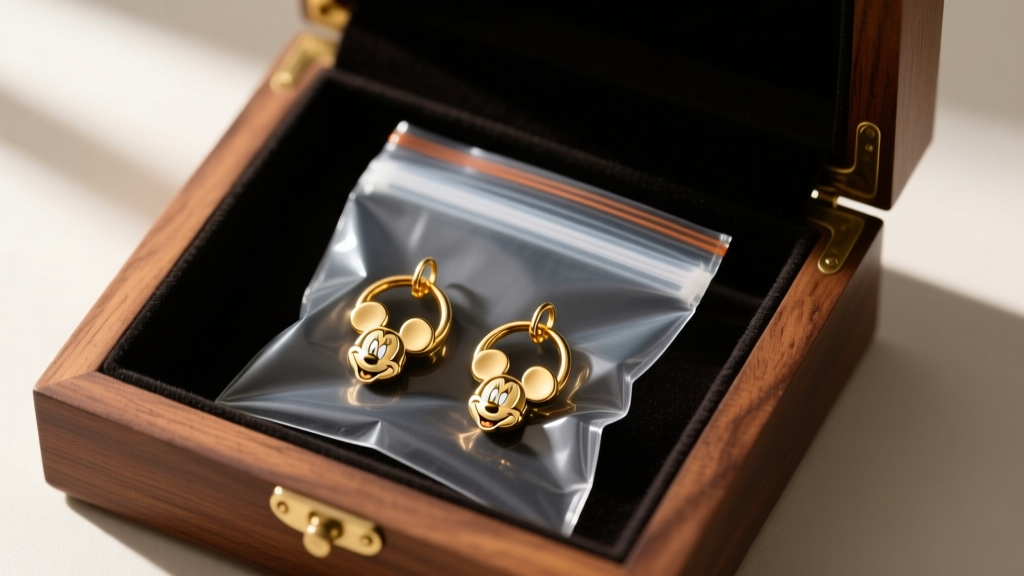
| Polyethylene Zip Bags | Blocks airborne sulfur and moisture; inexpensive. | Does not actively absorb existing tarnish-causing gases. | Everyday storage for all tiers. |
| Anti-Tarnish Flannel Pouches | Contains silver/copper particles that absorb sulfur. | Can trap moisture if stored in a humid bathroom. | Demi-fine and solid gold pieces. |
| Silica Gel Packets | Aggressively absorbs ambient moisture. | Must be replaced every 3-6 months to remain effective. | Use inside zip bags for enamel pieces. |
Troubleshooting Common Minnie Earring Issues
Issue: The Gold Plating is Rubbing Off
If you notice the brass or silver base metal showing through on the high-contact points of your Minnie silhouette (such as the edges of the ears or the bow loop), the flash plating has worn away due to friction. Solution: Stop wearing the earrings immediately to prevent skin discoloration. Take them to a local bench jeweler who can perform an electroplating service to re-plate the piece with a thicker layer of 14k gold, extending its lifespan by several years.
Issue: Cubic Zirconia Stones Look Cloudy
CZ has a high refractive index but is highly susceptible to oil accumulation. If your Minnie earrings look dull, the stones are likely coated in a microscopic layer of skin oils and lotion. Solution: Use a wooden toothpick or a soft interdental brush to gently dislodge debris from the underside of the stone's pavilion. Follow up with a gentle wipe using a lint-free cloth dampened with a tiny amount of glass cleaner (applied to the cloth, never sprayed directly on the earring).
Issue: Green Discoloration on the Earlobe
This is not an infection; it is a harmless chemical reaction between the copper in the brass base metal and the acids in your sweat. Solution: For a quick, temporary fix, paint the earring post and the back of the decorative face with a thin layer of clear, hypoallergenic nail polish to create a barrier between the metal and your skin. For a permanent fix, have a jeweler swap the 20-gauge brass post for a solid 14k gold or implant-grade titanium post.
Final Thoughts on Preserving the Magic
Minnie Mouse gold earrings are more than just accessories; they are wearable expressions of fandom and nostalgia. By treating them not as indestructible trinkets, but as complex, mixed-media jewelry pieces requiring specific chemical and physical care, you can ensure they remain vibrant and sparkling. Ditch the harsh commercial dips, embrace the gentle power of distilled water and microfiber, and always prioritize climate-controlled storage. With these expert protocols, your favorite Disney ears and bows will continue to shine brilliantly for years to come.


