Expert Cleaning and Care for Orange and Blue Earrings
Learn how to safely clean orange and blue earrings. Discover expert maintenance tips for sapphire, citrine, turquoise, coral, and enamel pairings.

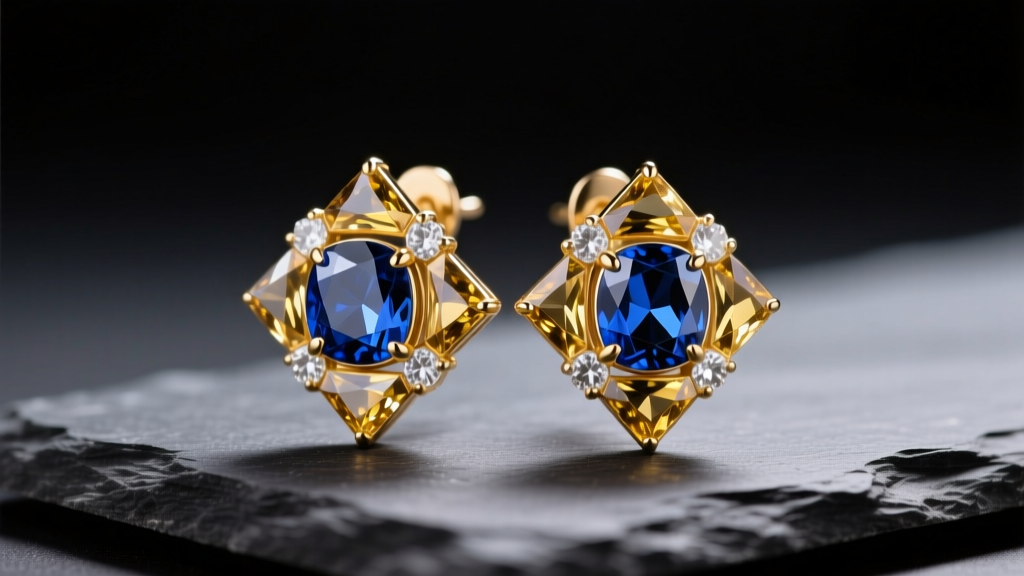
The Material Science Behind Orange and Blue Pairings
When you invest in a striking pair of orange and blue earrings, you are leveraging one of the most dynamic complementary color pairings on the color wheel. However, from a gemological and metallurgical perspective, caring for these earrings is never about the colors themselves—it is entirely about the specific materials used to achieve those hues. The cleaning protocol for a pair of blue sapphire and orange citrine studs is vastly different from the regimen required for turquoise and coral dangles, or enameled and anodized titanium hoops.
As a general rule in jewelry maintenance, the Mohs scale of mineral hardness and the chemical porosity of the materials dictate your cleaning boundaries. Using the wrong chemical agent or mechanical cleaner can permanently strip an anodized layer, fracture a porous organic gem, or cloud a delicate enamel finish. This comprehensive guide breaks down the exact care, maintenance, and cleaning methodologies required to keep your orange and blue earrings vibrant and structurally sound for decades.
Gemstone Pairings: Hard Stones vs. Porous Organics
The most common way jewelers create orange and blue earrings is by pairing contrasting gemstones. Understanding the physical properties of these stones is the first step in preventing catastrophic damage during your cleaning routine.
Cleaning Hard Stones: Sapphire and Citrine
Blue sapphires (corundum) rank at a 9 on the Mohs scale, while orange citrines (quartz) rank at a 7. Both are exceptionally durable, non-porous crystalline structures. According to the Gemological Institute of America (GIA), sapphires can safely withstand ultrasonic cleaners and steam, provided they are not heavily included or fracture-filled. Citrine is similarly resilient but can be sensitive to extreme thermal shock, which may cause internal stress fractures if moved rapidly from hot steam to cold water.
The Protocol: For sapphire and citrine orange and blue earrings, a mild solution of warm distilled water and a few drops of pH-neutral dish soap (like Dawn) is ideal. Soak for 15 minutes, then gently agitate the pavilion (back) of the stones with a baby-soft toothbrush to remove sebum and lotion buildup that dulls light return.
Protecting Porous Stones: Turquoise and Coral
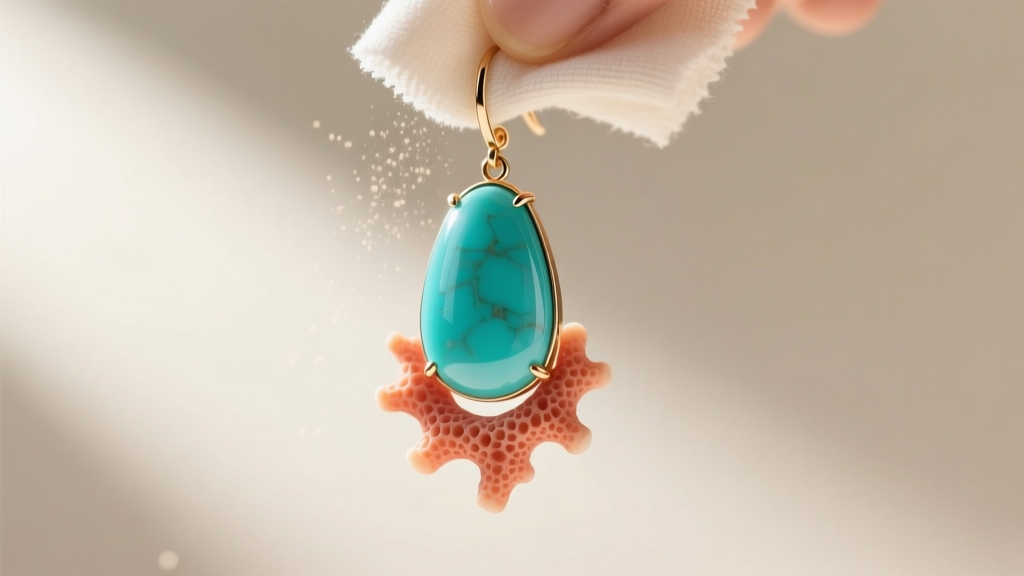
If your orange and blue earrings feature blue turquoise and orange coral, you are dealing with highly reactive, porous materials. Coral is an organic gemstone composed primarily of calcium carbonate, ranking a mere 3 to 4 on the Mohs scale. Turquoise is a hydrous phosphate of copper and aluminum, ranking 5 to 6. The GIA explicitly warns against using ultrasonic or steam cleaners on turquoise, as the heat and vibrations can shatter the stone or alter its chemical hydration.
Furthermore, orange coral is highly susceptible to acid etching. Even the natural acidity of human sweat, or mild household cleaners containing vinegar or citrus, will chemically react with the calcium carbonate, leaving permanent dull white spots on the polished surface. Never soak turquoise or coral. Instead, wipe them gently with a damp, lint-free microfiber cloth immediately after wearing to remove skin oils, and dry them thoroughly before storage.
Enamel and Anodized Titanium: Preserving Vibrant Hues
Not all orange and blue earrings rely on gemstones. Modern and artisanal jewelry frequently utilizes vitreous enamel or anodized titanium to achieve these bold, opaque, or metallic colors. These materials require a radically different approach to maintenance.
The Fragility of Vitreous Enamel
Cloisonné and guilloché enamels are essentially glass fused to a metal substrate at high temperatures. While the colors are incredibly stable and UV-resistant, the glass itself is brittle. Steam cleaners are the enemy of enameled jewelry; the rapid thermal expansion can cause the glass to craze (develop micro-cracks) or pop entirely off the metal backing. Always clean enameled orange and blue earrings with a soft cloth and room-temperature soapy water, avoiding the metal prongs or bezels where moisture can become trapped and cause underlying metal oxidation.
Anodized Titanium: Voltage and Oxide Layers
Titanium is a hypoallergenic marvel for sensitive earlobes and cartilage piercings. The brilliant oranges and blues seen in titanium huggies and threadless ends are not paints or dyes; they are created through anodization. By running an electrical current through the titanium in an electrolyte bath, a transparent oxide layer forms on the surface. The thickness of this layer, controlled by voltage, dictates the color. Orange typically requires around 80 to 90 volts, while deep blues require 90 to 110 volts.
Critical Warning: This oxide layer is only a few nanometers thick. Using abrasive polishing cloths, baking soda pastes, or harsh chemicals like ammonia will physically strip the oxide layer, permanently reverting the jewelry to its raw, dull grey state. To clean anodized titanium, use only a mild, non-abrasive liquid soap and your fingertips.
Material Compatibility and Cleaning Agent Chart
To prevent irreversible damage, reference this compatibility matrix before applying any cleaning agent to your orange and blue earrings.
| Material Combination | Ultrasonic Safe? | Steam Safe? | Ammonia/Bleach Safe? | Recommended Cleaning Method |
|---|---|---|---|---|
| Sapphire (Blue) & Citrine (Orange) | Yes (if no fractures) | Yes | Yes (diluted) | Warm soapy soak + soft brush |
| Turquoise (Blue) & Coral (Orange) | NO | NO | NO | Damp microfiber wipe only |
| Cloisonné Enamel (Blue/Orange) | NO | NO | NO | Room-temp soapy water + soft cloth |
| Anodized Titanium (Blue/Orange) | NO | NO | NO | Mild liquid soap + fingertips |
Step-by-Step Cleaning Routine for Multi-Gem Drops
For complex drop earrings featuring a mix of durable blue and orange gemstones (e.g., London Blue Topaz and Carnelian) set in 14k or 18k gold, follow this precise 5-minute routine to restore brilliance without loosening the settings.
Tools You Actually Need
- Distilled Water: Tap water contains chlorine and hard minerals that can leave microscopic calcium deposits on gemstone facets.
- pH-Neutral Dish Soap: Avoid soaps with added moisturizers or citrus degreasers.
- Baby Toothbrush: The bristles must be ultra-soft to prevent micro-scratching the gold bezels or prongs.
- Wooden Toothpick: For carefully dislodging debris from the gallery (the underside of the setting).
The 5-Minute Soak and Brush Method
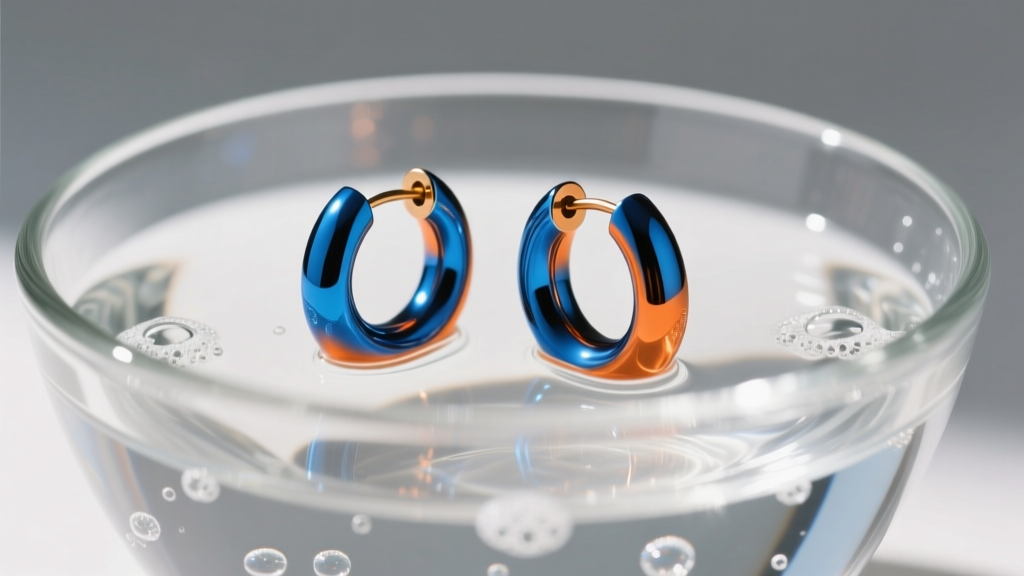
- Mix one cup of lukewarm distilled water with three drops of pH-neutral dish soap in a glass bowl.
- Submerge the earrings for exactly 5 minutes. This softens sebum and cosmetic residue without compromising the metal alloy.
- Remove the earrings and gently brush the crowns (tops) of the stones in a circular motion.
- Flip the earring and use the baby toothbrush to sweep the pavilion facets, where light-blocking grease accumulates.
- Use the wooden toothpick to gently scrape the junction where the prong meets the gemstone girdle. Never use metal needles, as they will scratch the gold and weaken the prong tension.
- Rinse under a gentle stream of lukewarm distilled water and pat dry with a lint-free optical cloth.
Storage and Environmental Damage Prevention
Improper storage is the leading cause of degradation in multi-colored jewelry. Because orange and blue earrings often pair stones of vastly different hardness levels, they must never be tossed loosely into a communal jewelry box. If a sapphire (Mohs 9) rests against a citrine (Mohs 7) or a coral (Mohs 3) during transit, the harder stone will act as a lapidary file, permanently scratching the softer gem's surface.
Store each pair in its own soft flannel pouch or a dedicated compartment in a tarnish-resistant jewelry box. For silver settings paired with turquoise or coral, include a small silica gel packet in the storage compartment to control ambient humidity, which accelerates silver sulfide tarnishing. Keep all enameled and anodized pieces away from direct, prolonged UV exposure and extreme temperature fluctuations, such as leaving them on a car dashboard.
Troubleshooting Common Issues
Even with meticulous care, environmental factors and daily wear can introduce issues. Here is how to troubleshoot the most common problems associated with orange and blue earrings.
Persistent Cloudiness in Gemstones
If your citrine or topaz remains cloudy after a thorough soak, the buildup is likely not on the surface, but trapped beneath a semi-bezel or inside a closed-back setting. Moisture and soap residue can become sealed behind the stone. In this case, do not attempt to pry the setting open. Take the earrings to a professional jeweler who can use a low-pressure steam wand from a specific angle to flush the cavity without damaging the stone.
Fading in Dyed or Treated Stones
Be aware that some vibrant orange and blue stones on the market are dyed. Howlite is frequently dyed blue to imitate turquoise, and pale agate is dyed orange. If you notice color transferring to your cleaning cloth or the water turning murky, stop immediately. Dyed stones are highly unstable and should only be dry-dusted with a soft brush.
Expert Prong Check: Twice a year, use a 10x jeweler's loupe to inspect the prongs holding your blue and orange gemstones. Look for 'lifting' (where the prong no longer sits flush against the stone's crown) or thinning of the metal tip. Catching a worn prong early prevents the loss of a valuable gemstone.
When to See a Professional Jeweler
While home maintenance is excellent for surface cleaning, certain situations require professional intervention. If your orange and blue earrings feature intricate pavé settings (dozens of micro-stones held by tiny metal beads), home brushing can easily snag and lift these microscopic prongs. Furthermore, if your coral or turquoise shows signs of structural cracking, or if your enameled pieces develop hairline fractures, a master jeweler or specialized lapidary must stabilize the piece using specialized optical resins or re-firing techniques. By respecting the material science behind your jewelry, your orange and blue earrings will remain a vibrant, head-turning staple in your collection for a lifetime.


