The Silver Forest Earrings Catalog: 2026 Buyer's Guide
Explore the Silver Forest earrings catalog with our 2026 buying guide. Learn about materials, sizing, collections, and how to spot authentic artisan pieces.

Decoding the Silver Forest Earrings Catalog
When navigating the extensive Silver Forest earrings catalog, buyers are often captivated by the brand's signature blend of nature-inspired motifs and Art Deco geometry. Founded in Rhode Island, Silver Forest has carved a unique niche in the artisan jewelry market, frequently found in museum gift shops, botanical garden boutiques, and high-end galleries. However, as we move through 2026, the catalog has expanded to include hundreds of distinct SKUs, making it crucial for collectors and everyday wearers to understand the specific metallurgy, gauge sizing, and structural nuances of these pieces before purchasing.
Unlike mass-produced fast-fashion jewelry, Silver Forest pieces are hand-finished in the USA. But this artisan approach also means that material compositions vary wildly from one collection to the next. This guide will break down exactly what to look for when shopping the catalog, ensuring you select pieces that match your aesthetic preferences, skin sensitivities, and lifestyle requirements.
Material Science: Surgical Steel Meets Artisan Plating
The most defining characteristic of the Silver Forest earrings catalog is its hybrid material construction. The brand frequently pairs hypoallergenic posts with intricately cast, silver-plated decorative fronts. Understanding this dichotomy is essential for buyers with sensitive ears.
The 316L Surgical Steel Post
For the post—the part that actually pierces the skin—Silver Forest predominantly uses 316L surgical stainless steel. According to the American Academy of Dermatology, nickel is the most common cause of contact dermatitis in jewelry. While 316L steel does contain trace amounts of nickel, it is tightly bound within the alloy's crystalline structure, making it highly biocompatible and safe for the vast majority of wearers. However, if you have a severe, clinically diagnosed nickel allergy, you must verify if a specific catalog piece offers an implant-grade titanium post alternative, as standard surgical steel may still trigger a reaction in highly sensitive individuals.
Silver-Plated Brass vs. Solid Sterling
The decorative fronts are typically cast in lead-free pewter or brass and then heavily silver-plated. The Federal Trade Commission (FTC) Jewelry Guides mandate strict thickness and purity standards for items marketed as 'silver-plated.' Silver Forest adheres to these guidelines, applying a thick mil-layer of .925 sterling silver over the base metal. This provides the brilliant luster of solid silver at a fraction of the weight and cost, though it requires specific care to prevent the base metal from eventually bleeding through.
Navigating the Core Collections
The catalog is broadly divided into two primary aesthetic and structural categories. Knowing the difference will help you predict the durability and weight of the earrings you are buying.
Botanical & Nature Motifs
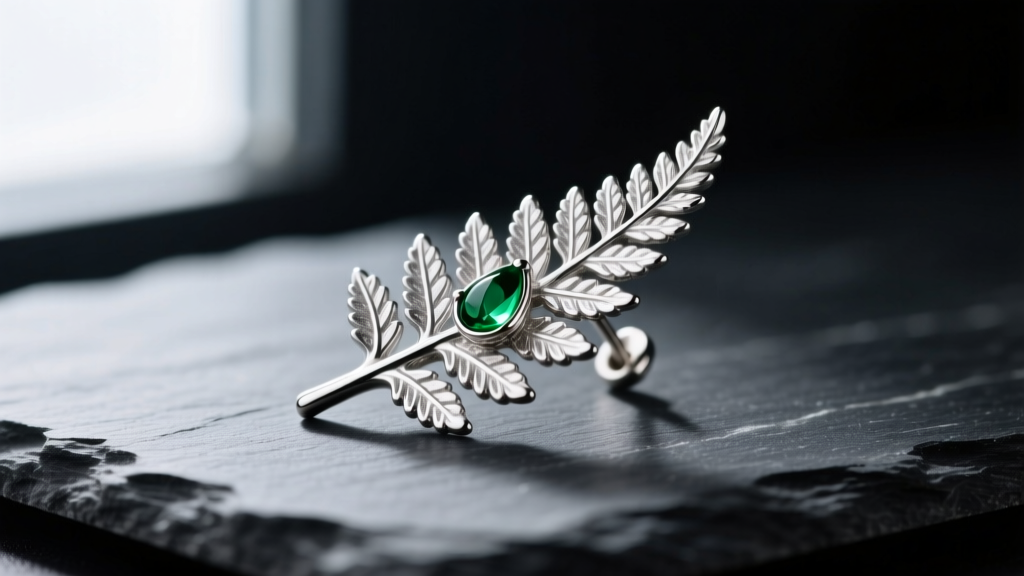
This is the brand's flagship category. Featuring hyper-detailed oak leaves, ferns, gingko, and wildlife, these pieces are usually cast using a lost-wax method in lead-free pewter. The resulting earrings are remarkably lightweight but feature deep, organic textures. Because they rely entirely on metallic luster without added color, they are highly resistant to everyday wear and tear, lacking any fragile surface coatings that could chip.
Geometric & Cold Enamel Series
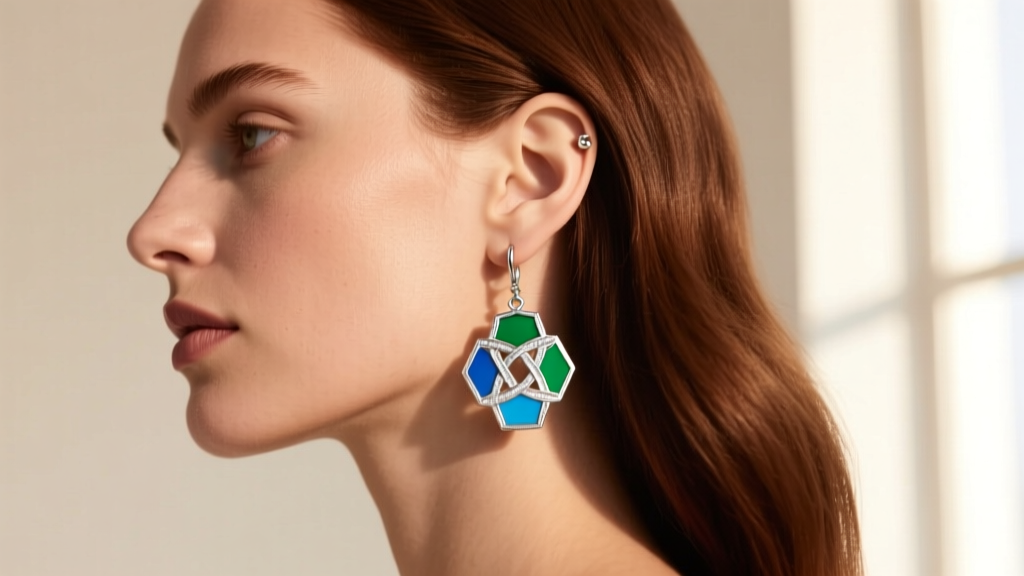
For buyers seeking color, the catalog offers striking Art Deco and geometric drops utilizing 'cold enamel.' It is vital to understand that this is not traditional vitreous enamel (fused glass). Instead, it is a high-grade, two-part epoxy resin that is hand-painted and cured. While this allows for vibrant, opaque colors like lapis blue, malachite green, and coral red, it is fundamentally a plastic polymer. It is durable against moisture but vulnerable to sharp impacts and prolonged UV exposure.
| Catalog Category | Base Material | Post Material | Avg. Price Range | Best Use Case |
|---|---|---|---|---|
| Botanical Studs | Lead-Free Pewter / Silver Plate | 316L Surgical Steel (20G) | $24 - $38 | Everyday lobe wear |
| Enamel Geometric Drops | Brass / Silver Plate / Epoxy | 316L Surgical Steel (20G) | $42 - $65 | Office / Statement |
| Semi-Precious Dangles | Sterling Silver / Natural Stone | Sterling Silver (18G-20G) | $75 - $120 | Evening / Special Event |
Sizing, Gauge, and the 'Cheese-Cutter' Effect
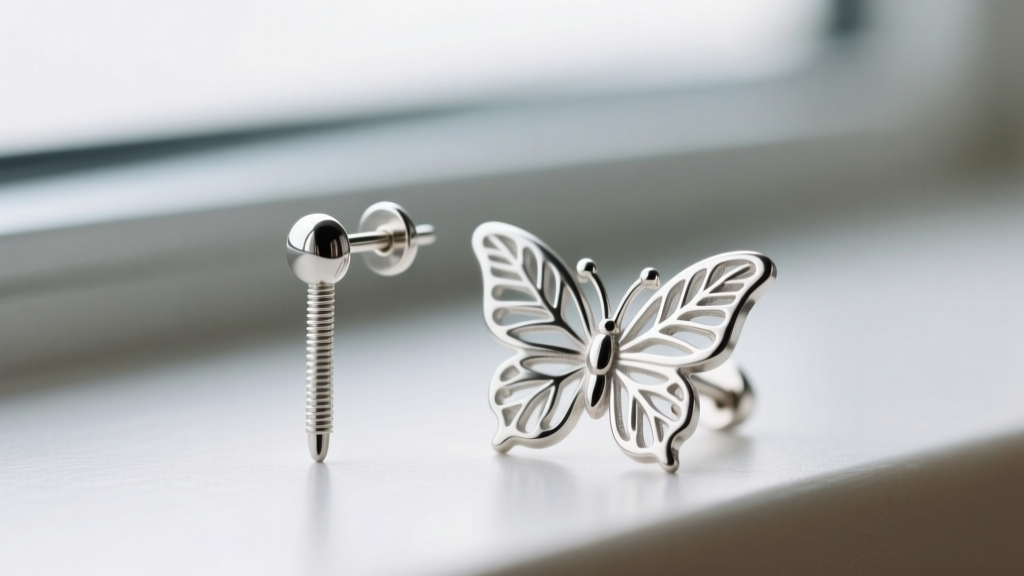
A critical, often overlooked aspect of the Silver Forest earrings catalog is the post gauge and weight distribution. The vast majority of their stud and drop earrings are fitted with standard 20-gauge (0.81mm) posts. This is the industry standard for standard earlobe piercings and will fit comfortably through healed lobes.
However, buyers must be cautious when selecting the heavier, elongated dangle earrings from the catalog. If you have stretched earlobes or slightly enlarged piercing holes, a heavy 2-inch drop earring on a thin 20G post will create what piercers call the 'cheese-cutter effect.' The downward momentum of the heavy cast metal will cause the thin wire to slowly migrate downward through the tissue, eventually tearing the lobe. If you are buying large drops from the catalog, always check the product weight; anything exceeding 12 grams per earring should be worn with caution on a 20G post, or you should utilize silicone support patches (like 'Lobe Wonder') to distribute the weight across a wider surface area of the ear.
Real-World Failure Modes & Troubleshooting
As an artisan brand, Silver Forest jewelry is built with care, but it is not indestructible. When evaluating vintage pieces from the catalog or deciding how to wear new ones, keep these specific failure modes in mind:
- Solder Joint Shearing: The surgical steel post is laser-welded or silver-soldered to the back of the decorative pewter/brass front. If the earring is snagged forcefully on a winter sweater or towel, the post will typically snap cleanly at the solder joint rather than bending. This is a clean break, but it requires professional jeweler repair to re-solder; superglue will not hold the sheer force of a steel post against base metal.
- Epoxy Yellowing: The cold enamel (epoxy) used in their geometric collections is susceptible to UV degradation. If you frequently wear the white, pale pink, or light blue enamel pieces outdoors in direct sunlight over several years, the resin will inevitably develop a yellowish tint. Darker colors like navy, forest green, and black are immune to this visual degradation.
- Stone Bezel Loosening: For catalog pieces featuring semi-precious cabochons (like turquoise or lapis), the stones are held in place by glued bezel cups. Exposing these earrings to chlorine in swimming pools or harsh chemical cleaners will dissolve the adhesive, causing the stone to pop out.
Authentication and Care Protocols
Because Silver Forest is a highly recognizable brand in the boutique space, secondary markets are occasionally flooded with misattributed 'vintage' pieces. Authentic catalog pieces will almost always feature a distinct 'SF' stamp on the back of the earring post pad, or they will be sold with the original branded display card featuring the Silver Forest logo and Rhode Island manufacturing mark.
When it comes to maintenance, treat these pieces as you would fine museum artifacts. The Gemological Institute of America (GIA) strongly advises against using ultrasonic cleaners or liquid silver dips on plated jewelry. The high-frequency vibrations of an ultrasonic bath will shatter the cold enamel and loosen the semi-precious stone bezels, while liquid dips will strip the silver plating right off the pewter base, leaving a dull, grayish-white finish. Instead, use a dry, untreated microfiber polishing cloth to gently buff the silver-plated surfaces after each wear, removing skin oils and sulfur compounds before they can cause permanent tarnishing.
"The true value of the Silver Forest earrings catalog lies not in the intrinsic melt-value of its metals, but in the artisanal craftsmanship, the hypoallergenic engineering of its posts, and the wearable artistry of its designs. Buy with an understanding of its materials, and these pieces will easily outlast fleeting jewelry trends."


