Expert Care & Cleaning for Sapphire Flower Earrings
Learn expert cleaning and maintenance tips for sapphire flower earrings. Protect your gemstones and metal settings from daily wear and tarnish.

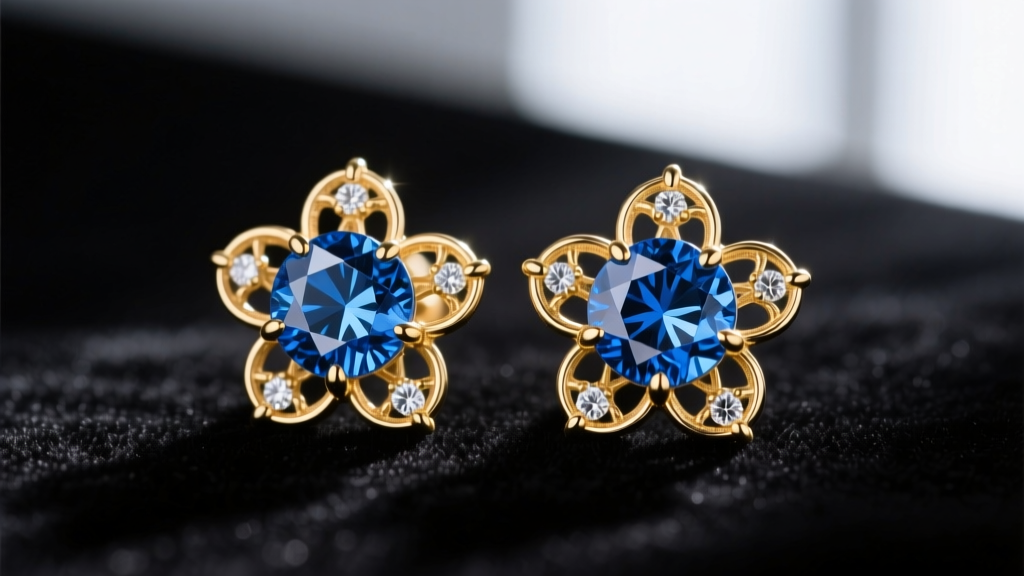
The Unique Challenges of Floral Gemstone Settings
Sapphire flower earrings are a masterclass in jewelry design, combining the exceptional durability of corundum with the delicate, intricate metalwork of floral motifs. However, as of 2026, jewelers continue to see an influx of damaged vintage-inspired floral settings due to improper at-home care. While the sapphire itself is incredibly resilient, the architectural complexity of petal-shaped prongs, pavé halos, and engraved leaves creates microscopic traps for sebum, cosmetic residues, and environmental dust. Over time, this buildup not only dulls the gemstone's brilliance by blocking light from entering the pavilion but also accelerates metal degradation. Understanding the specific vulnerabilities of your sapphire flower earrings is the first step toward preserving their heirloom quality.
Identifying Your Sapphire Treatment and Metal Alloy
Before applying any cleaning solution, you must identify both the treatment of your sapphires and the specific metal alloy of the setting. According to the Gemological Institute of America (GIA), the cleaning protocol changes drastically based on how the gemstone was enhanced:
- Heat-Treated Sapphires: The most common enhancement. These are highly stable and can safely withstand warm soapy water and gentle brushing.
- Lattice-Diffused Sapphires: Color is introduced via chemical diffusion at high heat. While generally stable, aggressive polishing or harsh chemical dips can alter the surface layer over time.
- Fracture-Filled (Lead-Glass) Sapphires: These are extremely vulnerable. The glass filler can be dissolved by mild acids (even lemon juice or vinegar) and shattered by ultrasonic vibrations. If your floral earrings feature fracture-filled stones, they must only be wiped with a damp, untreated microfiber cloth.
Similarly, the metal alloy dictates your chemical boundaries. If your floral settings are crafted from 14k or 18k white gold, they are likely plated with rhodium. Harsh abrasives will strip this plating, exposing the yellowish underlying alloy. Sterling silver (925) floral settings, on the other hand, are prone to deep oxidation within the engraved petal crevices, requiring specialized anti-tarnish care.
The Safe Step-by-Step Cleaning Protocol
For standard heat-treated sapphires set in gold or platinum, follow this meticulous cleaning routine to restore brilliance without compromising the delicate floral prongs.
Step 1: The Hydrating Soak
Fill a small glass bowl with distilled water and a few drops of phosphate-free, mild dish soap (such as Dawn). Avoid tap water, as heavy minerals and chlorine can leave a micro-film on the sapphire's table. Submerge the earrings for 15 to 20 minutes. This crucial step softens hardened lotions and dead skin cells trapped beneath the gemstone's gallery.
Step 2: Targeted Agitation
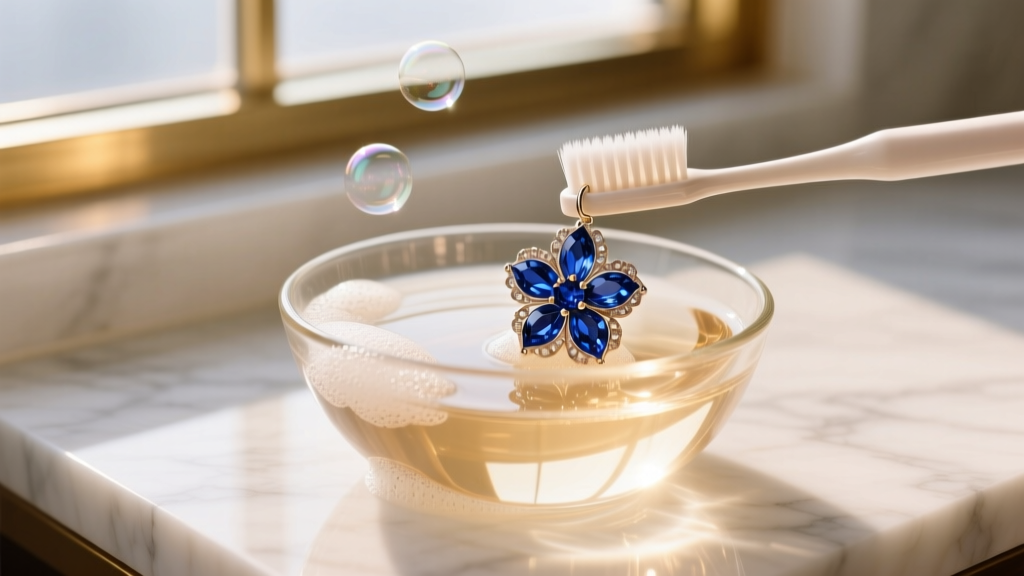
Using an extra-soft baby toothbrush, gently agitate the setting. Do not scrub the metal aggressively. Instead, use a circular motion to coax debris out from under the sapphire's pavilion (the bottom facets) and between the intricate metal petals. The underside of the stone is where light blockage occurs; cleaning the pavilion is the secret to restoring that coveted 'sparkle'.
Step 3: The Precision Rinse and Dry
Rinse the earrings under a gentle stream of lukewarm distilled water. Ensure the drain is securely plugged or use a mesh strainer. Pat dry with a lint-free microfiber cloth. Avoid cotton swabs or tissue paper, as the fibers can easily snag on the delicate tips of the floral prongs, pulling them away from the gemstone girdle.
Chemical and Mechanical Hazards to Avoid
Many well-intentioned jewelry owners destroy their sapphire flower earrings by utilizing modern cleaning shortcuts. Here is what you must avoid:
- Ultrasonic Cleaners: While sapphires are a 9 on the Mohs hardness scale and can technically withstand ultrasonic waves, the settings often cannot. High-frequency vibrations can shake loose stones if the petal prongs are already worn. Furthermore, if the earrings feature secondary accent stones like emeralds, opals, or pearls woven into the floral design, the ultrasonic heat and vibrations will fracture them.
- Steam Cleaners: The sudden thermal shock of high-pressure steam can cause internal inclusions within natural sapphires to expand, potentially leading to structural fracturing.
- Chlorine Exposure: Never wear your earrings in swimming pools or hot tubs. Chlorine reacts with the copper and zinc alloys in 14k and 18k gold, causing 'stress corrosion cracking.' This microscopic degradation weakens the delicate prongs holding your sapphire petals, leading to sudden stone loss.
Maintenance Matrix: Wear Frequency vs. Care
To maintain the structural integrity and optical brilliance of your earrings, adhere to a maintenance schedule based on your wear habits. The Jewelers of America recommends regular professional inspections for intricate settings.
| Wear Frequency | At-Home Cleaning Schedule | Professional Inspection & Servicing | Primary Risk Factors |
|---|---|---|---|
| Daily Wear | Every 2 weeks | Every 6 months | Prong wear, sebum buildup, rhodium loss |
| Weekly / Office Wear | Once a month | Annually | Cosmetic buildup, minor tarnish |
| Occasional / Evening | After every 3 wears | Every 18-24 months | Storage oxidation, dust accumulation |
Prong Inspection and the 'Tap Test'
Floral settings often utilize 'petal prongs' or 'leaf claws' that are thinner and more ornate than standard round prongs. Because they cover less of the sapphire's girdle, they are more susceptible to bending. Once a month, perform the 'tap test': gently tap the sapphire with your fingernail or a wooden toothpick near the edge of the setting. If you hear a faint rattling sound, or if the stone shifts even a fraction of a millimeter, stop wearing the earrings immediately. A loose stone will quickly abrade the interior of the metal setting, leading to costly re-tipping services (typically $40 to $90 per prong) or total stone loss. For a closer look, use a 10x jeweler's loupe to check that the metal is resting flush against the sapphire's crown.
Strategic Storage to Protect Metalwork and Gemstones
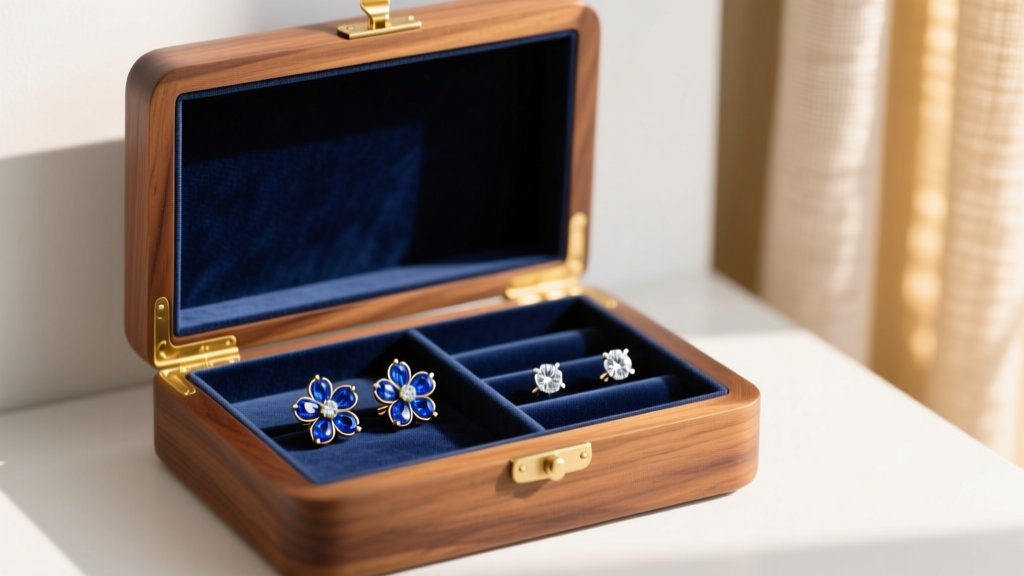
Because sapphire is a 9 on the Mohs scale, it is harder than almost all other gemstones and precious metals. If you toss your sapphire flower earrings into a communal jewelry box, the sapphires will easily scratch your gold hoops, silver chains, and softer stones like garnets or tourmalines. Conversely, if stored alongside diamonds (Mohs 10), the diamonds can scratch the polished metal of your floral settings.
Always store sapphire flower earrings in individual, soft-lined compartments or dedicated anti-tarnish flannel pouches. If your earrings feature sterling silver settings, include a silica gel packet or a 3M anti-tarnish strip in the storage pouch to absorb ambient moisture and sulfur compounds that cause deep, hard-to-remove oxidation in the engraved floral crevices. By combining meticulous cleaning with strategic storage, your sapphire flower earrings will retain their botanical brilliance and structural security for generations.


