How to Safely Clean and Maintain Stick Pearl Earrings
Learn how to safely clean, store, and maintain stick pearl earrings. Expert tips on protecting nacre, checking epoxy glue, and preserving post metals.

Stick pearl earrings—characterized by a single, perfectly spherical or baroque pearl mounted on a straight, needle-like metal post—are a cornerstone of fine jewelry. Whether you are wearing classic 8mm Akoya studs or dramatic 12mm South Sea drops, these pieces project effortless elegance. However, pearls are organic gemstones, and their unique biological composition makes them highly susceptible to environmental damage, chemical erosion, and physical scratching. In 2026, with the market offering everything from heavily treated low-grade freshwater pearls to pristine, unheated Hanadama-certified Akoyas, understanding the precise care requirements of your stick pearl earrings is essential to preserving their luster and structural integrity.
The Anatomy of Stick Pearl Earrings: Why They Require Special Care
Unlike diamonds or sapphores, which are formed from inorganic crystal lattices, pearls are biogenic. They are composed of aragonite (a crystalline form of calcium carbonate) held together by conchiolin, an organic protein secreted by the mollusk. This combination creates nacre, the iridescent outer layer responsible for a pearl's luster and orient. Because conchiolin is organic and contains trace amounts of water, pearls are inherently sensitive to extreme dryness, high heat, and acidic or alkaline substances.
Furthermore, the construction of a stick pearl earring introduces a specific mechanical vulnerability. Unlike bead necklaces where pearls are fully drilled and strung on silk, stick earrings typically utilize a half-drilled blind hole. The metal post is inserted into this cavity and secured with jeweler's epoxy. If moisture, lotions, or sweat penetrate the microscopic gap between the metal post and the drill hole, it can degrade the adhesive bond or cause base-metal posts to corrode and expand, ultimately cracking the pearl from the inside out.
The Mohs Scale and Nacre Vulnerability
On the Mohs scale of mineral hardness, pearls rank between 2.5 and 4.5. To put this into perspective, a copper penny is a 3.5, and a steel knife blade is a 5.5. This means that everyday dust—which often contains microscopic quartz particles (hardness 7)—can easily scratch the nacre of your stick pearl earrings if wiped aggressively without rinsing first. According to the Gemological Institute of America (GIA), abrasive damage is one of the most common and irreversible issues seen in pearl jewelry, manifesting as a dull, chalky patch on the surface where the aragonite platelets have been physically scraped away.
Step-by-Step Cleaning Protocol for Pearl Studs
Routine maintenance is the best defense against permanent nacre damage. You should clean your stick pearl earrings after every few wears, especially if they have been exposed to perspiration, perfume, or high humidity. Never use ultrasonic or steam cleaners; the high-frequency vibrations can shatter the pearl, and the intense heat will dehydrate the conchiolin, causing severe crazing (surface cracking).
What You Need
- Distilled or filtered water (tap water often contains chlorine and heavy minerals)
- Unscented, pH-neutral liquid Castile soap
- Two lint-free microfiber cloths
- A soft-bristled cosmetic brush (optional, for the post area)
The Wiping Technique
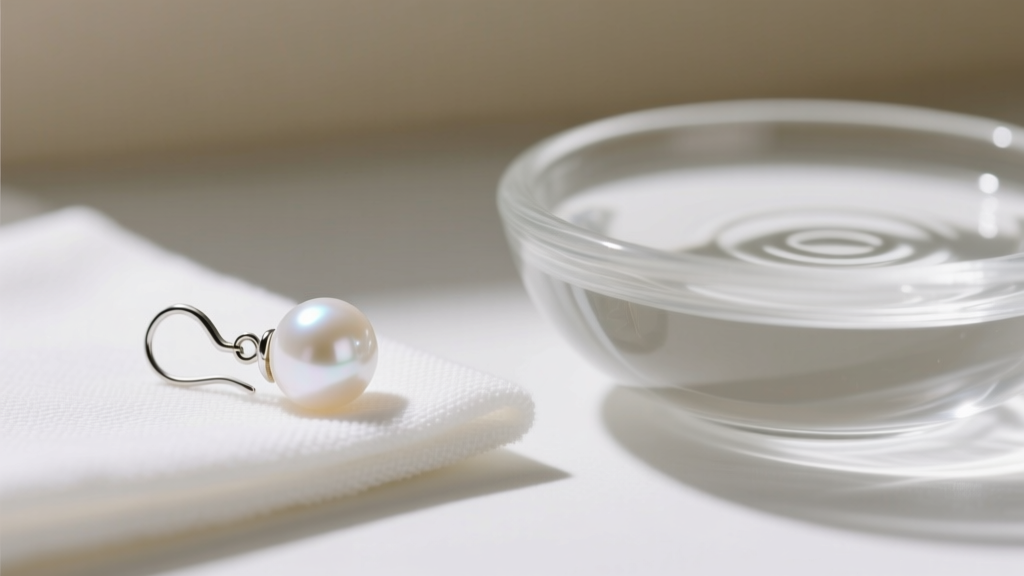
Begin by mixing a few drops of the Castile soap into a small bowl of distilled water. Dampen the first microfiber cloth in the solution and wring it out until it is only slightly moist—never soaking wet. Gently wipe the surface of the pearl, following its natural contour. Do not submerge the earring. Submerging allows water to seep into the half-drilled hole, which compromises the epoxy glue. Use the soft cosmetic brush, lightly dampened, to gently sweep away debris where the metal post meets the base of the pearl. Finally, use the second, dry microfiber cloth to buff the pearl gently and absorb any residual moisture. Allow the earrings to air-dry completely on a soft towel before storing them.
Chemical Hazards: What Destroys Pearl Nacre
The calcium carbonate structure of nacre reacts violently with acids and harsh alkalis. The Jewelers of America strictly advises against using commercial jewelry dips, ammonia-based cleaners, or vinegar on any organic gemstone. Below is a breakdown of common household chemicals and their specific effects on stick pearl earrings.
| Chemical / Substance | Effect on Pearl Nacre | Effect on Metal Post (14k/18k Gold) |
|---|---|---|
| Ammonia (Glass Cleaner) | Dissolves aragonite, causing permanent etching and dullness. | Can weaken gold alloys over time. |
| Chlorine (Pools/Bleach) | Pits the surface and degrades the conchiolin protein. | Causes stress corrosion cracking in karat gold. |
| Acetic Acid (Vinegar) | Creates a chemical reaction that literally dissolves the calcium carbonate. | Tarnishes lower-karat gold alloys. |
| Hairspray / Perfume | Leaves a stubborn, dulling film that traps dirt against the nacre. | Accelerates tarnish on earring backings. |
Hardware Maintenance: Posts, Backings, and Epoxy
The 'stick' component of the earring—the straight metal post—requires its own maintenance regimen. High-quality stick pearl earrings typically feature 18-gauge (1.02mm) posts for heavier South Sea or Tahitian pearls, and 20-gauge (0.81mm) posts for lighter Akoya or Freshwater varieties. Platinum and 18-karat gold are the preferred metals because they resist corrosion from skin oils and environmental moisture.
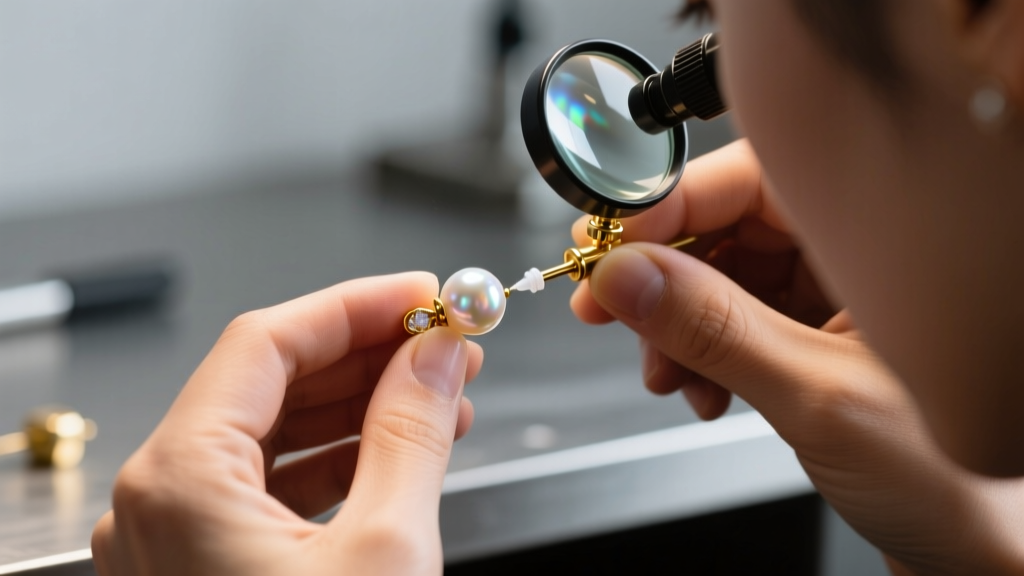
The most critical failure point in stick pearl earrings is the adhesive bond. Jewelers use a specialized two-part jeweler's epoxy to secure the pearl to the post. Over time, exposure to body heat, lotions, and natural skin acids can cause this epoxy to become brittle or degrade. Once a year, perform the 'twist test': hold the metal post firmly and attempt to very gently rotate the pearl. If there is any rotational movement or clicking, the epoxy has failed. Do not attempt to fix this with cyanoacrylate (Super Glue). Cyanoacrylate dries hard and brittle, expands slightly upon curing, and will permanently ruin the pearl's drill hole, making professional re-setting impossible. Always take loose stick pearls to a bench jeweler for proper cleaning of the blind hole and re-application of flexible, jewelry-grade epoxy.
Proper Storage: The 'Breathing' Rule
Because pearls contain trace amounts of water within their conchiolin matrix, they require a specific storage environment. A common and fatal mistake is storing stick pearl earrings in airtight plastic bags or sealed safety deposit boxes for years on end. Dehydration causes the nacre to shrink and crack, a phenomenon known as 'crazing'.
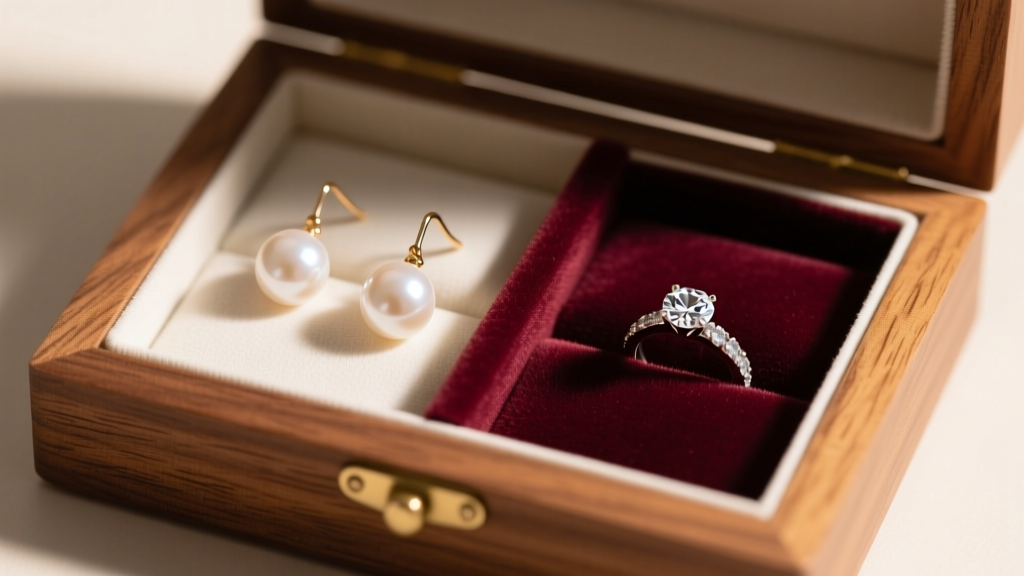
Store your earrings in a soft, breathable fabric pouch or a lined wooden jewelry box. Crucially, they must be stored separately from harder gemstones. Diamonds, rubies, and sapphires will easily scratch the surface of a pearl if they rub together in a shared compartment. Finally, adhere to the golden rule of pearl wear: Last On, First Off. Put your stick pearl earrings on after your makeup, perfume, and hairspray have completely dried, and remove them before washing your face or showering.
Troubleshooting Common Stick Pearl Issues
- Yellowing Nacre: If your white Akoya or South Sea pearls are turning yellow, it may be due to severe dehydration or prolonged exposure to UV light and sweat. While mild surface yellowing can sometimes be polished by a professional gemologist, deep structural yellowing is often irreversible.
- Bent Posts: 20-gauge posts are relatively soft, especially in high-purity 18k or 22k gold. If your post bends, do not repeatedly bend it back, as this causes work-hardening and eventual snapping. A jeweler can easily straighten and re-harden the post.
- Stuck Butterfly Backings: If the metal friction backing gets stuck on the post due to trapped lotion or soap, do not use pliers near the pearl. Soak the metal post and backing (avoiding the pearl itself) in a tiny cup of warm, soapy water for five minutes to dissolve the residue, then gently slide the backing off.
By treating your stick pearl earrings as the delicate, organic treasures they are, you ensure their lustrous beauty will endure for generations. Consistent, gentle cleaning and mindful storage are the ultimate secrets to preserving their flawless orient.


