The Ultimate Buying Guide for Cartilage Cuff Earrings
Discover how to choose the perfect cartilage cuff earrings. Explore material grades, gauge sizes, fit tips, and non-pierced options in our expert guide.

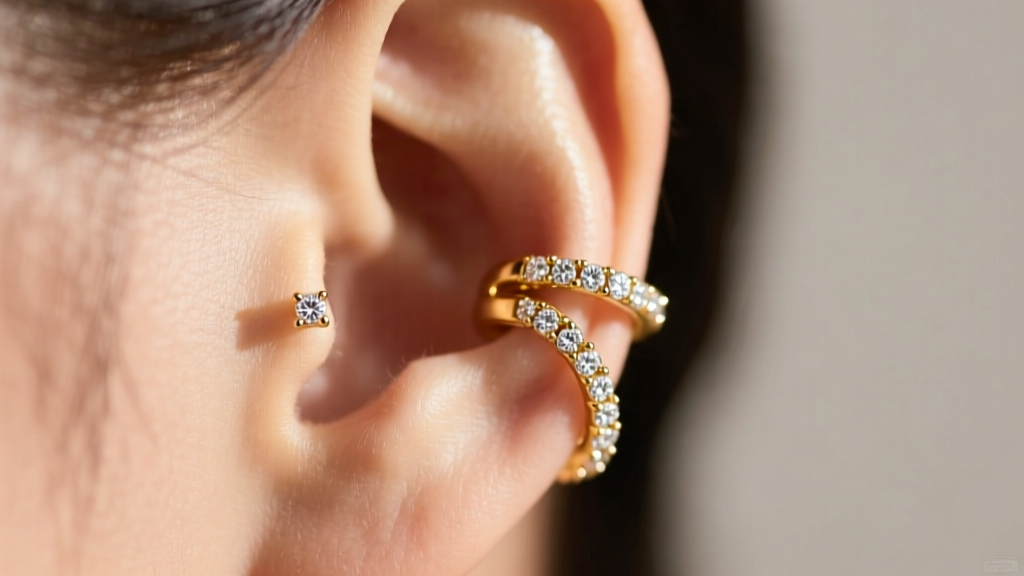
Decoding Cartilage Cuff Earrings: Pierced vs. Non-Pierced
The term "cartilage cuff earrings" is frequently used as a catch-all in the jewelry market, but as a buyer, you must understand the critical distinction between the two primary categories: pierced huggie-style cuffs and non-pierced tension cuffs. Pierced cartilage cuffs (often called helix cuffs or huggies) are designed to pass through an existing fistula (piercing channel) and wrap snugly around the outer rim of the ear. Non-pierced cuffs, on the other hand, rely on mechanical tension or magnetic force to grip the cartilage ridge. Understanding which type you are purchasing is the first step in ensuring comfort, safety, and aesthetic alignment with your personal style.
In 2026, the evolution of ear styling has blurred the lines between these two, with many brands offering modular designs that can transition between pierced and non-pierced applications. However, the anatomical requirements and material safety standards for each remain vastly different. This guide will break down the metallurgical, dimensional, and mechanical factors you must evaluate before adding cartilage cuff earrings to your collection.
Material Matters: Hypoallergenic Standards for Cartilage
Cartilage tissue is notoriously prone to irritation bumps, contact dermatitis, and prolonged healing times compared to the earlobe. Because cartilage cuffs sit flush against the skin and trap moisture, the material composition is non-negotiable.
The Titanium Standard: ASTM F-136 vs. F-67
When shopping for high-quality titanium cartilage cuff earrings, you will encounter two primary grades. ASTM F-67 is commercially pure titanium, which is generally safe but can contain trace microscopic inclusions. ASTM F-136 is ELI (Extra Low Interstitial) implant-grade titanium alloy (Ti-6Al-4V). According to the Association of Professional Piercers (APP), ASTM F-136 is the gold standard for body jewelry because its mirror-polished surface prevents bacteria from adhering to microscopic scratches, drastically reducing the risk of cartilage irritation.
Gold Purity and the Nickel Trap
If you prefer precious metals, opt exclusively for 14k or 18k solid gold. Avoid "gold vermeil" or "gold-plated" brass or sterling silver bases for cartilage wear. As the plating wears down from friction against the helix ridge, the base metal is exposed. The FDA warns that nickel is the most common cause of allergic contact dermatitis, and many inexpensive gold-plated alloys contain high nickel content. Always verify that the gold is nickel-free, especially if purchasing from independent jewelers or overseas marketplaces.
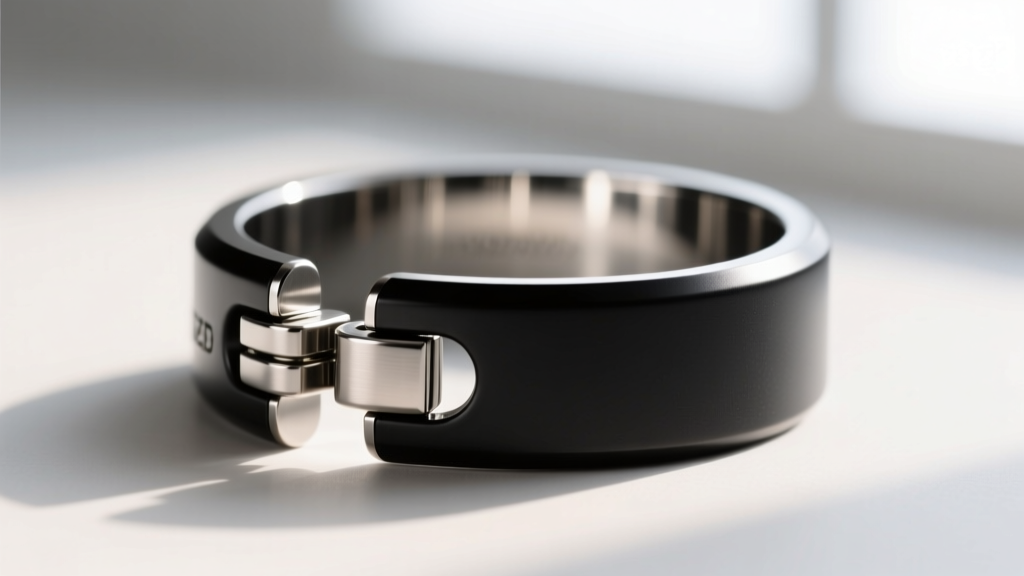
Sizing, Gauge, and Inner Diameter (ID)
Unlike standard stud earrings, cartilage cuff earrings require precise dimensional matching to your specific ear anatomy. A cuff that is too tight will cause pressure necrosis (tissue death from restricted blood flow), while a cuff that is too loose will rotate, snag on hair, and cause mechanical irritation to the piercing channel.
Understanding Gauge and Inner Diameter
Gauge refers to the thickness of the metal wire, while Inner Diameter (ID) measures the empty space inside the hoop. Most standard helix piercings are done at 16G (1.2mm) or 18G (1.0mm). The ID for a snug cartilage cuff typically ranges from 7mm to 10mm, depending on the exact placement on the ear ridge.
| Ear Placement | Standard Gauge | Recommended Inner Diameter (ID) | Cuff Style Notes |
|---|---|---|---|
| Upper Helix | 16G (1.2mm) | 7.0mm - 8.5mm | Requires tight, secure hinge; high snag risk. |
| Mid Helix | 16G (1.2mm) | 8.0mm - 9.5mm | Most versatile for standard huggie cuffs. |
| Lower Helix / Auricle | 14G (1.6mm) or 16G | 9.0mm - 11.0mm | Thicker tissue may require larger ID for comfort. |
| Conch (Edge) | 16G (1.2mm) | 10.0mm - 12.0mm | Often requires custom-bent cuffs for flush fit. |
Non-Pierced Cartilage Cuffs: Mechanics and Risks
For those without piercings, non-pierced cartilage cuff earrings offer an immediate aesthetic upgrade without the commitment or healing time of a needle. However, the mechanical engineering of these pieces requires careful scrutiny.
Tension Cuffs vs. Magnetic Cuffs
Tension Cuffs: These rely on the spring-like tension of the metal (usually sterling silver, gold, or copper alloys) to grip the ear. The primary risk with tension cuffs is overtightening. If the gap is too narrow, the continuous pressure on the avascular cartilage can lead to severe pain, headaches, and even cartilage deformation over extended wear. Always buy adjustable tension cuffs and gently bend them to match the exact curvature of your ear ridge.
Magnetic Cuffs: These use rare-earth neodymium magnets clamped on either side of the cartilage. While easier to put on, they are notorious for sliding off the ear during physical activity and can pinch the delicate skin of the helix rim. Furthermore, the American Academy of Dermatology (AAD) notes that cheap magnetic clasps often leach nickel, causing localized rashes on the ear ridge.
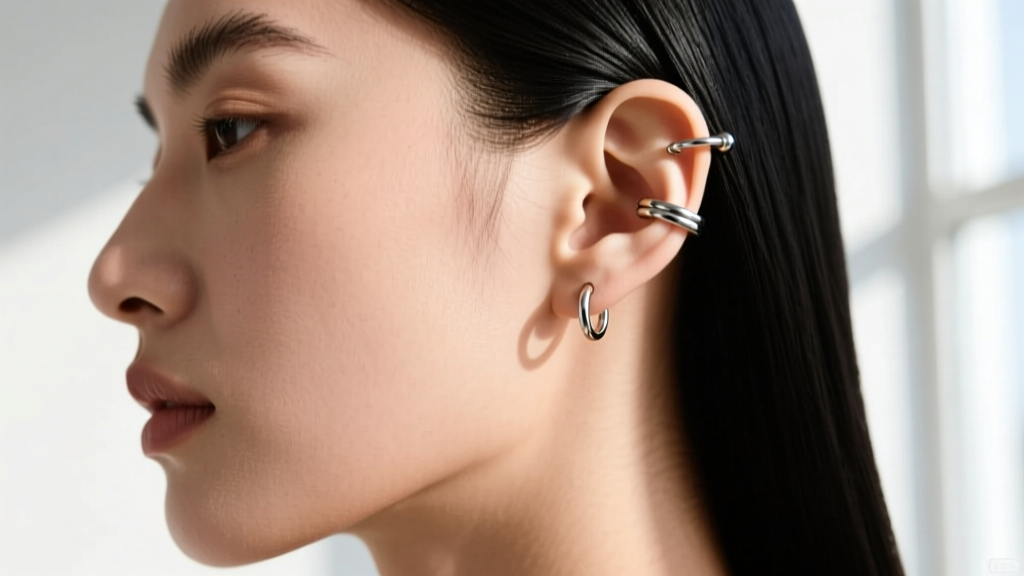
Price Ranges and Brand Recommendations
The market for cartilage cuff earrings spans from budget-friendly fashion accessories to high-end, custom-machined body jewelry. Here is what you can expect to pay and which brands deliver genuine quality.
- High-End / Professional ($60 - $200+): Brands like BVLA, Maria Tash, and Anatometal machine their cuffs from solid 14k/18k gold or ASTM F-136 titanium. These feature precision-milled hinge and clicker mechanisms that will not snag on your fistula. They are an investment in lifelong wearability.
- Mid-Tier / Fine Fashion ($40 - $90): Brands like Mejuri, Catbird, and Gorjana offer excellent 14k solid gold huggies. While they may lack the specialized threading of professional body jewelry brands, their material safety and polish are generally excellent for fully healed piercings.
- Budget / Fast Fashion ($10 - $30): Found on Amazon, Etsy, or mall kiosks. These are almost exclusively gold-plated over brass or stainless steel. While fine for occasional non-pierced wear, they should be strictly avoided for pierced cartilage due to the high risk of allergic reactions and tarnish buildup inside the piercing channel.
Expert Tip: When buying hinged cartilage cuffs online, look for brands that explicitly state their "clicker" mechanism is tested. A weak hinge will pop open while you are sleeping or brushing your hair, leading to lost jewelry and irritated piercing channels.
Expert Tips for Healing, Maintenance, and Troubleshooting
Even the highest quality cartilage cuff earrings can cause issues if not maintained properly. Cartilage lacks a direct blood supply, meaning it heals slowly and is highly susceptible to prolonged inflammation.
The Travel Pillow Hack
Sleeping on a cartilage cuff is the number one cause of irritation bumps (hypertrophic scarring). The pressure pushes the metal into the fistula at an unnatural angle. If you are a side sleeper, invest in a memory foam travel pillow and sleep with your ear in the center hole. This eliminates pressure on the cuff and allows the tissue to rest.
Cleaning Hinged Mechanisms
Hinges and segment rings trap dead skin cells, sebum, and shower residue. Once a week, remove your pierced cartilage cuffs and soak them in a small cup of warm water with a drop of mild, fragrance-free liquid soap. Use a soft-bristled baby toothbrush to gently scrub the hinge crevice. Rinse thoroughly with distilled water before reinserting. Never use rubbing alcohol or hydrogen peroxide, as these degrade the O-rings and gaskets found in premium clicker mechanisms.
Troubleshooting Snagging
If your cartilage cuff constantly catches on your hair or masks, the issue is likely the closure mechanism. Captive bead rings (CBRs) and segment rings have microscopic gaps that act like tiny hooks. Upgrading to a continuous hinge clicker or a threadless push-pin cuff will immediately eliminate snagging, preserving both your jewelry and your peace of mind.


