Pearl Chain Earrings: 2026 Trend Analysis & Style Guide
Discover how pearl chain earrings are dominating 2026 jewelry trends. Explore styling frameworks, metal pairings, and lobe vs. cartilage placements.

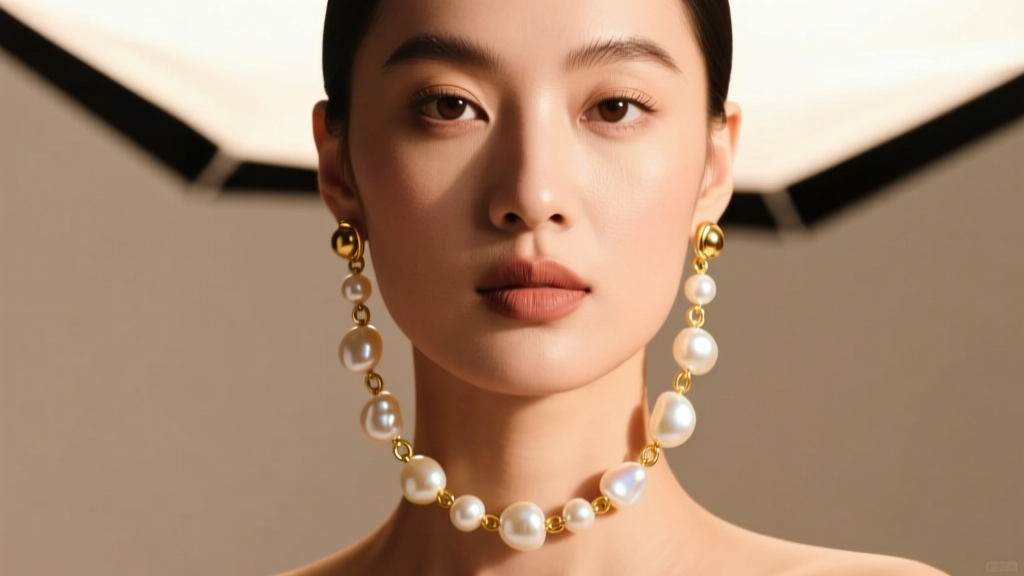
The Evolution of the Pearl Chain Earring in 2026
The jewelry landscape in 2026 has decisively pivoted away from rigid, static silhouettes, embracing kinetic movement and fluid drapery. At the forefront of this shift are pearl chain earrings, a category that marries the timeless luminescence of pearls with the industrial versatility of metal chain links. No longer confined to traditional bridal or conservative office wear, modern pearl chain earrings have been reimagined by avant-garde designers and mainstream houses alike. They now feature asymmetric drops, helix-to-lobe connectors, and ear climber integrations that redefine spatial awareness on the ear.
According to recent trend forecasting, the demand for modular and multi-piercing jewelry has surged by 34% over the last two years. Pearl chain earrings perfectly satisfy this demand, acting as visual bridges between multiple piercings while introducing a soft, organic texture to otherwise metallic ear curations. This analysis breaks down the material specifications, structural mechanics, and styling frameworks necessary to navigate this dominant 2026 trend.
Material Grades & Hardware Specifications
The longevity and aesthetic success of pearl chain earrings rely entirely on the synergy between the organic gemstone and the forged metal. Understanding the exact grades and specifications is critical for both designers and consumers.
Pearl Typologies: Akoya vs. Baroque Freshwater
While perfectly round Akoya pearls (typically 6.0mm to 8.5mm) remain a staple for minimalist, high-luster drops, 2026 trends heavily favor baroque freshwater pearls (8.0mm to 12.0mm). Baroque pearls offer an irregular, sculptural silhouette that catches light unpredictably, complementing the structured geometry of metal chains. According to the Gemological Institute of America (GIA), freshwater pearls are composed of nearly 100% nacre, making them significantly more durable and resistant to chipping than their bead-nucleated saltwater counterparts—a crucial factor when the pearl is subjected to the swinging momentum of a chain.
Metal Alloys and Plating Standards
The chain component must balance tensile strength with skin safety. Solid 14k gold (58.5% pure gold) remains the industry benchmark for chain links, offering the ideal hardness to prevent link distortion. 18k gold (75% pure) provides a richer, warmer hue but is softer, making it prone to micro-stretching if paired with heavy baroque pearls. For silver-toned aesthetics, sterling silver (925) must be plated with at least 0.5 microns of rhodium to prevent oxidation and sulfide tarnishing, as detailed by Jewelers of America metal standards.
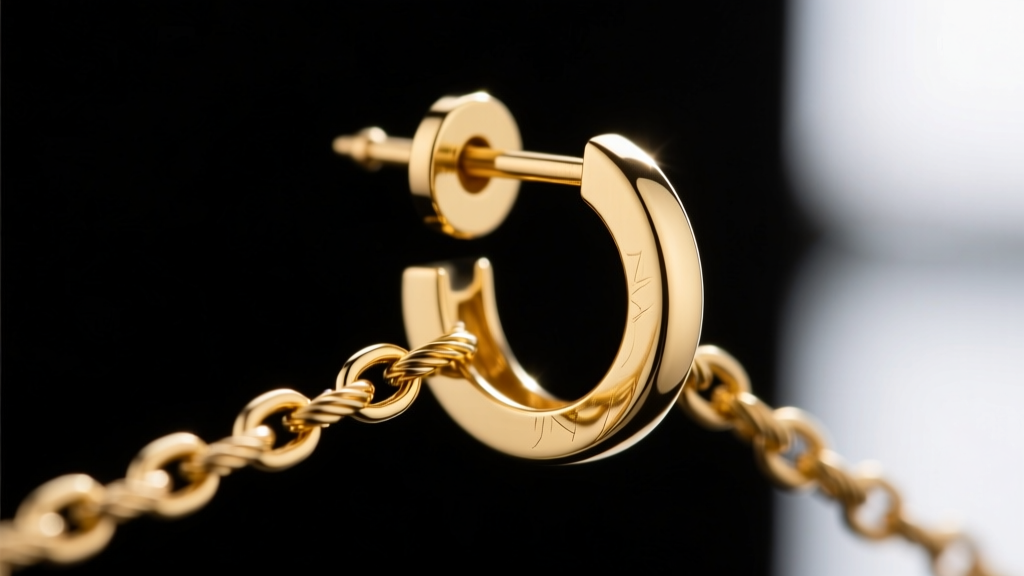
Gauge, Links, and Clasp Mechanics
The structural integrity of pearl chain earrings is frequently compromised by improper gauge sizing and clasp selection.
- Post Gauge: Standard lobe piercings accommodate 20-gauge (0.81mm) posts. However, for pearl chain earrings, an 18-gauge (1.02mm) post is highly recommended. The added thickness prevents the post from bending under the kinetic torque generated by a swinging 40mm chain and an 8mm pearl.
- Chain Links: The 1.2mm to 1.5mm cable chain is the most prevalent, offering a classic, unobtrusive backdrop. Figaro and rope chains are emerging in 2026 for a more textured, vintage-inspired look, though they carry a higher risk of catching on hair or textiles.
- Clasp and Jump Rings: Spring-ring clasps are largely being phased out in premium designs due to internal spring fatigue. The 5x9mm or 6x10mm lobster clasp is the standard. Crucially, the jump ring connecting the chain to the earring post or clasp must be soldered closed or forged from hard-tempered wire to prevent the heavy pearl from pulling the ring open.
Face Shape & Placement Matrix
Styling pearl chain earrings requires an understanding of facial geometry. The length of the chain and the volume of the pearl can drastically alter the perceived proportions of the jawline and neck. Below is a strategic framework for selecting the optimal configuration.
| Face Shape | Optimal Chain Length | Pearl Profile | Visual Effect & Strategy |
|---|---|---|---|
| Round | 45mm - 65mm | Baroque (8-11mm) | Elongates the jawline and draws the eye vertically, countering facial width. |
| Oval | 20mm - 40mm | Akoya (6-7mm) | Maintains natural symmetry; shorter drops prevent over-elongation of the face. |
| Square | 35mm - 50mm | Irregular Baroque | Softens angular jawlines with organic shapes and mid-length kinetic movement. |
| Heart | 25mm - 35mm | Teardrop / Round | Adds visual weight to the lower cheek/jaw area, balancing a narrower chin. |
Cartilage vs. Lobe: Structural Considerations
The integration of pearl chain earrings into cartilage piercings—specifically helix-to-lobe connectors and flat-to-helix chains—represents a major 2026 styling innovation. However, cartilage tissue lacks the elasticity and tensile support of the earlobe.
When designing or wearing a helix-to-lobe pearl chain, the chain length must be measured with absolute precision (typically between 35mm and 45mm, depending on individual ear anatomy). If the chain is too short, it will pull the helix piercing downward, causing migration, tearing, or chronic inflammation. If too long, it will sag and fail to create the intended taut, architectural line. Furthermore, the hardware used in cartilage should be strictly limited to implant-grade titanium (ASTM F136) or solid 14k/18k gold to minimize the risk of contact dermatitis in highly sensitive, low-blood-flow cartilage tissue.
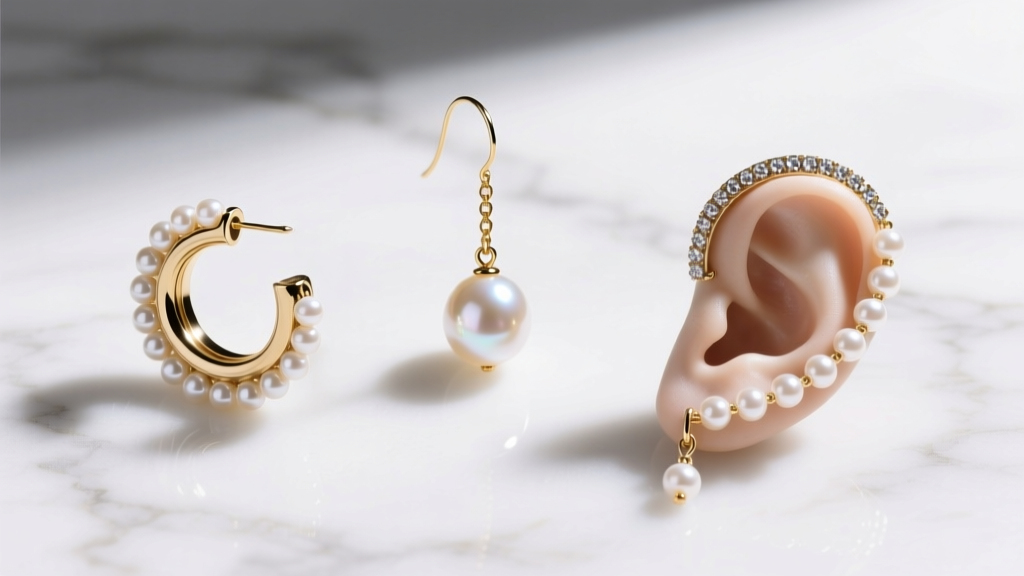
Pricing Tiers & Brand Benchmarks
Navigating the market requires an understanding of what dictates price in the pearl chain category. The American Gem Trade Association (AGTA) notes that pearl valuation is heavily dependent on luster, surface cleanliness, and nacre thickness, rather than just carat weight.
- Entry-Level ($40 - $90): Features freshwater baroque pearls with moderate luster, paired with gold-plated brass or sterling silver chains. Jump rings are often unsoldered, and clasps are standard spring-rings. Expect a lifespan of 1-2 years before plating wears or chains tangle irreparably.
- Mid-Tier ($150 - $350): The sweet spot for quality. Includes high-luster freshwater or entry-level Akoya pearls on solid 14k gold or heavy gold-filled chains. Features soldered jump rings, 18-gauge posts, and secure lobster clasps.
- High-End / Designer ($500 - $2,000+): Showcases AAA-grade Hanadama Akoya or rare saltwater baroque pearls. Chains are often custom-forged in 18k gold or platinum, featuring integrated diamond accents or complex ear-cuff mechanisms that require bespoke fitting.
Maintenance & Failure Mode Troubleshooting
Pearl chain earrings present unique maintenance challenges due to the conflicting care requirements of organic gems and forged metals. Pearls are exceptionally soft (2.5 on the Mohs scale) and highly porous, while metal chains require rigorous cleaning to remove sebum and oxidation.
Expert Warning: Never place pearl chain earrings in an ultrasonic cleaner. The high-frequency vibrations will micro-fracture the pearl's nacre and can shatter the drill hole, causing the pearl to snap off the chain.
Common Failure Modes & Solutions:
- Chain Tangling: Fine 1.2mm cable chains are notorious for knotting when stored loosely. Always store pearl chain earrings hanging on a jewelry tree or laid perfectly flat and clasped in a velvet-lined box.
- Luster Degradation: Hairspray, perfume, and acidic skin pH will dissolve a pearl's luster over time. Always put your earrings on after applying cosmetics. Wipe the pearls gently with a damp, lint-free microfiber cloth after every wear.
- Jump Ring Separation: The most common catastrophic failure is the jump ring pulling apart under the weight of a swinging baroque pearl. Inspect the connection points every six months. If you notice a visible slit in the jump ring, take the piece to a jeweler to have it laser-soldered closed immediately.
By understanding the precise mechanics, material grades, and styling geometry of pearl chain earrings, collectors and stylists can fully leverage this defining trend of 2026, ensuring their pieces are as structurally sound as they are visually captivating.


