2026 Channel Earrings Price Guide: Budget vs. Luxury Value
Discover the true value of channel earrings in 2026. We break down pricing tiers, metal grades, and lab-grown vs. natural stones to help you buy smart.

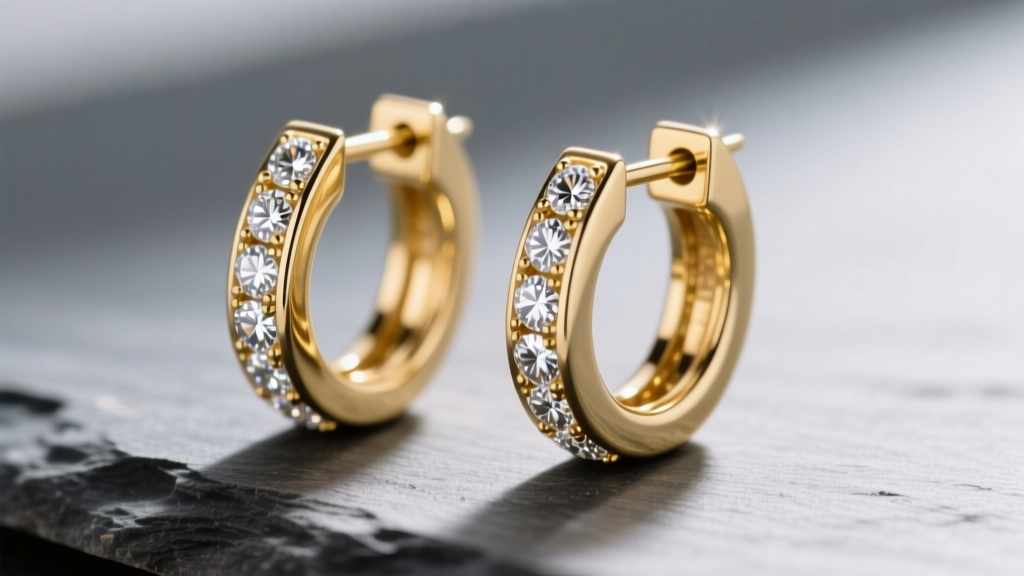
The Anatomy of a Channel Setting: Why Craftsmanship Dictates Price
When evaluating fine jewelry, the setting style is just as critical as the gemstones themselves. Channel earrings—whether designed as continuous hoops, hinged huggies, or straight-line studs—feature gemstones set flush between two parallel walls of metal. Unlike prong settings that expose the diamond's crown and pavilion, a channel setting secures the stones by their girdles (the outer edge). This creates a sleek, snag-free profile that is highly coveted for everyday wear.
However, from a budget and value assessment perspective, the channel setting presents a unique financial proposition. Because there are no prongs to hold the stones, the structural integrity of the earring relies entirely on the density, thickness, and precision of the metal walls. In 2026, advanced CNC (Computer Numerical Control) milling has made precision channels more accessible, but a massive divide remains between mass-cast budget pieces and hand-finished luxury tiers. When you buy channel earrings, you are paying for metal weight and engineering just as much as you are paying for carat weight.
2026 Pricing Matrix: What to Expect at Every Budget Tier
To accurately assess value, we must segment the market by material quality and manufacturing techniques. The table below outlines the current landscape for channel-set diamond and gemstone earrings.
| Value Tier | Price Range (USD) | Typical Metal | Stone Quality | Durability & Risk Assessment |
|---|---|---|---|---|
| Budget | $50 - $250 | 925 Sterling Silver, 10k Gold, or Gold Vermeil | Cubic Zirconia, Simulated, or low-grade natural melee (I1-I2 clarity) | High Risk. Thin cast walls often warp, leading to stone loss. Hinges are prone to snapping. |
| Mid-Range | $300 - $850 | Solid 14k Yellow, White, or Rose Gold | Lab-Grown Diamonds (VS/FG) or genuine semi-precious stones (Sapphires) | Excellent Value. CNC-milled tracks ensure secure fits. Hinged snap closures are reliable for daily wear. |
| Luxury | $1,200 - $5,000+ | 18k Gold or Platinum (950) | Natural or Ideal-Cut Lab Diamonds (VVS/DEF) | Heirloom Quality. Heavy gram weight, hand-polished interior tracks, and reinforced omega or saddle-back clasps. |
According to the FTC Jewelry Guides, consumers must be wary of misleading metal stamps in the budget tier. Always look for the '14k' or '585' hallmark to ensure you are getting solid gold rather than a thin plating that will inevitably wear through the friction of a channel track.
The Lab-Grown Disruption: Maximizing Carat Total Weight (CTW)
The most significant shift in the 2026 jewelry market is the normalization of lab-grown diamonds in channel settings. Channel hoops and huggies typically utilize 'melee' diamonds—small stones ranging from 0.01 to 0.05 carats each. Historically, natural melee diamonds were often 'single cut' (featuring only 17 or 18 facets) because cutting 57 facets into a 1.5mm stone was economically unviable for miners and cutters.
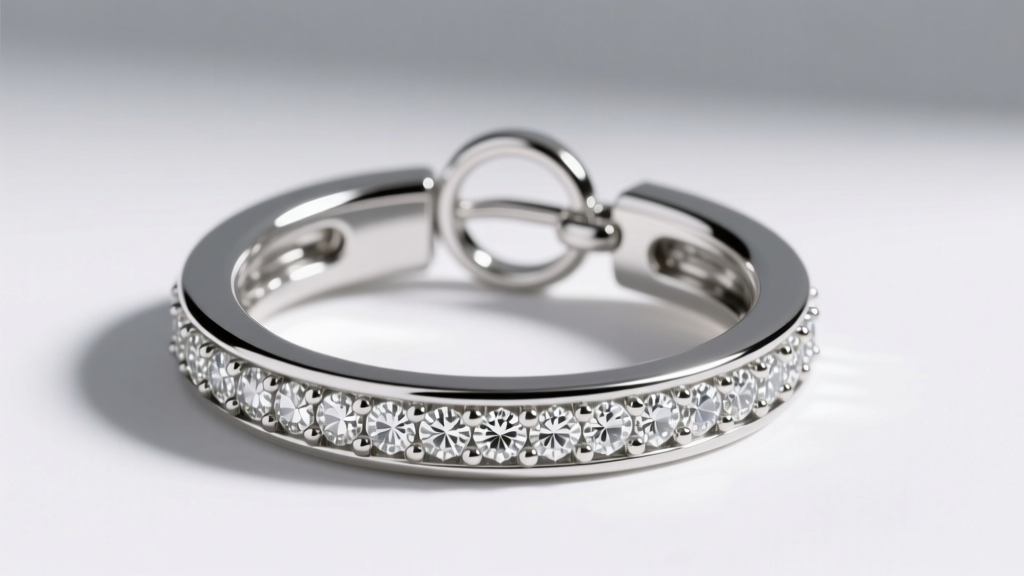
Lab-grown diamond manufacturers, unconstrained by mining yields, now routinely produce 'full cut' melee (57 facets) even in sub-2mm sizes. When assessing value, a mid-range pair of 14k gold channel huggies featuring 1.00 CTW of full-cut, F-color, VS-clarity lab-grown diamonds (typically priced around $450) will outperform a $1,200 pair of natural diamond earrings that rely on cloudy, single-cut melee. The optical performance—the brilliance and fire returning through the top of the channel—is vastly superior in the lab-grown mid-range tier.
Red Flags: Identifying Poor Craftsmanship and Hidden Costs
When shopping for channel earrings, especially in the $150 to $400 range, you must act as your own quality control inspector. Poorly engineered channel settings are a leading cause of gemstone loss. Here are the specific failure modes to watch for:
- The Rattle Test: Gently shake the earrings near your ear. If you hear a faint clicking or rattling, the channel track was cast too wide, and the stones are not being compressed securely by the metal walls. These stones will eventually fall out.
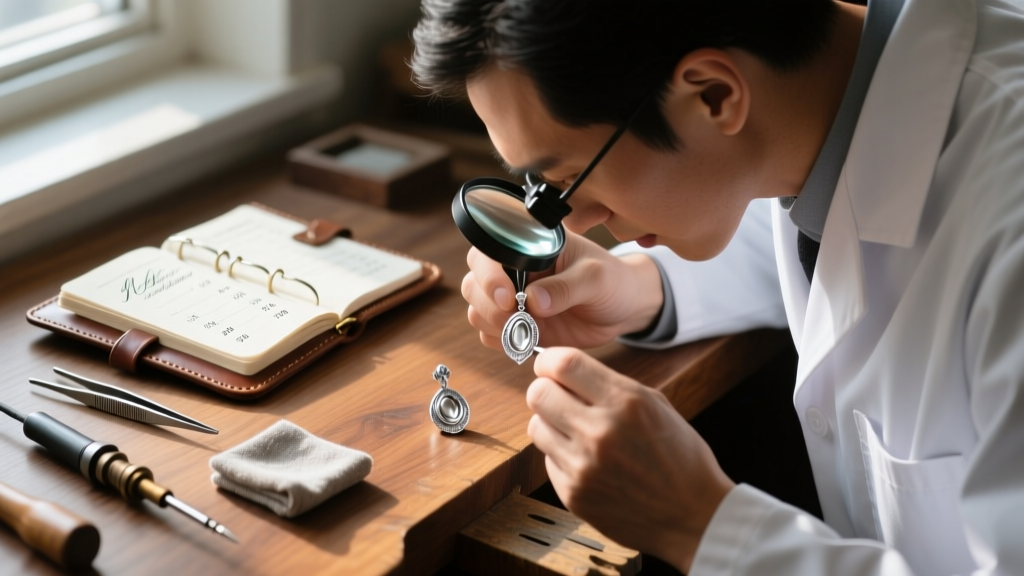
- Girdle Exposure and Gaps: Inspect the earring under a macro lens or jeweler's loupe. The metal walls should fold neatly over the girdle of the diamond. If you see large gaps of light beneath the stones, or if the metal looks 'crimped' unevenly, the setting was rushed.
- Weak Hinge Pins: For huggies and hoops, the hinge mechanism is a critical stress point. Budget manufacturers use thin, stamped wire for the hinge pin. Look for earrings with a reinforced, laser-welded hinge pin and a satisfying 'click' when the snap closure engages.
- Interior Track Roughness: Run your fingernail along the inside of the hoop where it touches your earlobe. Cheap castings leave porous, rough metal on the interior. This not only causes skin irritation but also traps soap and lotion, dulling the diamonds from the pavilion side.
For deeper insights into how setting styles impact diamond durability and light performance, the Gemological Institute of America (GIA) provides extensive research on how metal tension and track depth affect long-term gemstone security.
Assessing the Clasp: The Unsung Hero of Earring Value
A channel earring is only as valuable as its clasp. Losing a $2,000 pair of diamond hoops because of a $2 piece of bent wire is a catastrophic failure of value. In the budget tier, manufacturers rely on basic 'friction posts' for studs or thin 'latch-back' wires for hoops. These bend easily and offer zero security.
In the mid-to-luxury tiers, look for specific clasp upgrades that justify the price premium:
- Omega Backs: Common on luxury channel hoops, the omega back features a wide, curved wire that distributes the weight of the earring evenly across the earlobe, preventing tearing and sagging.
- Saddle Backs: A hinged, U-shaped wire that snaps into a secure groove. This is the gold standard for heavy channel hoops, as it locks into place and cannot be accidentally pulled open by hair or clothing.
- La Pousette (Push-Pull) Backs: For channel studs, these mechanical backs use a spring-loaded mechanism to grip the post, offering far superior security to standard butterfly friction backs.
The Final Verdict: Where is the 2026 Value Sweet Spot?
If your goal is to maximize aesthetic impact, structural longevity, and financial prudence, the undisputed sweet spot for channel earrings in 2026 lies in the $400 to $750 range. At this price point, you should demand solid 14k gold (weighing no less than 3.5 grams for a standard 15mm huggie) paired with full-cut, VS-clarity lab-grown diamonds.
Avoid the temptation of ultra-cheap sterling silver channel settings; the cost of replacing lost stones will quickly eclipse your initial savings. Conversely, unless you are purchasing for investment-grade heirloom purposes, the massive brand markups associated with luxury designer channel hoops (often exceeding $2,500 for 1.00 CTW) offer diminishing returns on material value. By focusing on gram weight, precise CNC track milling, and modern lab-grown melee, you can secure a pair of channel earrings that deliver lifetime durability and brilliant fire without overpaying for legacy brand names.


