Channel Set Earrings: 2026 Trend Analysis & Style Guide
Discover the 2026 trends for channel set earrings. Explore style guides, metal grades, stone cuts, and pricing for this secure, modern jewelry staple.

The Evolution of Channel Set Earrings in 2026
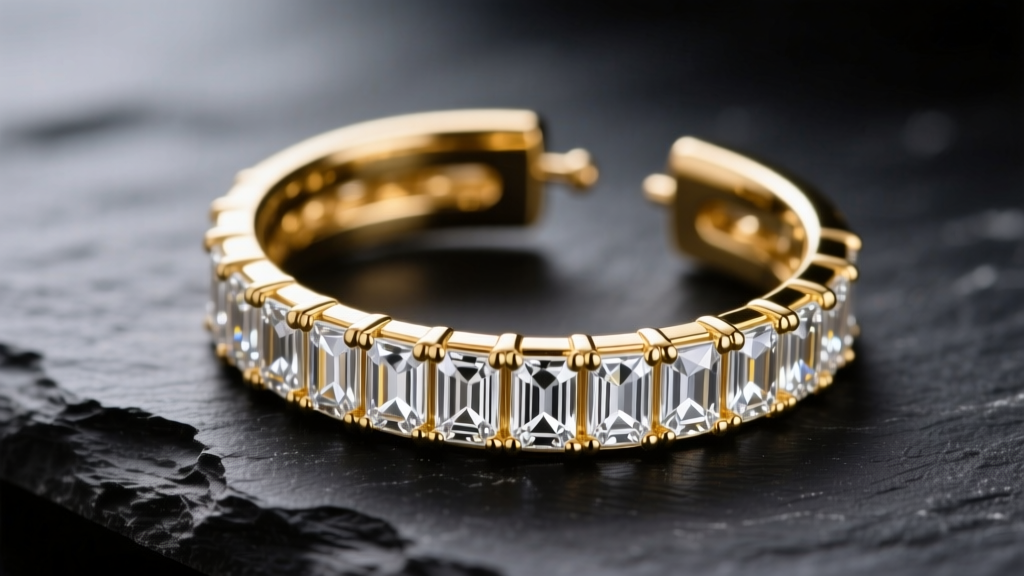
Channel set earrings have long been revered for their sleek, uninterrupted lines and exceptional security. Unlike prong settings that rely on delicate metal claws to grip a gemstone, a channel setting suspends stones between two parallel walls of metal. As we navigate the jewelry landscape of 2026, channel set earrings are experiencing a renaissance, evolving from traditional diamond tennis hoops into avant-garde ear cuffs, asymmetrical huggies, and mixed-gemstone drops. According to trend forecasts from National Jeweler, the modern consumer prioritizes pieces that offer both architectural brilliance and everyday durability, making the channel setting a dominant force in contemporary ear curation.
This comprehensive style and trend analysis breaks down the metallurgy, structural mechanics, and 2026 design innovations defining channel set earrings today. Whether you are investing in platinum baguette hoops or exploring 14k gold sapphire ear cuffs, understanding the nuances of this setting is critical for making an informed, high-value purchase.
The Mechanics and Security of Channel Settings
To appreciate the value of channel set earrings, one must understand the precise engineering required to execute them. In a true channel setting, gemstones are placed side-by-side within a track formed by two metal walls. The metal is then pushed or hammered over the girdle (the widest part) of the stones, securing them without any gaps.
Structural Integrity and Crown Coverage
For a channel setting to be secure, the metal walls must overlap the crown of the gemstone by at least 10% to 15%. If the overlap is too shallow, the stones risk popping out upon impact. The Gemological Institute of America (GIA) notes that channel settings offer superior protection for the girdle and pavilion of diamonds, as the continuous metal walls shield the stones from lateral blows. This makes channel set huggies and hoops ideal for active lifestyles, as there are no prongs to snag on clothing or hair.
Gauge Sizes and Post Specifications
Because channel settings add structural weight to the earring, the post or wire gauge must be robust. Standard channel set studs typically utilize an 18-gauge (1.0mm) or 20-gauge (0.8mm) post, while heavier channel set hoops and huggies require a 16-gauge (1.2mm) or even 14-gauge (1.6mm) wire to prevent the earring from sagging or bending the earlobe over time.
2026 Trend Forecast: Beyond the Classic Diamond Hoop
While the classic diamond channel hoop remains a staple, 2026 has introduced dynamic variations that push the boundaries of traditional fine jewelry. Forbes Jewelry highlights a distinct shift toward personalized, architectural ear styling, where the channel setting is used to create bold, geometric statements.
Asymmetrical Ear Cuffs and Helix Wraps
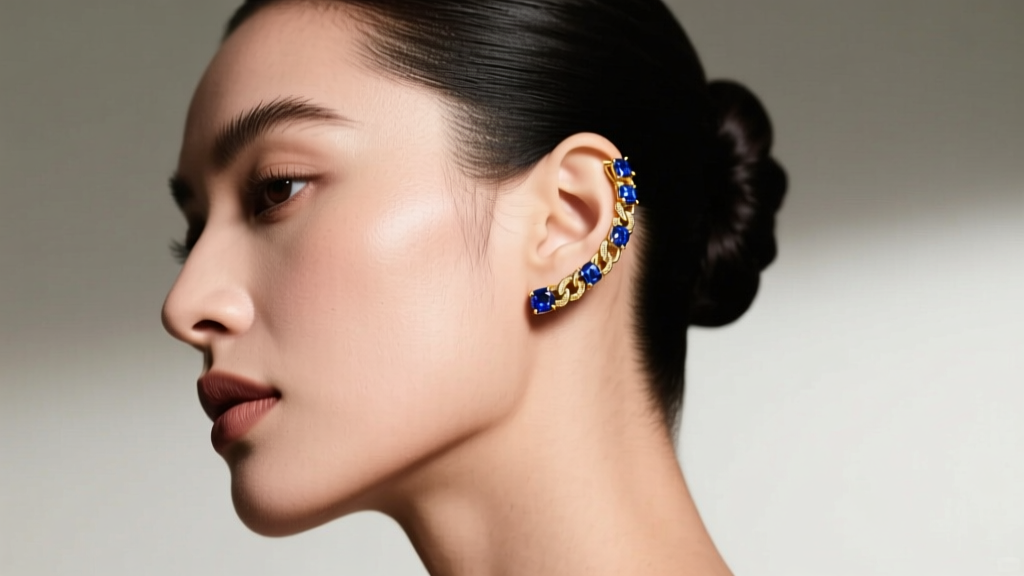
The integration of channel settings into ear cuffs is a major 2026 trend. Designers are utilizing the flexibility of precious metals to create channel-set ribbons that wrap around the upper cartilage helix. These pieces often feature graduated gemstones—starting with larger stones at the base and tapering down to micro-pavé or smaller channel-set stones at the tip, creating an illusion of movement and fluidity without the risk of snagging.
Colored Gemstone Gradations and Mixed Metals
Monochromatic diamond channels are being replaced by vibrant, ombré gemstone sequences. Imagine a 14k yellow gold huggie featuring a channel of white diamonds that seamlessly transitions into light blue topaz, and finally deep London blue topaz. Furthermore, bi-metal channels—where the outer wall is rose gold and the inner wall is white gold—are gaining traction for their ability to enhance the color contrast of the featured gemstones.
Material Specifications and Gemstone Compatibility
Not all metals or gemstone cuts are suitable for channel settings. The metal must possess enough malleability to be pushed over the stone, yet enough tensile strength to hold it permanently. Below is a technical breakdown of material compatibility for channel set earrings.
| Metal Grade | Wall Thickness | Best Stone Cut | Durability & Notes |
|---|---|---|---|
| Platinum (950) | 1.2mm - 1.5mm | Princess, Baguette | Excellent. Highly malleable for setting, incredibly strong for long-term wear. |
| 18k Gold | 1.0mm - 1.2mm | Round, Oval | Good. Softer than 14k, allowing for easier setting, but walls can dent if thin. |
| 14k Gold | 0.8mm - 1.0mm | Emerald, Radiant | Moderate. Stiffer and more brittle; requires skilled artisans to avoid cracking walls. |
Expert Insight: Square and rectangular cuts (Princess, Baguette, Emerald) are the undisputed kings of the channel setting. Their straight edges allow them to sit flush against one another, creating a continuous ribbon of light. Round brilliant cuts can be channel set, but they require precise spacing and deeper channels to prevent the stones from rotating or overlapping.
Pricing Tiers and Investment Value
When evaluating channel set earrings, pricing is heavily dictated by the total carat weight (TCW), the precision of the stone matching, and the metal used. Because channel settings require stones to be perfectly calibrated in size, the cutting and sorting process drives up the base cost compared to prong-set alternatives.
- Entry-Level ($400 - $900): Typically features 14k gold with smaller, commercial-grade diamonds (I-J color, SI clarity) or lab-grown alternatives. Often found in slim huggies or small stud jackets.
- Mid-Tier ($1,200 - $3,500): The sweet spot for fine jewelry. Includes 18k gold or platinum hoops with VS clarity, F-G color diamonds. Baguette and princess cuts in this tier exhibit exceptional light return and seamless alignment.
- High-End & Bespoke ($5,000 - $15,000+): Features large-format statement hoops or intricate ear cuffs utilizing VVS clarity, D-E color diamonds, or rare calibrated sapphires. The labor cost for setting 40+ perfectly matched stones in a curved platinum channel is substantial.
Styling Framework: Face Shapes and Ear Placements
The linear, geometric nature of channel set earrings makes them a powerful tool for balancing facial proportions. Here is a practical styling framework for 2026:
Round and Oval Faces
Opt for channel set drop earrings featuring vertical lines of baguette or emerald-cut diamonds. The sharp, elongated geometry draws the eye downward, creating a slimming, lengthening effect. Avoid thick, round channel hoops, which can exaggerate facial width.
Square and Angular Faces
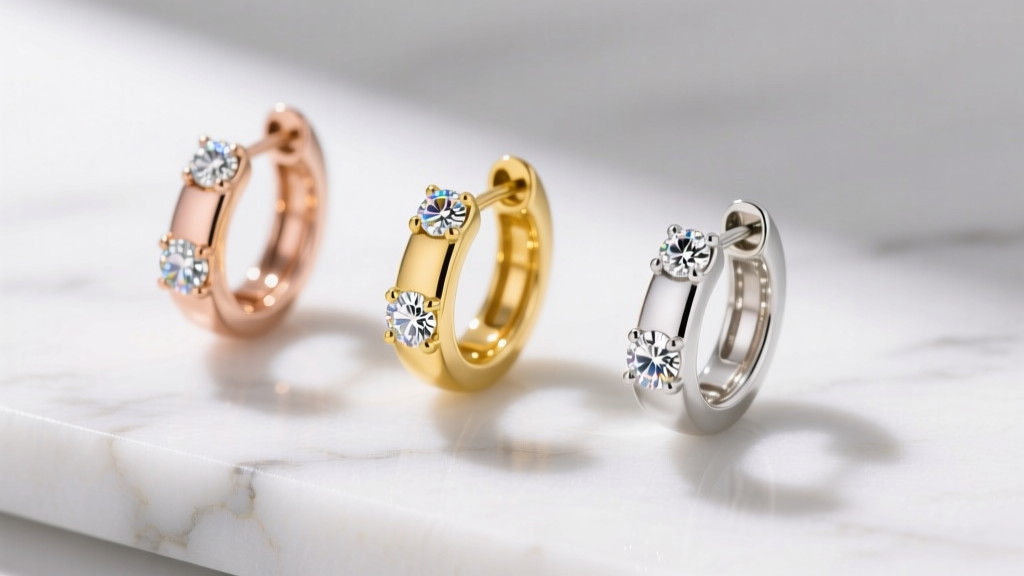
Soften strong jawlines with channel set circular hoops or huggies. The continuous curve of a round diamond channel hoop contrasts beautifully with angular features, adding softness and movement to the ear curation.
Heart-Shaped Faces
Balance a narrower chin with bottom-heavy channel set dangles or wide, geometric channel set ear cuffs that sit on the upper helix, drawing attention upward and widening the visual plane of the upper face.
Maintenance Realities and Care Protocols
While channel settings are incredibly secure against snagging, they present unique maintenance challenges. Dirt, lotion, and dead skin cells easily accumulate in the narrow tracks between the stones, dulling their brilliance.
Cleaning Protocol: Avoid harsh ultrasonic cleaners, especially if the earrings feature fractured-filled diamonds or fragile gemstones like emeralds or opals. Instead, use a soft-bristled baby toothbrush, warm water, and a mild degreasing dish soap. Brush gently along the channel track to dislodge debris.
The Repair Dilemma: If a channel wall is bent or damaged, resizing or repairing the earring is highly complex. Traditional soldering can melt the delicate walls or cause thermal shock to the diamonds. Repairs almost always require precision laser welding, a specialized service that not all local jewelers offer. Always purchase channel set earrings from reputable designers who provide in-house laser repair services and structural warranties.
Final Verdict: The Enduring Appeal of the Channel
As we move through 2026, channel set earrings stand out as a masterclass in functional luxury. They offer a seamless, modern aesthetic that aligns perfectly with the current demand for architectural, low-profile jewelry. By understanding the critical importance of metal gauge, wall thickness, and stone calibration, you can invest in channel set pieces that are not only visually striking but engineered to last a lifetime.


