The Gemology of Chartreuse Earrings: Stone Grades & Settings
Explore the gemology of chartreuse earrings. We analyze peridot, chrysoberyl, and enamel grades, plus prong settings that maximize yellow-green light return.

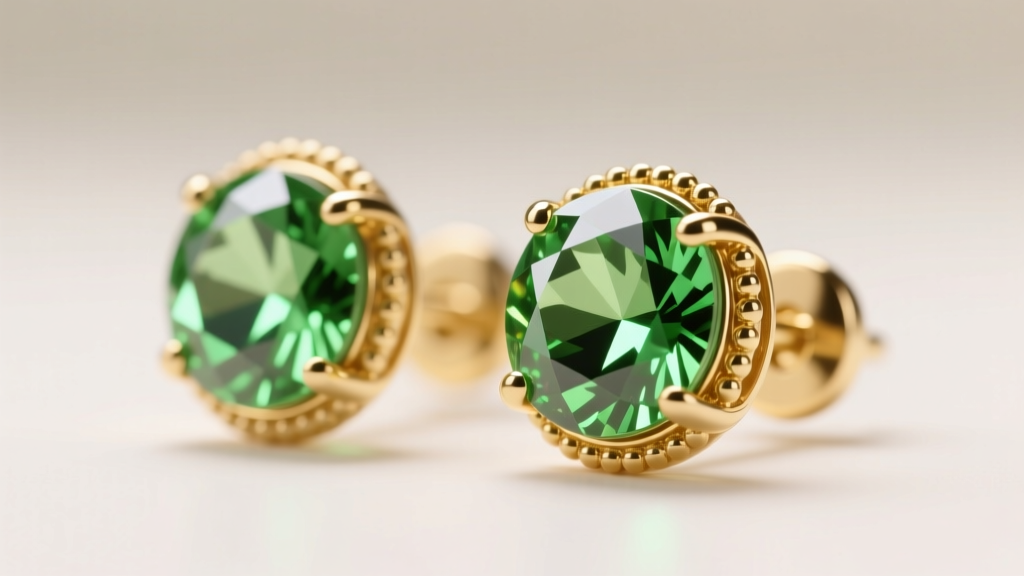
The Challenge of True Chartreuse in Jewelry Design
In the visible light spectrum, chartreuse occupies a highly specific, narrow band between yellow and green (roughly 550-570 nanometers). In gemology, achieving a pure, unadulterated chartreuse hue in earrings is notoriously difficult. Most natural green gemstones lean too blue (like tsavorite garnet or emerald) or too brown (like olive-toned peridot). When jewelry designers attempt to source chartreuse earrings, they are not simply looking for "green stones"; they are hunting for precise trace element concentrations that absorb specific wavelengths of light without muddying the secondary yellow flash.
From a technical standpoint, the human eye is exceptionally sensitive to yellow-green wavelengths. This means that any inclusions, poor facet symmetry, or inappropriate metal pairings in chartreuse earrings are immediately magnified to the observer. A poorly cut chartreuse stone will appear flat or grayish because it fails to return the high-energy yellow light back through the crown. This guide provides a deep dive into the gemological, metallurgical, and structural requirements for crafting and selecting high-performance chartreuse earrings.
Gemological Breakdown: Natural vs. Lab-Created Chartreuse
To achieve a stable chartreuse color, jewelers rely on three primary materials: natural peridot, natural chrysoberyl, and synthetic spinel. Each possesses distinct physical properties that dictate how they must be cut, set, and worn.
Peridot: The Iron-Driven Standard
Peridot is the most common natural chartreuse gemstone, but gem-grade material suitable for fine earrings is rare. Peridot is an idiochromatic gem, meaning its color is caused by its essential chemical composition—specifically, ferrous iron (Fe2+). According to the Gemological Institute of America (GIA), the ideal peridot for chartreuse earrings contains roughly 70% forsterite and 30% fayalite. If the fayalite (iron) content pushes too high, the stone turns a muddy brownish-olive. If it is too low, the stone lacks the necessary yellow-green saturation.
Technically, peridot has a refractive index (RI) of 1.65 to 1.69 and a high birefringence of 0.036. This birefringence causes "facet doubling," where the back facets of the stone appear doubled when viewed through the table. In chartreuse peridot earrings, this optical effect can either create a vibrant, velvety glow or a blurry, lifeless appearance if the pavilion angles are cut incorrectly. Cutters must aim for a pavilion main facet angle of exactly 42 to 43 degrees to maximize light return for this specific RI.
Chrysoberyl & Synthetic Spinel
For collectors seeking superior durability, chartreuse chrysoberyl is the ultimate choice. With a Mohs hardness of 8.5 and an RI of 1.74-1.75, it offers exceptional brilliance and scratch resistance. As noted by GIA's Chrysoberyl Guide, standard chrysoberyl is colored by trace amounts of iron, yielding a sharp, yellowish-green hue that lacks the brownish undertones common in peridot. However, its lack of cleavage and high hardness make it more expensive to lapidary.
Alternatively, lab-created synthetic spinel offers the most optically perfect chartreuse. Produced via the Verneuil (flame fusion) process, synthetic spinel can be doped with precise ratios of cobalt and chromium to achieve a Pantone-perfect chartreuse without any natural inclusions. While lacking the prestige of natural stones, synthetic spinel (RI 1.718, Mohs 8) is structurally flawless, making it ideal for micro-pavé chartreuse huggies or delicate ear cuffs where stone consistency is paramount.
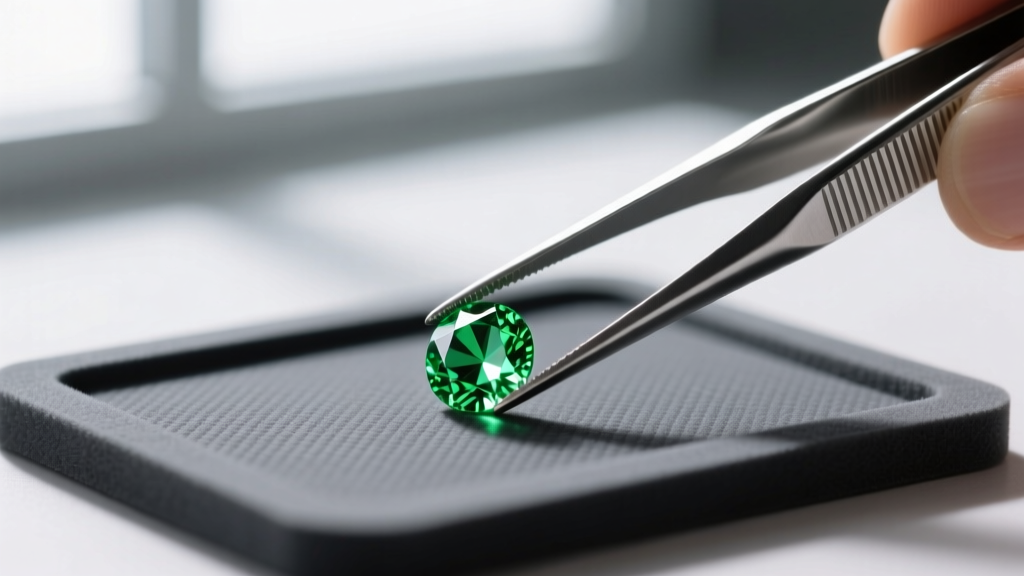
Material Comparison Matrix
When selecting chartreuse earrings, understanding the physical limitations of the stone is critical for longevity and optical performance. The following table outlines the technical specifications of the primary chartreuse materials used in modern jewelry.
| Material | Refractive Index | Mohs Hardness | Birefringence | Specific Gravity | Primary Failure Mode |
|---|---|---|---|---|---|
| Natural Peridot | 1.65 - 1.69 | 6.5 - 7.0 | 0.036 | 3.34 | Thermal shock / Acid etching |
| Natural Chrysoberyl | 1.74 - 1.75 | 8.5 | 0.008 | 3.73 | Hard impact chipping |
| Synthetic Spinel | 1.718 | 8.0 | None | 3.64 | None (highly stable) |
| Vitreous Enamel | N/A (Opaque/Translucent) | 5.0 - 6.0 | N/A | 2.50 | Impact shattering / Crazing |
Metallurgical Pairings: Which Alloys Enhance Yellow-Green?
The metal alloy used to set chartreuse earrings fundamentally alters the perceived color of the gemstone due to environmental light reflection. Chartreuse is highly reflective of its surroundings. Setting a light-toned chartreuse peridot in rhodium-plated white gold will cause the stone to absorb the cool, blue-leaning ambient light, effectively shifting the visual hue toward a clinical, minty green.
To preserve and enhance the yellow flash of chartreuse, metallurgists recommend 18k yellow gold (75% gold, 12.5% copper, 12.5% silver). The copper content in 18k yellow gold reflects warm wavelengths back into the pavilion of the stone, enriching the yellow-green spectrum. Conversely, 14k rose gold (which contains up to 20% copper) can overpower delicate chartreuse stones, forcing them to appear overly yellow or brownish. For a modern, high-contrast look, unplated platinum provides a neutral, bright white background that allows the natural chartreuse hue to stand on its own without color-shifting.
Precision Setting Techniques for Maximum Light Return
The structural setting of chartreuse earrings must account for both the optical needs of the stone and its physical vulnerabilities. Because chartreuse peridot and chrysoberyl rely on deep pavilions to refract light properly, the setting must leave the underside of the stone completely unobstructed.
Prong vs. Bezel: The Refractive Index Factor
Bezel settings are generally contraindicated for natural chartreuse peridot. A full metal bezel blocks ambient light from entering the stone's girdle, which is particularly detrimental to peridot due to its relatively low RI (1.65). Without side-lighting, peridot tends to "extinct" (turn black or muddy brown) in the center. A four-prong or six-prong setting is mandatory to allow maximum light penetration.
Furthermore, according to mineralogical data from Mindat.org, peridot lacks true cleavage but has a brittle tenacity. This means the girdle edges are highly susceptible to chipping from everyday impacts. Therefore, V-prongs are technically required for the corners of any princess-cut or emerald-cut chartreuse peridot earrings. For round brilliant cuts, standard rounded prongs with a deep bearing (the groove cut into the prong to hold the girdle) must be used to protect the edge without casting shadows over the crown facets.
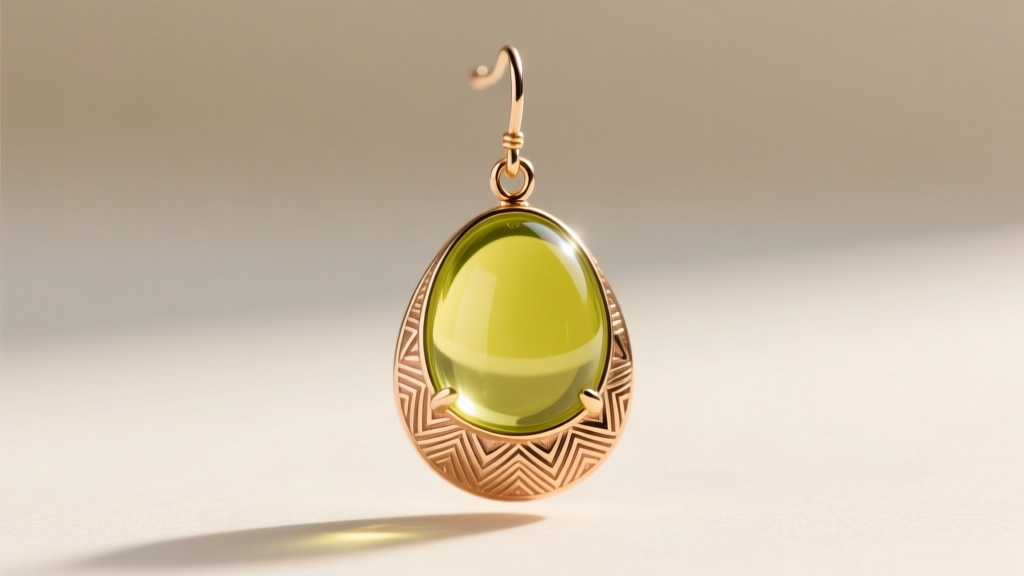
Vitreous Enamel: The Alternative Chartreuse
When gemological constraints prevent sourcing a matched pair of natural chartreuse stones for large statement earrings, master jewelers turn to plique-à-jour or guilloché vitreous enamel. Creating a true chartreuse enamel requires a precise mixture of copper oxide (for green) and antimony or uranium oxides (for yellow) suspended in a silica glass frit.
The enamel is fired at exactly 750°C to 800°C. If the temperature drops even slightly, the copper oxide fails to fully integrate, resulting in a cloudy, opaque green rather than a vibrant, translucent chartreuse. Guilloché enamel, where the translucent chartreuse glass is fired over an engine-turned (mechanically engraved) 18k gold base, creates a dynamic, shimmering yellow-green effect that mimics the birefringence of natural peridot but with total color consistency across large drop earring surfaces.
Maintenance and Chemical Vulnerabilities
Chartreuse earrings, particularly those featuring natural peridot, require strict maintenance protocols. Peridot is highly vulnerable to sulfuric acid and even prolonged exposure to the mild lactic and uric acids found in human perspiration. Over time, this acidic exposure will etch the surface polish of the stone, causing it to lose its refractive brilliance and appear dull or "sleepy."
Expert Maintenance Directives:
- Never use ultrasonic cleaners: The high-frequency vibrations can easily fracture natural peridot along its internal "lily pad" inclusion planes.
- Avoid steam cleaning: Peridot is highly sensitive to thermal shock. A sudden blast of hot steam followed by cool air can cause catastrophic internal fracturing.
- Manual cleaning only: Use a soft, untreated microfiber cloth and a drop of pH-neutral dish soap in lukewarm (never hot) water. Dry immediately.
- Storage: Store chartreuse earrings in a dark, climate-controlled environment. Prolonged UV exposure does not fade peridot, but it can degrade the structural integrity of certain synthetic spinel dopants over decades.
Conclusion
Designing and purchasing chartreuse earrings is an exercise in applied gemology and optics. Whether you are evaluating the birefringence of a natural peridot, the scratch-resistance of a lab-created spinel, or the firing temperature of a vitreous enamel drop, the yellow-green spectrum demands technical precision. By prioritizing open pavilion settings, selecting 18k yellow gold for optimal wavelength reflection, and adhering to strict chemical maintenance protocols, you ensure that the vibrant, electric hue of chartreuse jewelry maintains its optical integrity for generations.


