How to Choose and Style Birthstone Earrings for Women
Discover how to choose, style, and care for birthstone earrings for women. Learn about gemstone hardness, metal pairings, and face-shape styling.


Why Birthstone Earrings Require a Strategic Approach
Birthstone earrings for women offer a deeply personal touch to any jewelry collection, transforming a standard accessory into a meaningful signature piece. However, selecting the right pair goes far beyond simply matching a gemstone to a birth month. Because birthstones range from incredibly durable diamonds to highly fragile opals, a one-size-fits-all approach to settings, metals, and daily wear will inevitably lead to damaged stones or irritated piercings.
This comprehensive, step-by-step guide will walk you through the technical and aesthetic considerations of choosing birthstone earrings. From mapping gemstone hardness on the Mohs scale to selecting the correct post gauge for your specific piercing, you will learn how to curate a pair that is both structurally sound and perfectly styled.
Step 1: Map Gemstone Hardness to Your Daily Lifestyle
The most critical factor in choosing birthstone earrings is understanding the physical durability of the gem. The Gemological Institute of America (GIA) utilizes the Mohs scale of mineral hardness to rank gems, but hardness (scratch resistance) is only half the equation. You must also consider toughness (resistance to chipping and breaking) and stability (resistance to heat and chemicals).
The Mohs Scale and Cleavage Planes
| Birthstone (Month) | Mohs Hardness | Durability Risk | Recommended Setting |
|---|---|---|---|
| Diamond (April) | 10 | Low (but can chip on hard impacts) | Prong or Tension |
| Sapphire / Ruby (Sept/July) | 9 | Very Low | Prong or Bezel |
| Topaz (November) | 8 | Moderate (perfect cleavage plane) | Bezel or Half-Bezel |
| Emerald (May) | 7.5 - 8 | High (brittle, heavily included) | Bezel |
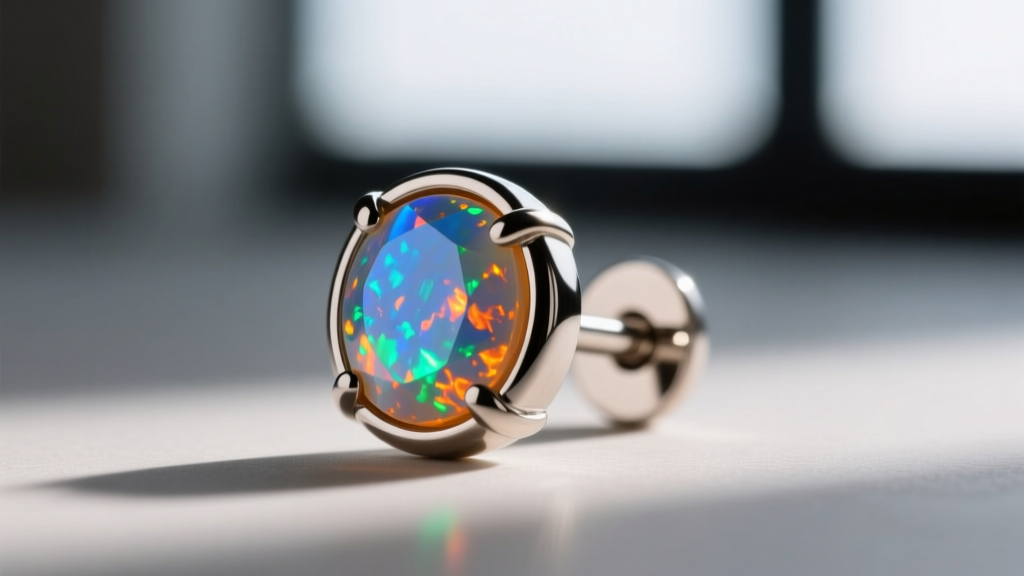
| Opal (October) | 5.5 - 6.5 | Very High (prone to crazing/cracking) | Full Bezel |
| Pearl (June) | 2.5 - 3.0 | Extreme (scratches easily) | Bezel / Cup Setting |
If you lead an active lifestyle or plan to wear your birthstone earrings daily in a standard lobe piercing, prioritize stones with a Mohs rating of 8 or higher. For softer stones like opals or pearls, reserve them for occasional wear or opt for lab-created alternatives that offer enhanced structural integrity.
Step 2: Select the Setting and Metal Grade
Once you have identified your gemstone's vulnerability, you must pair it with the correct metal setting to mitigate risk.
Prong vs. Bezel Settings
- Prong Settings: Ideal for high-Mohs stones like diamonds and sapphires. Prongs allow maximum light return, enhancing the gem's brilliance. However, they leave the girdle (edge) of the stone exposed to impacts.
- Bezel Settings: A continuous metal rim that encircles the gem. This is non-negotiable for emeralds, opals, and topaz. A bezel absorbs the shock of accidental bumps, protecting brittle edges and cleavage planes from chipping.
Metal Grades and Allergies
For fine jewelry, 14k and 18k gold are the industry standards. 14k gold (58.5% pure gold) offers superior durability for earring posts, which are prone to bending. However, if you have sensitive ears or a newly healed piercing, standard gold alloys may contain nickel or copper that triggers contact dermatitis. In these cases, demand ASTM F136 implant-grade titanium. This specific medical-grade alloy is entirely nickel-free and is the gold standard recommended by professional piercers for biocompatibility.
Lab-Created vs. Natural Birthstones
From a budgeting perspective, lab-created birthstones offer identical chemical and optical properties to mined stones but at a fraction of the cost. For example, a pair of natural, high-clarity sapphire studs (September) can easily exceed $1,500, whereas lab-created sapphire equivalents in 14k gold settings typically range from $200 to $400. Lab stones also tend to have fewer internal inclusions, making them slightly less prone to internal fracturing upon impact.
Step 3: Match Earring Silhouettes to Face Shapes
Beyond the gemstone itself, the silhouette of the earring dictates how the piece frames your face. According to styling principles endorsed by the American Gem Trade Association, contrasting your face shape with the earring's geometry creates the most flattering visual balance.
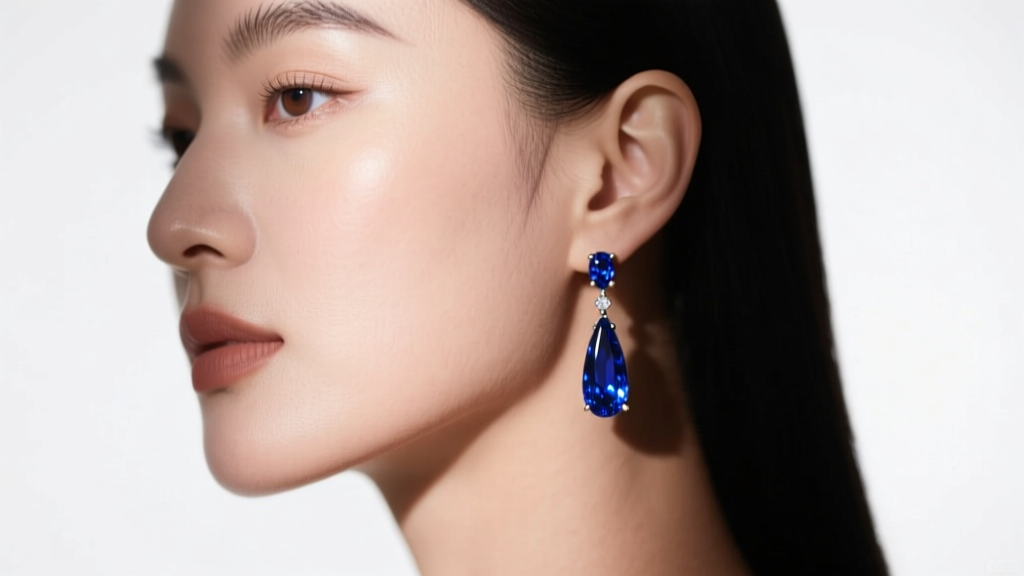
- Round Faces: Avoid circular hoops and large, chunky studs, which emphasize facial width. Instead, choose elongated drop earrings or dangle birthstone earrings. The vertical lines draw the eye downward, creating a lengthening illusion.
- Oval Faces: The most versatile shape. Oval faces can pull off almost any style, from geometric birthstone huggies to dramatic chandelier drops. Medium-sized studs are particularly elegant for everyday wear.
- Square Faces: Soften a strong jawline with curved silhouettes. Round birthstone studs, oval cabochons, or fluid, organic drop designs work beautifully. Avoid sharp, angular geometric shapes.
- Heart-Shaped Faces: Balance a wider forehead and narrower chin with teardrop or chandelier birthstone earrings that add visual weight to the lower half of the face.
Step 4: Verify Gauge Sizes for Lobe vs. Cartilage
A frequent and painful mistake buyers make is ignoring the post thickness (gauge) of the earring. Commercial mall kiosks often sell birthstone earrings with ultra-thin 22-gauge (0.64mm) or 20-gauge (0.81mm) friction posts. While these may fit a standard lobe piercing, they are entirely inappropriate for cartilage.
The Association of Professional Piercers (APP) notes that standard cartilage piercings (helix, tragus, conch) are typically pierced at 16-gauge (1.29mm) or 14-gauge (1.63mm). Forcing a thin 20-gauge post into a 16-gauge cartilage hole creates the 'cheese-cutter effect,' where the thin wire migrates through the tissue, causing inflammation, rejection, and permanent scarring.
Quick Gauge Reference Guide
- Standard Earlobe: 20G (0.81mm) or 18G (1.02mm)
- Cartilage (Helix/Tragus): 16G (1.29mm) or 14G (1.63mm)
- Thick Lobes / Stretched: 14G (1.63mm) or 12G (2.05mm)
When shopping for cartilage birthstone earrings, always verify the gauge with the jeweler. If you are buying online, look for listings that explicitly state '16G threaded post' or '14G clicker' rather than assuming a one-size-fits-all approach.
Step 5: Implement a Gemstone-Specific Care Routine
The final step in owning birthstone earrings is establishing a maintenance routine that will not inadvertently destroy the gem. Many women ruin their jewelry by tossing all pieces into an ultrasonic cleaner without checking the stone's stability.
What to Avoid
- Ultrasonic Cleaners: Never use these for emeralds, opals, pearls, or turquoise. The high-frequency vibrations can shatter brittle emeralds and strip the natural oils used to treat them, leaving them cloudy and cracked. Opals contain water, and the heat/vibration can cause 'crazing' (a network of fine cracks).
- Steam Cleaners: Avoid for any fracture-filled stones or organic gems (pearl, coral, amber).
- Harsh Chemicals: Hairspray, perfume, and chlorine can pit the surface of pearls and dull the polish of softer stones. Always put your birthstone earrings on after applying cosmetics and fragrances.
The Safe Cleaning Method
For 90% of birthstone earrings, the safest and most effective cleaning method is remarkably simple. Mix a few drops of mild, phosphate-free dish soap (like Dawn) into a bowl of lukewarm water. Use a baby-soft toothbrush to gently agitate the back of the setting where sebum and dead skin accumulate. Rinse under lukewarm tap water, and pat dry with a lint-free microfiber cloth. For high-refractive stones like diamonds and sapphires, this method will restore maximum light return without risking structural damage.
Conclusion
Choosing the perfect birthstone earrings for women requires balancing aesthetic desires with gemological realities. By respecting the Mohs scale, selecting biocompatible metals, matching silhouettes to face shapes, and adhering to proper gauge sizes, you ensure your personalized earrings remain a cherished, wearable heirloom rather than a fragile disappointment.


