Best Metals for Spider Web Earrings: Material Guide
Discover the best metals for spider web earrings. Compare titanium, sterling silver, and gold for durability, weight, and hypoallergenic properties.

The Engineering Challenge of Spider Web Designs
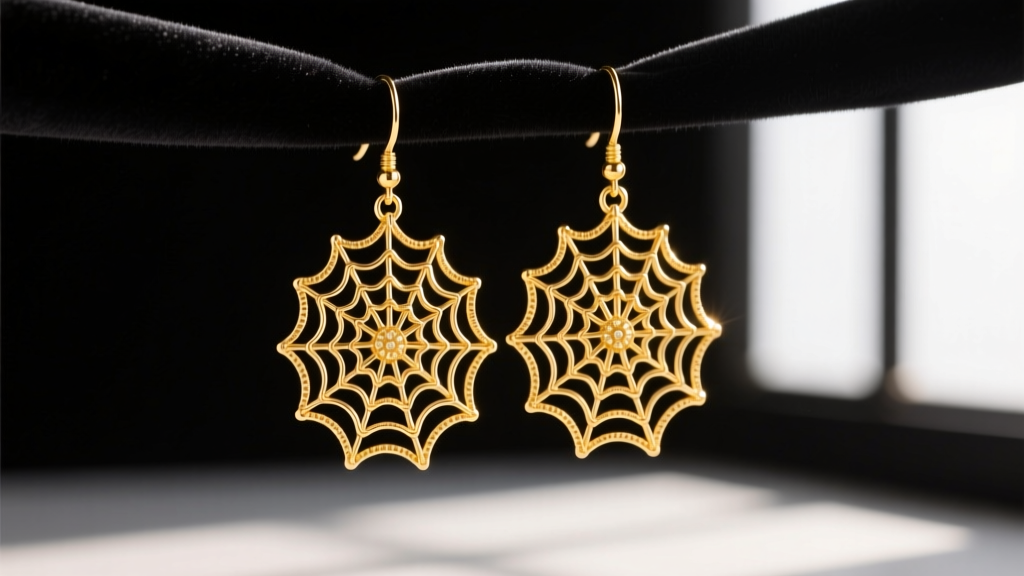
Spider web earrings are a captivating staple in alternative, gothic, and geometric jewelry aesthetics. Characterized by their intricate radial threads and concentric spiral patterns, these designs mimic the delicate yet resilient architecture of an actual arachnid web. However, translating this organic geometry into wearable metal presents a unique metallurgical challenge. Unlike solid cast hoops or simple stud earrings, spider web earrings rely on a complex network of micro-soldered joints and ultra-thin wire strands.
The structural integrity of a web design depends entirely on the base metal's tensile strength, malleability, and fatigue resistance. The outer frame of the earring typically requires a thicker wire—usually 18-gauge (1.02mm) or 16-gauge (1.29mm)—to maintain the overall shape and support the weight of the dangle. Conversely, the interior web strands are often drawn from 24-gauge (0.51mm) or even 26-gauge (0.40mm) wire to achieve a delicate, ethereal look. If the chosen metal is too soft, these micro-strings will warp, snag on clothing, and lose their tension. If the metal is too brittle, the numerous solder joints required to connect the spiral threads to the radial lines will snap under minor physical stress.
Choosing the right material is not merely an aesthetic decision; it dictates the lifespan, weight, and biocompatibility of the jewelry. Below, we break down the most common metals used in spider web earrings, analyzing their specific properties through the lens of a master jeweler.
Material Breakdown: Tensile Strength & Tarnish
Implant-Grade Titanium (ASTM F136)
For those with sensitive skin or multiple cartilage piercings, implant-grade titanium (specifically Ti6Al4V ELI, compliant with ASTM F136 standards) is the undisputed champion. According to the Association of Professional Piercers, this specific alloy is entirely nickel-free and highly biocompatible, making it safe for unhealed piercings and severe metal allergies.
From a structural perspective, titanium boasts an exceptional strength-to-weight ratio. Its high tensile strength allows jewelers to pull the interior web strands incredibly thin without sacrificing durability. A 26-gauge titanium wire will resist bending far better than a 22-gauge sterling silver wire. Furthermore, titanium's natural resistance to corrosion means that the intricate crevices of a spider web design will not trap moisture and oxidize over time. The primary drawback is that titanium is difficult to solder using traditional jeweler's torches; therefore, titanium web earrings are often laser-welded or constructed using micro-tension settings rather than traditional solder joints.
14k and 18k Gold Alloys
Gold is the traditional standard for fine jewelry, but pure 24k gold is far too soft for the intricate wirework required in spider web earrings. To achieve the necessary hardness, gold is alloyed with metals like copper, silver, and zinc.
When selecting gold web earrings, 14k gold is often structurally superior to 18k gold for the interior web strands. On the Vickers Hardness (HV) scale, 14k gold typically registers around 140-160 HV, whereas 18k gold sits closer to 120-130 HV. That extra hardness in 14k gold ensures that the delicate spiral threads maintain their geometry and resist warping when accidentally tugged. However, 18k gold offers a richer, warmer color and higher hypoallergenic properties, provided the alloy uses palladium or silver rather than nickel for white gold variations.
925 Sterling Silver vs. Argentium Silver
Standard 925 sterling silver (92.5% silver, 7.5% copper) is the most common and affordable material for spider web earrings. It offers excellent malleability, making it a joy for artisans to solder into complex web patterns. However, the copper content makes it highly susceptible to tarnishing. Because spider web designs feature dozens of tight angles and overlapping wires, polishing tarnished silver with a traditional cloth is nearly impossible without snagging the fabric or bending the wires.
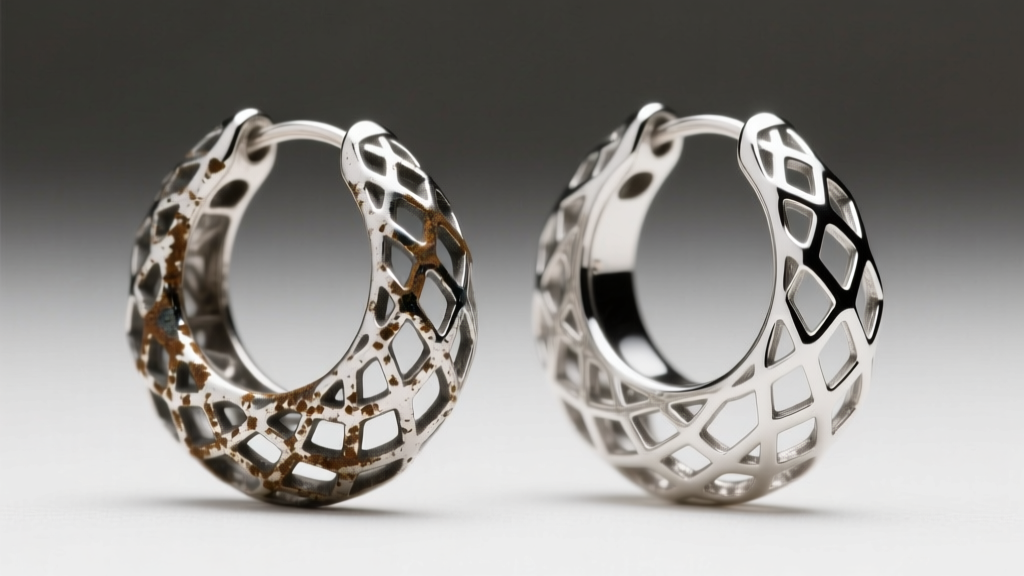
To solve this, many high-end artisans are turning to Argentium silver. Argentium replaces a portion of the copper with germanium, which creates a transparent, self-healing oxide layer on the surface. This makes Argentium silver highly tarnish-resistant and significantly brighter than standard sterling, ensuring your intricate web patterns remain visible and require far less aggressive polishing.
316L Surgical Steel
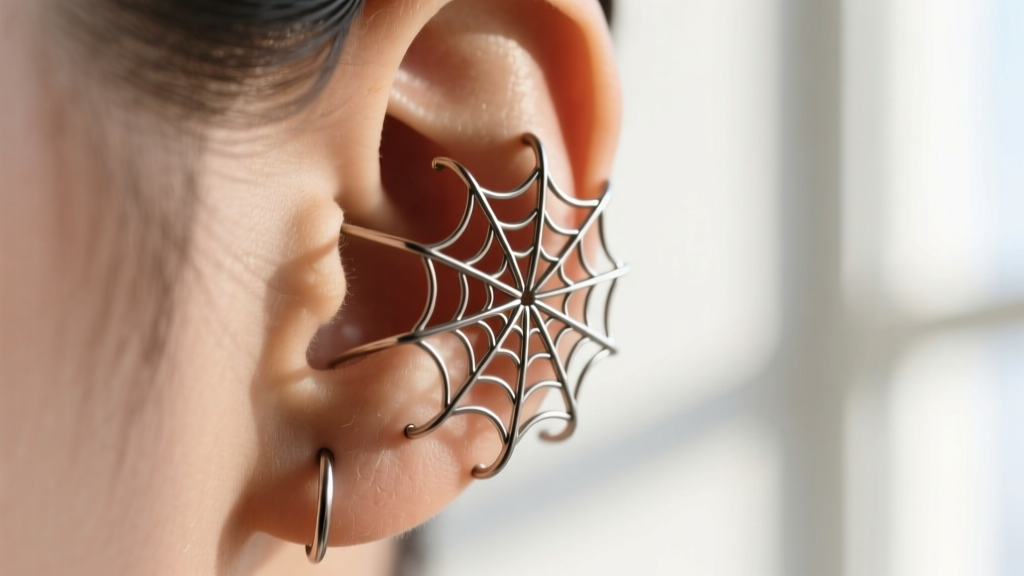
Surgical steel is a budget-friendly workhorse, but it comes with distinct disadvantages for intricate designs. First, 316L steel contains trace amounts of nickel, which can trigger contact dermatitis in sensitive wearers. Second, steel is incredibly dense. A large, dramatic spider web dangle made from steel will weigh significantly more than the same design in titanium, potentially causing lobe stretching or discomfort during extended wear. It is best reserved for smaller, stud-style web earrings or rigid ear cuffs where weight is less of a factor.
The Weight Factor: Gauge Sizes and Wire Thickness
When purchasing large spider web dangles or full-ear cartilage shields, the density of the metal directly impacts your comfort. The gauge of the wire used for the structural frame versus the decorative web also plays a crucial role in the earring's overall mass and durability.
| Metal | Density (g/cm³) | Estimated Weight (50mm Web Dangle) | Recommended Frame Gauge | Recommended Web Gauge |
|---|---|---|---|---|
| Titanium (ASTM F136) | 4.43 | 3.2 grams | 18g (1.02mm) | 24g - 26g |
| 14k Yellow Gold | 13.5 | 9.8 grams | 16g (1.29mm) | 22g - 24g |
| 925 Sterling Silver | 10.36 | 7.5 grams | 18g (1.02mm) | 24g |
| 316L Surgical Steel | 8.00 | 5.8 grams | 16g (1.29mm) | 22g |
As illustrated in the table above, a 50mm gold spider web earring is nearly three times heavier than its titanium counterpart. If you are designing or purchasing a large statement piece that hooks over the entire ear cartilage, titanium or Argentium silver are the most ergonomic choices to prevent ear fatigue.
Care and Maintenance for Intricate Web Patterns
The openwork nature of spider web earrings makes them magnets for hairspray, dead skin cells, and environmental dust. Proper maintenance requires specific techniques tailored to your chosen metal.
- Ultrasonic Cleaning: For titanium, steel, and solid gold (without gemstones), an ultrasonic cleaner is the most effective way to blast debris out of the micro-crevices where the web strands intersect. However, avoid using ultrasonics on oxidized or antiqued silver webs, as the high-frequency vibrations can strip the intentional dark patina from the recessed solder joints.
- Chemical Dips: Avoid harsh chemical silver dips on any web earring. These solutions can become trapped in the tight angles of the spiral threads, leading to delayed chemical burns on your skin and eventual degradation of the solder joints.
- Soft Brushing: For Argentium or standard sterling silver, use a baby toothbrush with a drop of mild dish soap and warm water. Gently brush along the radial lines of the web, always brushing from the center outward to avoid catching and bending the delicate 24-gauge wires.
Final Verdict: Choosing Your Metal
The ideal metal for your spider web earrings depends entirely on your piercing placement, budget, and lifestyle. If you are outfitting a fresh cartilage piercing or require a lightweight, large-scale dangle that will never tarnish or trigger allergies, implant-grade titanium is the ultimate functional choice. For heirloom-quality pieces with a luxurious finish, 14k gold provides the perfect balance of Vickers hardness and prestige. Finally, if you prefer the classic look of silver but despise the maintenance of polishing tight wirework, seek out artisans who craft their web designs using Argentium silver. By understanding the metallurgical properties behind the web, you can ensure your jewelry remains as resilient and captivating as the natural architecture it mimics.


