How to Choose and Style Black Hoops Earrings Perfectly
Learn how to choose, style, and care for black hoops earrings. Expert guide on materials, gauge sizes, face shapes, and maintenance.

The Rise of the Dark Aesthetic in Ear Styling
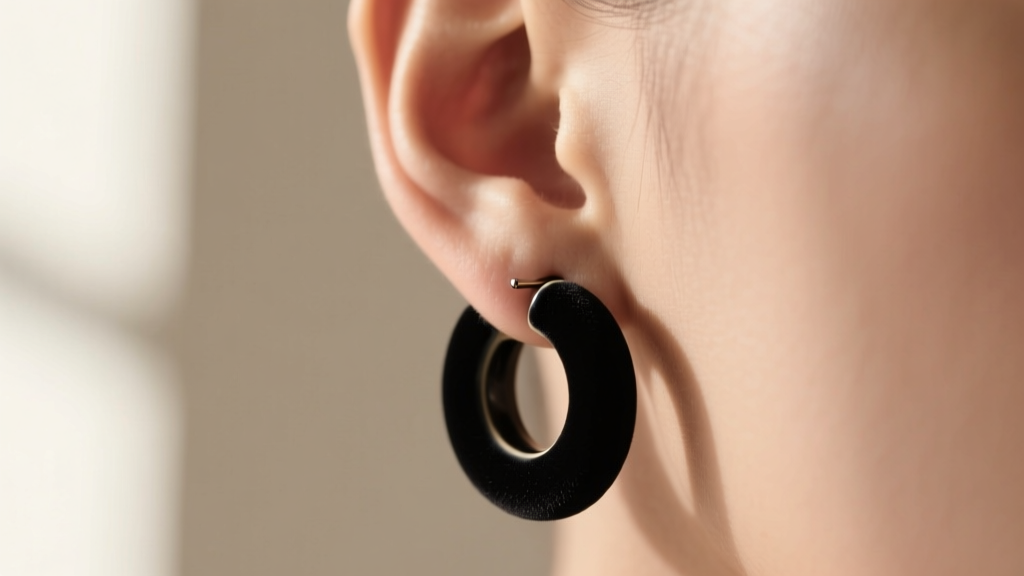
Black hoops earrings have transcended their alternative subculture roots to become a cornerstone of modern, avant-garde, and minimalist styling. As we navigate the jewelry trends of 2026, the demand for dark, moody, and sophisticated ear aesthetics has never been higher. However, not all dark metals are created equal. Choosing the right pair requires a deep understanding of material science, piercing anatomy, and facial proportions. This comprehensive, step-by-step guide will teach you how to select, style, and maintain black hoops earrings with the precision of a professional jeweler.
Step 1: Decode the Material Grade
The most common mistake consumers make is assuming all black jewelry is crafted from the same base material. The 'black' finish is usually achieved through one of four distinct methods, each with vastly different durability profiles and hypoallergenic properties. Understanding these differences is critical, especially if you have sensitive skin or newly healed piercings.
- Black Rhodium Plating: A member of the platinum family, rhodium is electroplated over sterling silver or gold to create a sleek, gunmetal-black finish. While stunning, plating is subject to friction wear and will eventually reveal the base metal beneath.
- Oxidized Sterling Silver: This is a chemical treatment where sterling silver is exposed to sulfides to darken the recessed areas. It offers a rustic, matte-black patina that is solid throughout, meaning it will not 'flake' off, though it can be polished back to silver over time.
- Black Zirconia / Ceramic: High-tech ceramic and black zirconium are baked at extreme temperatures to create a permanent, scratch-resistant black surface. According to the Gemological Institute of America (GIA), advanced ceramics are highly inert, making them the ultimate choice for severe metal allergies.
- Black Enamel: Glass powder fused to metal at high heat. Enamel provides a glossy, opaque black finish but is highly susceptible to chipping if dropped on hard surfaces.
| Material | Durability | Hypoallergenic | Price Range | Best Use Case |
|---|---|---|---|---|
| Black Rhodium | Moderate (wears over time) | Depends on base metal | $40 - $120 | Occasional wear, lobes |
| Oxidized Silver | High (solid patina) | Moderate (contains copper) | $30 - $90 | Textured, rustic styles |
| Black Zirconia | Extremely High (scratch-proof) | Excellent (100% inert) | $60 - $150+ | Fresh piercings, daily wear |
| Black Enamel | Low (chips upon impact) | Excellent (glass surface) | $25 - $80 | Statement pieces, huggies |
Step 2: Match Gauge and Diameter to Your Anatomy
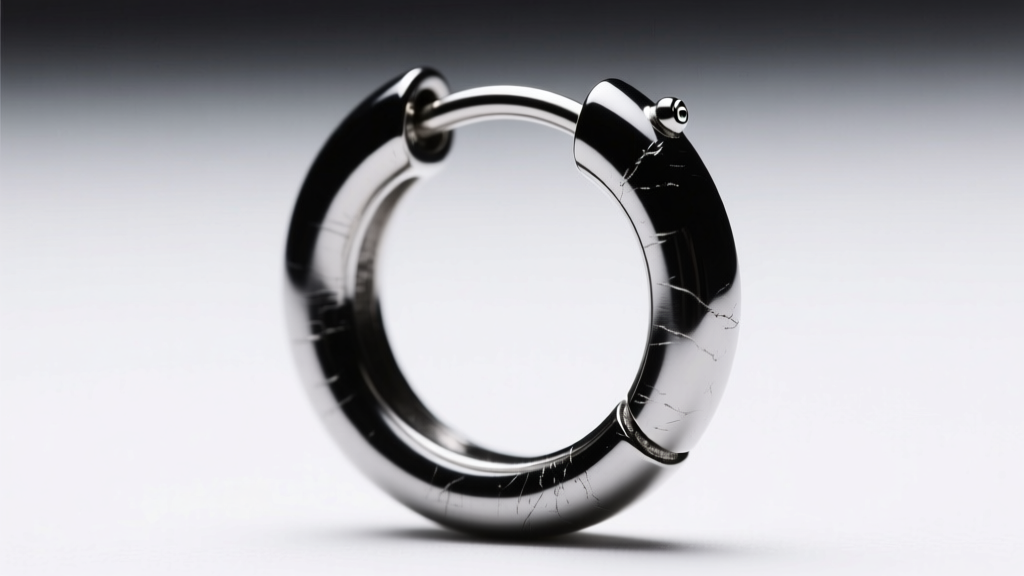
A beautifully crafted hoop will still look awkward—and potentially cause tissue irritation—if the gauge (thickness) and diameter do not match your specific piercing placement. The Association of Professional Piercers (APP) emphasizes that wearing the correct gauge prevents the 'cheese-cutter effect,' where a hoop that is too thin slowly migrates through the tissue.
Standard Lobe Piercings
Most standard lobe piercings are done at 20-gauge (0.8mm) or 18-gauge (1.0mm). For lobes, you have the most freedom with diameter. Huggies (10mm-15mm) will sit snug against the earlobe, while standard hoops (20mm-30mm) will dangle slightly. If you are wearing multiple lobe piercings, graduate the sizes: use a 12mm black huggie for the second hole and a 20mm hoop for the primary lobe to create a cascading effect.
Cartilage, Conch, and Orbital Piercings
Cartilage piercings, including the helix, conch, and flat, are typically pierced at 16-gauge (1.2mm) or 14-gauge (1.6mm). When selecting black hoops earrings for these placements, the diameter is heavily dictated by your ear's anatomy. A hoop that is too small will pull upward on the healing fistula, causing irritation bumps. Conversely, a hoop that is too large will snag on hair and clothing. For a standard conch piercing, a 10mm or 12mm internally threaded black titanium clicker is usually the perfect fit to hug the outer ear ridge without protruding.
Step 3: Face Shape Proportions
Because black is a visually heavy and light-absorbing color, black hoops draw immediate attention to the sides of the face. Use this to your advantage by selecting shapes that balance your natural bone structure.
- Round Faces: Avoid perfectly circular, medium-sized black hoops, as they will echo and exaggerate the roundness of your face. Instead, opt for elongated black drop-hoops or large, oversized 40mm+ circular hoops that draw the eye vertically downward, creating the illusion of a longer face.
- Square Faces: Strong jawlines benefit from softening elements. Medium-sized (25mm) rounded black hoops or black hoops with a hammered, organic texture will soften sharp angles. Avoid stiff, geometric black hexagons or squares.
- Oval Faces: The most versatile face shape can pull off any style. In 2026, the trend for oval faces is asymmetrical styling: pair a chunky 15mm black enamel huggie in one ear with a delicate 30mm black zirconia threadless hoop in the other.
- Heart-Shaped Faces: With a wider forehead and a narrow chin, you want to add visual weight to the lower half of your face. Bottom-heavy black hoops, such as teardrop-shaped dark hoops or hoops featuring a black onyx bead at the base, perfectly balance this profile.
Pro Stylist Tip: When wearing matte black hoops, keep your hair tucked behind the ears or styled in an updo. Matte black absorbs light, so it needs negative space around the ear to stand out against the skin tone; otherwise, it can get lost in dark, flowing hair.
Step 4: The Maintenance and Cleaning Protocol
Dark finishes require specialized care. The natural oils from your skin, combined with lotions and perfumes, can create a cloudy film over black metals, while harsh chemicals can strip platings and ruin patinas. According to dermatological guidelines on contact dermatitis from the Mayo Clinic, keeping jewelry free of trapped bacteria and degraded chemical coatings is also vital for preventing localized skin reactions.
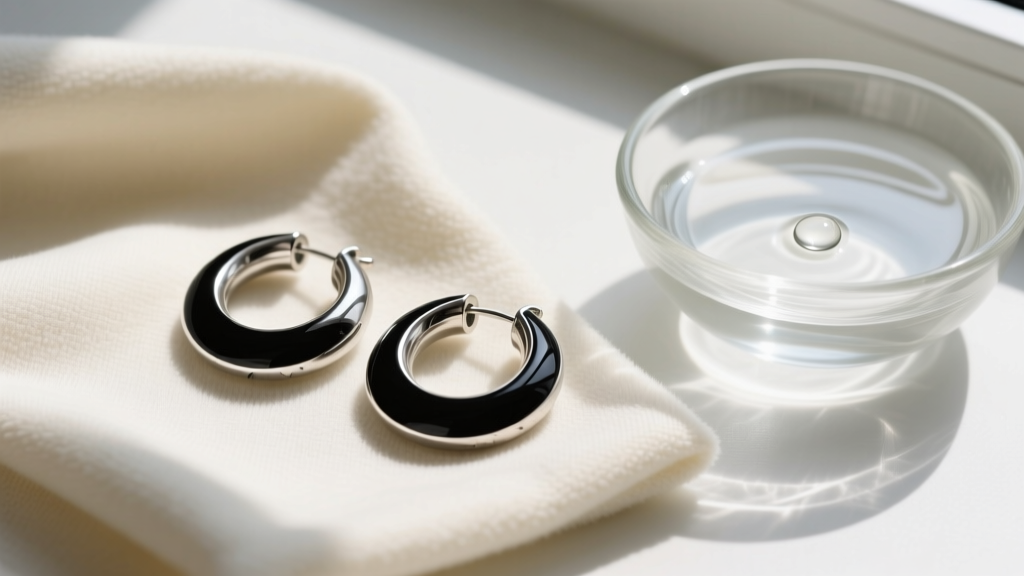
- Prepare a Mild Solution: Mix a few drops of phosphate-free dish soap into a bowl of lukewarm (never hot) water. Hot water can cause thermal shock to enamel and accelerate the oxidation of treated silvers.
- Soak Briefly: Submerge your black hoops earrings for no more than 3 to 5 minutes. This loosens sebum and dead skin cells trapped in the hinge mechanisms and clicker closures.
- Agitate Gently: Use a baby-soft toothbrush to gently sweep the bristles over the post, the hinge, and the inside of the hoop. Do not scrub aggressively, especially on black rhodium or enamel, as micro-abrasions will dull the finish.
- Rinse and Dry: Rinse under cool distilled water to prevent hard water spots. Pat dry immediately with a lint-free microfiber cloth. Never let black jewelry air dry, as water spots can etch into porous oxidized finishes.
Troubleshooting Common Black Hoop Failures
Even high-end black hoops earrings can experience mechanical or cosmetic issues. Here is how to troubleshoot the most common problems:
The 'Cheese-Cutter' Migration
If your black hoop is slowly moving downward through your lobe or cartilage, the gauge is too thin for the weight of the jewelry, or the diameter is too tight, creating constant downward tension. The Fix: Size up by one gauge (e.g., move from 18g to 16g) and increase the diameter by 2-3mm to relieve pressure on the fistula.
Patchy Fading on Black Rhodium
Black rhodium plating wears off fastest at high-friction points, such as the clasp closure and the back of the hoop where it rubs against the neck. The Fix: You cannot polish this back to black. You must take the piece to a professional jeweler to have it re-plated. To delay this, remove rhodium-plated hoops before sleeping or exercising.
Stuck Clicker Closures
The hinged segment on a black clicker hoop can become stuck due to trapped soap residue or microscopic debris in the internal locking groove. The Fix: Do not use pliers, which will crush the delicate tubing and chip the black finish. Instead, soak the closed hoop in warm distilled water for 10 minutes, then use a wooden toothpick to gently dislodge debris from the seam before attempting to pull the hinge open with your fingernails.


