A Beginner's Guide to Buying Gold and Crystal Earrings
Discover how to choose, style, and care for gold and crystal earrings. Learn about metal grades, crystal types, and gauge sizes in our beginner guide.

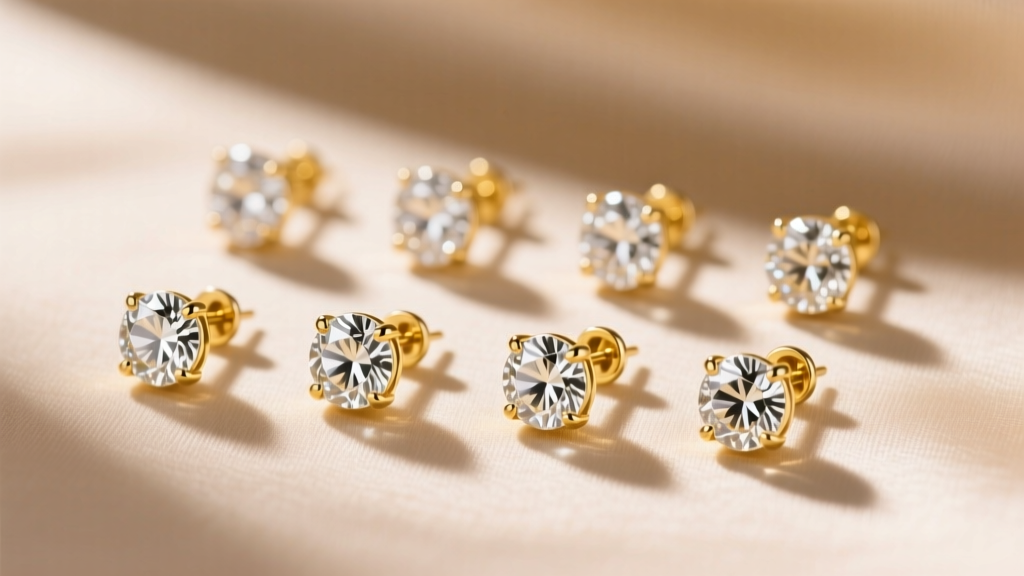
The Timeless Appeal of Gold and Crystal Earrings
When building a foundational jewelry collection, gold and crystal earrings serve as the ultimate bridge between everyday versatility and evening elegance. For beginners, navigating the jewelry market can feel overwhelming. Terms like 'vermeil,' 'cubic zirconia,' and '14-karat' are often thrown around without adequate context, leading to buyer's remorse or allergic reactions. This guide breaks down the exact material grades, structural specifications, and styling frameworks you need to make informed, long-lasting purchases.
Decoding the Metals: Solid Gold vs. Alternatives
Not all gold is created equal, especially when it comes to body jewelry that interacts with your skin's natural chemistry. Understanding the alloy composition is critical for both durability and hypoallergenic properties.
The 14k vs. 18k Dilemma
Pure 24k gold is entirely unsuitable for earring posts and settings because it is too soft; it will bend under minor pressure, potentially causing you to lose a precious crystal. Therefore, gold is alloyed with other metals like copper, silver, and zinc.
- 14k Gold (58.5% pure gold): The industry standard for everyday wear. It offers an excellent balance of rich color and structural integrity. It is highly resistant to scratching and bending, making it the safest choice for securing crystal settings.
- 18k Gold (75% pure gold): Noticeably warmer and richer in color, but softer. While beautiful, 18k gold requires more careful maintenance, especially in high-friction areas like huggie hoops or cartilage studs.
White Gold and the Nickel Trap
Beginners with sensitive ears must be cautious with white gold. To achieve a silvery hue, yellow gold is often alloyed with nickel. According to the American Academy of Dermatology, nickel is the most common cause of allergic contact dermatitis. If you prefer white gold, ensure the piece is alloyed with palladium instead, or verify that it has a fresh, intact rhodium plating barrier.
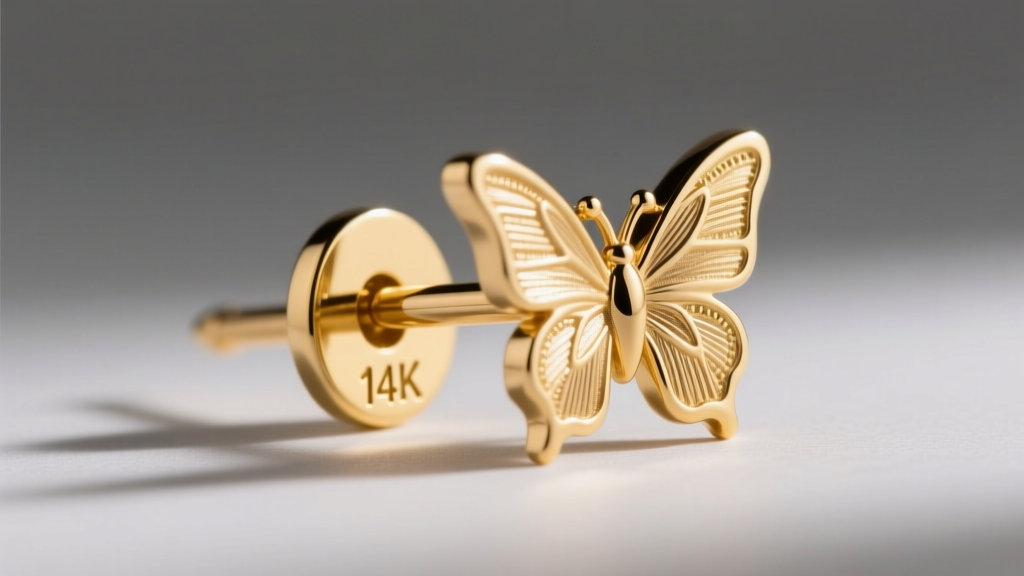
Crystal Clarity: What Are You Actually Buying?
The term 'crystal' in jewelry is a catch-all that spans from precision-cut glass to natural earth-mined minerals. Knowing the difference dictates how the earrings will sparkle, age, and react to environmental factors.
Comparing Crystal Types
| Material | Mohs Hardness | Refractive Index (Sparkle) | Best Use Case | Price Range |
|---|---|---|---|---|
| Swarovski (Advanced Crystal) | 6 - 7 | 1.52 - 1.57 | Everyday studs, huggies | $40 - $150 |
| Cubic Zirconia (CZ) | 8 - 8.5 | 2.15 - 2.18 | High-sparkle evening drops | $50 - $200 |
| Natural Clear Quartz | 7 | 1.54 - 1.55 | Bohemian or organic styles | $80 - $300+ |
Expert Insight: Swarovski transitioned to their 'Advanced Crystal' formula in 2012, making their products completely lead-free while maintaining high optical clarity. CZ, while harder and more brilliant, is highly oleophilic (oil-attracting). As noted by the Gemological Institute of America (GIA), CZ readily attracts skin oils and lotions, which can quickly dull its fire if not cleaned regularly. Natural quartz, meanwhile, offers unique internal inclusions but lacks the uniform light dispersion of lab-created alternatives.
Sizing and Piercing Placement: Gauges and Backings
Buying gold and crystal earrings online requires a firm grasp of gauge sizes and post lengths. A beautiful earring is useless if the post doesn't fit your specific piercing anatomy.
Gauge Specifications
- 20G (0.81mm): The standard size for most commercial lobe earrings. If you bought your earrings at a standard mall retailer, they are likely 20G.
- 18G (1.02mm): Slightly thicker, often used for higher-end jewelry brands and sleepers. Ideal for standard lobes that need a bit more support for heavier crystal drops.
- 16G (1.29mm): The standard for cartilage piercings (helix, tragus, conch). Never force a 20G lobe stud into a 16G cartilage piercing, as the thin post can cause the 'cheese-cutter effect,' migrating through the tissue.
Post Length Matters
Standard lobe posts are typically 6mm to 7mm long. However, if you have thick lobes or are buying for a fresh cartilage piercing, you need an 8mm post to accommodate tissue swelling and prevent the butterfly backing from embedding into your skin.
Common Failure Modes and How to Avoid Them
Beginners often experience premature wear and tear because they don't understand how jewelry is constructed. Here are the most common failure modes for gold and crystal earrings and how to shop defensively.
1. Adhesive Degradation
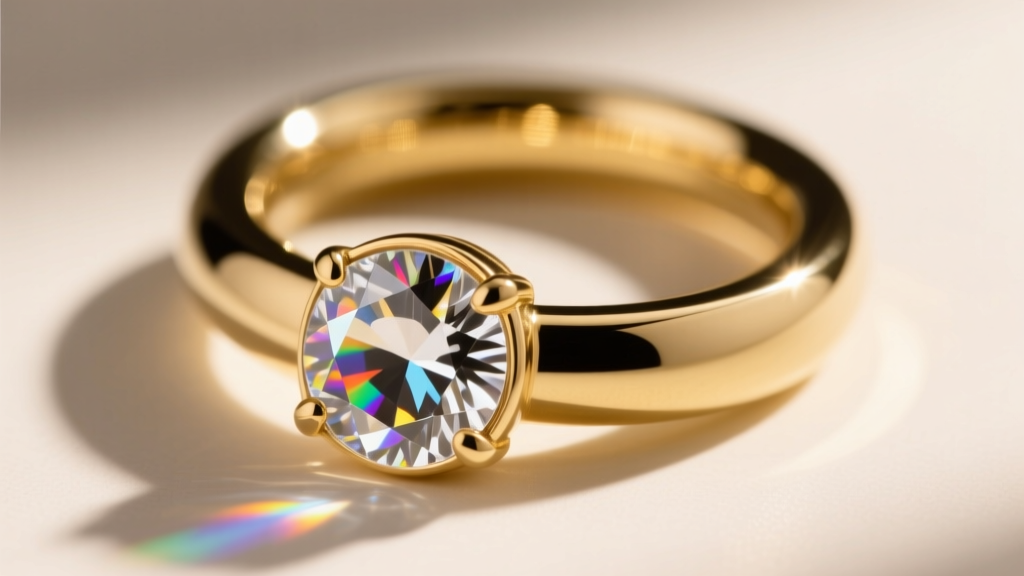
Cheap crystal earrings rely on industrial glues to hold the stone in the setting. When exposed to ethanol-based perfumes, sweat, or humid showers, this glue turns brittle and fails. The Fix: Always inspect the setting. Opt for prong-set or bezel-set crystals where the gold physically wraps around or claws onto the stone. Avoid flat-back glued settings entirely.
2. Prong Snagging
High-profile prong settings catch on silk pillowcases, wool sweaters, and hair, which can bend the gold prongs and dislodge the crystal. The Fix: For everyday wear, choose bezel settings (where a smooth rim of gold encircles the crystal) or low-profile V-prongs that sit flush against the stone.
Pro Care Tip: Never use ultrasonic jewelry cleaners on crystal earrings. The high-frequency vibrations can shatter precision-cut glass crystals and loosen the microscopic friction grips in gold settings. Stick to warm water, a drop of mild dish soap, and a soft microfiber cloth.
Styling Framework: Face Shape and Crystal Cut
Once you have secured high-quality materials, the final step is matching the crystal cut and earring silhouette to your face shape to maximize aesthetic harmony.
- Round Faces: Elongate your features with linear drop earrings featuring baguette-cut or emerald-cut crystals. Avoid large, circular crystal hoops that mimic the face's natural geometry.
- Square Faces: Soften a strong jawline with curved silhouettes. Gold huggie hoops adorned with round-cut or oval crystals draw the eye inward and add softness.
- Heart-Shaped Faces: Balance a narrower chin with chandelier or teardrop earrings where the bulk of the crystal weight sits at the bottom of the lobe.
Final Verdict for Beginners
Investing in gold and crystal earrings is an exercise in balancing material science with personal style. By prioritizing 14k solid gold for its hypoallergenic durability, understanding the optical differences between Swarovski and CZ, and strictly adhering to correct gauge sizing, you will build a collection that remains secure, brilliant, and comfortable for years to come. Start with a versatile pair of 14k gold bezel-set crystal studs in 20G or 18G, and expand into cartilage huggies and drop silhouettes as your confidence and collection grow.


