Chris Brown Earrings: Cleaning & Care for Iced-Out Styles
Learn how to clean and maintain Chris Brown earrings, from diamond studs to iced-out cross dangles. Expert tips on prong care and polishing.

The Signature Styles: What Defines Chris Brown Earrings?
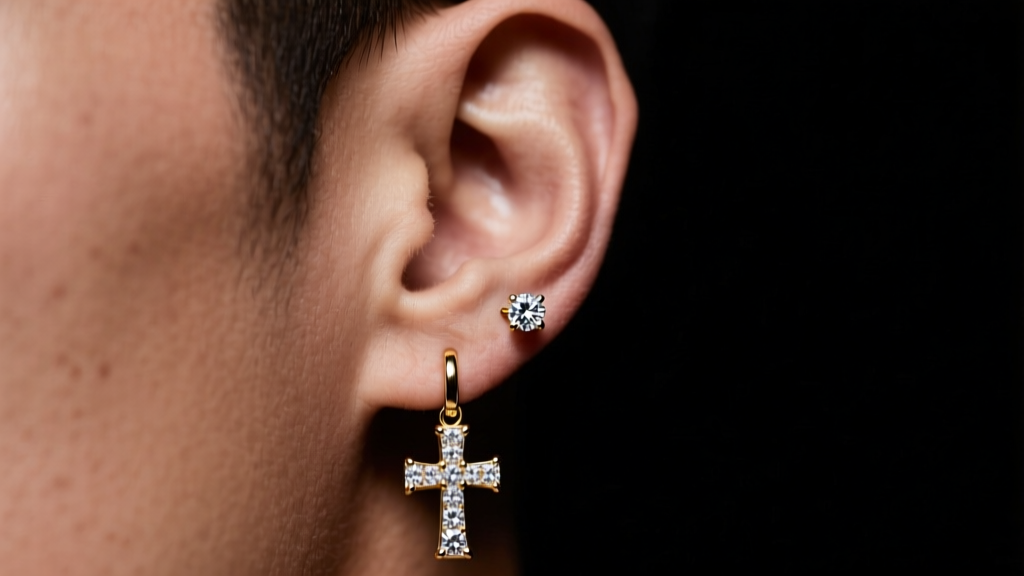
When discussing the evolution of men's hip-hop and R&B jewelry, few artists have influenced mainstream trends quite like Chris Brown. His signature ear game typically rotates between three distinct categories: high-carat round brilliant diamond studs, custom iced-out crucifix dangles, and medium-sized pavé diamond hoops. These pieces are not just accessories; they are statement investments that demand rigorous maintenance to retain their optical brilliance and structural integrity. Whether you own authentic VVS diamond pieces or high-quality moissanite and lab-grown alternatives styled after iconic chris brown earrings, the physical mechanics of keeping them pristine remain identical.
Stage-ready jewelry is subjected to extreme environments. From the intense heat of stage lighting to the friction of hoodies and the chemical exposure of daily life, the wear and tear on men's statement earrings is significant. To maintain the mirror-like finish of white gold and the scintillation of pavé settings, a specialized, scientifically grounded approach to cleaning and maintenance is required. Below, we break down the exact protocols used by high-end jewelers to maintain iced-out men's jewelry.
Daily Wear & Tear: The Chemistry of Degradation
Before diving into cleaning solutions, it is crucial to understand why iced-out earrings lose their luster. Human sweat has a pH ranging from 4.5 to 7.0 and contains lactic acid, urea, and salts. When this mixture interacts with the alloy metals in 14k or 18k gold—specifically the copper and silver used to strengthen the gold—it causes microscopic oxidation. This results in a dull, sometimes reddish or blackish film that traps dead skin cells and sebum behind the diamond girdle.
Furthermore, the rhodium plating on white gold earrings is typically only 0.75 to 1.0 microns thick. Constant friction from wiping the earrings with abrasive materials, or exposure to chlorine in tap water, will strip this plating prematurely, exposing the yellowish underlying alloy. Understanding these chemical interactions is the first step in preserving the high-end aesthetic of your jewelry.
Step-by-Step Cleaning Protocols by Material
1. Diamond & Moissanite Studs (The Classics)
The classic 2-carat to 5-carat round brilliant stud is a staple. Because studs sit flush against the earlobe, they are notorious for accumulating sebum and dead skin on the pavilion (the bottom half of the stone), which severely restricts light return and makes the diamond look cloudy.
- The Solution: Create a lukewarm bath of distilled water and a few drops of mild, phosphate-free dish soap. Avoid tap water, as chlorine can react with the metal alloy over time.
- The Technique: Soak the studs for 15 minutes to soften the sebum. Using a brand-new, ultra-soft baby toothbrush, gently brush the pavilion and the gallery (the metal basket holding the stone). Brush in a circular motion, never aggressively back-and-forth, to avoid bending the prongs.
- Drying: Rinse with distilled water and dry using a lint-free microfiber cloth, or better yet, use a can of compressed air to blow water out from under the culet.
2. Iced-Out Cross Dangles & Charms
Dangle earrings introduce kinetic stress. The jump rings and hinges that connect the cross charm to the post bear the brunt of physical movement. Dirt accumulation in these mechanical joints can cause stiffness and eventual metal fatigue.
- The Solution: Use a specialized jewelry cleaning pen with a built-in microfiber tip for the surface diamonds, and a wooden toothpick to gently dislodge debris from the hinge mechanisms and jump rings.
- The Technique: Never submerge hinged or hollow-backed dangle earrings in liquid solutions unless you are certain they are completely sealed. Moisture trapped inside hollow charms can lead to internal corrosion and a foul odor. Spot-clean the diamonds with an isopropyl alcohol (90%+) soaked cotton swab, which evaporates instantly and leaves no residue.
3. Rhodium-Plated White Gold Hoops
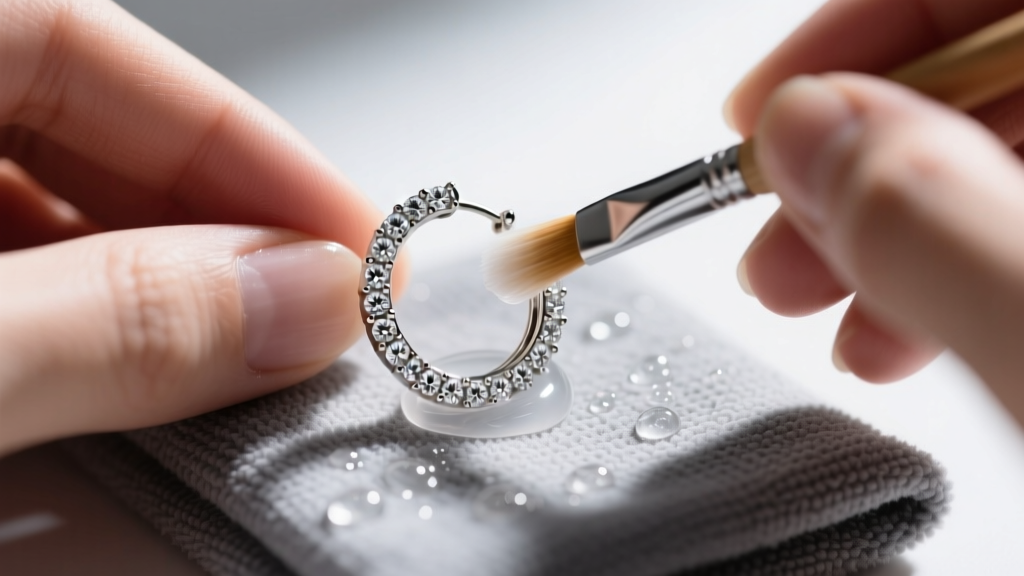
Pavé hoops require the most delicate touch. The tiny beads of metal holding the micro-diamonds are incredibly small and can easily be worn down by aggressive polishing.
- The Solution: Avoid commercial 'dip' cleaners or ultrasonic machines for pavé hoops. Instead, use a 50/50 mix of distilled water and 90% isopropyl alcohol in a spray bottle.
- The Technique: Mist the hoops lightly and wipe them with a dedicated, clean microfiber jewelry cloth. The alcohol cuts through hairspray, cologne, and skin oils without requiring the mechanical friction that damages pavé beads.
Maintenance Schedule & Prong Inspection
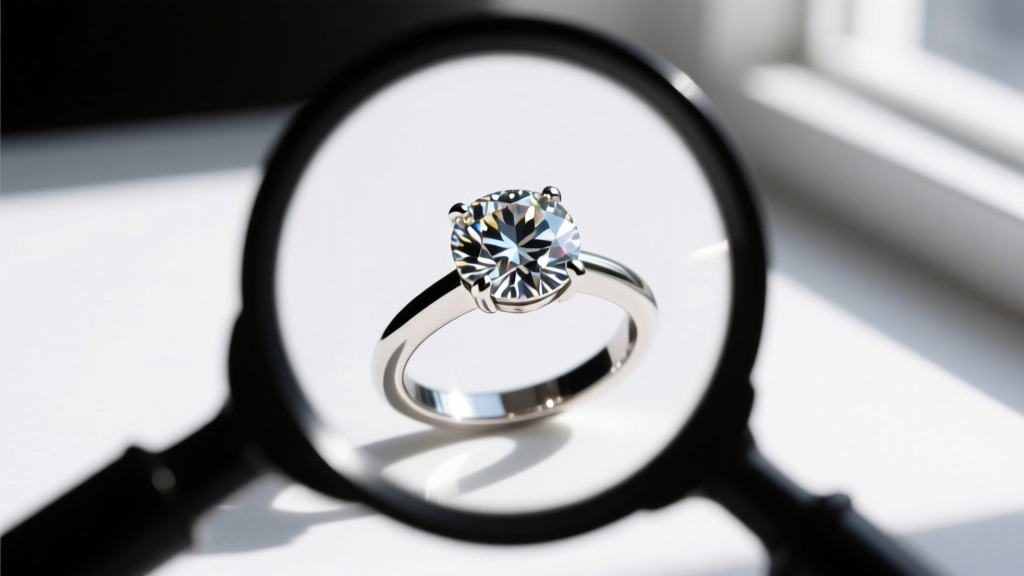
Cleaning only addresses the surface; true maintenance preserves the structural security of the stones. According to the Gemological Institute of America (GIA), prongs should be inspected every six months. For active individuals who wear their earrings to the gym or while sleeping, this should be reduced to every three months.
| Inspection Target | Frequency | Tool Required | Actionable Check |
|---|---|---|---|
| Stud Prongs | Every 3 Months | 10x Triplet Loupe | Check for 'shoulder wear' or rounding on the prong tips. If the prong looks flat, it needs re-tipping. |
| Dangle Jump Rings | Monthly | Naked Eye / Magnifier | Ensure the gap in the jump ring is flush. If it is open, the charm will detach and be lost. |
| Pavé Beads (Hoops) | Every 6 Months | 10x Triplet Loupe | Look for 'snagging'. If the earring catches on a cotton t-shirt, a pavé bead is lifted and requires burnishing. |
| Rhodium Plating | Annually | Naked Eye | Inspect the high-friction zones (posts and clutches). If yellowing appears, schedule a professional re-plate. |
Common Mistakes That Destroy Iced-Out Jewelry
When maintaining styles inspired by chris brown earrings, avoiding catastrophic errors is just as important as knowing how to clean them. The Federal Trade Commission (FTC) jewelry guidelines frequently highlight the misuse of commercial cleaners that damage treated stones.
- The Ultrasonic Trap: Ultrasonic cleaners operate at frequencies around 40-45 kHz, creating microscopic cavitation bubbles that blast dirt away. However, if your diamond is fracture-filled (treated with glass-like substances to hide inclusions), or if you are wearing earrings featuring porous accent stones like turquoise or lapis lazuli, the ultrasonic vibrations will shatter the stone or melt the filler.
- Using Toothpaste or Baking Soda: These are highly abrasive. Toothpaste contains silica, which ranks at 7 on the Mohs hardness scale. While it won't scratch a diamond (10 on Mohs), it will heavily scratch the 14k gold (approx. 3.5 to 4 on Mohs) and strip the rhodium plating off white gold instantly, leaving a dull, matte finish.
- Wiping Dirty Stones Dry: If a diamond has microscopic dust or sand (quartz) on it, wiping it dry with a cloth will drag the quartz across the metal setting, causing micro-scratches on the gold basket.
Professional Servicing: When to See a Jeweler
While home maintenance is vital for daily brilliance, certain procedures require professional equipment. If your white gold earrings have lost their bright white luster and reveal a pale yellow undertone, the rhodium has worn through. A bench jeweler will need to polish the piece using a muslin buffing wheel with rouge compound, followed by an electroplating bath to restore the 0.75-micron rhodium layer.
Additionally, if you notice any 'rattling' when you gently tap the earring against your palm, a stone is loose in its gallery. Stop wearing the earring immediately and take it to a professional for laser welding or prong re-tipping. For more comprehensive data on gemstone durability and care, consult the GIA Gem Care database to understand the specific cleavage planes and hardness ratings of your exact stones.
By treating your iced-out earrings with the same level of care as a luxury timepiece, you ensure that the optical performance and structural security of your jewelry will last a lifetime, keeping your style as sharp and relevant as the artists who popularized it.


