Cab You Refight Royajsal Jelly Earring of Light Chrono Cross Replicas
Explore the technical craft behind Chrono Cross Earring of Light replicas, from Royal Jelly bio-resin casting to luminescent hardware and gauge sizing.

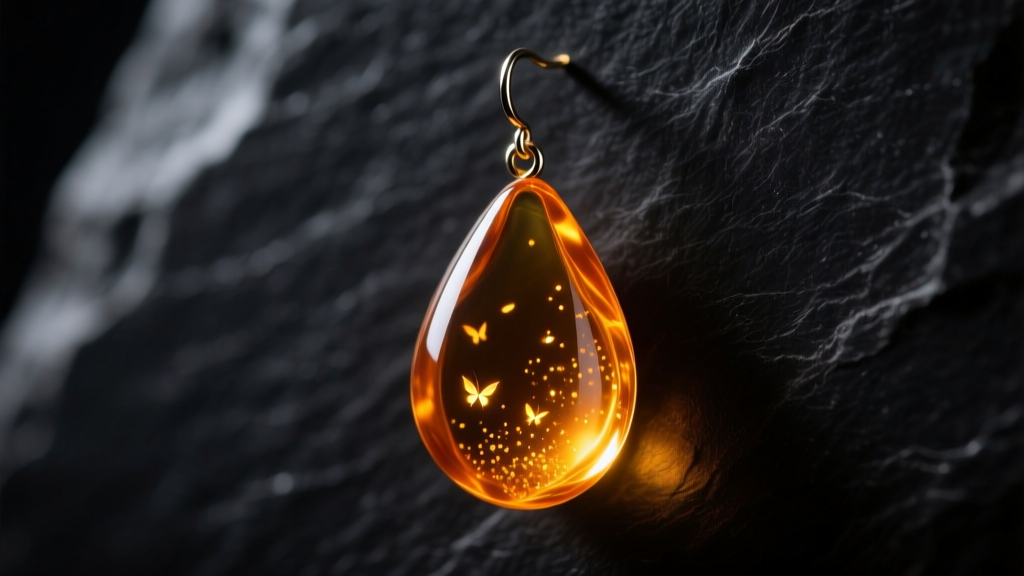
In late 2025, a massive voice-to-text glitch on a popular RPG gaming subreddit spawned a bizarre but highly specific search trend: cab you refight royajsal jelly earring of light chrono cross. While it reads like complete gibberish to the uninitiated, hardcore RPG jewelers and custom accessory crafters know exactly what this means. The user was likely trying to ask about farming the "Royal Jelly" item or equipping light-based accessories in the classic PS1 RPG Chrono Cross. However, the custom jewelry community rapidly adopted this hilarious typo as the official codename for a highly specific, technically demanding replica project: crafting a luminescent, amber-toned bio-resin drop earring inspired by the game's elemental Light and Earth lore.
As we move through 2026, the demand for high-end, technically accurate gaming replicas has pushed jewelry makers to adopt advanced material sciences. Creating an "Earring of Light" that mimics the organic, translucent look of "Royal Jelly" requires far more than pouring cheap craft epoxy into a mold. It demands a deep understanding of bio-resin viscosity, photoluminescent doping, and structural hardware engineering. Here is your expert deep dive into the technical craftsmanship behind these viral replica earrings.
Material Science: Bio-Resin vs. Traditional Epoxies
To achieve the authentic "Royal Jelly" aesthetic—a warm, amber-hued translucency with organic internal marbling—jewelers have largely abandoned petroleum-based epoxies in favor of advanced bio-resins. Bio-resins, derived from plant-based epoxides and cashew nut shell liquid (CNSL) derivatives, offer a naturally warm undertone that perfectly mimics the in-game item without requiring heavy synthetic dyes.
According to material data referenced by the GIA Gem Encyclopedia, achieving optical clarity in organic polymers requires strict control over the curing environment. Jewelry-grade bio-resins typically boast a Shore D hardness of 82 to 85, making them scratch-resistant enough for daily earlobe wear. However, the real challenge lies in the viscosity. To capture the "jelly" effect, artisans use a high-viscosity formula (around 3,000 to 5,000 cP) that suspends internal marbling agents rather than letting them sink to the bottom of the silicone mold.

The Curing Process and UV Stabilizers
One of the primary failure modes of early replica earrings was UV degradation. Standard resins yellow heavily when exposed to sunlight. To counteract this, expert casters integrate Hindered Amine Light Stabilizers (HALS) and UV absorbers directly into the bio-resin matrix before the catalyst is introduced. This ensures the "Royal Jelly" maintains its pristine, honey-like optical clarity for years, even with daily outdoor wear.
Luminescence: Achieving the "Earring of Light" Effect
The "Light" aspect of the Chrono Cross accessory cannot be achieved with simple glitter. True replica artists utilize advanced photoluminescent compounds. Specifically, strontium aluminate (SrAl2O4) doped with europium and dysprosium is the industry standard for high-end glow jewelry. Unlike older zinc sulfide compounds that fade within minutes, europium-doped strontium aluminate absorbs UV and ambient light, storing the energy and releasing it as a bright, ethereal glow for up to 10 hours.
For the "Earring of Light" replica, the strontium aluminate flakes must be milled to a precise 35-50 micron particle size. Anything larger will create a gritty, opaque texture that ruins the "jelly" translucency; anything smaller will fail to refract light effectively. When suspended in the amber bio-resin, these microscopic flakes catch ambient light during the day and emit a soft, magical luminescence in low-light environments, perfectly capturing the elemental magic of the game's lore. For deeper lore references on the game's elemental combinations, the Chrono Compendium remains the definitive archival resource for fans and replica designers alike.
Structural Integrity & Hardware Specs
The most overlooked aspect of heavy resin earring design is the hardware. A fully cured bio-resin drop earring of this scale typically weighs between 4.5 and 7 grams. Standard 22-gauge or 20-gauge fishhook ear wires will inevitably bend under the dynamic movement of walking, causing the earring to droop forward and stretch the earlobe piercing.
| Hardware Type | Wire Gauge | Max Weight Capacity | Best Application |
|---|---|---|---|
| Standard Fishhook | 20G - 22G | < 3 grams | Small studs, lightweight acrylics |
| Leverback Clasp | 18G (1.0mm) | 3 - 8 grams | Heavy bio-resin drops, gemstone dangles |
| French Wire w/ Bead | 18G - 20G | 2 - 5 grams | Medium drops requiring counterweights |
| Flat Post & Clutch | 16G - 18G | Up to 10 grams | Heavy front-facing studs |
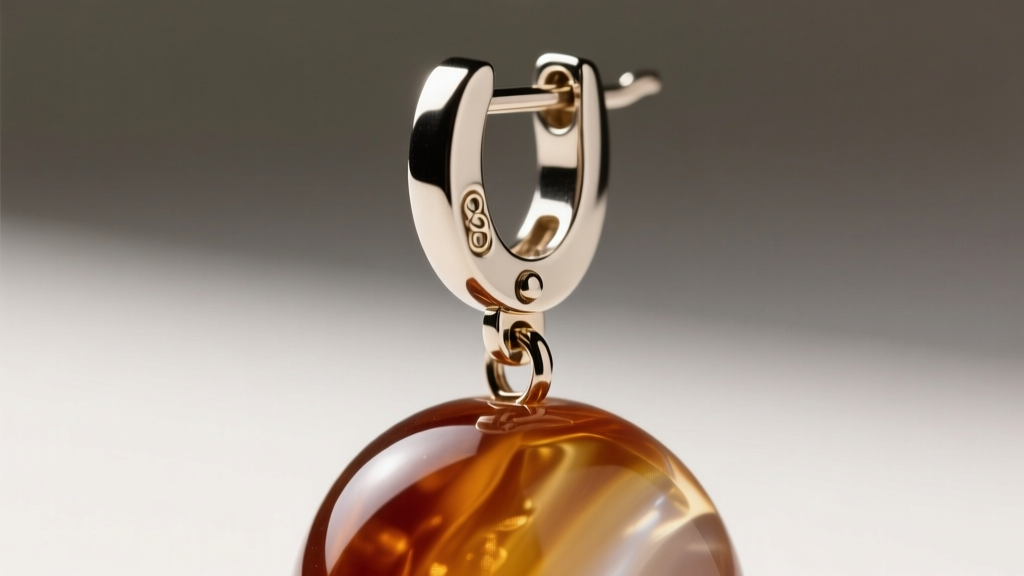
For the Royal Jelly replica, an 18-gauge (1.0mm) implant-grade titanium (ASTM F-136) leverback clasp is the mandatory choice. Titanium is completely hypoallergenic and possesses a vastly superior tensile strength compared to sterling silver or gold-filled wires. The leverback mechanism physically locks the earring onto the earlobe, preventing the heavy resin pendant from pulling the wire open and dropping the earring.
Center of Gravity and Counterweighting
Because bio-resin drops are inherently front-heavy, expert jewelers employ a counterweighting technique. By attaching a 4mm or 5mm solid titanium or surgical steel bead to the back of the ear wire, the center of gravity is shifted backward. This forces the earring to hang perfectly plumb, allowing the luminescent resin to catch the light at the optimal angle without pulling uncomfortably on the earlobe tissue.
Care & Maintenance for Bio-Resin Jewelry
Expert Warning: Never clean bio-resin earrings with alcohol, acetone, or commercial jewelry dips. These solvents will break down the polymer chains, causing the resin to cloud, craze, and eventually shatter.
To maintain the optical clarity and luminescent properties of your replica earrings, stick to a simple cleaning regimen. Use a microfiber cloth dampened with distilled water and a tiny drop of pH-neutral dish soap to gently wipe away sebum and skin oils. Dry immediately with a lint-free cloth. Store the earrings in a dark, climate-controlled drawer when not in use; while the HALS additives protect against UV yellowing, prolonged heat exposure can soften the bio-resin matrix over time.
Ultimately, the viral cab you refight royajsal jelly earring of light chrono cross search query represents a fascinating intersection of gaming nostalgia and advanced material science. By combining plant-derived bio-resins, rare-earth photoluminescent compounds, and aerospace-grade titanium hardware, modern jewelers are transforming pixelated RPG accessories into tangible, high-end wearable art.