Budget Guide for a Guy with Earrings: Best Value Metals & Styles
Discover the ultimate budget guide for a guy with earrings. Learn material value, gauge sizes, and cost-per-wear strategies for men's jewelry.


Building a curated ear curation is no longer just a niche subculture; it is a mainstream staple of men's fashion. However, navigating the market as a guy with earrings often leads to a frustrating crossroads: you either overspend on luxury boutique brands or risk your ear health on cheap, mass-produced mall kiosk jewelry. As of 2026, the men's body jewelry market has matured, offering incredible middle-ground options that balance metallurgical safety with aggressive pricing. This budget and value assessment will break down exactly where to allocate your funds, which materials offer the highest return on investment, and how to avoid the hidden costs of beginner mistakes.
The True Cost of Being a Guy with Earrings
When evaluating budget jewelry, the initial price tag is only a fraction of the true cost. The most expensive mistake a beginner can make is purchasing 'mystery metals'—alloys heavily laced with nickel or copper to keep manufacturing costs low. According to the Mayo Clinic, nickel allergy is one of the most common causes of allergic contact dermatitis, resulting in itchy, swollen, and weeping earlobes that can permanently scar or reject the piercing.
The 'cheap metal tax' includes the cost of treating infections, replacing ruined jewelry, and potentially paying a professional piercer to re-pierce closed or damaged fistulas. True value in men's earrings is defined by biocompatibility and longevity, not just the lowest dollar amount at checkout.
Material Value Matrix: What to Buy on a Budget
To maximize your budget, you must understand the metallurgical hierarchy of body jewelry. Below is a 2026 value assessment of the most common materials marketed to men.
| Material | Avg. Price Range | Biocompatibility | Best Use Case | Value Rating |
|---|---|---|---|---|
| ASTM F136 Titanium | $15 - $35 | Excellent (Hypoallergenic) | Fresh piercings, daily wear | ★★★★★ |
| 316L Surgical Steel | $5 - $15 | Fair (Contains Nickel) | Healed lobes only | ★★★☆☆ |
| 925 Sterling Silver | $20 - $45 | Poor (Tarnishes, Copper alloy) | Occasional wear in healed holes | ★★☆☆☆ |
| PVD Gold over Titanium | $30 - $60 | Excellent (Safe coating) | Upgraded aesthetic daily wear | ★★★★☆ |
Why Implant-Grade Titanium is the Ultimate Budget Hack
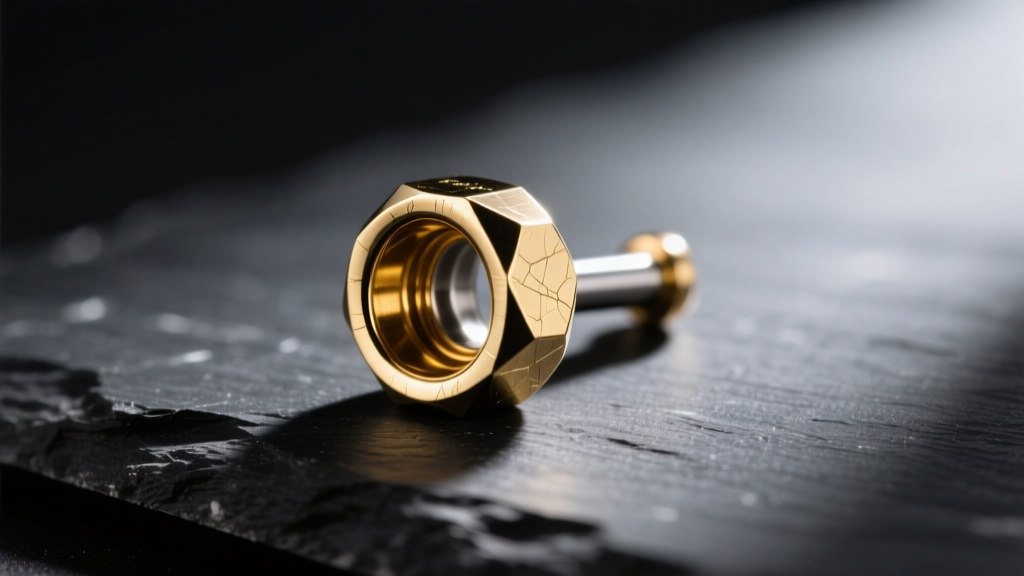
Many men assume they need to buy solid 14k or 18k gold to get a premium, irritation-free experience. Solid gold jewelry from reputable brands like Maria Tasha or BVLA can easily cost $80 to $150+ for a single stud. The smartest budget hack for a guy with earrings is purchasing ASTM F136 Implant-Grade Titanium with a PVD (Physical Vapor Deposition) gold finish. PVD coating bonds gold at a molecular level to a titanium base, offering the exact look of solid gold for a fraction of the price, while remaining 100% nickel-free. The Association of Professional Piercers (APP) heavily advocates for implant-grade titanium as the gold standard for both initial piercings and long-term wear due to its inert nature.
Starter Styles: Maximizing Cost-Per-Wear (CPW)
When building your collection on a budget, apply the Cost-Per-Wear (CPW) formula: Total Cost ÷ Number of Wears. A $40 pair of avant-garde, heavy dangle earrings worn twice a year has a CPW of $20. A $25 pair of seamless titanium hoop huggies worn 300 days a year has a CPW of $0.08. For men building a foundational collection, prioritize high-CPW staples.
- Seamless Huggies (16G or 14G): The undisputed king of men's ear styling. They catch on clothing less than standard captive bead rings and offer a rugged, minimalist profile. Budget $20-$30 for a pair of high-quality titanium huggies.
- Flat-Back Labret Studs: Essential for cartilage (helix, tragus, conch). Unlike traditional butterfly-back studs that poke the neck and trap bacteria, flat-backs sit flush against the ear. Budget $15-$25 per piece.
- Minimalist Barbell Studs: Perfect for the standard lobe. A simple 3mm or 4mm titanium ball or bezel-set cubic zirconia offers a sharp, masculine aesthetic without looking overly flashy. Budget $12-$20.
The Gauge Size Trap: Standard vs. Stretched
One of the most common ways men waste money is buying jewelry in the wrong gauge (thickness). Standard women's fashion earrings are often 20G (0.81mm) or 22G, which are too thin for most professional men's piercings and can cause the 'cheese-cutter effect,' where thin wire slowly migrates through the earlobe tissue.
Most professional studios pierce standard lobes at 18G (1.0mm) or 16G (1.2mm), and cartilage at 16G or 14G (1.6mm). Always verify your exact gauge with your piercer before ordering online. Buying a $40 20G earring for a 16G hole means it will either not fit, or it will slip through and irritate the fistula.
Plugs and Tunnels: A Budget Breakdown for Stretched Lobes
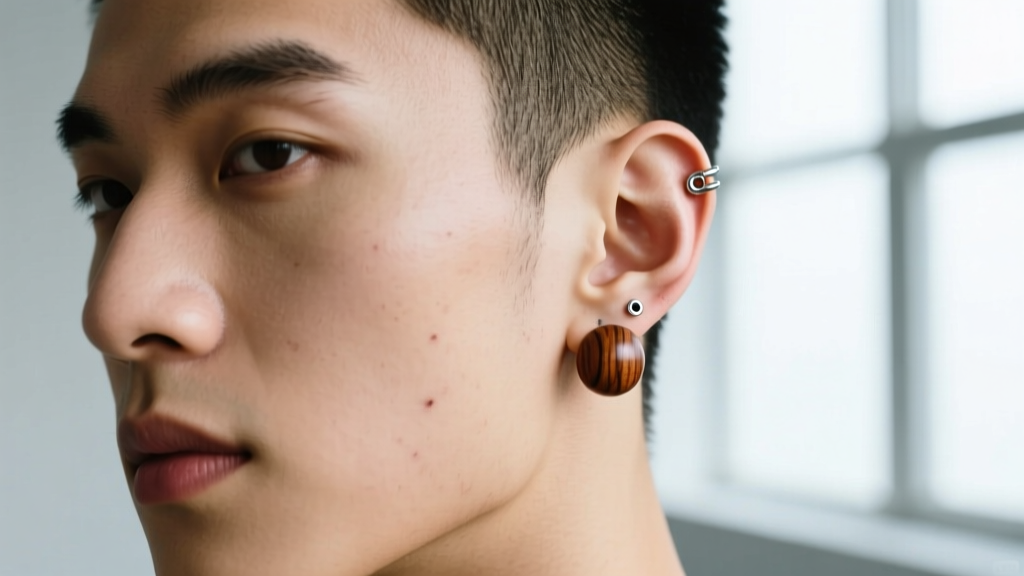
For the guy with earrings who has ventured into stretched lobes, the budget dynamics shift entirely. Standard metal jewelry is replaced by plugs, tunnels, and tapers. Here is how to assess value in the stretching community:
Where to Splurge: Glass and High-End Wood
When stretching your ears, never use acrylic or cheap steel tapers, which can harbor bacteria and cause blowouts. Splurge on borosilicate glass or high-quality, sealed woods (like Chechen or Chakte Viga) from reputable vendors like Urban Body Jewelry or King of Cobalt. Glass is non-porous, autoclavable, and perfectly weighted for healthy healing, typically costing $25-$40 per pair. This is an investment in the structural integrity of your earlobes.
Where to Skimp: Basic Steel Tunnels
Once your lobes are fully healed at your target size (e.g., 00G or 1/2 inch), you do not need to spend a fortune on daily wear. 316L Surgical Steel double-flared tunnels are perfectly safe for healed stretches and can be found for as little as $6 to $12 a pair. Because stretched ears are less prone to the surface-level allergic reactions that plague standard cartilage piercings, surgical steel is a highly acceptable budget option for everyday tunnel wearers.
Hidden Maintenance Costs Often Ignored by Beginners
A true budget assessment must factor in maintenance. Failing to account for these micro-expenses will blow your jewelry budget out of the water.
- Sterile Saline Solution: Essential for cleaning new piercings or flushing out irritated cartilage. Budget $8 for a can of NeilMed or H2Ocean. Never use rubbing alcohol or hydrogen peroxide, which destroy healing cells and prolong the time you are stuck wearing boring, basic starter jewelry.
- O-Rings for Plugs: If you wear single-flared plugs, the silicone O-rings that hold them in place will degrade, stretch out, and snap over time. Buy a bulk pack of 50 silicone O-rings for $5 online rather than paying $2 for a single pair at a local shop when an emergency happens.
- Threaded Jewelry Upgrades: Many budget brands use 'externally threaded' jewelry, where the screw is on the post that passes through your ear. This tears the fistula upon insertion. Upgrade to internally threaded or threadless (press-fit) jewelry from brands like Neometal. It costs about $10 more per piece but saves your tissue from micro-tears.
Final Verdict: The Smart Buyer's Framework
Being a guy with earrings in 2026 doesn't require a luxury budget; it requires metallurgical literacy. Skimp on the brand name and the solid gold price tag. Splurge on ASTM F136 implant-grade titanium, internally threaded mechanisms, and correct gauge sizing. By focusing on high cost-per-wear staples like seamless huggies and flat-back studs, you can build a rugged, sophisticated, and entirely hypoallergenic ear curation for under $100. Remember, the most valuable earring is the one your body doesn't try to reject.


