Expert Care and Cleaning for Amethyst Gold Earrings
Learn how to safely clean, store, and maintain your amethyst gold earrings. Expert tips on avoiding heat damage, ultrasonic risks, and gold tarnish.

The Delicate Balance of Amethyst and Gold
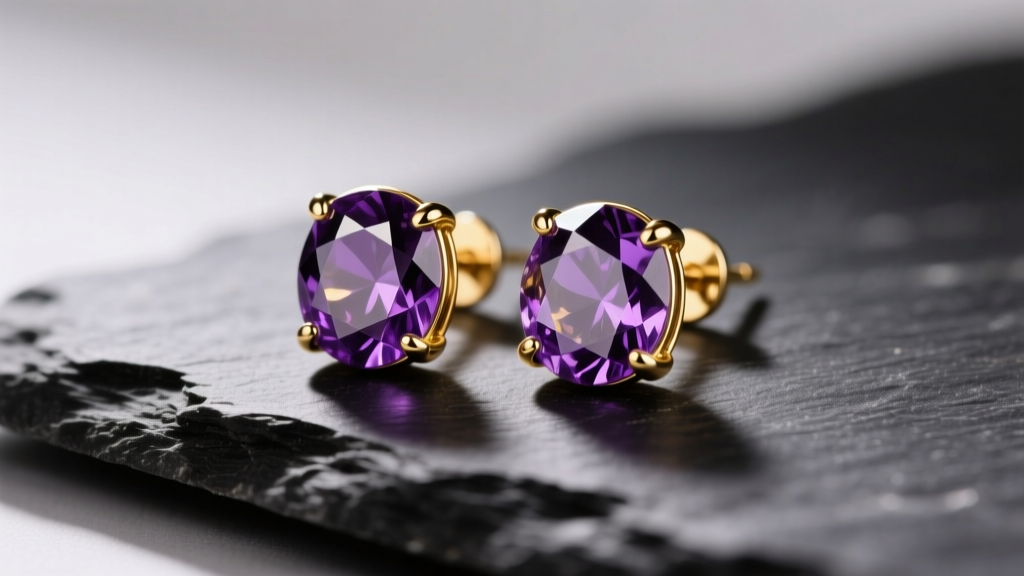
As we navigate the evolving jewelry landscape of 2026, the timeless appeal of amethyst gold earrings remains undeniable. The rich, violet hues of amethyst paired with the warm luster of gold create a striking contrast that flatters virtually every skin tone. However, owning these stunning pieces comes with a specific set of maintenance responsibilities. Amethyst and gold, while beautiful, possess distinct physical and chemical properties that dictate how they must be cleaned, worn, and stored. Treating your amethyst gold earrings with the same generic methods you use for diamond or platinum jewelry can lead to irreversible damage, including color loss, stone fracturing, and alloy pitting.
To properly care for your jewelry, you must first understand the materials. Amethyst is a purple variety of quartz, registering at a 7 on the Mohs scale of mineral hardness. While it is harder than glass and everyday dust, it is significantly softer than sapphire, topaz, and diamond. More importantly, amethyst is highly sensitive to heat and sudden temperature changes. Gold, on the other hand, is a noble metal, but it is rarely used in its pure 24k form for jewelry. Most amethyst gold earrings are crafted in 14k or 18k gold, meaning they contain alloy metals like copper, silver, and zinc to increase durability. These alloys are the weak link when exposed to harsh chemicals.
The Science of Color: Why Heat is the Enemy
The captivating purple color of amethyst is caused by trace amounts of iron impurities and natural irradiation within the crystal lattice. This coloration is notoriously unstable when exposed to high temperatures. According to the Gemological Institute of America (GIA), prolonged exposure to heat or intense, direct sunlight can cause the purple color to fade or even shift entirely to yellow or brown, effectively turning your amethyst into citrine or smoky quartz.
This thermal sensitivity means that steam cleaning—a common practice for diamonds—is absolutely forbidden for amethyst. Furthermore, leaving your earrings on a sunny windowsill or wearing them in a hot sauna can cause cumulative, irreversible fading over time. When cleaning, always use lukewarm or room-temperature water. Never use hot water, as the sudden thermal shock can also cause microscopic fractures within the stone to expand, potentially cleaving the gemstone in half.
The Step-by-Step Safe Cleaning Routine
When your amethyst gold earrings lose their sparkle due to everyday oils, lotions, and environmental dust, a gentle, manual cleaning is the safest approach. Follow this precise protocol to restore their brilliance without risking damage to the stone or the gold setting.
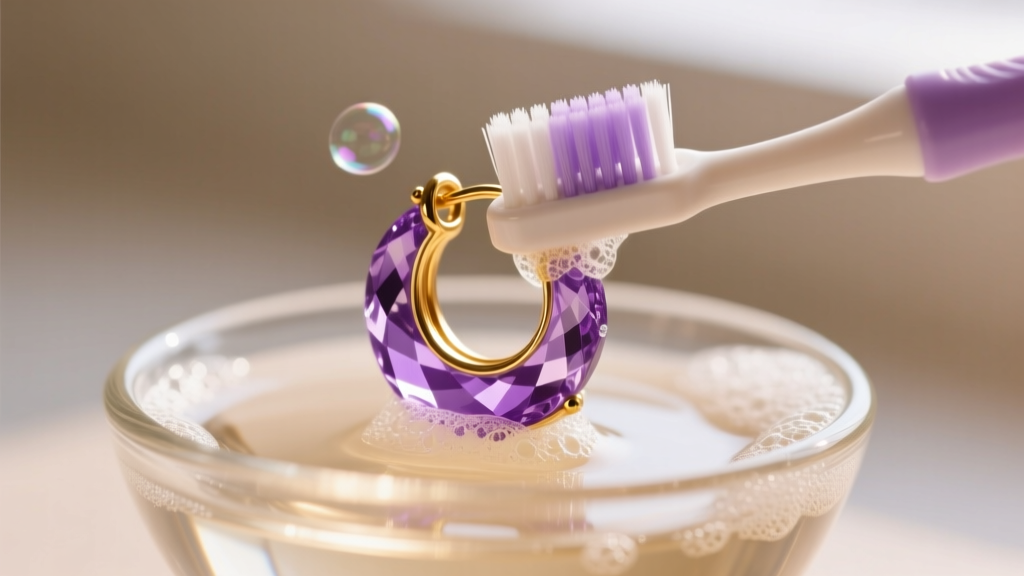
- Prepare the Solution: Fill a small glass or ceramic bowl with lukewarm water. Add two to three drops of a mild, pH-neutral dish soap. Avoid soaps with added moisturizers, heavy fragrances, or antibacterial agents, as these can leave a filmy residue on the gemstone. Original blue dish soap is the industry standard for jewelry cleaning.
- Soak Briefly: Place your amethyst gold earrings in the solution and let them soak for no more than three to five minutes. This is enough time to loosen surface oils and debris without compromising the integrity of any adhesives that might be used in the setting.
- Agitate Gently: Using an extra-soft infant toothbrush with rounded nylon bristles, gently brush the earrings. Pay special attention to the back of the gemstone (the pavilion) and the prongs holding the stone, as this is where light-blocking grease accumulates. Never scrub the face of the amethyst with abrasive force.
- Rinse Thoroughly: Rinse the earrings under a gentle stream of lukewarm tap water. To prevent losing an earring down the drain, always perform this step over a plugged sink or a fine-mesh strainer.
- Dry and Polish: Pat the earrings dry with a lint-free optical microfiber cloth. Avoid paper towels or facial tissues, as the wood pulp fibers can cause micro-scratches on the gold and leave frustrating lint trapped in the prongs.
Critical Warnings: What to Avoid at All Costs
Misguided cleaning methods are the leading cause of ruined gemstone jewelry. To protect your investment, strictly avoid the following practices:
- Ultrasonic Cleaners: While ultrasonic machines are excellent for diamonds, they are highly dangerous for amethyst. Quartz gems frequently contain liquid inclusions, microscopic fractures, or internal stress points. The high-frequency vibrations generated by an ultrasonic cleaner can cause these internal flaws to expand, resulting in a shattered stone.
- Harsh Chemicals: Never clean your earrings with bleach, ammonia, or abrasive toothpaste. As noted in the GIA's gold care guidelines, chlorine and bleach can cause a chemical reaction with the copper and zinc alloys in 14k and 18k gold, leading to permanent pitting, discoloration, and structural weakening of the prongs.
- Abrasive Polishing Cloths: Do not use silver polishing cloths or jeweler's rouge on your gold settings. These contain mild abrasives designed to strip tarnish from silver, but they will scratch the high-polish finish of your gold and dull the surface of the amethyst.
Expert Insight: Always put your amethyst gold earrings on after applying makeup, hairspray, and perfume. The aerosolized chemicals and alcohols in cosmetics can degrade the polish of the gold and create a stubborn, cloudy film on the gemstone that requires professional polishing to remove.
Strategic Storage and Daily Wear Practices
Proper storage is just as critical as proper cleaning. Because amethyst is a 7 on the Mohs scale, it can easily be scratched by harder gemstones. If you toss your amethyst earrings into a communal jewelry box alongside diamond studs or sapphire rings, the harder stones will act like sandpaper against the amethyst, creating permanent surface scratches that can only be removed by a lapidary professional recutting the stone.
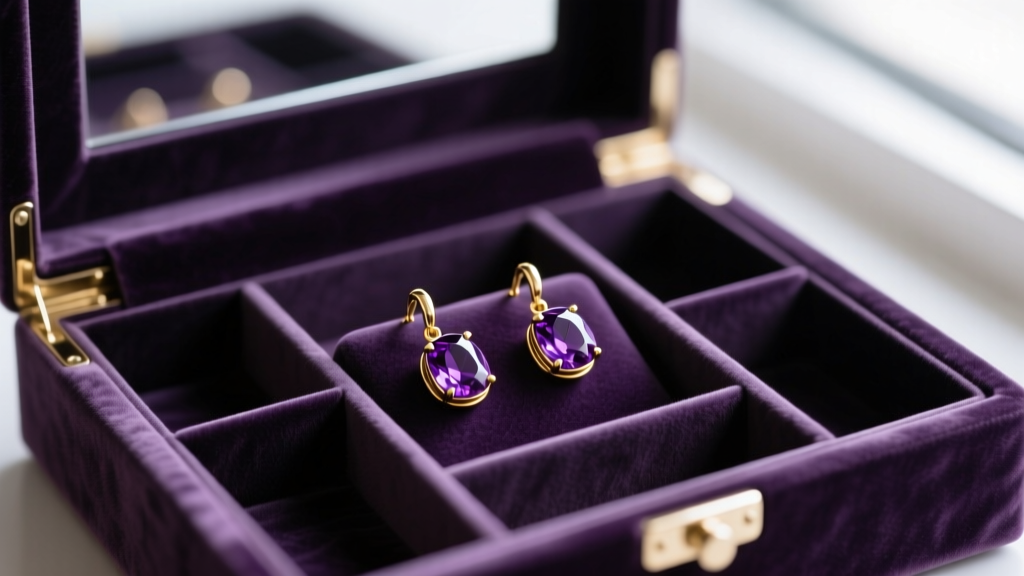
Store your amethyst gold earrings in a dark, dry environment. A fabric-lined jewelry box with individual compartments is ideal. Alternatively, keep them in their original soft pouches. Keeping them in the dark is not just about preventing physical scratches; it is about protecting the gemstone from prolonged UV exposure, which can contribute to color fading over years of storage. Furthermore, remove your earrings before swimming in chlorinated pools, soaking in hot tubs, or doing household cleaning. The combination of heat and harsh chemicals is a guaranteed way to compromise both the stone and the metal.
Troubleshooting Common Amethyst Earring Issues
Even with meticulous care, you may encounter specific issues with your earrings over time. Use this troubleshooting guide to address common problems safely.
| Issue | Probable Cause | Actionable Solution |
|---|---|---|
| Cloudy or dull gemstone | Buildup of lotions, oils, or soap residue on the pavilion (back) of the stone. | Repeat the gentle dish soap soak and use a soft brush specifically on the back of the stone to dislodge trapped grease. |
| Gold appears reddish or dark | Oxidation of copper alloys in 14k gold due to exposure to sweat, chlorine, or sulfur. | Take the earrings to a professional jeweler for a gentle ultrasonic cleaning (if the stone is deemed safe) and a professional polishing. |
| Stone feels loose in the setting | Wear and tear on the gold prongs, or accidental impact bending the metal. | Stop wearing the earrings immediately. Place them in a sealed plastic bag and take them to a jeweler for prong tightening and re-tipping. |
| Purple color looks faded | Prolonged exposure to direct sunlight, heat, or harsh UV tanning beds. | Unfortunately, heat-induced color loss in amethyst is permanent. Consult a lapidary about potential re-irradiation treatments, though replacement is often more cost-effective. |
By understanding the unique vulnerabilities of both the gemstone and the metal, you can ensure that your amethyst gold earrings remain vibrant, secure, and breathtaking for decades. Consistent, gentle care is the ultimate secret to preserving the magic of this classic jewelry pairing.


