Expert Care and Cleaning Tips for Large Disk Earrings
Master the care, cleaning, and storage of large disk earrings. Expert tips on preventing warping, protecting vermeil, and maintaining earlobe health.

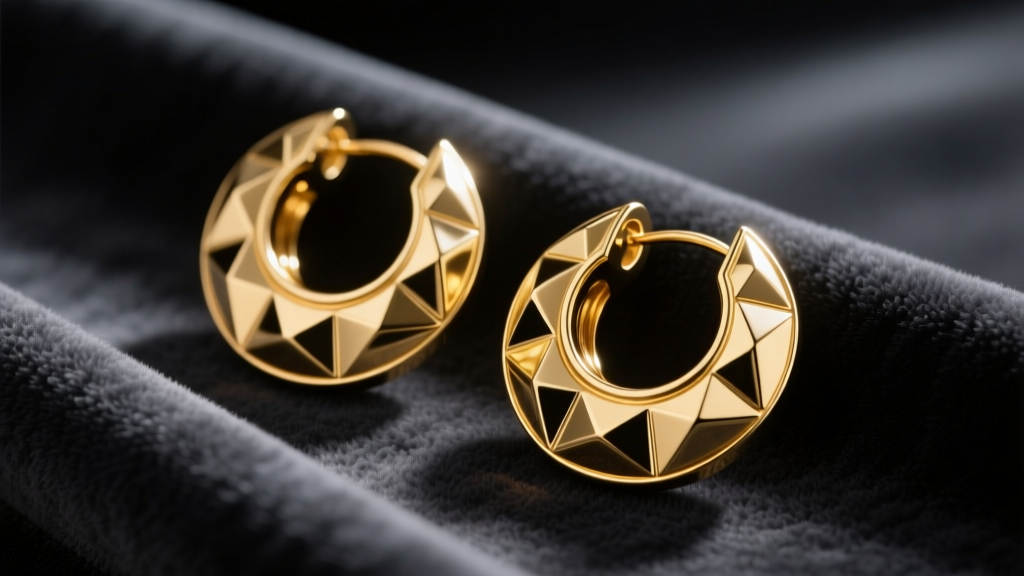
The Physics and Material Science of Large Disks
Large disk earrings—typically ranging from 50mm to over 100mm in diameter—present a unique set of maintenance challenges that standard studs or small hoops simply do not. Because of their expansive, flat surface area, these earrings act as magnets for environmental debris, sebum, aerosolized hair products, and friction from clothing. Furthermore, the sheer scale of the design dictates the materials used by jewelers, which heavily influences how they must be cleaned and stored.
To keep the weight manageable for standard ear piercings, large disk earrings are rarely crafted from solid gold or thick sterling silver. Instead, they are predominantly manufactured using 18k gold vermeil over a brass or silver base, lightweight anodized aluminum, or cast acrylic and resin. Each of these materials reacts differently to chemical cleaners and physical abrasion. Understanding the material science behind your specific pair is the first step in preventing irreversible damage, such as plating loss, acrylic clouding, or structural warping.
Material-Specific Cleaning Matrix
Using the wrong cleaning agent on a large surface area can ruin the finish in minutes. Refer to the matrix below to identify your earring's primary material and its specific care requirements.
| Material | Base / Core | Best Cleaning Agent | Critical Avoidances |
|---|---|---|---|
| Gold Vermeil | Sterling Silver or Brass | pH-neutral dish soap & distilled water | Ammonia, alcohol, ultrasonic cleaners |
| Anodized Aluminum | Solid Aluminum | Mild soap & microfiber cloth | Alkaline cleaners, stiff bristle brushes |
| Cast Acrylic | Solid Polymer | Damp microfiber cloth only | Any submersion, glass cleaners, alcohol |
| Sterling Silver | 925 Silver | Silver polishing cloth, mild soap | Bleach, chlorine, hard water soaking |
The 4-Step Deep Cleaning Protocol
For metal-based large disk earrings (vermeil, aluminum, and silver), a systematic deep cleaning routine should be performed every two to three weeks to remove invisible layers of lotion and dead skin cells that dull the reflective surface.
Step 1: The Distilled Soak
Fill a small glass bowl with warm distilled water. Tap water contains microscopic minerals like calcium and magnesium that will leave water spots on large, flat metallic surfaces once dried. Add two drops of a pH-neutral liquid dish soap (such as original Dawn) and gently agitate. Submerge the earrings for exactly three to five minutes to loosen sebum buildup around the post and backing.
Step 2: Targeted Agitation
Remove the earrings from the soak. Using a brand-new, extra-soft baby toothbrush, gently sweep across the surface of the disk. Do not scrub in tight circles, as this can create micro-swirl marks on high-polish metals. Instead, use long, sweeping strokes from the center of the disk outward to the edge, mimicking the radial pattern of the metal's original polish.
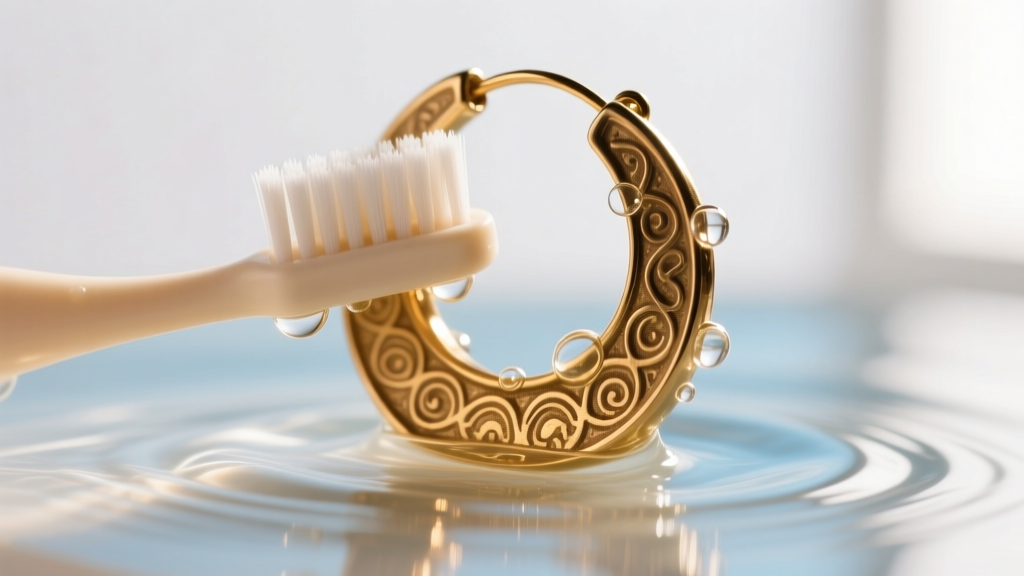
Step 3: The Post and Clutch Detail
The area where the earring post meets the flat back of the disk is a primary trap for debris. Dip a cotton swab in rubbing alcohol and carefully clean only the post and the backing mechanism. Avoid letting the alcohol touch the front face of gold vermeil disks, as repeated exposure can degrade the gold layer over time.
Step 4: Immediate Microfiber Drying
Never let large disk earrings air dry. The expansive surface area guarantees that airborne dust will stick to the damp metal, and residual water will leave mineral rings. Immediately pat the earrings completely dry using a clean, lint-free optical microfiber cloth.
Why You Must Avoid Ultrasonic Cleaners
While ultrasonic cleaners are highly effective for intricate diamond settings, they are notoriously destructive for large disk earrings. The high-frequency sound waves create microscopic cavitation bubbles that can easily strip gold plating from vermeil pieces. Furthermore, if your large disks feature any enamel detailing or acrylic inlays, the vibrations will cause the materials to separate from the metal base or develop internal crazing (tiny fractures). For large, flat-surface jewelry, manual cleaning is always the safest and most effective method, a standard corroborated by guidelines from the Gemological Institute of America (GIA).
Storage Mechanics: Preventing Warping and Scratches
Because large disk earrings are often crafted from thin-gauge metals (sometimes as thin as 0.8mm) to reduce weight, they are highly susceptible to bending and warping if stored improperly. Tossing them into a standard jewelry box where they can be crushed under heavier items will permanently ruin their flat profile.
- Flat-Lay Velvet Trays: Store disks completely flat in a velvet-lined drawer insert. The velvet prevents sliding, which causes micro-scratches across the wide surface.
- Dedicated Hanging Organizers: If hanging, ensure the earring backs are securely fastened so the disks hang perfectly vertical and do not swing into one another.
- Individual Pouches: When traveling, place each earring in its own soft flannel pouch. Stacking two large disks together in a single bag will result in friction scratches during transit.
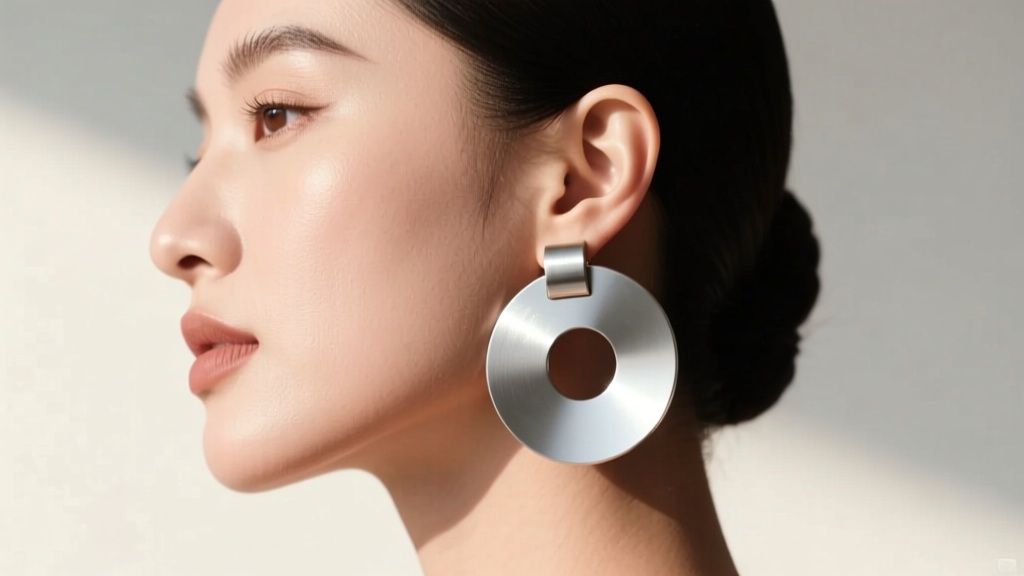
Earlobe Biomechanics and Weight Management
Care for large disk earrings also involves caring for the earlobe itself. A standard earlobe piercing is typically 20-gauge (0.81mm) or 18-gauge (1.02mm). The human earlobe is not designed to support heavy, dangling weights for extended periods. A solid brass disk measuring 70mm in diameter can easily weigh over 15 grams. Wearing heavy, poorly engineered large disks will cause the piercing channel to stretch and migrate downward, eventually leading to a permanent tear.
When purchasing large disk earrings, always check the weight. High-quality jewelers engineer these pieces using hollow-core construction, ultra-lightweight aluminum, or acrylic to keep the weight under 4 to 5 grams per earring. Additionally, because large flat backs can trap sweat and heat against the skin, they create an ideal environment for contact dermatitis and localized fungal issues. The American Academy of Dermatology notes that prolonged contact with trapped moisture and certain base metals can trigger severe allergic reactions. Always remove large disk earrings before showering, exercising, or sleeping to allow the earlobe to breathe and to prevent the earring from catching on pillows and tearing the tissue.
Expert Tip: If you experience redness or itching behind the earlobe after wearing large metal disks, apply a thin layer of clear nail polish to the earring post and the back of the disk where it touches the skin. This creates a temporary, hypoallergenic barrier against nickel or brass exposure.
By respecting the material limitations, utilizing the correct cleaning chemistry, and storing these statement pieces with structural care, your large disk earrings will maintain their bold, flawless finish for years to come.


