Golden Pearl Earrings Drop Guide: A Beginner's Buying Explainer
Discover how to choose the perfect golden pearl earrings drop style. Learn about South Sea pearl grades, pricing, and gold pairings in this guide.

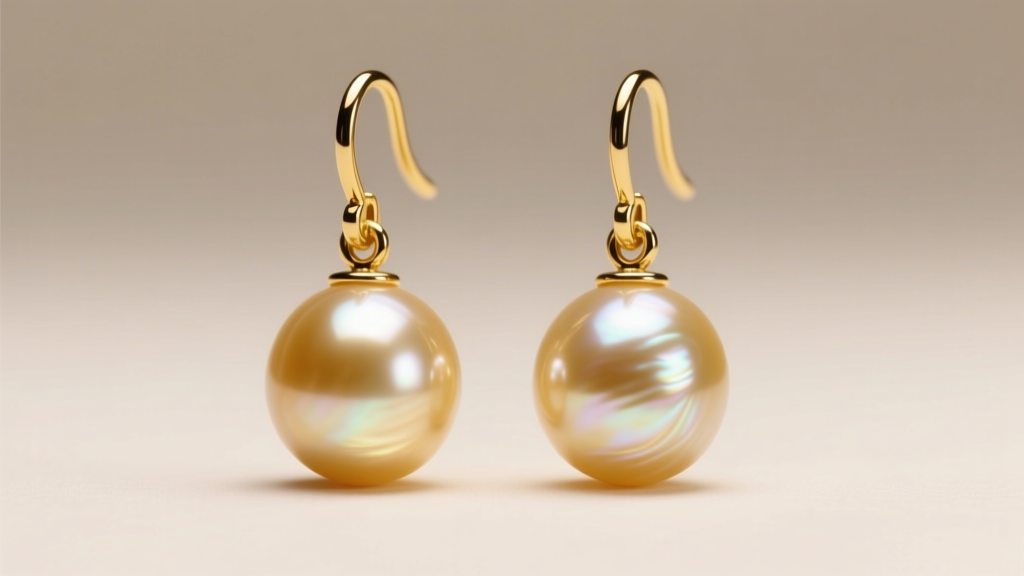
When you begin exploring fine jewelry, few pieces command attention quite like a pair of golden pearl earrings. Drop styles, in particular, offer a sophisticated balance between the understated elegance of a stud and the dramatic movement of a chandelier earring. However, navigating the market for a golden pearl earrings drop design can be overwhelming for beginners. Are you looking at naturally colored South Sea pearls or dyed freshwater alternatives? What karat of gold best complements the pearl's natural overtone?
This comprehensive explainer breaks down everything you need to know about selecting, grading, and styling golden pearl drop earrings, ensuring your investment is both beautiful and structurally sound.
The Origin: South Sea vs. Dyed Freshwater
To make an informed purchase, you must first understand the biological origin of golden pearls. True, naturally occurring golden pearls are produced exclusively by the gold-lipped variety of the Pinctada maxima oyster, primarily cultivated in the warm waters of the Philippines, Indonesia, and Australia. These oysters are massive, allowing them to produce pearls ranging from 9mm to over 15mm in diameter. The natural color ranges from a pale champagne to a deep, saturated 24-karat gold.
Conversely, many entry-level "golden" pearls on the market are actually freshwater pearls that have been artificially dyed or irradiated to mimic the South Sea look. While dyed freshwater pearls are perfectly acceptable for fashion jewelry, they lack the deep, luminous nacre layers and complex overtones of their saltwater counterparts. According to the Gemological Institute of America (GIA), natural color origin is a primary value factor in pearl appraisal. Always ask the jeweler for a certificate of authenticity or a gemological report confirming the natural color origin of the pearls before investing in high-end South Sea drops.
The Anatomy of a Drop Earring: Hardware and Gauge
A "drop" earring is defined by its structure: it hangs just below the earlobe but does not possess the complex, multi-tiered articulation of a chandelier or the extreme length of a dangle. Because South Sea pearls are dense and heavy—a single 12mm pearl can weigh between 1.5 and 2.5 grams—the structural integrity of the hardware is critical.
Choosing the Right Backing and Wire
- Leverback Wires: The gold standard for drop earrings. A secure, hinged closure prevents the heavy pearl from pulling the earring out of the lobe. Look for an 18-gauge (1.02mm) or 19-gauge wire to prevent bending under the pearl's weight.
- French Wires (Fishhooks): Elegant and classic, but they require a silicone stopper behind the ear to prevent loss. Ensure the wire is at least 20-gauge (0.81mm).
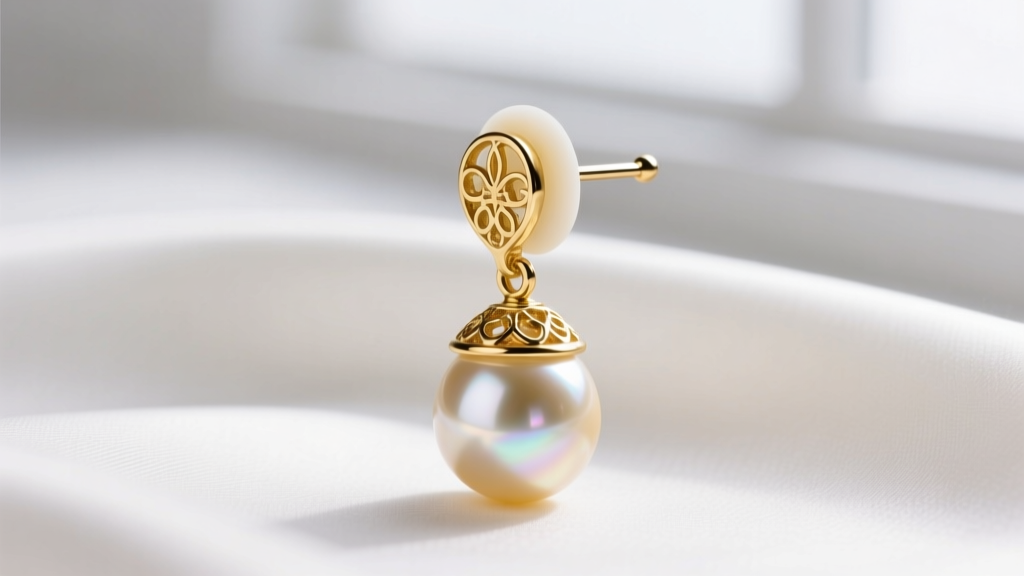
- Post and Friction Back: Best for shorter, stud-like drops. The post must be thick (18-gauge) and paired with a wide, flat backing (like a La Poussette clutch) to distribute the weight evenly and prevent the earring from drooping forward.
Decoding Pearl Grades: What You Are Actually Paying For
The American Gem Society (AGS) and other major gemological labs evaluate pearls based on luster, surface quality, nacre thickness, and color. For golden South Sea pearls, nacre thickness is particularly vital; a high-quality specimen will boast 2.0mm to 4.0mm of nacre over its bead nucleus, giving it a deep, glowing luster rather than a flat, chalky appearance.
Below is a practical framework to help you understand pricing and grading for a standard 9mm to 11mm golden pearl earrings drop pair in the current market:
| Pearl Grade | Surface Quality | Luster & Nacre | Estimated Price Range (9-11mm Pair) |
|---|---|---|---|
| AAAA (Top 1%) | 99% Blemish-Free | Mirror-like, sharp reflections, 3.0mm+ nacre | $2,200 - $4,500+ |
| AAA (Top 5%) | 95% Blemish-Free | High, distinct reflections, 2.5mm+ nacre | $1,100 - $2,100 |
| AA+ (Top 20%) | 85% Blemish-Free | Good, slightly blurred edges, 2.0mm+ nacre | $500 - $1,000 |
| Dyed Freshwater | Variable | Chalky to moderate, solid nacre but no depth | $80 - $250 |
Matching the Metal: 14K vs. 18K vs. 22K Gold
The metal setting is not just a structural necessity; it acts as a reflector that influences how the pearl's color is perceived by the eye. When buying a golden pearl earrings drop design, the karat of the gold hardware will dramatically alter the final aesthetic.
- 18K Yellow Gold (75% Pure): This is the ideal pairing for golden South Sea pearls. The rich, buttery hue of 18K gold perfectly amplifies the champagne and deep gold overtones of the pearl without overpowering it. It is also durable enough for secure prong and cup settings.
- 14K Yellow Gold (58.5% Pure): More affordable and highly durable, but its paler, slightly greenish-yellow tint can clash with the warm, peachy overtones of a high-quality golden pearl. If you choose 14K, opt for pearls with a lighter champagne hue rather than deep gold.
- 22K or 24K Gold: While the color match is spectacular, pure gold is far too soft for earring hardware. Posts will bend, and leverback hinges will warp under the weight of a 12mm pearl. Avoid anything above 18K for structural components.
Face Shape and Styling Framework
The length and silhouette of your drop earrings should be chosen to harmonize with your facial structure. Here is a quick stylist's matrix for selecting the perfect drop length:
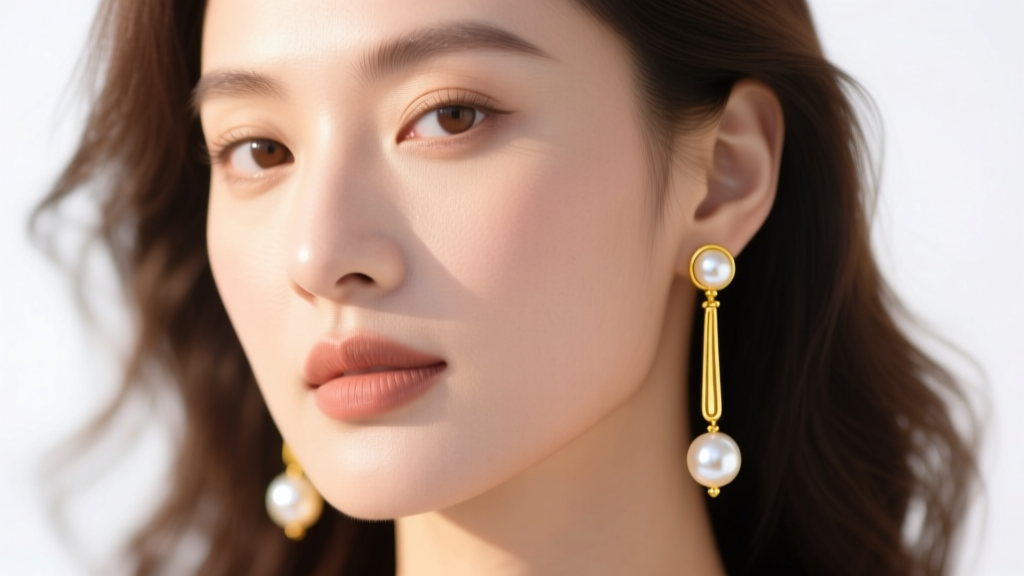
- Round Faces: Opt for elongated, linear drop earrings (1.5 to 2.5 inches in total length). The vertical lines help elongate the face and draw the eye downward, creating a slimming effect. Avoid perfectly round, short drops that mimic the face's natural curvature.
- Oval Faces: Highly versatile. Medium-length drops (1 to 1.5 inches) with a teardrop or oval pearl shape maintain the natural balance of your proportions.
- Square Faces: Choose drops with curved elements, such as a gold filigree cap that transitions into a round or slightly baroque golden pearl. The organic curves soften a strong jawline.
- Heart-Shaped Faces: Look for drop earrings that are slightly wider at the bottom, such as a pear-shaped pearl or a drop with a small diamond accent at the base. This adds visual weight to the lower half of the face, balancing a narrower chin.
Care and Maintenance for Golden Nacre
Golden South Sea pearls are organic gemstones. Their beautiful color and luster are derived from microscopic layers of aragonite crystals and conchiolin (an organic protein). Because of this, they are highly susceptible to chemical damage. Perfumes, hairsprays, and acidic skin pH can etch the nacre, dulling the luster and fading the golden hue over time.
Always follow the "last on, first off" rule. Put your golden pearl earrings on after your cosmetics and perfumes have fully dried, and wipe them gently with a soft, damp microfiber cloth before storing them in a breathable pouch. Never store pearls in airtight plastic bags or safety deposit boxes for extended periods, as the lack of ambient humidity can cause the nacre to dehydrate and crack.
Final Verdict
Investing in a golden pearl earrings drop style is a masterclass in timeless elegance. By prioritizing natural South Sea origins, ensuring the hardware is structurally rated for the pearl's weight (18-gauge or thicker), and pairing the gems with 18K yellow gold, you secure a piece of jewelry that will retain its beauty and value for generations. Whether you are stepping into the boardroom or attending a black-tie gala, the warm, luminous glow of a perfectly graded golden pearl remains unmatched in the world of fine jewelry.


