Expert Care Guide: Cleaning Opal Butterfly Earrings
Learn expert techniques to safely clean opal butterfly earrings, prevent gemstone crazing, and remove buildup from metal friction backs.

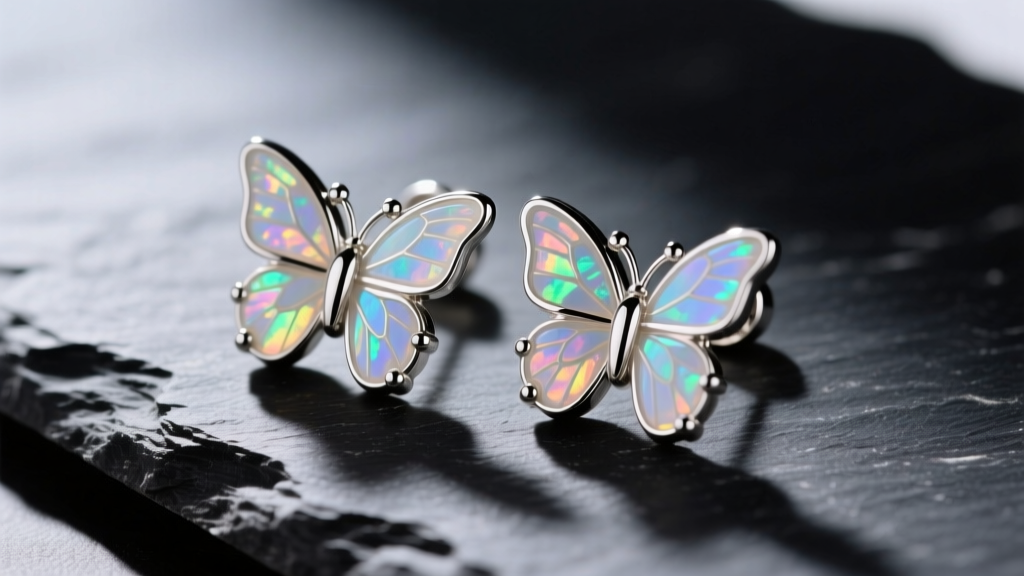
The Unique Vulnerabilities of Opal and Butterfly Backs
Opal butterfly earrings are a stunning combination of ethereal gemstone beauty and practical, everyday wearability. However, this specific pairing creates a unique maintenance challenge that requires a nuanced approach. Opals are relatively soft gemstones, ranking between 5.5 and 6.5 on the Mohs hardness scale, and they contain anywhere from 3% to 21% water within their silica structure. Meanwhile, the standard butterfly clutch (friction back) is a notorious trap for sebum, dead skin cells, and cosmetic residue, which can lead to odor and metal tarnishing.
According to the Gemological Institute of America (GIA), opals require specialized care because sudden temperature changes or extreme dryness can cause "crazing"—a network of fine cracks that ruins the stone's structural integrity. When you add the intricate metalwork of butterfly backs into the mix, you must balance the delicate needs of the gemstone with the heavy-duty sanitization required for the metal components.
The Crucial First Step: Identifying Your Opal Type
Before you introduce any moisture or cleaning agents to your earrings, you must determine the exact construction of the opal. This single factor dictates your entire cleaning protocol.
Solid Opals
Solid opals are natural, single-piece gemstones. They can tolerate brief exposure to lukewarm water and mild soaps. Because their color is structural (caused by the diffraction of light through microscopic silica spheres), surface dirt dulls their play-of-color, making gentle washing highly effective.
Doublets and Triplets (Composite Opals)
Many affordable opal butterfly earrings utilize doublets (a thin slice of opal glued to a dark backing) or triplets (an opal slice, a backing, and a clear quartz or glass dome). Never submerge composite opals in water. Prolonged moisture exposure will dissolve the adhesive layers, causing the dome to lift or the opal to separate from the backing, resulting in irreversible cloudiness and delamination.
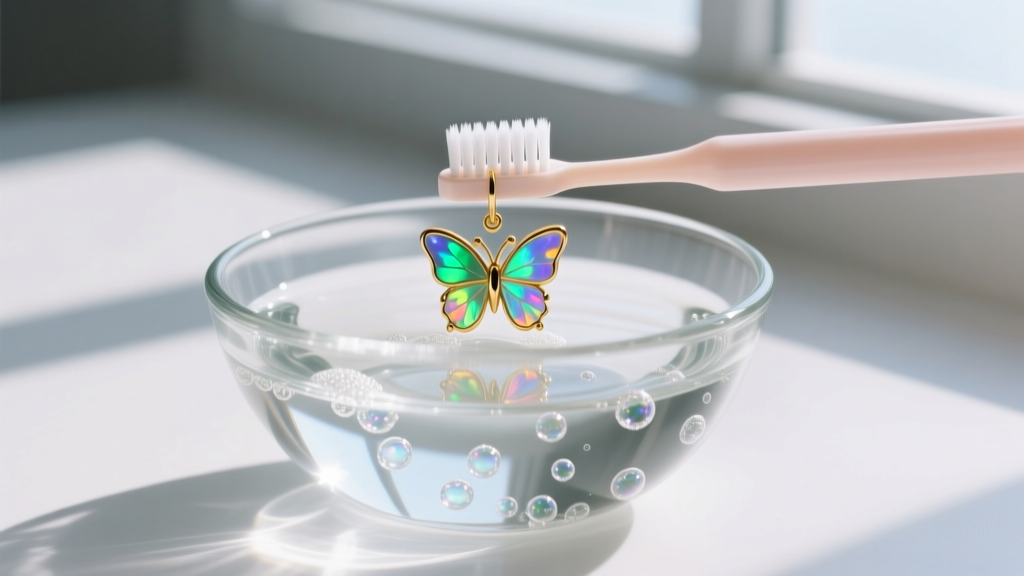
Step-by-Step Cleaning Protocol for Solid Opal Inlays
If you have confirmed your earrings feature solid opals, follow this meticulous cleaning process to restore their brilliance without risking surface abrasion.
- Dry Dusting: Use a clean, ultra-soft makeup brush or a dedicated jewelry polishing cloth to gently sweep away loose dust and cosmetic powders. This prevents scratching the opal during the wet wash.
- Prepare the Solution: Mix a few drops of pH-neutral dish soap (like Dawn Free & Clear) into a small glass bowl of lukewarm water. Avoid hot water, as thermal shock can induce crazing.
- Gentle Agitation: Dip a baby toothbrush (which has ultra-soft bristles) into the solution. Gently brush the surface of the opal in circular motions for no more than 10 to 15 seconds.
- Rinsing: Quickly rinse the earring under a slow stream of lukewarm tap water. Ensure the drain is plugged.
- Drying: Immediately pat the earring dry with a lint-free microfiber cloth. Do not air dry, as hard water spots can dull the opal's finish.
Sanitizing the Metal and Butterfly Clutches
The butterfly clutch is anatomically complex. It consists of a central barrel, two tension prongs, and a flat base. The tiny gaps between the prongs and the barrel accumulate a waxy buildup of sebum and dead skin (often colloquially called "ear cheese"). This buildup not only smells unpleasant but can also harbor bacteria that lead to earlobe infections.
Because harsh chemicals damage opals, you must clean the metal components separately from the gemstone.
- Tools Required: 91% Isopropyl alcohol, cotton swabs, and a 0.4mm interdental brush (the kind used for braces or tight teeth gaps).
- The Technique: Remove the butterfly back from the earring post. Dip the interdental brush into the isopropyl alcohol and scrub the inside of the clutch barrel and the tension prongs. The 0.4mm bristles will physically dislodge the compacted sebum that cotton swabs leave behind.
- The Post: Wipe the earring post with an alcohol-soaked cotton swab, moving from the base of the opal setting down to the tip. Critical Warning: Keep the alcohol strictly away from the opal. Alcohol is a desiccant and will rapidly draw moisture out of the gemstone, increasing the risk of cracking.
The Cleaning Agent Safety Matrix
Not all jewelry cleaners are created equal. Use this matrix to ensure you are not accidentally destroying your opal butterfly earrings.
| Cleaning Agent | Safe for Solid Opal? | Safe for Metal/Clutch? | Expert Notes & Risks |
|---|---|---|---|
| Ultrasonic Cleaners | No | Yes | High-frequency vibrations will shatter opals and shake stones loose from their prong or bezel settings. |
| Isopropyl Alcohol | No | Yes | Excellent for sanitizing butterfly backs, but will dry out opals and dissolve composite glues. |
| Mild Dish Soap & Water | Yes (Briefly) | Yes | Safe for solid opals. Must be rinsed quickly. Avoid soaking. |
| Silver Dip / Tarnish Remover | No | Yes | Highly acidic. Will permanently etch the surface of an opal, destroying its play-of-color. |
| Steam Cleaners | No | Yes | Thermal shock from steam will cause immediate and catastrophic crazing in opals. |
Storage and Humidity Control: Preventing Crazing
How you store your opal butterfly earrings is just as important as how you clean them. Mineralogical data from Mindat.org highlights that opals are highly sensitive to their ambient environment. If stored in a dry environment (like a safety deposit box or a room with central heating), the water inside the opal evaporates, leading to structural failure.
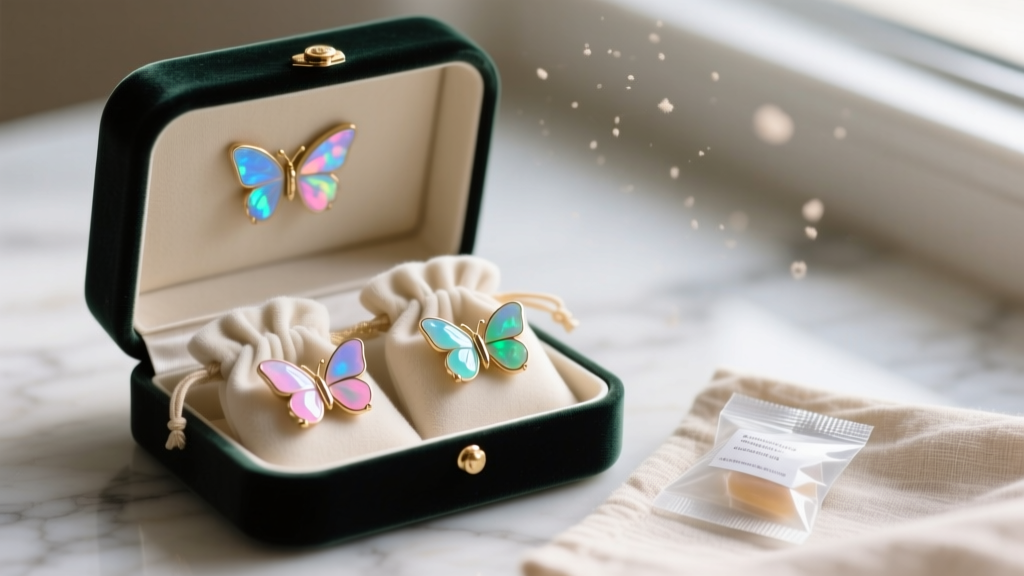
Expert Storage Tip: For solid opals, store the earrings in a soft velvet pouch inside a sealed zip-top bag with a slightly damp (not wet) cotton ball. This creates a micro-climate that maintains the necessary humidity. For triplets and doublets, store them in a dry environment to protect the adhesive layers.
Furthermore, always store your earrings with the posts facing upward or secured in a jewelry box with dedicated earring holes. If thrown loosely into a drawer, the metal butterfly backs can scratch the delicate surface of the opal, leaving permanent white scuff marks that cannot be polished out at home.
Troubleshooting Common Issues
My Opal Looks Cloudy or Has Lost Its Fire
If a solid opal loses its fire, it is usually due to a buildup of body oils, lotions, or hairspray on the surface. Repeat the lukewarm soapy wash. If the opal is a triplet, cloudiness between the clear dome and the opal layer indicates that moisture has breached the glue seal. Unfortunately, this requires professional lapidary intervention to re-glue or replace the stone.
The Butterfly Backs Are Too Tight or Too Loose
Friction backs rely on the tension of the metal loops. If they become too loose and your earrings keep falling off, use a pair of nylon-jaw jewelry pliers to gently squeeze the loops closer together. If they are too tight and difficult to push onto the post, use a needle-nose plier to slightly widen the gap. Never use your teeth to adjust metal clasps, as this can bend the post and introduce oral bacteria to your piercing.
The Sterling Silver Setting is Tarnished
If your opal is set in 925 sterling silver, the metal will naturally oxidize over time. Because you cannot use chemical silver dips, use a treated silver polishing cloth (like a Sunshine cloth). Fold the corner of the cloth to reach the tight crevices around the bezel or prongs, but ensure the abrasive polishing compound does not rub onto the opal itself.


