How to Clean and Care for Compass Earrings: Expert Guide
Learn how to safely clean, maintain, and store your compass earrings. Expert tips for moving parts, enamel, and mixed metals.

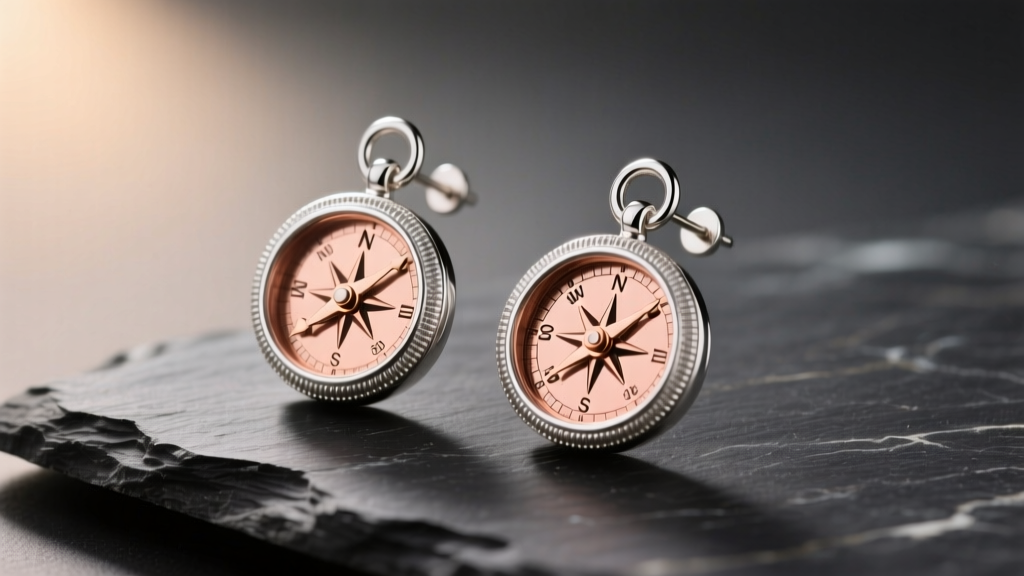
The Unique Anatomy of Compass Earrings: Why They Need Special Care
Compass earrings are a beloved staple in symbolic jewelry, representing guidance, travel, and protection. However, from a maintenance perspective, their intricate designs present unique challenges that standard stud or hoop earrings do not. Whether you wear a delicate 18-gauge lobe stud featuring a micro-compass rose or a bold, heavy brass dangle style, the structural complexity of these pieces demands a specialized care routine.
Unlike a simple cast band, a high-quality compass earring often features a moving central dial, a friction-fit pivot pin, mixed-metal inlays, and occasionally, delicate cold or vitreous enamel. The gap between the spinning compass rose and the outer bezel is typically less than 0.5 millimeters. This microscopic tolerance is a magnet for sebum (skin oils), dead skin cells, cosmetics, and environmental dust. When left unaddressed, this debris calcifies, seizing the moving parts and dulling the intricate directional engravings.
In this comprehensive guide, we will break down the exact protocols for cleaning, lubricating, and storing your compass earrings to ensure their mechanical function and aesthetic brilliance endure for decades.
The Chemistry of Tarnish and Intricate Engravings
Before applying any cleaning solution, it is crucial to understand what you are actually cleaning. The Gemological Institute of America (GIA) notes that tarnish on sterling silver is not dirt; it is a chemical reaction. The copper alloyed into 925 sterling silver reacts with hydrogen sulfide in the atmosphere to form silver sulfide, which manifests as a yellow, brown, or black film.
On a flat surface, silver sulfide is easily wiped away. But on compass earrings, the deep, intentional engraving of the N, S, E, and W markers creates micro-crevices where tarnish aggressively compounds. Furthermore, many artisan compass earrings feature intentional oxidation (antiquing)—a process where the jeweler applies liver of sulfur to darken the recessed areas, making the raised compass points pop. Using aggressive chemical dips or ultrasonic cleaners will strip this intentional patina, leaving the earring looking flat, overly bright, and aesthetically ruined.
Step-by-Step Cleaning Protocol for Compass Earrings
To safely clean your compass earrings without damaging the pivot mechanisms or enamel inlays, follow this meticulous, non-abrasive protocol.
1. Dry Debris Extraction
Never introduce water to a compass earring before removing loose dust and skin cells. Water turns cosmetic powders and dead skin into a paste that can become permanently wedged in the compass pivot. Use a soft, dry baby toothbrush or a clean, soft-bristled makeup brush to gently sweep the crevices. For the tight gap around the spinning dial, use a wooden toothpick—never a metal needle or pin, which will scratch the silver or gold vermeil.
2. The Distilled Water and Surfactant Soak
Tap water contains chlorine and dissolved minerals that can leave microscopic hard-water spots on polished metals and cloud gemstone inlays like turquoise or mother of pearl, which are common in bohemian compass designs.
- Fill a small glass bowl with distilled water and add two drops of a mild, phosphate-free dish soap (like Dawn).
- Submerge the compass earrings for no more than 3 to 5 minutes.
- Gently agitate the water to allow the surfactant to penetrate the moving parts.

3. Precision Scrubbing and Rinsing
Using a soft baby toothbrush, lightly brush the surface of the compass rose. Pay special attention to the post and the butterfly back or hinge mechanism if they are huggie-style compass hoops. Rinse thoroughly under a gentle stream of distilled water.
4. The Crucial Drying Phase
Air-drying is the enemy of intricate jewelry. Water trapped under the compass dial will cause rust on the steel or iron pivot pins often used in mixed-metal pieces. Use a can of compressed air (held at least six inches away) to blow water out of the micro-crevices, or use a hairdryer on the cool, low setting. Finally, buff the raised surfaces with a lint-free microfiber cloth.
Materials Matrix: Cleaning Agents and Risk Factors
Compass earrings are crafted from a variety of materials, each with distinct vulnerabilities. Refer to this matrix before selecting a cleaning agent.
| Material | Safe Cleaning Method | Strict Avoidances | Maintenance Frequency |
|---|---|---|---|
| 925 Sterling Silver (Polished) | Mild soap, distilled water, Sunshine polishing cloth. | Ultrasonic cleaners (if enamel is present), toothpaste. | Monthly |
| 14k Gold Vermeil | Damp microfiber cloth, gentle dry brushing. | Chemical dips, abrasive pastes, prolonged soaking. | Bi-weekly |
| Solid Brass / Bronze | Lemon juice and baking soda paste (for bare brass only). | Ammonia-based cleaners (causes stress corrosion cracking). | As needed |
| Cold Enamel Inlay | Dry microfiber cloth, mild soapy water (quick rinse). | Ultrasonic vibrations, alcohol, acetone, heat. | Weekly wipe-down |
Note on Gold Vermeil: Vermeil requires a minimum of 2.5 microns of gold plating over sterling silver. Aggressive polishing with treated jeweler's cloths will strip this layer, exposing the silver beneath and ruining the compass design's color contrast.
Maintaining Moving Parts and Hinges
The defining feature of premium compass earrings is the spinning rose dial. Over time, friction and debris can cause this mechanism to seize. If your compass dial no longer spins freely, do not force it with your fingernail, as you risk snapping the micro-rivet.
Unseizing a Stuck Compass Dial
- Clear the Gap: Take a piece of dental floss and gently work it into the seam between the spinning dial and the outer bezel. Pull it back and forth to act as a saw, cutting through calcified oils and debris.
- Apply Dry Lubricant: Avoid standard household oils or WD-40, which attract dust and degrade enamel. Instead, use a microscopic drop of PTFE-based dry lubricant or a specialized watchmaker's oil (like Moebius 8217).
- The Needle Technique: Dip the tip of a fine steel needle into the lubricant, then touch the needle to the edge of the pivot pin. Capillary action will draw the oil exactly where it is needed without flooding the face of the earring.
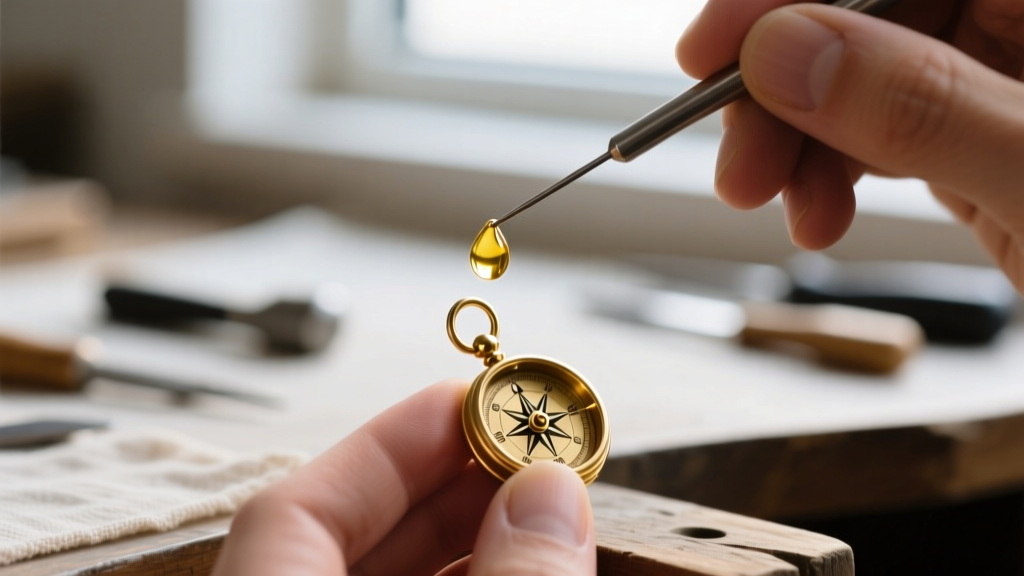
According to the Jewelers of America, regular maintenance of moving parts and clasps is essential to prevent long-term mechanical failure and metal fatigue, especially in heavier dangle styles that experience kinetic stress during wear.
Proper Storage to Preserve Intricate Details
How you store your compass earrings is just as critical as how you clean them. The protruding points of a compass rose (North, South, East, West) are prone to snagging and scratching if tossed into a communal jewelry box.
Expert Storage Rule: Never store compass earrings in PVC or polyethylene plastic bags. These plastics can emit volatile organic compounds (VOCs) that accelerate the tarnishing of silver and brass. Always opt for breathable, anti-tarnish fabric pouches.
- Individual Pouches: Store each pair in its own soft flannel or Pacific Silvercloth pouch to prevent the compass points from scratching softer metals or gemstones.
- Humidity Control: Keep your jewelry box in a room with a relative humidity below 50%. High humidity drastically accelerates the oxidation of copper alloys.
- Anti-Tarnish Strips: Place 3M anti-tarnish strips in your storage drawers. These strips absorb hydrogen sulfide and sulfur dioxide from the air, neutralizing the primary catalysts for silver tarnish.
Frequently Asked Questions
Can I use silver dip on antiqued compass earrings?
No. Silver dips contain thiourea, a highly aggressive chemical that instantly strips silver sulfide. While it will make the metal bright, it will completely erase the dark, intentional antiquing in the compass engravings, leaving the piece looking flat and cheap. If a dip is accidentally used, a jeweler must re-apply the liver of sulfur patina by hand.
How do I clean hard water spots off the enamel inlay of my compass rose?
If mineral deposits have clouded the enamel, dampen a cotton swab with a 50/50 mixture of distilled white vinegar and distilled water. Gently roll the swab over the enamel to dissolve the calcium carbonate, then immediately neutralize the acid by wiping with a swab dipped in plain distilled water. Dry instantly with compressed air.
My 20-gauge compass stud post is bending. Is this normal?
A 20-gauge (0.81mm) post is standard for lightweight studs, but compass designs can be front-heavy. If the post bends easily, it is likely made of pure silver or high-karat gold, which are inherently soft metals. Take the earrings to a bench jeweler to have the posts swapped for 18-gauge (1.02mm) posts made from a harder alloy, or consider upgrading to a heavier friction-back to support the weight of the compass face.


