How to Clean Different Types of Earring Materials Safely
Master the care and cleaning routines for your jewelry. Discover expert maintenance tips for different types of earring metals, gems, and piercing sites.

When building a curated ear, enthusiasts quickly learn that maintaining the brilliance of their pieces requires more than a quick wipe with a cloth. The care routines for the different types of earring metals, gemstones, and backing mechanisms vary wildly based on their chemical composition and structural integrity. A cleaning method that restores a platinum diamond stud to factory shine could permanently cloud a turquoise cabochon or strip the gold layer off a vermeil huggie.
As we navigate the jewelry landscape in 2026, advancements in metal alloys and gemstone treatments mean that collectors must be more precise than ever with their maintenance protocols. This comprehensive guide breaks down the exact chemistry, tools, and techniques required to clean, sanitize, and preserve your ear jewelry without causing micro-abrasions or chemical damage.
The Chemistry of Tarnish and Oxidation
Before applying any cleaning agent, it is crucial to understand why your jewelry degrades. Pure gold (24k) and pure platinum are noble metals; they do not oxidize or tarnish under normal atmospheric conditions. However, jewelry is rarely made from pure metals due to durability concerns.
- Sterling Silver (925): Composed of 92.5% silver and 7.5% copper. The copper reacts with hydrogen sulfide in the air to form silver sulfide (Ag2S), the blackish film we call tarnish.
- 14k and 18k Gold: Alloyed with copper, zinc, or nickel. Rose gold, which contains a high copper content, can develop a dark patina over time as the copper oxidizes when exposed to sweat and cosmetics.
- Gold Vermeil & Plated: A thin layer of gold (usually 1.5 to 2.5 microns) over sterling silver or brass. Aggressive polishing will physically strip this microscopic layer, exposing the base metal.
Material-Specific Cleaning Protocols
Gold (14k, 18k) and Platinum
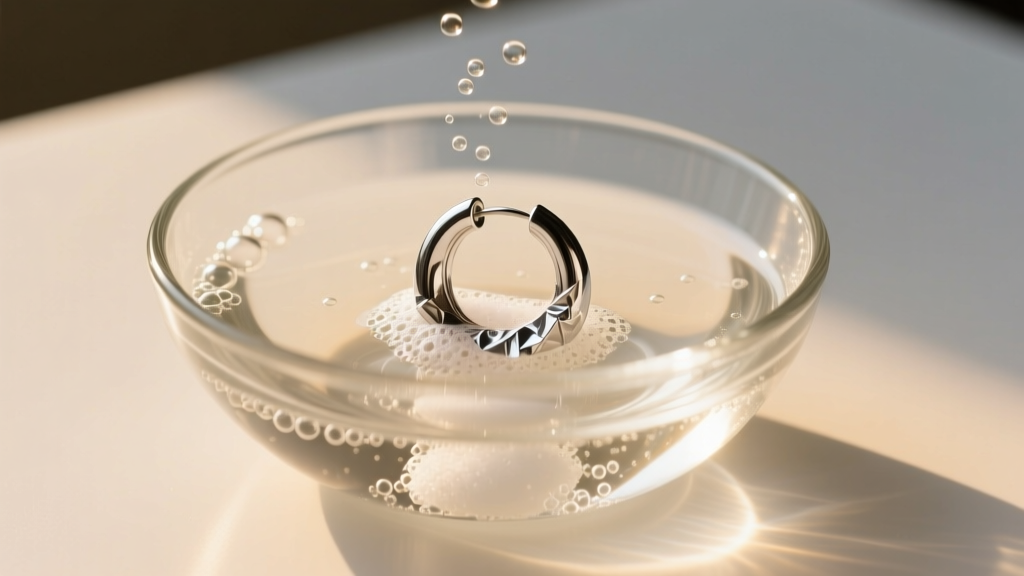
For solid gold and platinum earrings without porous gemstones, the safest and most effective cleaning method involves a mild surfactant. Mix a few drops of phosphate-free dish soap (like Dawn) in a bowl of lukewarm water. Soak the earrings for 15 to 20 minutes to loosen sebum and dead skin cells. Use a baby-soft bristle toothbrush to gently sweep the back of the setting and the post. Rinse under distilled water—never tap water, as the chlorine and hard minerals can leave microscopic water spots on polished platinum. Dry with a lint-free microfiber cloth.
Sterling Silver and Argentium
While commercial silver dips exist, they often contain harsh thiourea compounds that strip the metal's natural luster over time. Instead, utilize an electrochemical reduction bath. Line a glass bowl with aluminum foil (shiny side up). Add one tablespoon of baking soda and one tablespoon of non-iodized salt. Pour boiling water into the bowl to dissolve the powders. Drop your tarnished sterling silver hoops or studs into the solution, ensuring they touch the aluminum foil. Within 60 seconds, a chemical reaction transfers the sulfur from the silver to the aluminum, leaving the silver pristine without removing any base metal.
Implant-Grade Titanium (ASTM F-136)
Titanium is the gold standard for fresh piercings and sensitive ears because it is entirely hypoallergenic and corrosion-resistant. However, the textured surface of titanium posts can trap cellular debris. To sanitize titanium body jewelry, submerge the post in 91% or higher isopropyl alcohol for five minutes. This evaporates cleanly without leaving a residue, unlike rubbing alcohol (70%), which contains water and skin-conditioning additives that can irritate a healing fistula.
Gemstone and Organic Material Vulnerabilities
The Mohs hardness scale measures a stone's resistance to scratching, but it does not account for toughness (resistance to breaking) or chemical stability. This distinction is critical when cleaning gemstone earrings.
| Gemstone / Material | Porosity & Stability | Ultrasonic Safe? | Steam Safe? | Recommended Cleaning Method |
|---|---|---|---|---|
| Diamond | Non-porous, high toughness | Yes (40kHz) | Yes | Ultrasonic or ammonia-based cleaner |
| Emerald | Fracture-filled with oils/resins | NO | NO | Damp microfiber cloth only |
| Pearl (Akoya, South Sea) | Highly porous organic (calcium carbonate) | NO | NO | Dry, soft cloth; wipe after every wear |
| Opal | Contains 3-21% water; prone to crazing | NO | NO | Mild soapy water, quick rinse, no soaking |
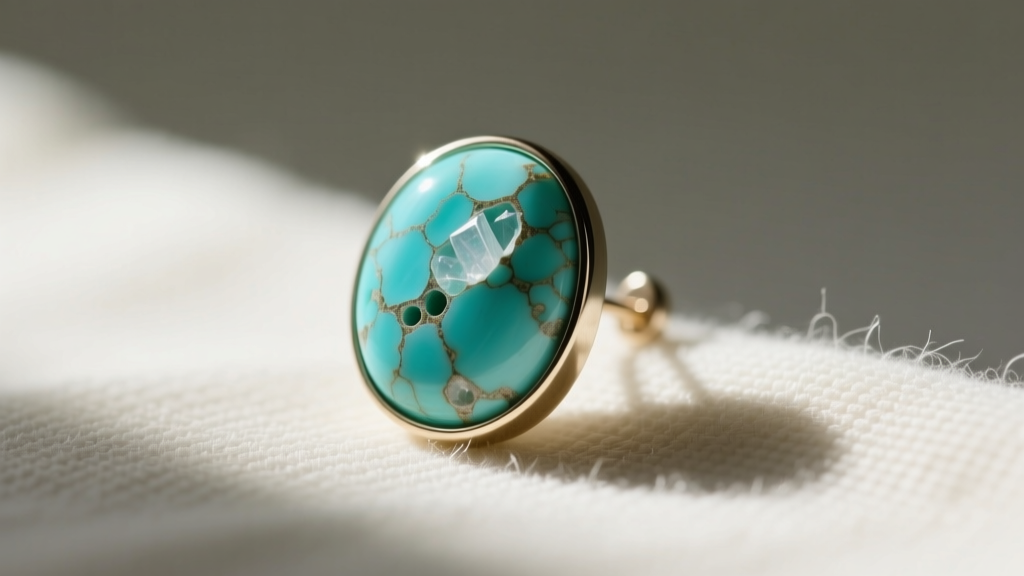
| Turquoise | Extremely porous; absorbs oils and dyes | NO | NO | Dry polishing cloth; avoid all liquids |
According to the Gemological Institute of America (GIA), organic gems like pearls, coral, and amber are highly susceptible to acidic compounds found in everyday items like perfume, hairspray, and even human perspiration. Pearls should always be the last thing you put on and the first thing you take off. Never submerge pearl earrings in water, as the moisture can degrade the silk thread or the epoxy resin used to secure the pearl to the post.
Piercing Site and Hardware Maintenance
Cleaning the earring is only half the battle; maintaining the piercing site and the mechanical hardware is equally vital. The Association of Professional Piercers (APP) emphasizes that the environment of the fistula (the piercing channel) dictates how you should handle the jewelry.
Lobe vs. Cartilage Considerations
Earlobe piercings have a robust blood supply and heal quickly, making them forgiving if you occasionally sleep in your studs. Cartilage piercings (helix, conch, tragus), however, lack direct blood flow and are highly prone to irritation bumps (hypertrophic scarring) if subjected to pressure or trapped moisture. When cleaning cartilage earrings, avoid twisting or rotating the jewelry. Instead, apply sterile saline spray (0.9% sodium chloride with no additives) to a non-woven gauze and gently press it against the entry and exit points to soften and remove lymphatic crusties.
Threadless vs. Internally Threaded Hardware
Modern high-end body jewelry relies on either internal threading or threadless (press-fit) tension systems. Externally threaded earrings—where the screw is on the post itself—act like a cheese grater on your piercing channel and should be discarded. For internally threaded earrings, use a soft brush to clean the female threads on the post; if debris builds up in the threads, the decorative end will not screw on flush, leading to cross-threading and permanent damage to the jewelry.
Mechanical Failure Points: The 10x Loupe Check
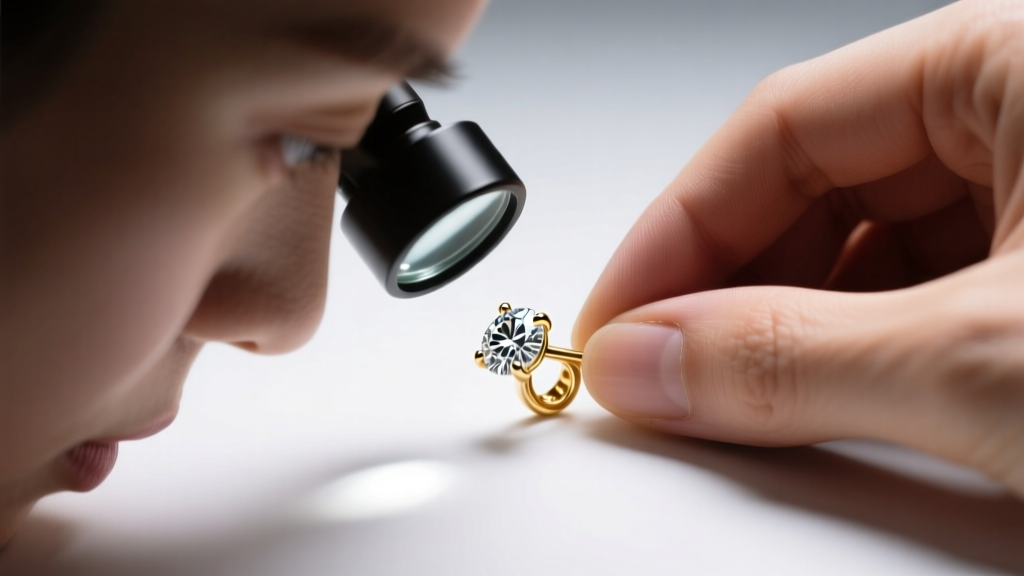
Even if your earrings are chemically pristine, mechanical failure can result in the loss of a precious stone. Once a month, use a 10x jeweler's loupe to inspect the structural integrity of your fine jewelry.
Expert Insight: When inspecting prong settings on diamond or sapphire studs, do not just look for bent prongs. Look for 'shoulder wear.' This occurs when the top curve of the prong flattens out from friction against hair and clothing. If the prong's shoulder is flattened by more than 30%, it is no longer securely gripping the girdle of the stone and requires professional re-tipping.
Additionally, check the tension on your earring backs. Butterfly friction backs lose their grip over time as the metal loops stretch. You can gently squeeze the loops together with flat-nose pliers to restore tension. For high-value earrings, consider upgrading to secure locking backs, such as La Poussiere or jumbo silicone discs, which provide a physical barrier against accidental loss.
What to Avoid: The 'Do Not Use' List
To protect your investment, banish the following from your jewelry care routine:
- Toothpaste: Contains hydrated silica, an abrasive that will permanently scratch high-polish gold and silver, leaving a dull, matte finish.
- Bleach (Sodium Hypochlorite): Will instantly destroy the structural integrity of gold alloys, causing the metal to become brittle and crumble.
- Boiling Water: While safe for plain platinum, boiling water can cause thermal shock to gemstones, particularly tanzanite and opals, causing internal fractures.
- Paper Towels: Made from wood pulp, paper towels contain microscopic fibers that act like sandpaper on polished metals and can leave lint trapped in prong settings.
By tailoring your maintenance routine to the specific metallurgical and gemological properties of your collection, you ensure that every piece remains as radiant and secure as the day it was first worn.


