The Ultimate Care and Cleaning Guide for Sunface Earrings
Learn how to safely clean, store, and maintain Zuni sunface earrings. Protect delicate turquoise, coral, and silver inlay from damage with expert tips.

The Cultural and Material Anatomy of Sunface Earrings
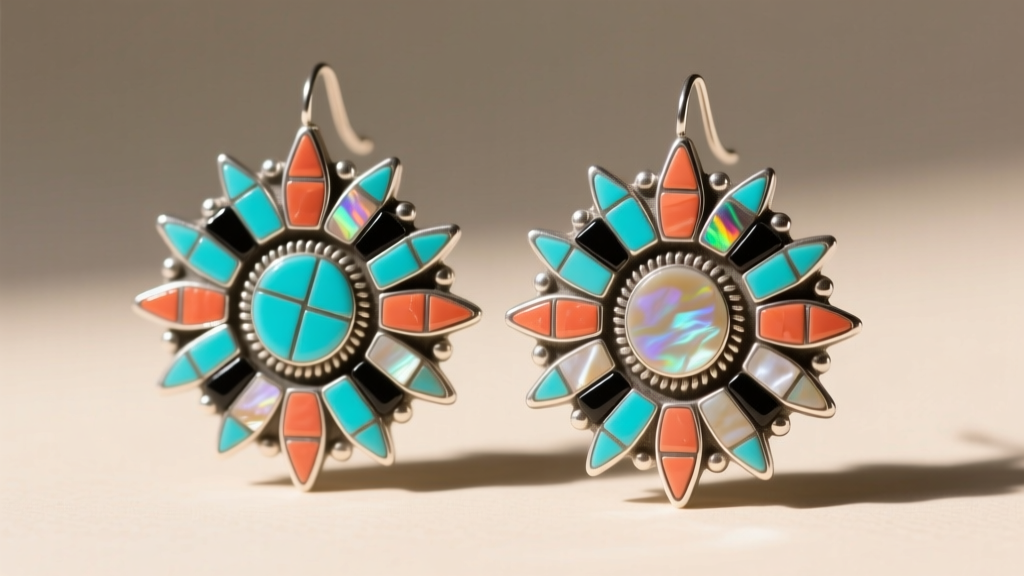
Zuni sunface earrings are far more than mere accessories; they are masterpieces of Native American lapidary art. The sunface motif honors the Sun Father, a sacred figure in Zuni cosmology representing warmth, life, and agricultural abundance. When you own a pair of authentic sunface earrings, you are acting as a custodian of a rich cultural heritage and an intricate assembly of organic and inorganic materials.
To properly care for these pieces, you must first understand their anatomy. Authentic Zuni inlay jewelry is typically crafted from .925 sterling silver—an alloy containing 92.5% pure silver and 7.5% copper. It is this copper content that makes sterling silver prone to tarnishing when exposed to sulfur in the atmosphere. The true magic, however, lies in the inlay work. Artisans meticulously cut and shape four primary materials: Sleeping Beauty turquoise, Mediterranean red coral, lignite jet, and nacre (mother-of-pearl). These stones are secured into the silver bezels using specialized jeweler's epoxies. Understanding the distinct chemical and physical vulnerabilities of each component is the first step in preserving your earrings for generations.
The Golden Rules: What NEVER to Do
The most common way collectors ruin vintage and contemporary Native American inlay jewelry is by treating it like standard diamond or gold jewelry. The organic nature of the stones and the adhesives used in the inlay process dictate a strict set of prohibitions.
- Never Use Ultrasonic Cleaners: Ultrasonic machines operate at high frequencies (typically 40kHz). These microscopic vibrations can easily shatter brittle materials like jet and mother-of-pearl, and will rapidly degrade the epoxy holding the inlay channels together.
- Never Use Liquid Silver Dips: Commercial silver dips contain thiourea and harsh acids. These chemicals will strip the natural waxes and oils from turquoise, permanently altering its color. Furthermore, the liquid seeps into the microscopic gaps between the stones and the silver, leaving a corrosive residue that eats away at the adhesive from the inside out.
- Never Use Steam Cleaners: The intense, localized heat from a jewelry steam cleaner will melt or soften the jeweler's epoxy, causing your meticulously arranged sunface mosaic to pop out of its silver channels.
- Never Wear Them in Pools or Hot Tubs: Chlorine and bromine are highly reactive. They will cause immediate, irreversible pitting in the sterling silver and bleach the vibrant red hues of natural coral.
Step-by-Step Cleaning Routine for Sunface Inlay
Maintaining the brilliance of your sunface earrings requires a gentle, methodical approach. Follow this routine every few months, or whenever the earrings lose their luster.
Step 1: Dry Dusting the Inlay
Before introducing any moisture or friction, remove loose dust and skin cells. Use a clean, ultra-soft makeup brush (like a kabuki or eyeshadow blending brush) to gently sweep across the surface of the inlay. This prevents you from grinding abrasive dust particles into the softer stones during the polishing phase.
Step 2: Polishing the Sterling Silver
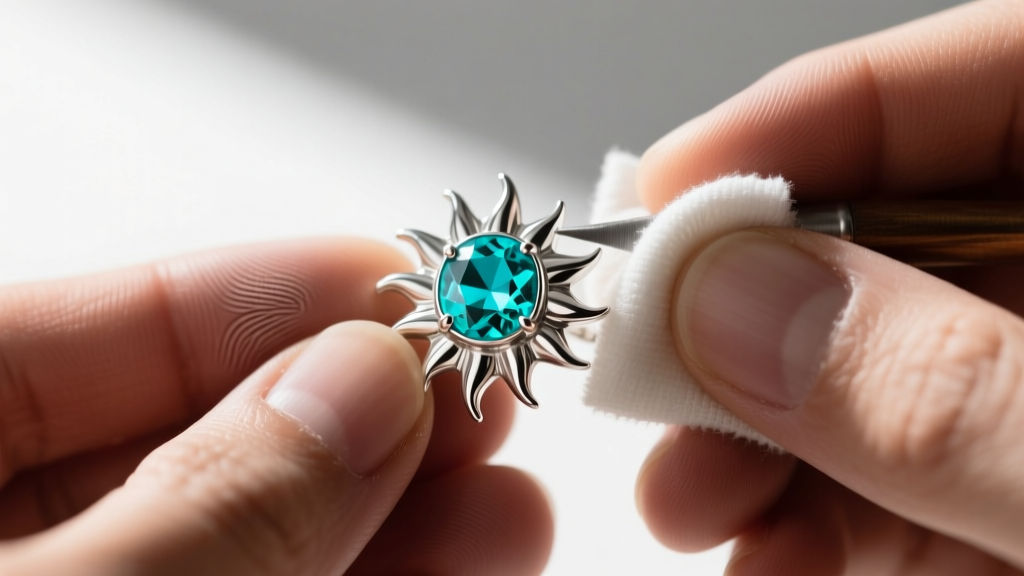
Because you cannot submerge the earrings, you must polish the silver manually. Use a high-quality jeweler's polishing cloth impregnated with micro-abrasives and anti-tarnish agents, such as a Sunshine Cloth. Gently rub the exposed silver frames and backs of the earrings. Crucial Tip: When you reach the edge where the silver meets the stone, use a cotton swab (Q-tip) to carefully polish the tight crevices. Avoid aggressively rubbing the polishing cloth over the turquoise and coral, as the micro-abrasives in the cloth can cause microscopic scratching on stones with lower Mohs hardness ratings.
Step 3: Spot Cleaning Stubborn Grime
If the inlay stones have accumulated heavy oils or lotions, do not use soap. Instead, slightly dampen a microfiber cloth with distilled water (never tap water, as the chlorine and dissolved minerals can leave spots or react with the stones). Wipe the stones gently, then immediately dry them with a separate, bone-dry microfiber cloth to prevent water from seeping into the inlay channels.
Material-Specific Vulnerabilities and Care Data
Each stone used in a traditional Zuni sunface design has unique physical properties. According to the Gemological Institute of America (GIA), understanding the Mohs hardness and porosity of your gems is vital for preventing accidental damage.
| Material | Mohs Hardness | Porosity | Primary Vulnerability | Safe Cleaning Method |
|---|---|---|---|---|
| Turquoise | 5.0 - 6.0 | High | Oils, cosmetics, chemicals | Dry brush, barely damp distilled cloth |
| Red Coral | 3.0 - 4.0 | High | Acids, heat, prolonged sunlight | Dry brush only |
| Jet (Lignite) | 2.5 - 4.0 | Low | Impact, scratching, drying out | Dry brush, soft cloth |
| Mother-of-Pearl | 2.5 - 4.5 | Low | Acids, abrasion, ultrasonic waves | Dry brush, soft cloth |
As noted in the GIA Coral Care Guide, coral is composed of calcium carbonate, making it highly susceptible to acidic environments. Even the natural acidity of human sweat can dull the polish of red coral over time, which is why wiping your earrings with a dry, soft cloth immediately after wearing them is a non-negotiable habit.
Proper Storage to Prevent Scratches and Tarnish
How you store your sunface earrings when they are not on your ears is just as important as how you clean them. Sterling silver tarnishes when it reacts with hydrogen sulfide in the air. Furthermore, the varying hardness of the inlay stones means they can easily scratch one another if jumbled together in a jewelry box.
Expert Storage Tip: Never store Native American inlay jewelry in plastic bags made of PVC or polyvinyl chloride. These plastics emit chemical gases that can accelerate tarnishing and degrade organic stones. Always opt for archival-quality, acid-free materials.
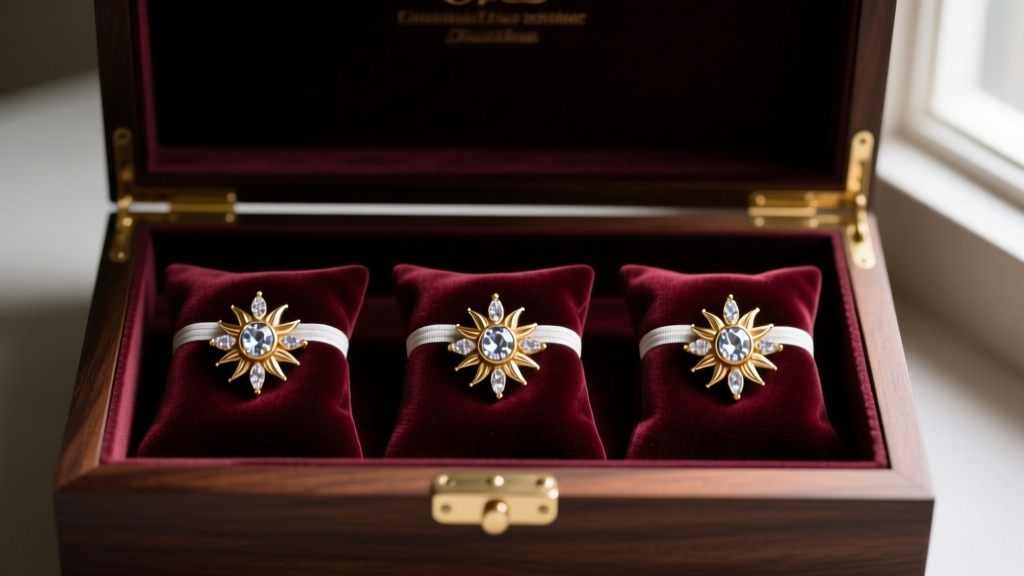
For optimal preservation, store each pair of sunface earrings in its own individual, untreated flannel or velvet pouch. Place a small strip of 3M anti-tarnish paper or a piece of Pacific Silvercloth inside the pouch to absorb airborne sulfur compounds. Keep the pouches in a dark, climate-controlled drawer away from direct sunlight and humidity. Prolonged UV exposure can cause the vibrant blues of stabilized turquoise and the deep reds of coral to fade over time.
Troubleshooting Common Sunface Earring Issues
Even with meticulous care, vintage and well-loved sunface earrings may develop issues. Here is how to handle the most common problems without causing further damage.
Loose or Missing Inlay Stones
If you notice a piece of turquoise or coral rattling or sitting slightly raised in its channel, stop wearing the earrings immediately. Do not attempt to glue them back in place with cyanoacrylate (Super Glue). Super glue dries hard and brittle, and it will leave a permanent, cloudy white residue on the porous stones. Instead, use a flexible, clear jeweler's adhesive like G-S9000 or Devcon 5-Minute Epoxy. Apply a microscopic drop using the tip of a wooden toothpick, press the stone gently into place, and wipe away any excess immediately with a dry cotton swab. Let it cure for 24 hours in a dry environment.
Heavy Silver Tarnish in Deep Crevices
Channel inlay features deep silver dividers that polishing cloths cannot reach. If black silver sulfide builds up in these channels, do not use a silver dip. Instead, take a wooden toothpick or a soft-bristled interdental brush and gently work a tiny amount of silver polishing paste into the crevice. Wipe it clean with a dry microfiber cloth. Never use metal needles or pins, as they will scratch the sterling silver and potentially chip the adjacent stones.
When to Seek a Professional Jeweler
While daily maintenance and light cleaning should be done at home, there are scenarios that require professional intervention. If your sunface earrings have a broken post, a cracked silver bezel, or if multiple inlay stones have fallen out indicating a systemic failure of the original adhesive, take them to a jeweler who specializes in Native American jewelry. A specialist will know how to safely remove the old, degraded epoxy using controlled heat and specialized solvents without harming the antique stones, ensuring your sunface earrings remain a vibrant part of your collection for decades to come.


