The Ultimate Technical Guide to Turquoise Huggie Earrings
Discover the technical details of turquoise huggie earrings. Learn about stone stabilization, metal gauges, hinge mechanics, and authentic grading.

The Intersection of Gemology and Miniature Hardware
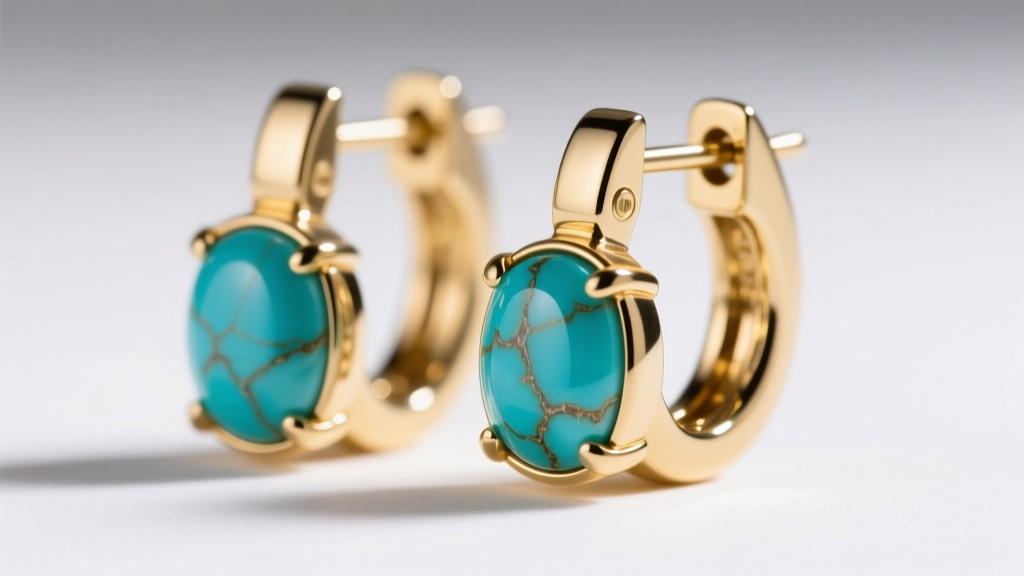
Turquoise huggie earrings represent a complex intersection of Southwestern gemology and precision miniature hardware. Unlike standard drop earrings or simple studs, huggies demand rigorous structural integrity. They must hug the earlobe securely while bearing the weight of opaque, often heavily matrixed gemstones. For jewelry enthusiasts and collectors, understanding the technical specifications of these pieces—from the Vickers hardness of the gold alloy to the polymer stabilization of the turquoise—is essential for making informed acquisitions. This guide bypasses superficial styling advice to examine the metallurgical and gemological realities of high-end turquoise huggies.
The Anatomy of a High-Quality Huggie
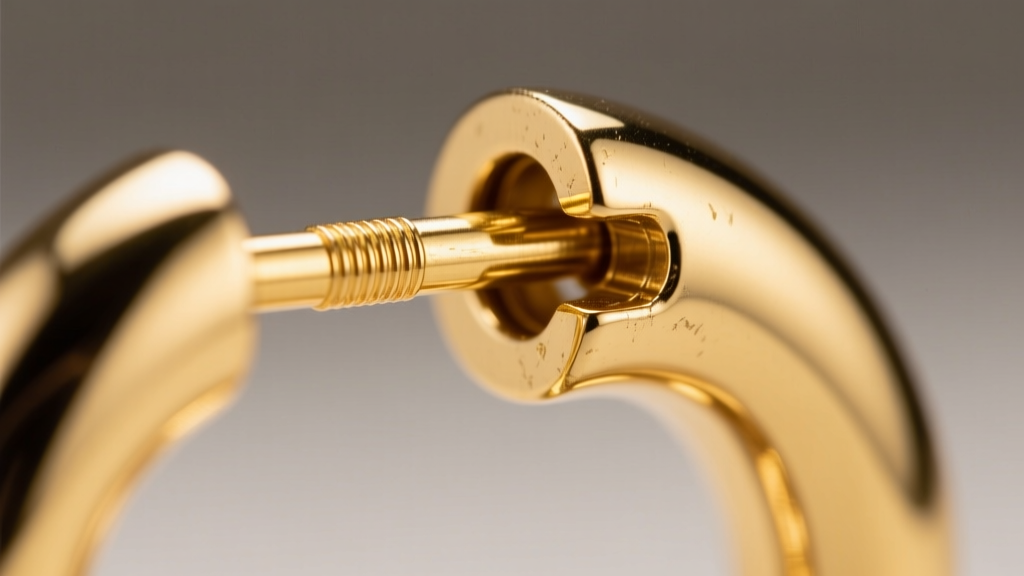
The defining feature of a huggie is its hinged construction, which allows the earring to open and snap shut, 'hugging' the earlobe. However, not all hinges are engineered equally.
Hinge and Clasp Mechanics
Premium huggies utilize a 'snap-hinge' mechanism featuring a tensioned wire pin that locks into a hollow catch on the opposite end. Over time, repeated opening and closing can cause the pin to compress or the catch to widen, resulting in a loose closure. Expert jewelers recommend using nylon-jaw pliers to gently bend the pin back into its original V-shape to restore tension. Avoid using standard steel pliers, which will mar the precious metal finish.
Wire Gauge and Post Thickness
The thickness of the wire that passes through the piercing is critical for comfort and healing. Standard lobe huggies typically feature an 18-gauge (1.02mm) or 16-gauge (1.29mm) post. While 18-gauge is the industry standard for standard earlobe piercings, 16-gauge offers superior structural support for heavier turquoise settings, preventing the earring from drooping or tearing the piercing channel over time. Cartilage-specific huggies often step down to 20-gauge (0.81mm) to accommodate tighter, more delicate piercings.
Turquoise Grading: Natural vs. Stabilized vs. Imitation
The most pervasive myth in turquoise jewelry is that 'natural' is always superior. When it comes to huggie earrings—which are subject to high friction, accidental impacts, and constant exposure to skin oils—stabilized turquoise is often the technically superior choice.
Natural turquoise is highly porous, with a Mohs hardness ranging from 5 to 6. It can absorb lotions, perfumes, and sweat, leading to permanent discoloration. Stabilization involves subjecting the rough stone to high pressure and infusing it with a clear epoxy or acrylic resin. This process hardens the stone, enhances the color, and seals the porosity without altering the stone's fundamental chemical identity. According to the Gemological Institute of America (GIA), stabilization is an accepted industry practice, provided it is disclosed to the buyer.
The Zachery Treatment
For collectors seeking a middle ground between natural porosity and plastic stabilization, the Zachery method is the gold standard. This proprietary treatment reduces the stone's porosity and improves its color without introducing polymers, plastics, or waxes. Zachery-treated turquoise retains the natural feel of the stone while offering the durability required for daily-wear huggies.
| Stone Type | Mohs Hardness | Treatment Process | Durability for Huggies | Relative Price |
|---|---|---|---|---|
| Natural (Untreated) | 5.0 - 6.0 | None | Low (Prone to staining/chipping) | $$$$ |
| Stabilized | 6.0 - 7.0 | Epoxy/Resin under pressure | High (Impact & stain resistant) | $$ |
| Zachery Treated | 6.0 - 6.5 | Non-polymer chemical bath | Medium-High | $$$ |
| Reconstituted | 4.0 - 5.0 | Turquoise dust bonded with resin | Low (Brittle, lacks structural integrity) | $ |
| Dyed Howlite | 3.5 | Surface dye application | Very Low (Scratches easily, dye fades) | $ |
Metallurgy and Setting Techniques
The metal alloy chosen for turquoise huggies dictates both the longevity of the hinge and the security of the gemstone.
14k vs. 18k Gold Alloys
While 18k gold (75% pure gold) is prized for its rich color and hypoallergenic properties, it has a lower Vickers hardness (approximately 115 HV) compared to 14k gold (58.3% pure gold, approximately 135 HV). For the structural demands of a huggie hinge and the tension required to hold a heavy bezel setting, 14k gold is metallurgically superior. It resists warping and maintains the clasp's snap tension far longer than softer 18k alloys.
Vermeil and FTC Guidelines
Gold vermeil (sterling silver plated with gold) is a common alternative for budget-friendly huggies. However, buyers must verify the plating thickness. The Federal Trade Commission (FTC) mandates that vermeil must have a gold plating of at least 2.5 microns. Huggies experience high friction at the hinge and clasp; anything less than 2.5 microns will quickly wear down to the silver base, leading to tarnish and potential skin irritation.
Bezel vs. Prong Settings
Turquoise lacks cleavage planes but is notoriously brittle. Prong settings concentrate stress on tiny points of the stone, increasing the risk of chipping upon impact. A full bezel setting, where a continuous rim of metal encircles the turquoise cabochon, distributes pressure evenly and protects the stone's vulnerable edges. For huggies, which are frequently bumped against hair, phones, and collars, a bezel setting is non-negotiable for long-term preservation.
Sizing Framework: Matching Huggies to Ear Anatomy
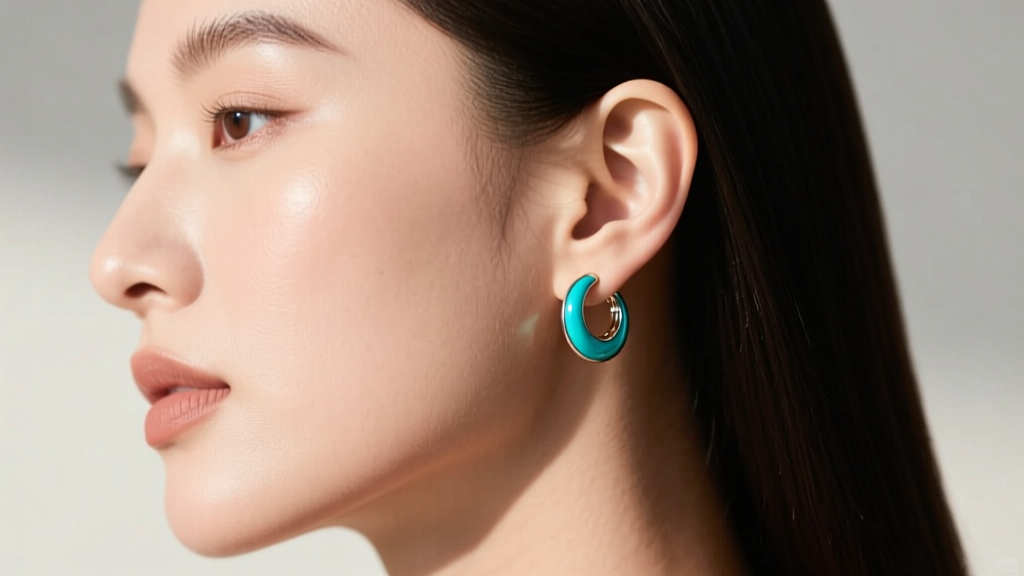
Purchasing huggies online requires a precise understanding of Inner Diameter (ID) versus Outer Diameter (OD). The ID determines how the earring fits your ear, while the OD includes the thickness of the metal and the turquoise setting.
- 10mm ID: Designed for upper lobe piercings, helix cartilage, or individuals with very thin earlobes seeking a tight, 'second-skin' fit.
- 12mm ID: The industry standard for standard lobe piercings. Provides a snug hug with just enough clearance to prevent the earlobe from swelling against the metal.
- 14mm - 15mm ID: Necessary for thicker earlobes or lower lobe piercings. Also used as 'clickers' for daith or rook cartilage piercings, provided the gauge is appropriate (usually 16g or 14g for cartilage clickers).
Pro Tip: To find your ideal huggie size, wrap a piece of string around the exact part of your ear where the earring will sit. Mark the overlap, measure the string's length in millimeters, and divide by 3.14 (Pi) to calculate your required Inner Diameter.
Chemical Vulnerabilities and Maintenance
Even stabilized turquoise requires specific maintenance protocols. The most critical rule is to never use ultrasonic jewelry cleaners on turquoise huggies. The high-frequency acoustic waves can cause microscopic fractures in the stone, shatter the matrix, or strip the dye from imitation stones. Furthermore, the heat generated by ultrasonic baths can melt the epoxy used in lower-grade stabilization.
For routine cleaning, use a soft, lint-free microfiber cloth dampened with warm water and a drop of mild, phosphate-free dish soap. Gently wipe the metal and the stone, avoiding harsh scrubbing that could degrade the polish of the turquoise cabochon. Always dry the huggies thoroughly with a separate cloth before closing the clasp, as trapped moisture inside the hinge mechanism can lead to internal oxidation, particularly in sterling silver or lower-karat gold alloys.


