How to Clean and Maintain Little Hoop Earrings Silver Styles
Learn how to clean, polish, and store little hoop earrings silver styles. Expert tips on removing tarnish, preventing scratching, and daily maintenance.

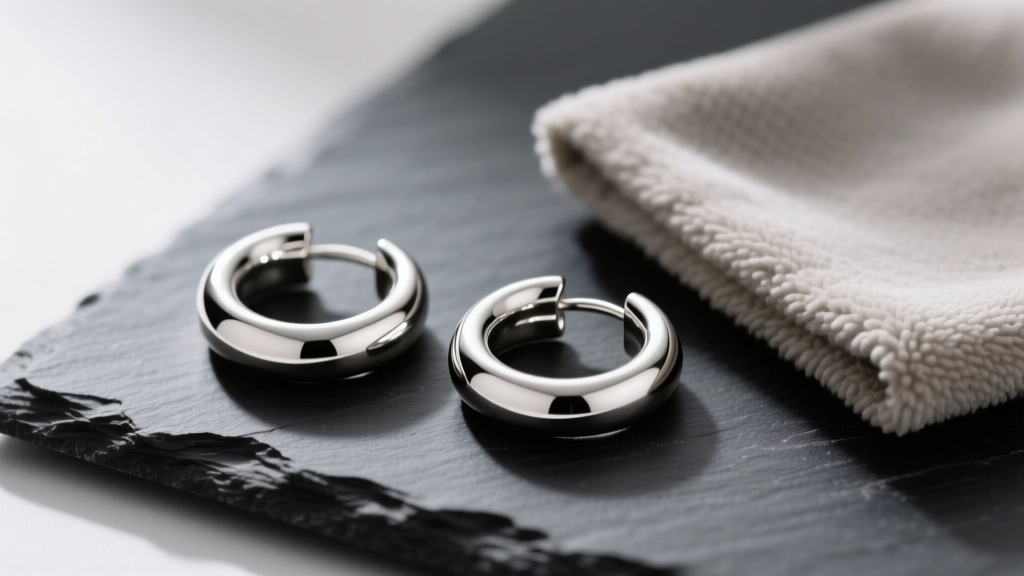
As we navigate the jewelry trends of 2026, the minimalist stacking aesthetic remains dominant, making small hoops an absolute staple in everyday wear. However, maintaining these delicate pieces requires specialized knowledge. Many of our readers search for 'little hoop earrings silver' care tips because these specific items endure constant contact with skin oils, hair products, and environmental pollutants. Unlike heavier statement pieces, little hoops—typically crafted in 20-gauge (0.81mm) or 22-gauge (0.64mm) wire—are highly susceptible to bending, hinge clogging, and rapid tarnishing due to their high surface-area-to-mass ratio.
This comprehensive guide dives deep into the metallurgy of silver, the mechanical vulnerabilities of small hoop clasps, and the exact chemical protocols required to keep your jewelry pristine without causing micro-abrasions or structural failure.
The Chemistry of Tarnish: Why Silver Reacts
To properly care for your jewelry, you must first understand what you are fighting. A common misconception is that silver 'rusts' or oxidizes in the same way iron does. In reality, the dark layer that forms on sterling silver is silver sulfide ($Ag_2S$).
Pure silver (999) is highly resistant to tarnish, but it is too soft for jewelry. Therefore, little hoop earrings are almost exclusively crafted from 925 Sterling Silver, which contains 7.5% copper or other base metals to provide structural integrity. It is this copper alloy that reacts with hydrogen sulfide in the atmosphere, as well as the sulfur compounds found in human sweat, wool, and certain cosmetics. Because little hoops sit snugly against the neck and jawline, they are constantly exposed to sebum and sweat, accelerating the sulfide formation process compared to dangling earrings.
Argentium Silver: The Modern Alternative
If you are purchasing new hoops in 2026, look for Argentium Silver. This patented alloy replaces some of the copper with germanium, which forms a transparent, self-healing germanium dioxide layer on the surface. Argentium little hoops are up to seven times more resistant to tarnish than traditional 925 sterling, drastically reducing your maintenance workload.
Step-by-Step Cleaning Protocols
Different levels of tarnish require different approaches. Avoid the temptation to use abrasive silver polishes on delicate 22-gauge wires, as the friction can easily warp the hoop's perfect circular geometry.
Level 1: The Daily Sebum Removal (Mild Surfactant)
For routine maintenance and the removal of body oils, lotions, and light dust, a mild surfactant is all you need.
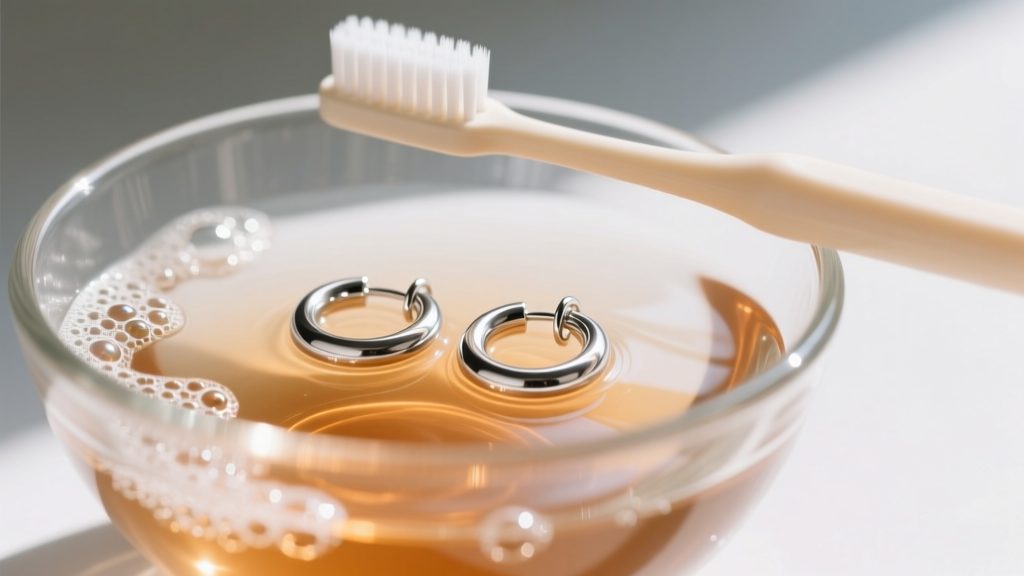
- The Solution: Mix three drops of phosphate-free dish soap (like Dawn) into a bowl of lukewarm distilled water. Avoid tap water, as chlorine and trace minerals can leave microscopic water spots.
- The Agitation: Submerge the hoops for 3 to 5 minutes. Use an extra-soft baby toothbrush to gently sweep the inner curve of the hoop and the clasp mechanism.
- The Drying Phase: Rinse with distilled water and immediately pat dry with a lint-free microfiber cloth. Air-drying will leave mineral deposits.
Level 2: Heavy Tarnish Removal (The Redox Bath)
When your hoops have developed a deep yellow or black sulfide layer, polishing cloths will remove too much silver over time. Instead, use an electrochemical redox reaction to convert the silver sulfide back into pure silver without removing any metal.
- Line a glass bowl with aluminum foil, shiny side up.
- Add 1 tablespoon of baking soda and 1 tablespoon of non-iodized salt.
- Place your little silver hoops on the foil, ensuring they physically touch the aluminum.
- Pour boiling water into the bowl until the earrings are submerged. You will immediately smell a rotten egg odor—this is the sulfur leaving the silver and binding to the aluminum.
- After 3 minutes, remove the hoops with plastic tongs (never metal, which can scratch), rinse in distilled water, and dry thoroughly.
Crucial Warning: Never use the redox bath on little hoops that feature an intentional 'antique' or 'oxidized' finish, as it will strip the darkened accents from the crevices. Furthermore, if your hoops are set with porous stones like turquoise, opal, or emerald, the boiling water and alkaline solution will destroy the gems.
Mechanical Maintenance: Hinges, Clasps, and Wire Tension
The most common point of failure for small hoops is not the metal itself, but the mechanical closures. Because these earrings are small, the hardware is miniaturized and highly sensitive to debris and physical stress.
Latchback and Hinged Clicker Hoops
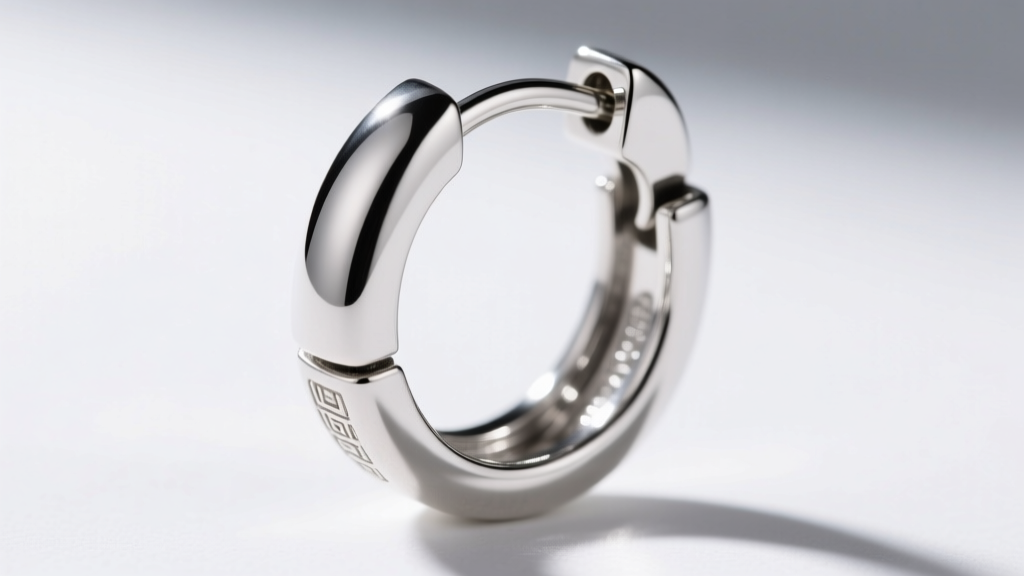
Latchbacks feature a tiny hinge pin (often less than 0.5mm thick) and a catch groove. Over time, a mixture of dead skin cells, soap residue, and lint packs into this hinge, preventing the clasp from snapping shut securely. The Fix: Dip a wooden toothpick in 99% isopropyl alcohol and gently scrape the hinge barrel. The alcohol dissolves the sebum and evaporates instantly, leaving no moisture behind to cause oxidation. Never use a metal pin or needle, as you will scratch the silver and widen the hinge tolerance, leading to a loose, rattling clasp.
Continuous (Endless) Hoops
Endless hoops rely on the natural spring tension of the 20G or 22G wire to hold the slightly thicker post inside the hollow tubing of the opposite end. The Failure Mode: Most people open continuous hoops by pulling the ends laterally (side-to-side). This causes 'work hardening' in the silver alloy. If you bend a 22G wire laterally more than a dozen times, the crystalline structure of the metal locks up, becomes brittle, and will snap cleanly in half. The Fix: Always open and close continuous hoops by twisting the ends vertically (up and down) in a gentle 'S' motion. This preserves the structural integrity and spring tension of the wire.
Ultrasonic Cleaners: Are They Safe for Little Hoops?
Ultrasonic cleaners use high-frequency sound waves (typically 40 to 45 kHz) to create microscopic cavitation bubbles in a liquid solution, which implode and blast away dirt. While highly effective for plain silver hoops, they are a massive risk for gemstone-set hoops. The intense vibrations can fracture included stones (like emeralds) and shake loose the tiny prongs or bezels holding micro-pave diamonds. If your little hoops are plain metal, an ultrasonic cleaner used for just 3 minutes with a specialized silver solution is safe and highly effective for cleaning intricate textured designs that a toothbrush cannot reach.
Storage Solutions to Prevent Micro-Scratches and Oxidation
How you store your earrings in 2026 should involve active environmental control, not just tossing them into a velvet-lined box. Velvet and felt often contain trace amounts of sulfur and can trap moisture.
| Storage Method | Effectiveness | Best For |
|---|---|---|
| Standard Velvet Box | Poor | Short-term display only; traps moisture and sulfur. |
| Ziploc Polyethylene Bags | Good | Isolates from air, but must be squeezed of excess oxygen. |
| Anti-Tarnish Cloth Pouches | Excellent | Pouches treated with silver nitrate or zinc to absorb sulfur gases. |
| Sealed Bags + 3M Tarnish Strips | Superior | Long-term storage; strips absorb ambient $H_2S$ for up to 6 months. |
For the ultimate protection, place each pair of little silver hoops into an individual, airtight polyethylene bag (avoid PVC, which off-gasses damaging plasticizers). Drop in a small square of a 3M anti-tarnish strip and a tiny silica gel desiccant packet to control humidity. This creates a micro-climate that effectively halts the sulfide reaction in its tracks.
Common Cleaning Mistakes to Avoid
To preserve the lifespan and finish of your jewelry, steer clear of these common household 'hacks' that actually cause irreversible damage to delicate silver alloys.
- Toothpaste: Toothpaste contains hydrated silica and calcium carbonate, which are highly abrasive. Scrubbing little hoops with toothpaste will create thousands of micro-scratches, dulling the mirror finish and creating grooves where future tarnish will accumulate faster.
- Baking Soda Paste: While baking soda dissolved in water (as in the redox bath) is safe, creating a thick paste and rubbing it on the silver acts as a harsh abrasive, similar to sandpaper on a microscopic level.
- Commercial Silver Dips: Many commercial liquid dips contain thiourea and strong acids. While they strip tarnish instantly, they leave a porous surface that actually accelerates future tarnishing and can cause severe skin irritation if not rinsed perfectly.
By understanding the specific metallurgical and mechanical needs of your jewelry, you can ensure your collection remains brilliant, structurally sound, and ready for daily wear for decades to come.


