How to Clean and Maintain Carabiner Earrings Safely
Learn how to safely clean and maintain carabiner earrings. Discover expert tips for preserving spring mechanisms, metal finishes, and gemstone accents.

The Rise of Utilitarian Jewelry: Why Carabiner Clasps Need Special Care
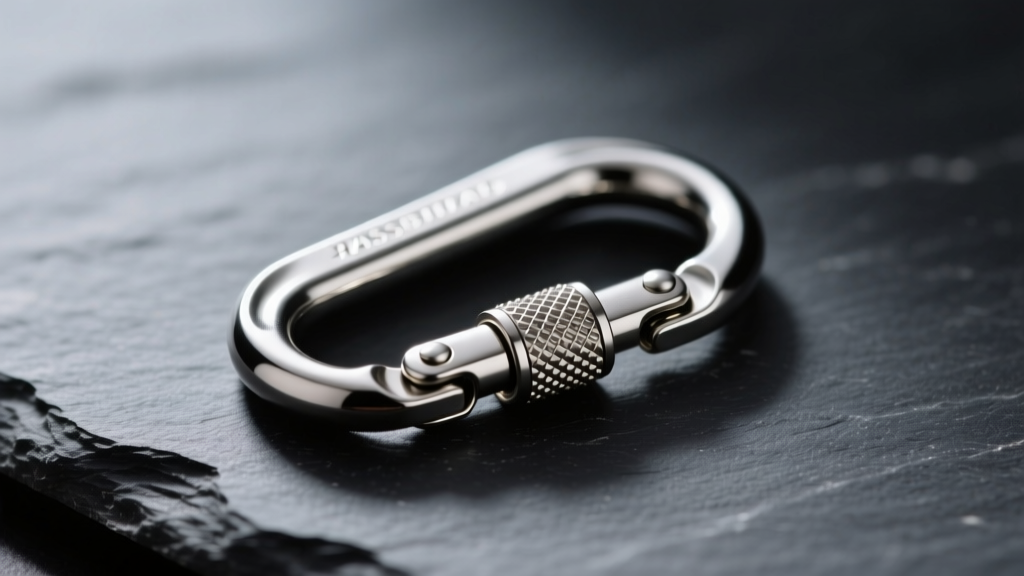
Carabiner earrings have transcended their niche climbing origins to become a staple in gorpcore, streetwear, and utilitarian fashion. Unlike standard clickers or continuous hoops, carabiner earrings feature a functional, spring-loaded gate. While this mechanical detail adds undeniable edge and a satisfying tactile snap, it also introduces unique maintenance challenges. Sebum, dead skin cells, and environmental dust easily become trapped in the micro-hinge and spring housing. If neglected, the gate can stick, lose its tension, or even corrode from the inside out. This comprehensive guide will teach you how to clean, lubricate, and store your carabiner earrings to ensure the clasp remains snappy and the metal pristine for years to come.
Understanding the Anatomy and Metallurgy of Carabiner Clasps
To properly care for carabiner earrings, you must first understand their construction. A standard carabiner earring consists of the main body (shank), the post or wire, the moving gate, the micro-hinge pin, and the internal coil spring. Most high-quality pieces are crafted from 316L surgical stainless steel or ASTM F136 implant-grade titanium. While 316L contains molybdenum for excellent corrosion resistance, the internal carbon steel spring is often a different alloy, making it highly susceptible to oxidation if water is trapped inside the housing.
Because the post must be hollowed or grooved to house the spring mechanism, carabiner earrings are typically thicker than standard studs. Expect 14-gauge (1.6mm) or 12-gauge (2.0mm) wires for lobe and cartilage pieces. This thickness provides the structural integrity needed to prevent the post from bending under the leverage of the gate, but it also means the crevices are deeper and more prone to trapping debris.
The Step-by-Step Cleaning Protocol
According to the Jewelers of America, regular maintenance is the key to preserving mechanical jewelry. However, mechanical pieces require a gentler touch than solid cast rings or simple studs.
1. Clearing the Gate Crevice
Before introducing any liquid, use a wooden toothpick to gently scrape out packed sebum and lint from the seam where the gate meets the main body. Never use metal needles or safety pins, as these can scratch the finish, create micro-grooves where bacteria thrive, and compromise the flush closure of the gate.
2. The Gentle Wash
Mix a few drops of mild, phosphate-free dish soap into a bowl of warm distilled water. Tap water contains minerals that can cause spotting and accelerate tarnish. Dip a soft-bristled baby toothbrush into the solution and gently scrub the exterior of the earring, the post, and the backing.
Critical Warning: Do not soak carabiner earrings. Prolonged submersion forces soapy water deep into the spring housing, which is notoriously difficult to rinse and dry. Instead, use the damp brush to clean around the hinge without flooding it.
3. Rinsing and Rapid Drying
Rinse briefly under a gentle stream of distilled water. Immediately pat dry with a lint-free microfiber cloth. To remove moisture trapped inside the spring mechanism, use a can of compressed air. Hold the earring at an angle and blast the hinge crevice with short bursts. This prevents internal rust and keeps the spring action crisp.
Lubricating the Micro-Spring: What to Use and What to Avoid
Over time, the gate may become stiff or fail to snap shut with its original satisfying click. This is usually due to friction and microscopic debris, not necessarily a broken spring. The most common mistake consumers make is reaching for household oils like WD-40, olive oil, or sewing machine oil. These wet lubricants attract dust, dead skin, and lint, eventually creating a thick sludge that jams the hinge entirely.
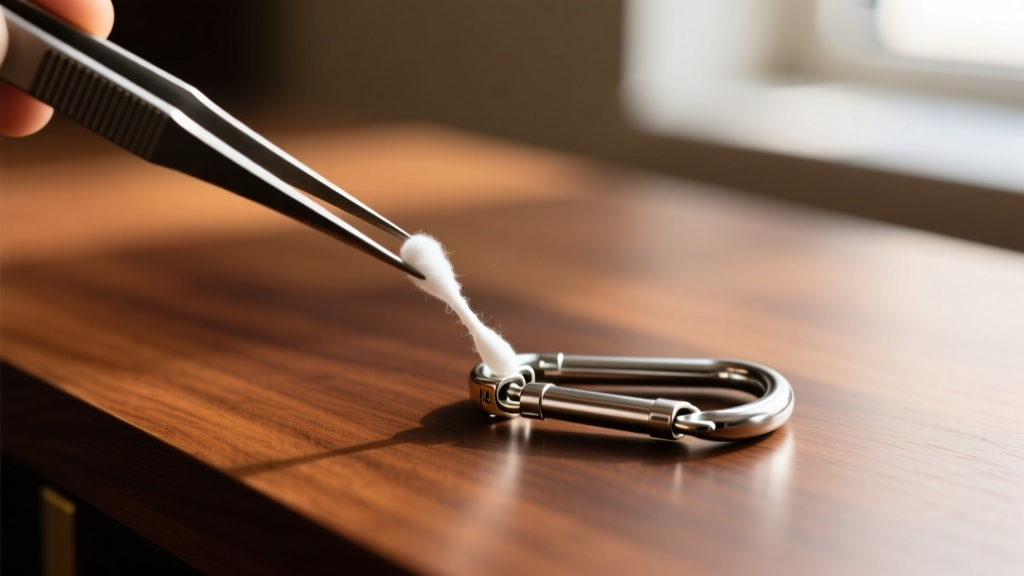
The professional solution is to use a dry PTFE (Teflon) lubricant. Spray a small amount onto a cotton swab, then carefully dab it onto the hinge pin and the gate seam. Work the gate open and closed a dozen times to distribute the PTFE. The solvent carrier will evaporate quickly, leaving behind a microscopic, non-stick dry film that repels dust and skin oils while ensuring smooth mechanical action.
Cleaning Agents and Material Compatibility Chart
Not all carabiner earrings are created equal. Many feature mixed materials, anodized finishes, or gemstone inlays. Use the table below to determine the safest cleaning approach for your specific pair.
| Material / Finish | Safe Cleaning Agents | Agents to Avoid | Primary Risk |
|---|---|---|---|
| 316L Stainless Steel | Mild dish soap, distilled water, isopropyl alcohol (exterior only) | Bleach, chlorine, prolonged soaking | Pitting, internal spring corrosion |
| ASTM F136 Titanium | Mild dish soap, saline solution, distilled water | Hydrofluoric acid, harsh abrasives | Surface scratching, dulling |
| Anodized Aluminum Accents | Damp microfiber cloth, mild soap | Ultrasonic cleaners, baking soda, ammonia | Stripping of the anodized color layer |
| Epoxy-Set Gemstone Inlays | Soft dry brush, slightly damp cloth | Alcohol, acetone, ultrasonic waves | Adhesive degradation, stone loss |
Why You Must Avoid Ultrasonic Cleaners
Many jewelry owners swear by ultrasonic cleaners for deep-cleaning crevices, a method often recommended by the Gemological Institute of America (GIA) for solid diamond settings. However, for carabiner earrings, ultrasonic cavitation is a severe mechanical hazard. The high-frequency sound waves (typically 40 kHz) create microscopic vacuum bubbles that implode against the metal. While great for blasting dirt out of a prong setting, this intense vibration can warp the delicate internal coil spring or dislodge the microscopic retaining pin that holds the gate hinge in place. Stick to manual cleaning to preserve the structural integrity of the clasp.
Troubleshooting Common Carabiner Clasp Failures
- Gate Won't Close Flush: This is usually caused by a bent post or debris packed into the receiver notch. Inspect the post under a magnifying glass. If bent, do not force it back with pliers, as this will weaken the metal's crystalline structure and cause it to snap. Take it to a professional jeweler for annealing and straightening.
- Loss of Spring Tension: If the gate flops open without resistance, the internal spring has either corroded or fatigued. Unfortunately, micro-springs in jewelry are rarely replaceable. This is a sign to retire the piece or have a custom jeweler convert it into a standard hinged clicker.
- Skin Irritation or Green Discoloration: If you experience itching or staining, the internal spring may be rusting and leaching nickel or copper through the hinge gap. Switch to ASTM F136 titanium carabiner earrings, which are entirely nickel-free and biocompatible.
Long-Term Storage and Wear Maintenance
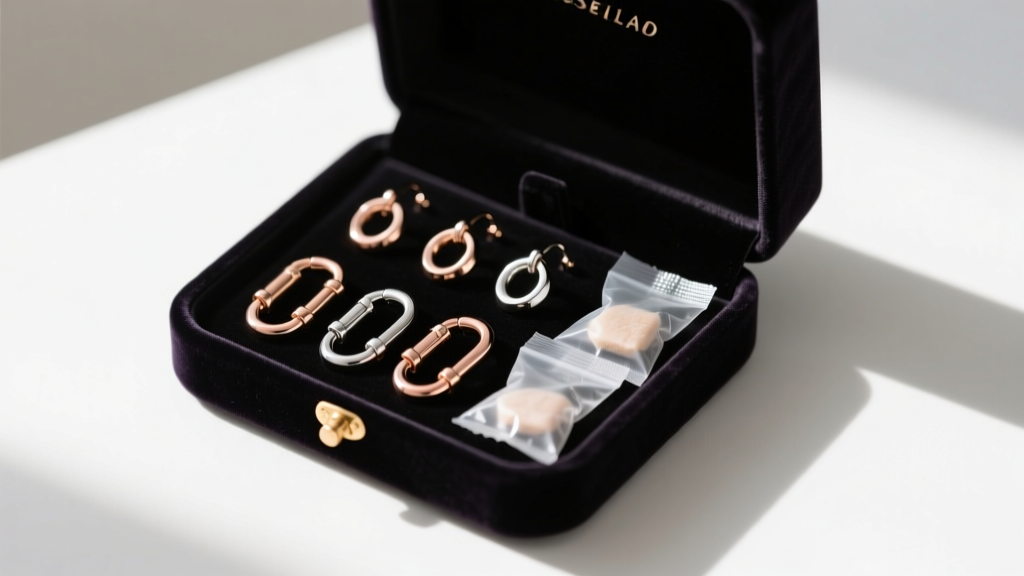
Proper storage is just as critical as cleaning. Carabiner earrings have protruding gates that easily snag on other jewelry, potentially bending the post or scratching softer metals. Store each earring individually in a soft flannel pouch or a compartmentalized jewelry box. Always include a small silica gel packet in your storage area to control ambient humidity, drastically reducing the risk of internal spring oxidation.
Finally, make it a habit to remove your carabiner earrings before swimming in chlorinated pools or hot tubs. Chlorine is highly reactive and can cause stress corrosion cracking in stainless steel alloys, particularly at the high-stress points of the spring hinge. By following these targeted maintenance steps, your utilitarian ear styling will remain functional, hygienic, and visually striking for years to come.


