How to Clean and Maintain Your Dangle Diamond Earrings
Learn expert techniques to clean, maintain, and store dangle diamond earrings. Discover prong care, safe solutions, and snag prevention tips.

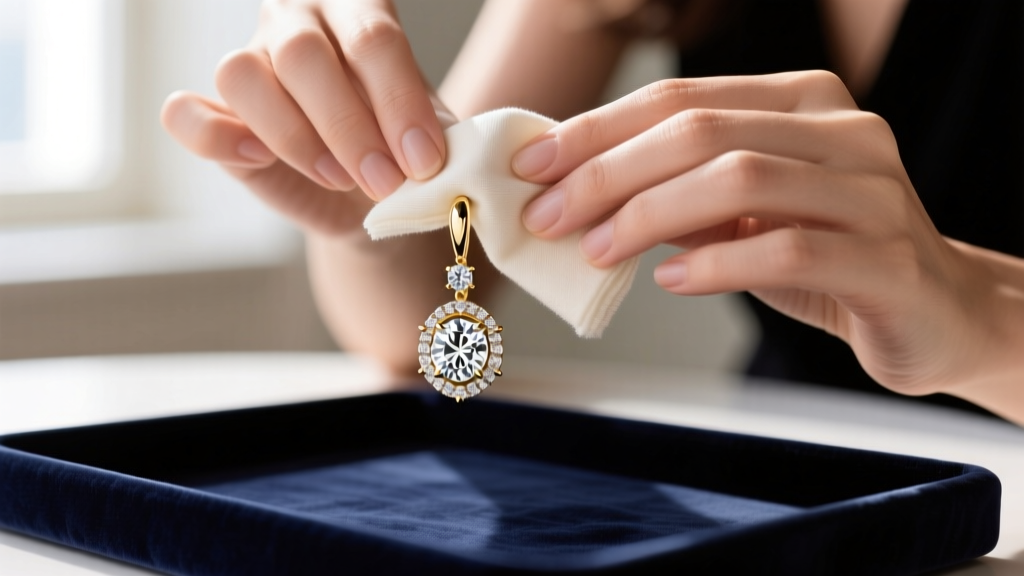
Dangle diamond earrings are a masterpiece of kinetic jewelry design. Unlike static studs, dangles move with you, catching the light from every angle. However, this constant articulation introduces unique mechanical stresses that demand specialized care. Whether you own a delicate 14k gold chain drop or a heavy 3-carat chandelier design, maintaining the structural integrity and optical brilliance of your earrings requires a proactive approach.
In this comprehensive guide, we break down the exact protocols jewelers use to clean, inspect, and store high-movement diamond earrings, ensuring they remain secure and luminous for decades.
The Anatomy of Vulnerability in Dangle Diamond Earrings
To properly care for dangle diamond earrings, you must first understand where they fail. The primary vulnerability lies in the articulation points—the jump rings, hinges, or soldered loops connecting the top stud to the dangling drop.
- Kinetic Stress: Every time you turn your head, the drop swings, exerting micro-tension on the top basket and connecting wire. Over time, this can cause metal fatigue, especially at the base of the fishhook wire or the top jump ring.
- Alloy Selection: While 18k gold is prized for its rich color and purity, it is relatively soft. For dangle earrings with thin, structural wires, 14k gold or platinum is often superior due to higher tensile strength and resistance to warping at the hinge points.
- Solder Joint Degradation: Exposure to chlorine (from pools or harsh household cleaners) causes stress corrosion cracking in gold alloys, specifically targeting the solder joints that hold the drop components together.
Prong Inspection: The Cotton Ball Test
Because dangle earrings frequently brush against hair, scarves, and collars, prongs are highly susceptible to lifting. A lifted prong won't just snag your clothing; it exposes the diamond's girdle to chipping.
How to perform the test: Take a clean, dry cotton ball and gently swipe it across the face of the diamonds. If the cotton fibers catch or pull, you have a lifted prong. Stop wearing the earring immediately and take it to a jeweler for tightening.
V-Prongs vs. Round Prongs
If your dangle earrings feature pear, marquise, or trillion-cut diamonds, they should be set with V-prongs at the pointed tips. V-prongs wrap around the sharp corners, protecting them from impact. During your annual inspection, ask your jeweler to check the V-prongs specifically, as they tend to wear down faster than round prongs due to their exposed geometry.
Manual vs. Ultrasonic Cleaning Protocols
Diamonds are naturally lipophilic, meaning they attract and hold onto oils from your skin, hair products, and lotions. This oil buildup creates a film on the pavilion (the bottom of the diamond), drastically reducing light return and making your dangles look dull.
The Safe Manual Cleaning Method
For routine maintenance, manual cleaning is the safest approach for all diamond types and settings.
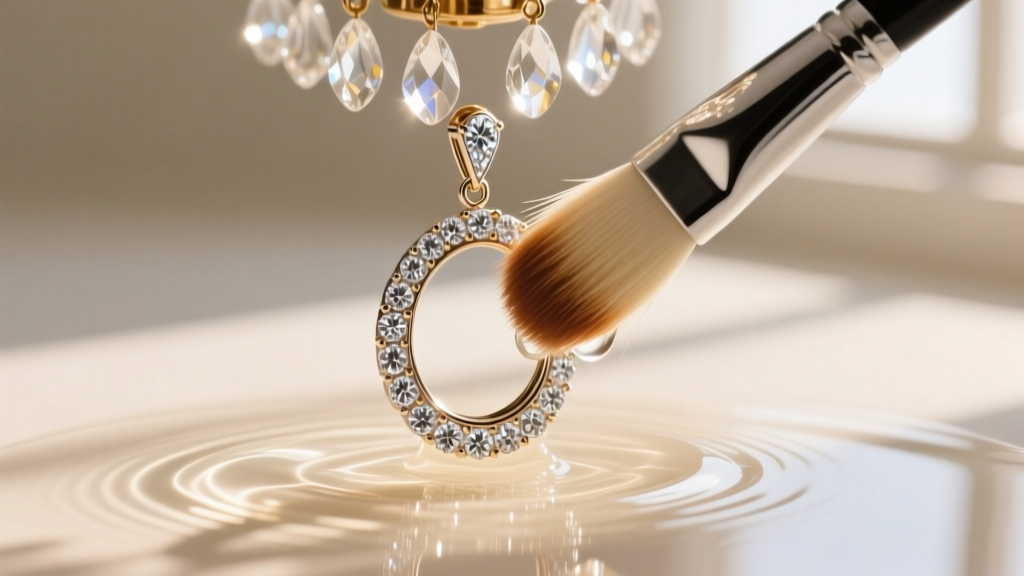
- Prepare the Solution: Mix 1 cup of distilled water with 2 drops of ammonia-free, mild dish soap (like original blue Dawn). Avoid soaps with heavy moisturizers, and strictly avoid ammonia, which can degrade certain alloy mixes or damage treated stones.
- Soak: Submerge the earrings for 15 to 20 minutes. This loosens the sebum and cosmetic buildup trapped in the gallery wire.
- Agitate: Use a baby toothbrush with ultra-soft bristles. Gently brush the underside of the diamonds and the intricate hinges. Never use hard bristles, as they can scratch the gold or platinum setting.
- Rinse and Dry: Rinse thoroughly under lukewarm distilled water. Pat dry with a lint-free microfiber cloth, ensuring no moisture is trapped in the articulation loops.
When to Use (and Avoid) Ultrasonic Cleaners
Ultrasonic cleaners use high-frequency sound waves to create microscopic cavitation bubbles that blast dirt from hard-to-reach crevices. While excellent for solid platinum or 14k/18k gold settings with untreated diamonds, they carry severe risks.
NEVER use an ultrasonic cleaner if your dangle diamond earrings contain:
- Clarity-Enhanced Diamonds: Diamonds that have been fracture-filled with glass-like resins will shatter or cloud permanently in an ultrasonic bath.
- Pavé Settings: The intense vibrations can loosen the tiny beads holding micro-pavé diamonds, causing them to fall out.
- Hollow Components: If the top stud or drop features hollowed-out gold for weight reduction, ultrasonic waves can cause the thin metal to collapse.
For a deeper dive into diamond durability and care, refer to the Gemological Institute of America (GIA) guidelines on gemstone maintenance.
Maintenance Schedule and Cost Estimates
Proactive maintenance is always cheaper than replacing a lost diamond. Below is a recommended care schedule for high-quality dangle diamond earrings, reflecting average industry pricing for 2026.
| Maintenance Task | Frequency | Estimated Cost | Execution |
|---|---|---|---|
| Mild Soap Soak & Brush | Bi-weekly | $0 | DIY |
| Prong Tightening & Inspection | Annually | $25 - $60 per head | Professional Jeweler |
| Rhodium Replating (White Gold) | 12 - 18 months | $45 - $95 | Professional Jeweler |
| Ultrasonic Deep Clean | Bi-annually | $0 - $25 | DIY / Jeweler |
| Jump Ring / Hinge Laser Welding | As needed | $75 - $150 | Professional Jeweler |
Safe Storage and Travel Protocols
Improper storage is the leading cause of cosmetic damage to fine jewelry. Diamonds rank a 10 on the Mohs scale of hardness. This means a diamond can easily scratch the gold or platinum setting of your earrings, and more importantly, diamonds can scratch each other's girdles if they knock together in a drawer. Paper-thin girdles are particularly prone to chipping if struck by another diamond's sharp culet.
The Tangle Factor
Dangle earrings are notorious for tangling, especially those with fine chain elements or multiple articulation points. When a delicate chain knots, pulling it tight can stretch the gold links or snap the jump ring.
Best Practices for Storage:
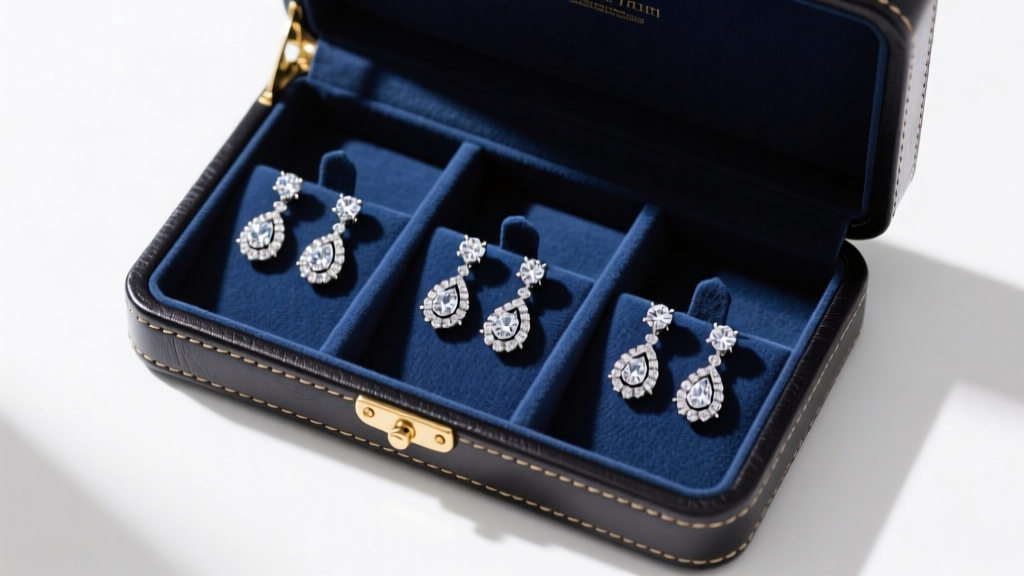
- Individual Pouches: Store each pair in its own soft, anti-tarnish flannel or microfiber pouch. This prevents diamond-on-diamond contact and limits exposure to sulfur in the air, which tarnishes silver and lower-karat gold alloys.
- Rigid Dividers: If using a jewelry box, ensure the slots are lined with soft felt and are deep enough that the dangles can hang or lay flat without bending the post.
- Travel Security: When traveling, use a hard-shell jewelry case with a secure clasp. For extra security, thread the earring post through a small piece of a plastic straw or a specialized silicone earring back to prevent the drop from slipping off the post if the case is jostled.
For additional insights on preserving the finish and structural integrity of precious metals, Blue Nile's jewelry care resources offer excellent guidelines on handling fine gold and platinum settings.
Professional Servicing: What to Ask Your Jeweler
When you take your dangle diamond earrings in for their annual check-up, don't just ask for a 'clean and check.' Be specific about the kinetic nature of your jewelry. Request the following:
- Microscopic Prong Inspection: Ask the jeweler to examine the prongs under a 10x loupe or microscope to check for porosity or thinning metal.
- Hinge and Jump Ring Integrity: Have them test the tension of the jump rings. If a jump ring pulls open too easily, it needs to be replaced with a heavier gauge wire (e.g., 18-gauge or 16-gauge) or soldered shut.
- Laser Welding over Torch Soldering: If a jump ring or hinge is broken, request laser welding. Traditional torch soldering requires heating the entire piece, which can cause thermal shock to the diamonds. Laser welding is highly localized and safe near gemstones.
- Post and Butterfly Back Check: The friction backs (butterfly backs) on dangle earrings wear out faster than those on studs because the swinging motion gradually widens the hole in the metal clutch. Ask for new silicone or heavy-duty friction backs if the earring feels loose on your lobe.
By treating your dangle diamond earrings as precision mechanical instruments rather than static accessories, you ensure their brilliance and structural safety for a lifetime of wear.


