The Complete Cleaning Guide for Silicone Back Earrings
Discover expert tips to clean, maintain, and replace silicone back earrings. Prevent ear odor, infections, and lost jewelry with our deep-care guide.

Silicone back earrings have completely transformed the landscape of everyday jewelry wear. Whether you are a side sleeper tired of metal butterfly clutches digging into your neck, or someone managing heavy statement pieces that require a high-friction grip, silicone friction backs (often called clutches or bullets) offer unparalleled comfort and security. However, this comfort comes with a hidden hygiene trap. Because of their unique material properties and the way they interface with the earlobe, silicone backs require a highly specific maintenance routine to prevent bacterial buildup, material degradation, and the dreaded 'ear cheese' odor.
In this comprehensive 2026 care guide, we bypass generic jewelry advice and dive deep into the material science, exact cleaning protocols, and failure modes of silicone earring backs. If you want to protect your earlobe health and keep your favorite studs secure, this is the only maintenance framework you will ever need.
The Material Science: Why Silicone Degrades and Traps Bacteria
To properly care for silicone back earrings, you must first understand what they are actually made of. True medical-grade silicone is a synthetic elastomer made from silica. Unlike cheap TPU (thermoplastic polyurethane) or PVC rubber blends that are frequently mislabeled as 'silicone' in fast-fashion jewelry, platinum-cured silicone is highly biocompatible and hypoallergenic. According to the National Center for Biotechnology Information (NCBI), medical-grade silicone rarely triggers contact dermatitis on its own.
However, silicone is micro-porous. At a microscopic level, its surface features tiny fissures that are perfect traps for sebum (skin oils), dead skin cells (desquamation), and environmental dust. When this organic matter mixes with the natural warmth and moisture behind the earlobe, it creates an ideal breeding ground for Staphylococcus aureus and Corynebacterium—the bacteria responsible for foul odors and localized earlobe infections. Furthermore, exposure to the natural acids in human sweat and the chemical compounds in hair sprays or perfumes can cause the plasticizers in lower-grade silicone to leach out, leading to a sticky, degraded texture.
The Step-by-Step Cleaning Protocol
Throwing your silicone backs into a glass of rubbing alcohol is a common mistake. While 70% isopropyl alcohol is an excellent disinfectant—as noted by CDC guidelines on sanitization—frequent alcohol exposure breaks down the polymer chains in silicone, causing it to dry out, crack, and lose its gripping tension. Instead, follow this tiered maintenance protocol.
1. The Daily Wipe (Post-Wear)
Every time you remove your earrings, wipe the silicone clutch with a lint-free microfiber cloth slightly dampened with distilled water. This removes the top layer of fresh sebum and sweat before it can oxidize and harden inside the core channel of the back.
2. The Weekly Surfactant Soak
Once a week, your silicone backs need a deep clean. Avoid harsh chemical jewelry dips, which are formulated for metals and will destroy elastomers.
- Fill a small ceramic bowl with warm (not hot) water.
- Add two drops of a mild, unscented surfactant, such as Dr. Bronner’s Unscented Baby Castile Soap or a dedicated hypoallergenic eyelid cleanser.
- Soak the silicone backs for 5 to 7 minutes to loosen hardened sebum.
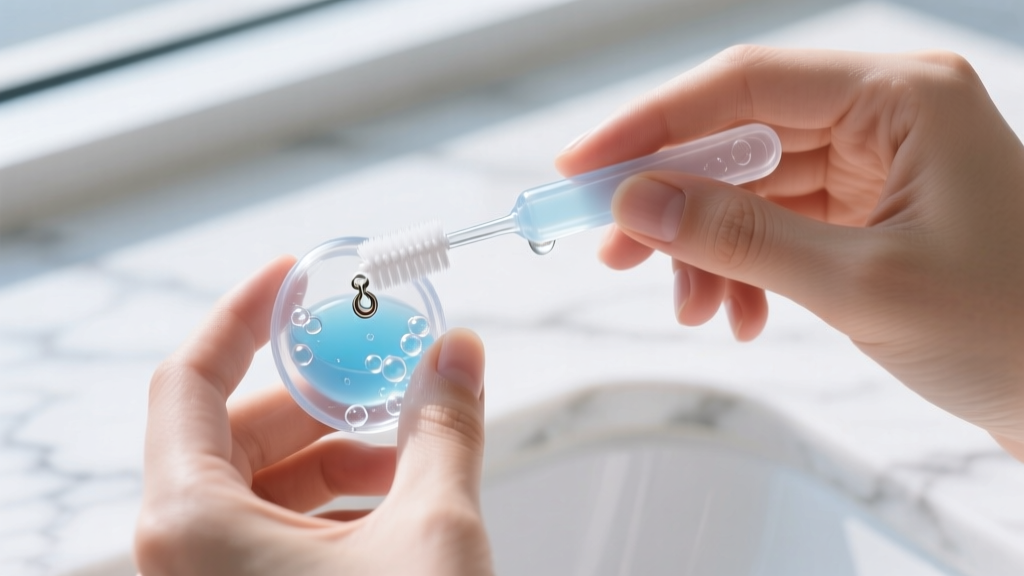
- The Core Channel Clean: This is the step most people miss. Take a 0.5mm soft-bristled interdental brush and gently slide it through the center hole of the silicone clutch. This physically extracts the compacted dead skin cells trapped inside the friction bore.
- Rinse thoroughly under distilled water and air dry on a clean paper towel.
3. The Monthly UV-C Sanitization
Boiling silicone backs is a risky internet myth; sustained high heat can warp the inner bore, ruining the friction fit. Instead, utilize a UV-C jewelry sanitizer box. UV-C light (specifically at the 254 nm wavelength) effectively destroys the DNA of bacteria and fungi trapped in the micro-fissures of the silicone without causing any physical or chemical degradation to the elastomer.
Ultrasonic Cleaners: A Warning for Silicone
Ultrasonic cleaners are fantastic for diamond studs and solid gold hoops, but they are highly detrimental to silicone back earrings. Ultrasonic machines work via cavitation—creating microscopic vacuum bubbles in the liquid that violently collapse and create shockwaves. While this blasts dirt out of metal crevices, these same shockwaves cause micro-tears in soft elastomers (specifically those with a Shore A hardness of 40-50, which is standard for earring backs). Over time, ultrasonic cleaning will turn your smooth silicone backs into a porous sponge that harbors even more bacteria.
Recognizing Silicone Failure Modes: When to Replace
Silicone backs are not lifetime accessories; they are consumable components. Even with meticulous care, the elastomer will eventually fail. Inspect your backs monthly for these three critical failure modes:
- Loss of Elasticity (Bore Stretch): The inner channel of a new silicone clutch is engineered to be slightly smaller than the earring post to create friction. If a 0.8mm (20-gauge) post slides in without a distinct 'pop' or resistance, the silicone has stretched beyond its yield point. The earring is now at high risk of falling out.
- Tackiness and Leaching: If the silicone feels sticky or leaves a residue on your fingers, the polymer is breaking down and leaching uncured oligomers or plasticizers. Discard them immediately, as this sticky surface will harbor aggressive bacterial colonies.
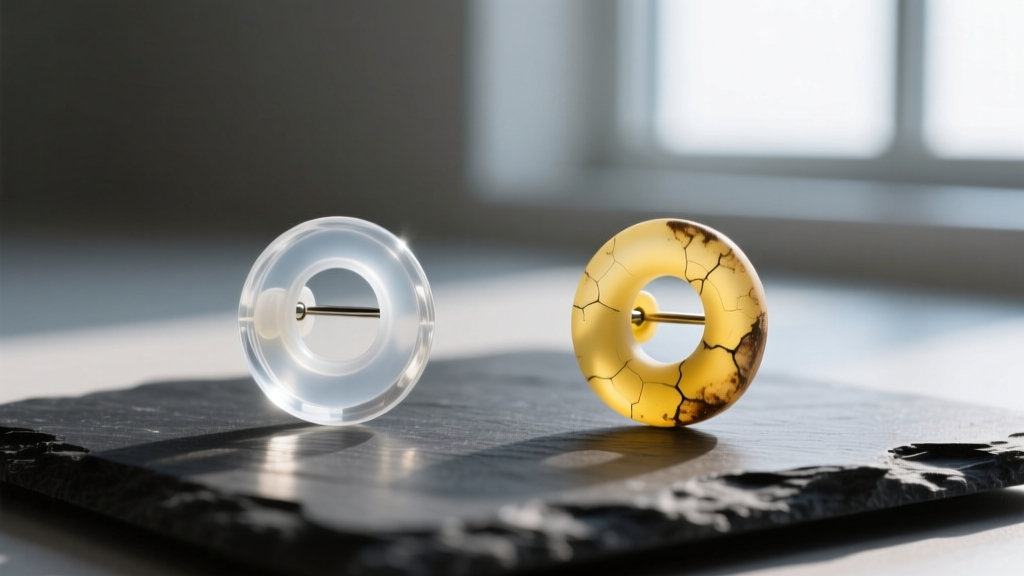
- Yellowing and Opacity: While clear silicone naturally yellows slightly over time due to UV exposure and oxidation, a deep amber color combined with a stiff, brittle texture indicates severe material degradation.
Material Comparison: Silicone vs. Traditional Backs
Understanding how silicone compares to other earring back materials helps contextualize its specific care requirements and lifespan.
| Material Type | Porosity & Hygiene | Recommended Cleaning Agent | Average Lifespan |
|---|---|---|---|
| Medical-Grade Silicone | Micro-porous; traps sebum | Mild Surfactant & UV-C | 3 to 6 Months |
| Titanium Butterfly | Non-porous; easy to wipe | 70% Isopropyl Alcohol | 5+ Years |
| Acrylic / Plastic | Low porosity; prone to cracking | Warm Soapy Water | 1 to 2 Months |
| Gold-Plated Brass | Non-porous; plating wears off | Polishing Cloth (No liquids) | 1 to 3 Years |
Gauge Sizing and Friction Compatibility
A major cause of premature silicone back failure is using the wrong gauge size. Standard earlobe piercings are typically done at 20-gauge (0.81mm) or 18-gauge (1.02mm). Most commercial silicone backs are molded with an inner bore diameter of 0.9mm, designed to grip a 20G post tightly while accommodating an 18G post with moderate tension.
If you have stretched lobes or wear cartilage jewelry with 16-gauge (1.29mm) or 14-gauge (1.63mm) posts, forcing a standard silicone back onto the post will cause immediate micro-tearing of the inner channel. For larger gauges, you must source specialized 'wide-bore' silicone clutches specifically molded for 16G and 14G posts. Attempting to stretch a 20G silicone back over a thicker post compromises the structural integrity of the elastomer and guarantees the earring will slip out within hours.
Preventing Contact Dermatitis and 'Ear Cheese'
The foul odor commonly referred to as 'ear cheese' is not actually a sign of infection, but rather the smell of butyric acid produced by bacteria breaking down trapped sebum and dead skin. Because silicone backs cover the posterior of the earlobe completely, they create an occlusive environment that limits airflow and traps moisture.
To mitigate this, adopt the 'dry earlobe' rule. Never insert an earring into a freshly pierced or wet earlobe and immediately cap it with a silicone back. Ensure the skin is bone-dry before securing the clutch. Additionally, if you are prone to contact dermatitis or have nickel allergies, ensure that the metal post of your earring is made of implant-grade titanium (ASTM F-136) or solid 14k/18k gold. While the silicone back itself is hypoallergenic, if the metal post contains nickel, the occlusive nature of the silicone back will trap the nickel salts against your skin, accelerating an allergic reaction.
Final Thoughts on Earlobe Hygiene
Silicone back earrings remain the gold standard for comfort, security, and sleep-friendly wear. However, treating them as permanent fixtures rather than replaceable hygiene components is a recipe for localized infections and lost jewelry. By implementing a mild surfactant cleaning routine, utilizing UV-C sanitization, and respecting the material limits of the elastomer, you can enjoy the unmatched comfort of silicone clutches while keeping your earlobes perfectly healthy. Remember to audit your jewelry box every six months, discard any backs showing signs of tackiness or bore stretch, and always match your silicone clutch to the exact gauge of your earring post.


