How to Clean and Store Christmas Stud Earrings Safely
Learn expert cleaning and storage methods for Christmas stud earrings. Protect enamel, vermeil, and gemstones during the 11-month off-season.

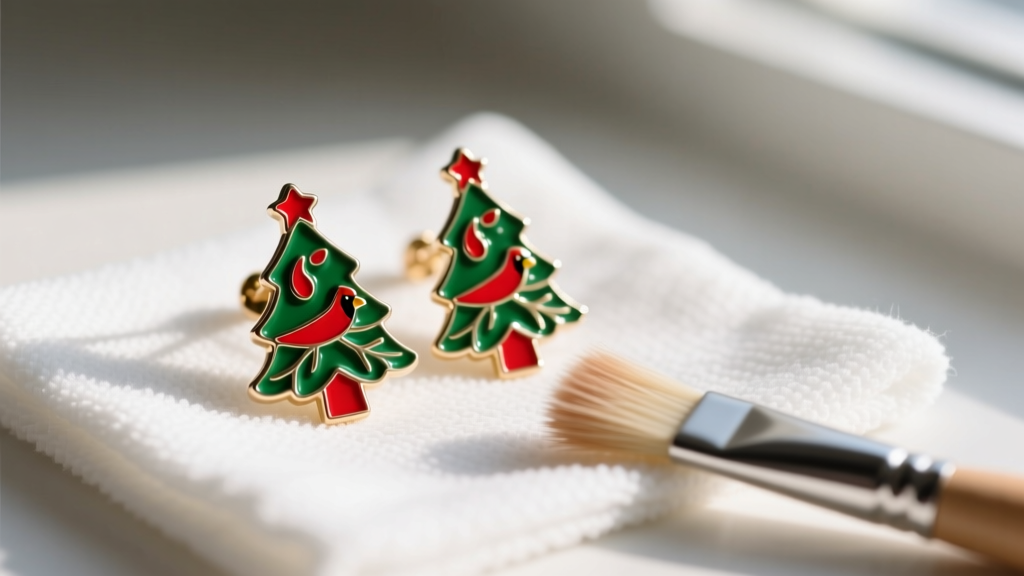
Christmas stud earrings are more than just seasonal accessories; they are wearable holiday traditions. Whether you own heirloom garnet studs, festive cold-enamel Christmas trees, or sparkling cubic zirconia snowflakes, these pieces face a unique lifecycle. Unlike everyday jewelry, holiday studs are typically worn for a few weeks in December and then relegated to dark storage boxes for the remaining eleven months of the year. This extreme cycle of wear and dormancy creates specific vulnerabilities, from accelerated tarnish to adhesive degradation.
To ensure your festive jewelry remains brilliant for decades, you must adopt a specialized post-holiday care protocol. This guide details the exact cleaning solutions, material-specific handling techniques, and long-term storage environments required to preserve your Christmas stud earrings.
The Unique Vulnerabilities of Holiday Jewelry
Before applying any cleaning solution, it is critical to understand how Christmas stud earrings are manufactured and where their failure points lie. Holiday jewelry often prioritizes visual impact and affordability over heirloom durability, leading to specific material sensitivities.
Flash Plating vs. True Vermeil
Many festive gold-toned studs are marketed as 'gold vermeil.' However, according to the Federal Trade Commission Jewelry Guides, true vermeil requires a sterling silver base plated with at least 2.5 microns of 10k (or higher) gold. Budget-friendly holiday studs often use 'flash plating'—a layer as thin as 0.1 to 0.5 microns over brass or copper. This ultra-thin layer is highly susceptible to friction wear and chemical stripping, meaning aggressive polishing will remove the gold finish entirely, exposing the base metal to rapid oxidation.
Enamel Micro-Fractures
Red and green enamel details are staples of Christmas stud earrings. Most modern holiday pieces use cold enamel (an epoxy-based resin) rather than vitreous enamel (fused glass). Cold enamel is softer and prone to micro-fractures if exposed to sudden temperature changes or ultrasonic vibrations. Once a micro-fracture occurs, moisture seeps beneath the resin, causing it to lift and peel from the metal backing.
Adhesive Degradation in Rhinestone Settings
Unlike fine diamonds set in metal prongs, the glass rhinestones and acrylic gems in holiday studs are frequently secured with industrial jewelry adhesives. These glues break down when exposed to alcohols, ammonia, or prolonged humidity, leading to lost stones the moment you take the earrings out of storage the following year.
Step-by-Step Post-Holiday Cleaning Protocol
Once the holiday season ends, your earrings will have accumulated skin oils, perfume residue, and environmental pollutants. These residues act as a catalyst for tarnish and corrosion during storage. Follow this precise cleaning protocol to neutralize these contaminants.
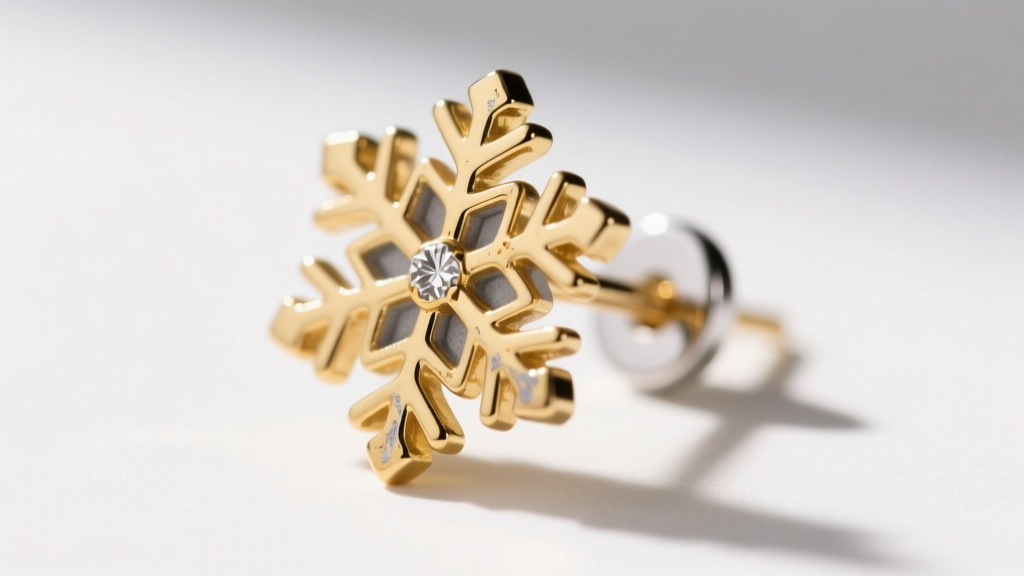
1. The Distilled Water Surfactant Bath
Never use tap water, as the dissolved minerals and chlorine can leave microscopic water spots and react with base metals. In a small glass bowl, mix 1 cup of distilled water with three drops of a pH-neutral, lotion-free dish surfactant (such as original Dawn). Stir gently to avoid creating excessive suds.
2. Targeted Agitation
Submerge your Christmas stud earrings for exactly three to five minutes. This short window is enough to loosen sebum and cosmetic buildup without compromising water-sensitive adhesives. Using an extra-soft baby toothbrush (with 0.12mm bristles), gently sweep the bristles across the surface of the studs. Pay special attention to the junction where the earring post meets the decorative face, as this crevice traps the most debris.
3. Capillary Drying
Rinse the studs briefly under a slow stream of distilled water. Do not rub them with a towel, as friction can scratch soft cold enamel or dislodge glued stones. Instead, place the earrings on a lint-free microfiber cloth and use a hairdryer on the 'cool' setting from a distance of 12 inches to evaporate trapped moisture. Ensure the earring posts and clutch backs are completely bone-dry before storage.
What to Avoid at All Costs
- Ultrasonic Cleaners: The high-frequency cavitation bubbles will shatter cold enamel and shake rhinestones loose from their adhesive beds.
- Silver Dip Solutions: These highly acidic thiourea-based liquids will instantly strip flash-plated gold and cloud the foil backing of glass rhinestones.
- Alcohol Wipes: Isopropyl alcohol dissolves the cyanoacrylate adhesives used in holiday jewelry settings.
Material-Specific Care Matrix
Because Christmas stud earrings feature a wide variety of materials, a one-size-fits-all approach is dangerous. Use the matrix below to tailor your maintenance strategy to your specific pieces.
| Material | Primary Risk | Approved Cleaning Agent | Storage Requirement |
|---|---|---|---|
| Gold Vermeil (2.5μ+) | Silver sulfide tarnish at wear points | Mild dish soap + distilled water | Anti-tarnish cloth pouch |
| Cold Enamel (Resin) | Micro-cracking, heat warping | Damp microfiber cloth only | Rigid, temperature-stable box |
| Glass Rhinestones | Adhesive failure, foil backing oxidation | Dry, soft-bristle brush | Low humidity (Silica gel) |
| Faux Pearls (Coated) | Coating peeling from acidity | Distilled water wipe-down | Separated from hard metals |
| Garnet / Peridot (Genuine) | Hard knocks, thermal shock | Warm soapy water | Individual soft slots |
The 11-Month Storage Strategy
The way you store your Christmas stud earrings dictates their condition next December. The primary enemy of dormant jewelry is atmospheric hydrogen sulfide, which reacts with copper and silver alloys to form black silver sulfide tarnish. The Library of Congress Preservation Department notes that controlling relative humidity and limiting exposure to sulfur-bearing pollutants are the most effective ways to halt metallic corrosion.
Upgrading Your Storage Environment
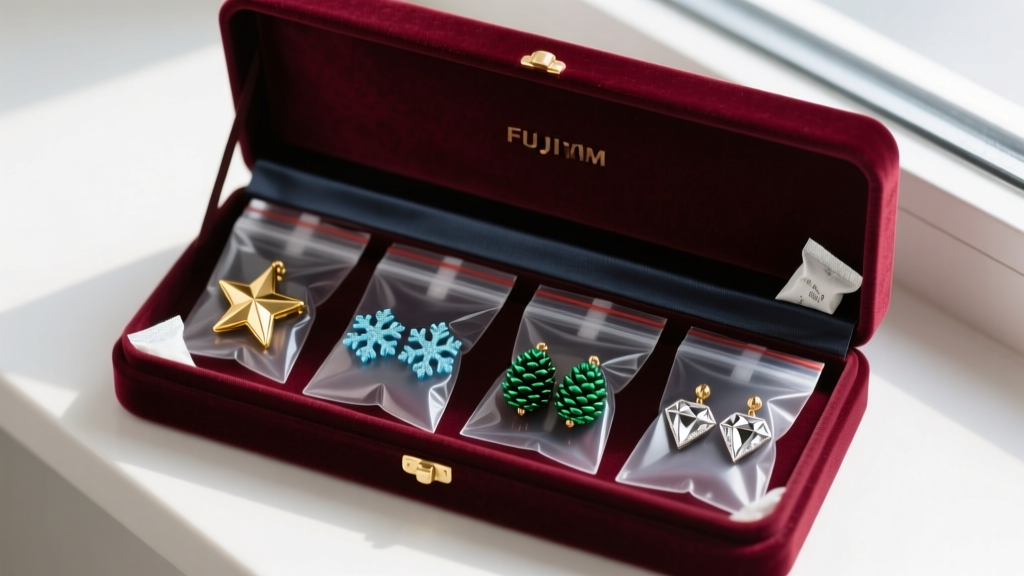
Discard the flimsy cardboard boxes or PVC plastic bags that holiday jewelry often comes in. Polyvinyl chloride (PVC) off-gasses acidic chemicals that accelerate tarnish and can permanently etch soft metals and pearls. Instead, adopt the following archival-grade storage method:
- Primary Containment: Place each pair of studs in an individual, 2-mil thick polyethylene zip bag. Polyethylene is chemically inert and will not off-gas.
- Tarnish Inhibition: Drop a 3M Anti-Tarnish strip or a piece of Pacific Silvercloth into each bag. These materials actively absorb and neutralize atmospheric sulfur before it reaches your earrings.
- Humidity Control: Add a small packet of indicating silica gel (the kind that changes color when saturated, rather than standard white silica) to the master storage box to keep relative humidity below 45%.
- Secondary Containment: Store the sealed polyethylene bags inside a lined wooden or velvet jewelry box, keeping them in a climate-controlled interior closet rather than an attic or basement where temperature fluctuations cause condensation.
Pre-Season Inspection Checklist
When November rolls around and you retrieve your Christmas stud earrings, perform this rapid mechanical inspection before wearing them to prevent loss or injury.
- Post Integrity Check: Inspect the earring posts. Most holiday studs use standard 20-gauge (0.81mm) or 18-gauge (1.02mm) posts. Look for bending or micro-cracks at the solder joint where the post meets the earring face. A compromised solder joint will snap under the pressure of pushing on a tight earring back.
- Stone Security Audit: Gently run a piece of thin silk thread or a soft cotton swab over the surface of rhinestone and gemstone studs. If the thread snags, a prong is lifted or a stone has partially unseated from its adhesive bed.
- Clutch Back Tension: Test the friction of your butterfly clutch backs. Over time, the metal loops stretch out. Use a pair of flat-nose jewelry pliers to gently squeeze the loops closer together, restoring the tension required to keep the earring securely on your lobe. Alternatively, upgrade to medical-grade silicone O-ring backs, which provide superior grip and distribute pressure more evenly across the earlobe.
By treating your Christmas stud earrings with the same technical respect as fine jewelry, you ensure that these festive pieces remain vibrant, structurally sound, and ready to shine for every holiday season to come.


