Expert Care and Cleaning Guide for Teal Stud Earrings
Discover material-specific cleaning protocols for teal stud earrings. Learn how to safely maintain turquoise, anodized titanium, and enamel.

The Hidden Complexity of Teal Jewelry
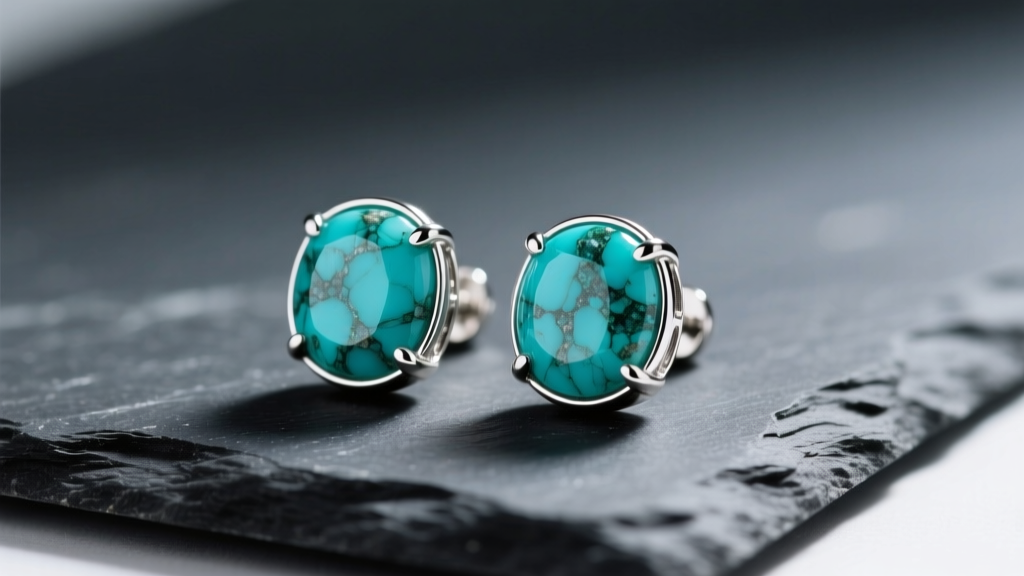
When you purchase a pair of teal stud earrings, you are buying into one of the most universally flattering color profiles in jewelry. Teal bridges the gap between calming blues and revitalizing greens, making it a staple for both everyday lobe wear and specialized cartilage piercings. However, from a gemological and metallurgical perspective, 'teal' is merely a color descriptor, not a material. The care required to maintain your studs depends entirely on the underlying substrate.
A one-size-fits-all approach to jewelry cleaning is the fastest way to ruin your pieces. Dropping porous turquoise into an ultrasonic cleaner will fracture its internal matrix, while using a silver polishing cloth on anodized titanium will physically strip the microscopic oxide layer responsible for its teal hue. In this guide, we break down the exact chemical and physical vulnerabilities of teal materials and provide actionable, professional-grade maintenance protocols.
Identify Your Teal: Material-Specific Vulnerabilities
Before applying any cleaning agent, you must accurately identify the material of your teal studs. The three most common teal materials in modern stud earrings each possess distinct failure modes.
1. Porous Gemstones (Turquoise, Amazonite, Chrysocolla)
Natural turquoise is the most common organic teal gemstone. Rated between 5 and 6 on the Mohs hardness scale, turquoise is a hydrous phosphate of copper and aluminum. Its defining vulnerability is its porosity. The stone readily absorbs sebum, lotions, and household chemicals. Furthermore, the copper content means that prolonged exposure to moisture and acids (like human sweat) will cause oxidation, slowly shifting the vibrant teal to a muddy, dark green. According to the Gemological Institute of America (GIA), porous stones must never be exposed to harsh chemicals, steam, or ultrasonic cavitation.
2. Anodized Titanium (Implant-Grade Ti-6Al-4V)
In the body jewelry sector, teal is frequently achieved through the anodization of implant-grade titanium. This is not a dye or a paint; it is a controlled oxidation process. By running an electrical current through the titanium in an electrolyte bath, a transparent oxide layer is grown on the surface. A teal color specifically requires an oxide layer thickness of exactly 110 to 120 nanometers. Because the color relies on light interference through this microscopic layer, any abrasive action will scratch the oxide off, permanently reverting the metal to its raw grey state or shifting it to a lower-voltage color like purple or gold.
3. Teal Enamel (Vitreous vs. Cold Epoxy)
Enamel studs offer a glossy, opaque teal finish. Vitreous enamel is essentially fused glass and is highly durable, though prone to chipping if dropped on tile. Cold enamel (epoxy resin), which is more common in affordable fashion jewelry, is highly susceptible to UV degradation and will yellow or become brittle over time when exposed to direct sunlight or harsh alcohol-based cleaners.
The Material-Specific Cleaning Matrix
Use the following decision matrix to determine the safest cleaning protocol for your specific pair of teal stud earrings.
| Material | Safe Cleaning Agents | Recommended Tools | Strict Prohibitions |
|---|---|---|---|
| Natural Turquoise | Distilled water (sparingly) | Dry, soft-bristled baby toothbrush | Ultrasonic cleaners, ammonia, steam, soap |
| Anodized Titanium | Mild, fragrance-free liquid surfactant | Lint-free microfiber cloth, fingertips | Polishing cloths, abrasives, ultrasonic |
| Teal Cubic Zirconia | Isopropyl alcohol, mild dish soap | Soft brush, ultrasonic (if bezel set) | Chlorine bleach (can pit the setting) |
| Cold Enamel (Epoxy) | Damp microfiber cloth | Wooden toothpick for crevices | Alcohol, acetone, hot water, UV exposure |
Step-by-Step Deep Cleaning Protocols
Protocol A: The Dry-Brush Method (For Turquoise & Enamel)
For porous stones and delicate epoxies, moisture is the enemy. The goal is to mechanically dislodge dead skin cells and cosmetic dust without driving them deeper into the stone's pores.
- Remove the earrings and place them on a clean, dry paper towel.
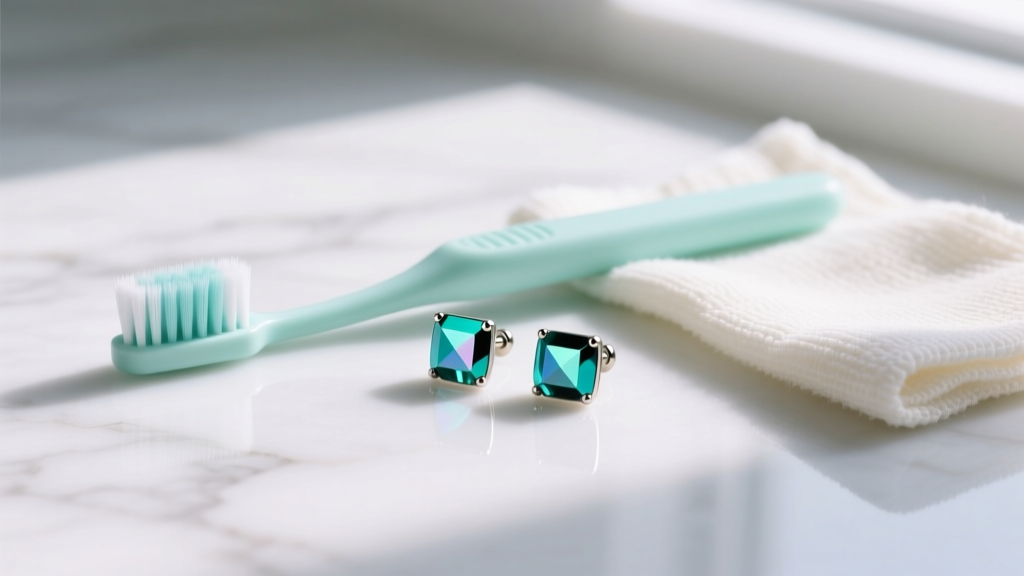
- Take a brand-new, extra-soft baby toothbrush. Do not use a brush that has been exposed to toothpaste, as the mild abrasives (like hydrated silica) will micro-scratch the teal enamel or turquoise polish.
- Gently sweep the bristles across the surface of the stone and into the bezel or prong settings where the gem meets the metal.
- Use a wooden toothpick to carefully scrape out any compacted sebum or lotion trapped in the gallery (the space beneath the stone). Metal tools will scratch the gold or silver backing.
- Buff the metal post with a dry microfiber cloth, avoiding the stone itself.
Protocol B: The Mild Surfactant Soak (For Titanium & CZ)
For non-porous materials like anodized titanium or teal cubic zirconia, a gentle chemical lift is required to break down body oils.
- Create a cleaning bath using lukewarm distilled water and two drops of fragrance-free, dye-free dish soap (such as Dawn Free & Clear).
- Submerge the earrings for no more than 3 to 5 minutes. Prolonged soaking can weaken the adhesive used in some CZ settings.
- Gently agitate the water with your fingers. Do not rub the anodized titanium with a brush, as even soft bristles can create micro-marring on the 110-nanometer oxide layer.
- Rinse thoroughly under a gentle stream of distilled water to prevent hard water spots.
- Pat dry immediately with a lint-free microfiber cloth. Allow to air dry completely on a paper towel before reinserting into the ear to prevent trapped moisture from causing contact dermatitis.
Hardware Maintenance: The Hidden Failure Points
The gemstone may be the focal point, but the hardware is where hygiene and structural failures occur. Most teal stud earrings are manufactured with either 20-gauge (0.81mm) or 18-gauge (1.02mm) posts. The primary maintenance issue lies with the earring back.
Friction Backs vs. Screw Backs
Standard push-back friction earrings feature a small metal scroll with a central tube. This tube is a notorious trap for keratin, sebum, and hair products. Over time, this buildup hardens, making the back difficult to remove and creating a breeding ground for bacteria. According to dermatological guidelines on piercing hygiene from the Mayo Clinic, keeping the jewelry hardware free of biological debris is critical to preventing localized infections and allergic contact dermatitis.
The Fix: Once a week, take a wooden toothpick and gently ream out the inside of the friction back's tube. If the buildup is severe, soak just the metal backs (not the teal gemstone) in a small cap of isopropyl alcohol for 10 minutes to dissolve the lipids, then rinse and dry.
Thread Stripping on Screw Backs
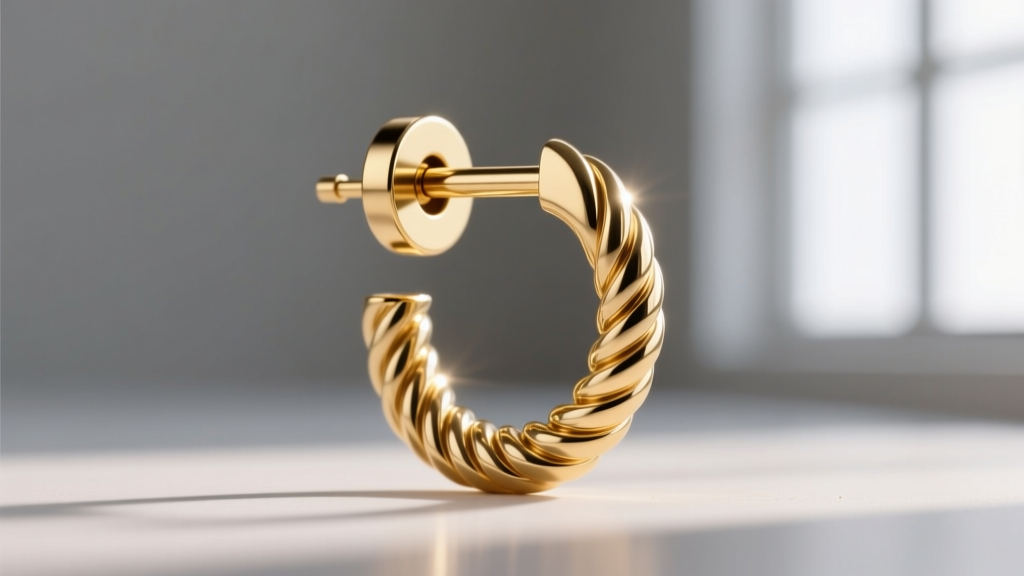
If your teal studs feature threaded screw backs (common in high-end cartilage jewelry), you must be meticulous about cross-threading. Forcing a 1.0mm threaded post into an internally threaded back at an angle will strip the microscopic threads. Always back the screw up slightly until you feel a subtle 'click' indicating the threads have aligned, then twist forward gently. If the threads become clogged with debris, use a soft brush and alcohol to clean the post grooves rather than forcing the back on.
Storage and Environmental Degradation
How you store your teal stud earrings when they are not in your ears dictates their lifespan.
- UV Protection: If your teal studs are made of dyed howlite (a common, inexpensive turquoise substitute) or cold enamel, prolonged exposure to direct sunlight will break down the chemical dyes, resulting in a faded, chalky appearance. Always store them in a closed, opaque jewelry box.
- Humidity Control: For natural turquoise and sterling silver settings, humidity accelerates oxidation. Store your studs in a sealed ziplock bag alongside a 3M anti-tarnish strip. The strip will absorb ambient sulfur compounds in the air, preventing the silver bezel from turning black and the turquoise from absorbing excess moisture.
- Isolation: Never toss your teal studs into a communal jewelry dish. Turquoise (Mohs 5-6) will easily be scratched by diamond, sapphire, or even quartz dust present on other jewelry pieces. Store them in individual soft flannel pouches.
When to Retire Your Teal Studs
Maintenance can only go so far. You should consider retiring or professionally refurbishing your teal studs if you notice the following irreversible failure modes:
- Spalling or Chalking: If the surface of a turquoise stud becomes rough, powdery, or begins to flake (spall), the structural integrity of the stone is compromised. It can no longer be safely cleaned and should be replaced to avoid inhaling or ingesting stone dust.
- Enamel Crazing: If you see a web of microscopic cracks (crazing) in teal enamel, moisture and bacteria will become permanently trapped beneath the surface. This poses a hygiene risk, especially for fresh or sensitive piercings.
- Post Bending: If a 20-gauge post has been bent and straightened multiple times, the metal has undergone work-hardening and is at a high risk of snapping off inside the earlobe. Have a jeweler laser-weld a new post before a catastrophic failure occurs.
By treating your teal stud earrings not just as colorful accessories, but as complex assemblies of specific minerals and metallurgical finishes, you ensure they remain vibrant, hygienic, and structurally sound for years of continuous wear.


