Wood Hoop Earrings Troubleshooting: Fix Warping, Cracks & Hardware
Learn how to troubleshoot common wood hoop earrings issues. Expert fixes for warping, splintering, moisture damage, and hardware irritation.

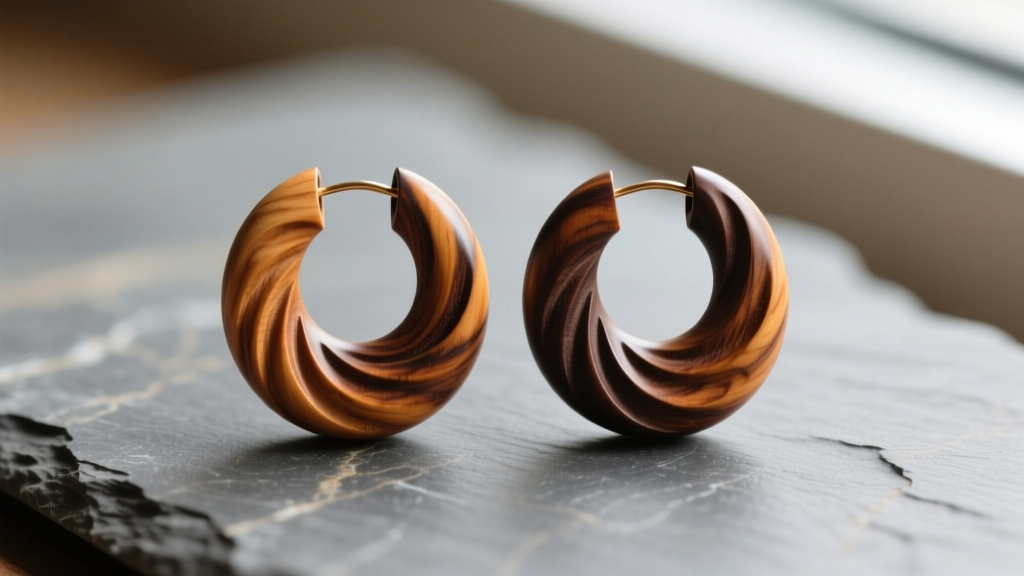
Wood hoop earrings offer an unmatched combination of lightweight comfort, organic beauty, and eco-friendly appeal. However, unlike inert metals or synthetic polymers, wood is a hygroscopic, living material that continues to react to its environment long after it has been carved and polished. As we navigate the shifting humidity levels and diverse climates of 2026, jewelry enthusiasts and artisans alike are facing a unique set of maintenance challenges with organic accessories.
If your favorite wooden hoops have lost their perfect circular shape, developed micro-splinters, or are causing unexpected earlobe irritation, the issue rarely lies in the design itself. Instead, it is usually a symptom of environmental mismatch, improper sealing, or substandard hardware pairing. This comprehensive troubleshooting guide will walk you through the exact material science and practical repair techniques required to restore and maintain your wood hoop earrings.
Diagnosing Moisture Damage and Warping
Wood absorbs and releases ambient moisture to reach equilibrium with its environment. When a wooden hoop earring is exposed to high humidity—such as being stored in a bathroom or worn during a humid summer commute—the cells on the exposed side of the wood can expand unevenly, causing the hoop to warp into an oval or figure-eight shape.
Bamboo (which is technically a grass) and highly porous woods like Mahogany are particularly susceptible to rapid moisture absorption, whereas dense, oily woods like Teak and Lignum Vitae resist warping but are not entirely immune.
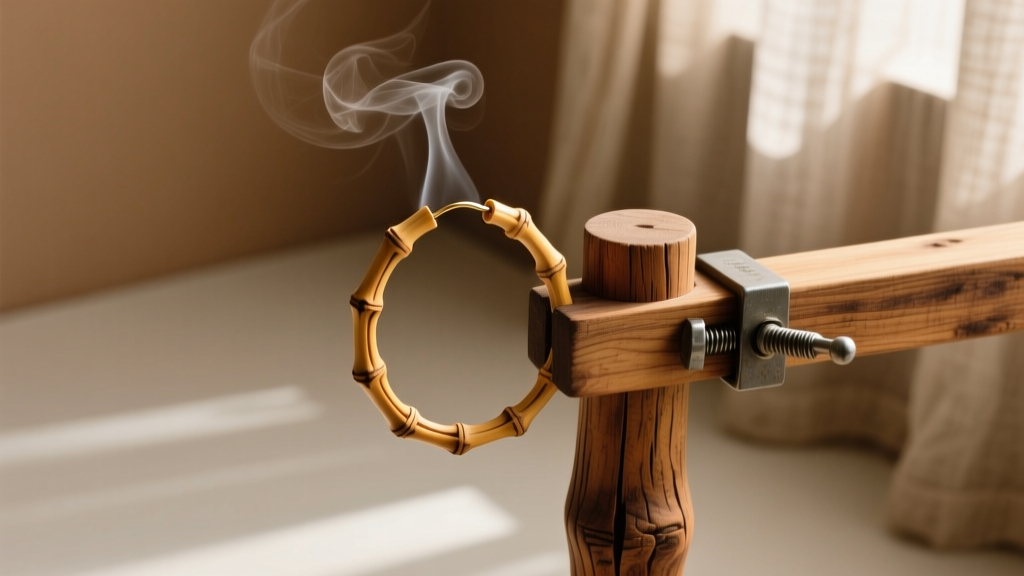
The Steam-and-Clamp Reshaping Protocol
Do not attempt to forcefully bend a warped wooden hoop back into shape at room temperature; the lignin binding the wood fibers will snap, resulting in a catastrophic fracture. Instead, use controlled heat and moisture to relax the fibers:
- Steam Application: Hold the warped section of the hoop over a gentle steam source (like a boiling kettle spout) for 30 to 45 seconds. You only want to soften the outer layers, not saturate the core.
- Jig Clamping: Immediately place the softened hoop onto a flat, heat-resistant wooden jig or a perfectly round cylindrical form that matches the original diameter.
- Cooling and Setting: Secure the hoop with gentle, even pressure using nylon-tipped clamps or heavy, soft-bound weights. Allow it to cool and dry completely for at least 12 hours. As the wood cools and dries, the lignin will re-harden, locking the hoop back into its true circular geometry.
Fixing Splinters, Cracks, and Surface Degradation
While warping is caused by excess moisture, surface cracking and splintering are the results of extreme dryness. In arid climates or during winter months when indoor heating drops ambient humidity below 20%, woods with high shrinkage rates (like Walnut and Cherry) will develop micro-fissures along the grain. These fissures not only ruin the aesthetic but pose a severe snagging hazard to hair and delicate fabrics.
The Micro-Abrasion and Resealing Framework
Repairing a splintered wood hoop requires a progressive sanding approach followed by the application of a specialized conservation-grade sealant. Avoid standard polyurethanes or hardware-store varnishes, which can peel and cause contact dermatitis.
- Progressive Sanding: Begin with an 800-grit micro-mesh pad to gently level the splintered area. Always sand with the grain, never against it. Progress to 1500-grit, and finish with 2000-grit to achieve a glass-like polish without the need for chemical buffers.
- Microcrystalline Wax Application: According to the Canadian Conservation Institute, microcrystalline waxes (such as Renaissance Wax) are the gold standard for sealing organic artifacts. Unlike carnauba or beeswax, microcrystalline wax does not bloom, turn white, or become tacky in high heat. Apply a microscopically thin layer with a lint-free cloth, let it haze for five minutes, and buff vigorously.
Hardware and Gauge Mismatches: The Hidden Irritants
A massive percentage of 'wood earring allergies' are actually contact dermatitis caused by the metal ear wire passing through the piercing, not the wood itself. Because wood is incredibly light, manufacturers often pair wooden hoops with cheap, heavy-gauge steel or brass wires to save costs. This creates a dual problem: the heavy wire drags on the earlobe, and the base metals leach nickel and copper into the piercing channel.
| Hardware Issue | Root Cause | Expert Troubleshooting Fix |
|---|---|---|
| Earlobe Dragging / Tearing | Using 16-gauge or thicker steel wire for large diameter hoops. | Swap to 20-gauge or 18-gauge wire. The wood provides the visual volume; the wire only needs to support its own minimal weight. |
| Itchy, Red Piercing Channels | Nickel or copper alloys in the ear wire causing contact dermatitis. | Replace wires with Implant-Grade Titanium (ASTM F136) or pure Niobium, which are biologically inert. |
| Wood Cracking at the Drill Hole | Wire gauge is too thick for the pre-drilled channel, creating radial pressure. | Ensure the drill bit used for the hoop channel is exactly 0.2mm wider than the wire gauge to allow for seasonal wood expansion. |
For those with highly sensitive piercings, the American Academy of Dermatology strongly recommends avoiding all white-gold and surgical steel alloys that contain nickel binders. Upgrading your wood hoop earrings with custom-bent Niobium ear wires is a permanent, hypoallergenic solution. As noted by Rio Grande Jewelry Supply, 20-gauge (0.81mm) wire is the standard for standard lobe piercings, offering the perfect balance of structural integrity and comfort without stretching the fistula.
Cleaning Mistakes That Ruin Organic Finishes
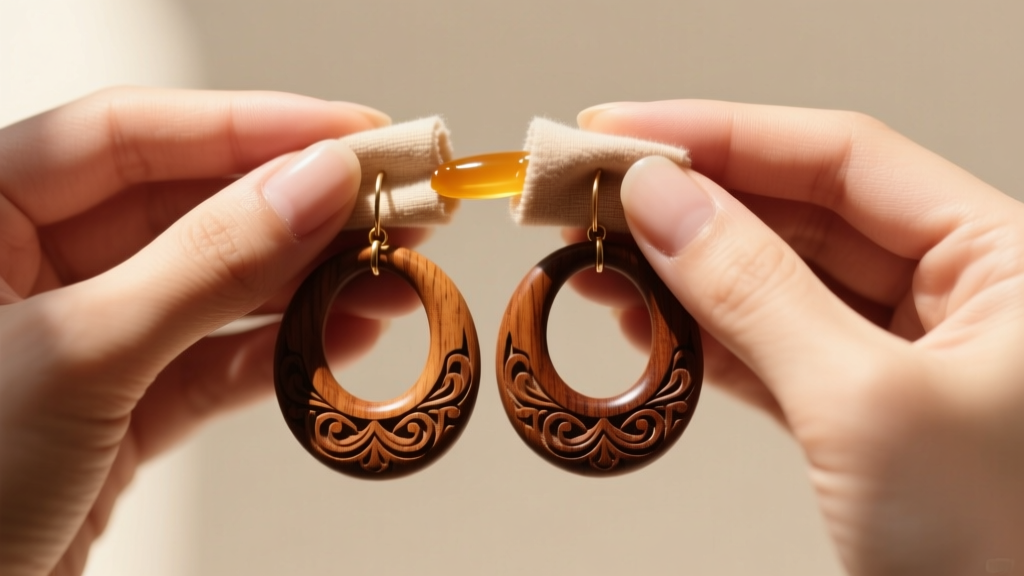
The most common way owners destroy their wood hoop earrings is by treating them like metal jewelry. Submerging wood in ultrasonic cleaners, wiping it down with isopropyl alcohol, or using commercial silver polishing cloths will instantly strip the natural oils and protective wax layers from the wood, leaving it brittle, gray, and prone to catastrophic shattering.
Rule of Thumb: If a cleaning solution is safe for your smartphone screen, it is likely too harsh for your wooden jewelry. Organic materials require pH-neutral, non-solvent cleaning methods.
The Correct Cleaning Method: Use a barely damp microfiber cloth with a single drop of unscented, pH-neutral castile soap to gently wipe away sebum and cosmetic residue from the ear wire and the immediate surrounding wood. Immediately dry the area with a separate, clean cloth. Once a month, reapply your microcrystalline wax to maintain the hydrophobic barrier.
Wood Type Vulnerability and Maintenance Matrix
Not all wood hoop earrings require the same level of vigilance. Understanding the specific species of your earrings will dictate your maintenance schedule.
| Wood Species | Density & Oil Content | Primary Vulnerability | Recommended Maintenance Frequency |
|---|---|---|---|
| Teak | High density, naturally oily | Surface dust accumulation; highly resistant to warping. | Waxing every 6-8 months. |
| Bamboo | Low density, fibrous grass | Severe warping in high humidity; edge splintering. | Monthly inspection; avoid bathroom storage entirely. |
| Walnut | Medium density, low natural oil | Micro-cracking in dry, heated indoor environments. | Bi-monthly conditioning with microcrystalline wax. |
| Ebony | Extremely high density, sinks in water | Thermal shock cracking if moved from extreme cold to heat. | Annual polishing; avoid leaving in hot vehicles. |
Preventative Storage Framework
How you store your wood hoop earrings when they are not on your ears is just as critical as how you wear them. Never toss wooden jewelry into a crowded drawer where metal zippers and harder gemstones can gouge the softer organic surface.
Store your hoops in a dedicated, soft-lined jewelry box equipped with a few silica gel desiccant packets to maintain a stable micro-climate with a relative humidity of around 40-50%. Keep the box out of direct UV sunlight, which will photo-degrade the lignin, causing dark woods like Walnut to bleach into an unattractive, pale yellow over time. By respecting the organic nature of the material and pairing it with high-quality, biocompatible hardware, your wood hoop earrings will remain a flawless, comfortable staple in your collection for decades.


