The Complete Care and Cleaning Guide for Coconut Earrings
Learn how to properly clean, oil, and store your coconut earrings to prevent cracking, mold, and tarnished hardware with our expert maintenance guide.

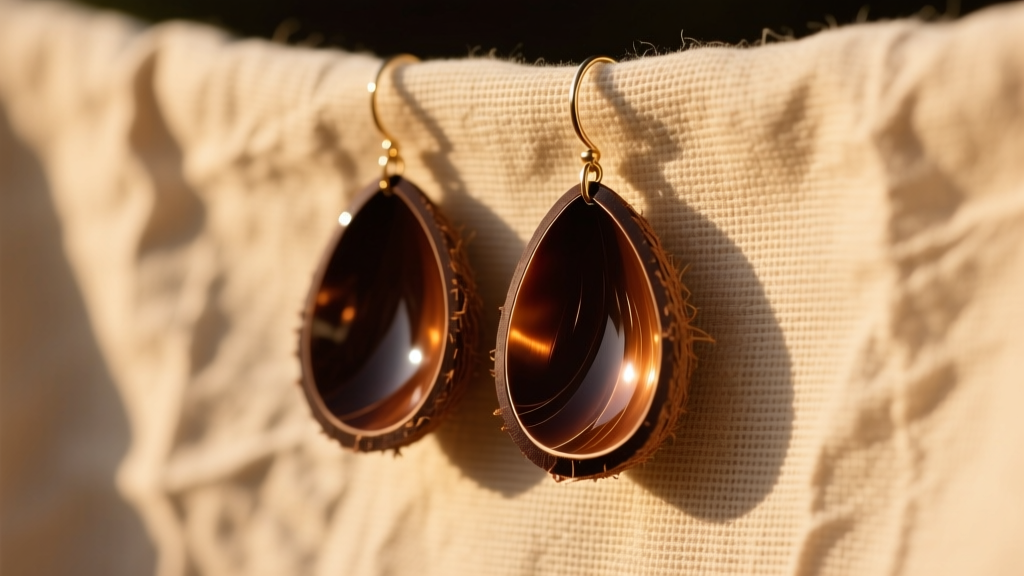
The Unique Anatomy of Coconut Shell Jewelry
As we move through 2026, sustainable and organic jewelry continues to dominate eco-conscious fashion, with coconut earrings remaining a staple for their lightweight, tropical aesthetic. However, caring for organic materials requires a fundamentally different approach than caring for mined gemstones or metals. According to the Gemological Institute of America (GIA), organic gem materials are inherently more sensitive to environmental stressors due to their biological origins.
Coconut shell (the endocarp) is incredibly dense and takes a beautiful, glass-like polish when sanded correctly. Yet, on a microscopic level, it remains porous. It contains natural lignins and residual oils that keep the material flexible and vibrant. When harvested, carved, and crafted into earrings, the shell loses its internal moisture equilibrium. Without proper maintenance, these micro-pores can absorb ambient pollutants, sweat, and cosmetics, leading to a dull, chalky appearance or, worse, structural degradation like micro-cracking and mold growth.
Daily Wear Precautions: What to Avoid
The longevity of your coconut earrings depends heavily on your daily wear habits. Because the shell is an organic polymer, it is highly reactive to certain chemicals and extreme environmental shifts.
- Chlorine and Saltwater: Never wear coconut shell earrings in swimming pools or the ocean. Chlorine actively breaks down the lignin structure, causing the shell to become brittle and prone to snapping. Saltwater can crystallize inside the micro-pores, creating internal pressure that leads to hairline fractures.
- Aerosols and Cosmetics: Hairsprays, perfumes, and sunscreens often contain high concentrations of alcohol and volatile organic compounds (VOCs). Alcohol strips the shell of its natural oils, accelerating the drying process. Always apply your cosmetics and allow them to dry completely before putting on your earrings.
- Extreme Heat: Avoid wearing these earrings in saunas or hot tubs. Rapid temperature fluctuations cause the organic fibers to expand and contract unevenly, which is the primary cause of warping and splitting in carved shell jewelry.
Step-by-Step Cleaning Routine for Coconut Earrings
Routine cleaning should be performed every two to three weeks, depending on how often you wear the pieces and your skin's natural oil production. Avoid commercial jewelry dips or ultrasonic cleaners, as the harsh chemicals and high-frequency vibrations will destroy the organic material.
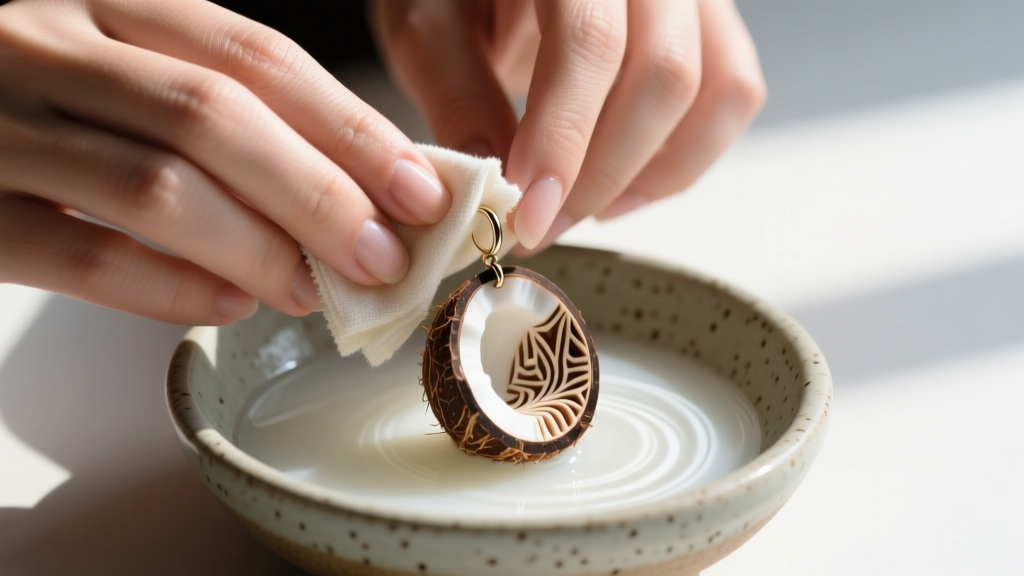
1. The Dry Dusting Phase
Before introducing any moisture, use a clean, dry, ultra-soft microfiber cloth or a soft-bristled makeup brush to gently sweep away surface dust, dead skin cells, and cosmetic residue. This prevents scratching the polished surface during the wet cleaning phase.
2. The Damp Wipe
Mix a small bowl of distilled water with a single drop of pH-neutral liquid castile soap (such as Dr. Bronner's). Distilled water is crucial here; tap water contains trace minerals and chlorine that can leave a white, chalky residue inside the shell's pores. Dampen a corner of your microfiber cloth in the solution—do not soak it—and gently wipe the surface of the coconut shell. Focus on the areas that touch your skin, such as the back of the earring and the post holes.
3. Immediate Drying
Never let coconut shell air-dry while wet. Immediately buff the earring dry with a clean, soft cotton towel. Do not use a hairdryer or place them in direct sunlight to speed up the process, as localized heat will cause rapid moisture loss and subsequent cracking.
Deep Conditioning: Oiling Your Coconut Shell
Cleaning removes surface dirt, but it also strips away some of the shell's natural protective barriers. To maintain the deep, rich brown color and prevent the material from drying out and chalking, you must periodically re-oil your coconut earrings. According to material finishing experts at The Wood Database, penetrating oils are essential for stabilizing organic, porous materials.
Apply a tiny drop of oil to a soft cloth and rub it into the shell using circular motions. Allow the oil to penetrate for 15 to 20 minutes, then buff off any excess. For heavily worn pieces, this should be done once a month; for occasionally worn pieces, once a quarter is sufficient.
Best Oils vs. Oils to Avoid
Not all oils are safe for organic jewelry. Using the wrong oil can lead to rancidity, sticky residue, or allergic reactions. Refer to the table below to select the correct conditioning agent.
| Oil Type | Verdict | Why? |
|---|---|---|
| Fractionated Coconut Oil | Excellent | Stays liquid, will not go rancid, and penetrates deeply without leaving a sticky film. |
| Jojoba Oil | Excellent | Technically a liquid wax ester; closely mimics human sebum and provides a beautiful, matte luster. |
| Food-Grade Mineral Oil | Good | Inert, odorless, and safe, though it sits more on the surface and requires more frequent reapplication. |
| Virgin Coconut Oil | Avoid | Despite the name, it can go rancid over time when exposed to air and body heat, causing a foul odor. |
| Olive or Vegetable Oil | Never Use | Highly prone to oxidation and rancidity; will turn sticky, attract dust, and ruin the jewelry. |
Hardware Maintenance: Cleaning the Hooks and Posts
While the coconut shell requires gentle, organic-friendly care, the metal hardware requires standard metallurgical maintenance. Most coconut earrings are fitted with 20-gauge (0.81mm) or 18-gauge (1.02mm) wire hooks. The thicker 18-gauge is preferred for heavier, oversized shell hoops to prevent the wire from bending and the earring from slipping out of the lobe.
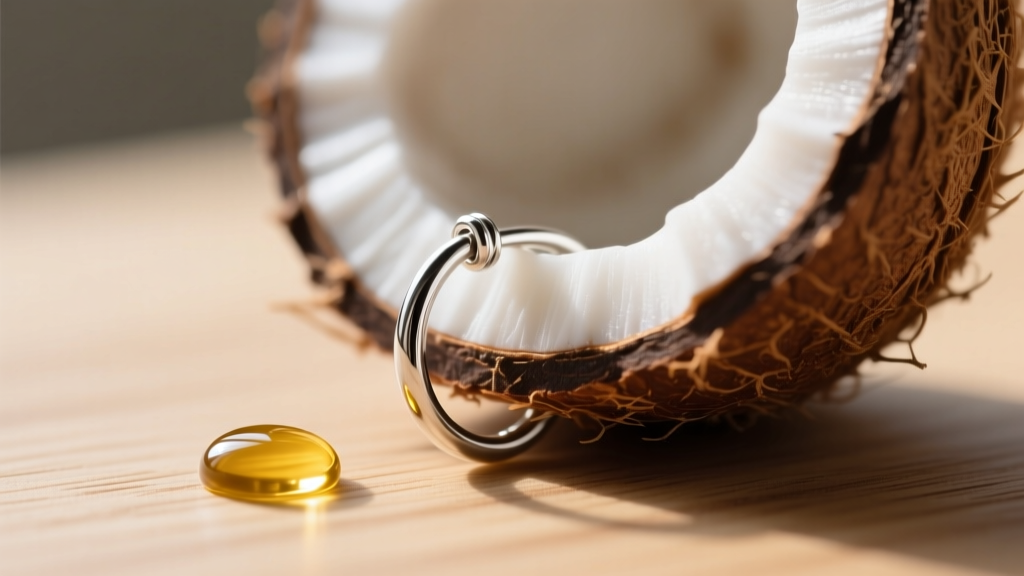
If your earrings feature sterling silver hooks, they will inevitably tarnish due to the sulfur in the air and your skin's natural chemistry. To clean the hardware without damaging the adjacent coconut shell, use a treated silver polishing cloth. Carefully wrap the cloth around the wire hook and rub gently. Avoid liquid silver dips, as they will seep into the shell's pores and cause permanent dark staining. For surgical steel or titanium posts, a simple wipe with a cotton swab dipped in rubbing alcohol is sufficient to sanitize the metal and remove sebum buildup.
Long-Term Storage Solutions
How you store your coconut earrings when they are not being worn is just as critical as how you clean them. The ideal storage environment maintains a relative humidity (RH) between 40% and 50%. Environments that are too dry (like a heated room in winter) will draw moisture out of the shell, leading to shrinkage and cracks. Environments that are too damp (like a bathroom) will encourage mold spores to bloom on the organic surface.
Store your earrings in breathable cotton or linen pouches. Avoid airtight plastic baggies, which can trap ambient moisture and create a micro-greenhouse effect. If you live in a particularly humid climate, place a small, jewelry-safe silica gel packet inside your storage box to regulate the moisture levels. The American Gem Society consistently recommends keeping organic and porous materials away from direct sunlight and extreme temperature fluctuations during storage to preserve their structural integrity.
Troubleshooting Common Coconut Earring Issues
White, Chalky Haze
If your earrings develop a dull, white haze, the shell has become severely dehydrated. This is not permanent. Perform a deep conditioning treatment using fractionated coconut oil or jojoba oil. You may need to apply two or three thin coats over a few days to fully re-saturate the lignins and restore the deep brown color.
Surface Mold or Mildew
If you notice small black or green spots, your earrings have been exposed to excess moisture. Dampen a cotton swab with white vinegar and gently dab the affected areas. The mild acidity of the vinegar will kill the mold spores without harming the shell. Wipe clean with a damp cloth and allow to dry completely in a well-ventilated area before oiling.
Loose Hardware
Because coconut shell expands and contracts with humidity changes, the drilled holes for the jump rings or posts can widen over time, causing the hardware to feel loose or rattle. If this happens, remove the hardware, apply a microscopic drop of clear, jewelry-safe epoxy resin into the hole, reinsert the hardware, and let it cure for 24 hours. Do not use superglue (cyanoacrylate), as it dries brittle and can shatter the shell under pressure.


